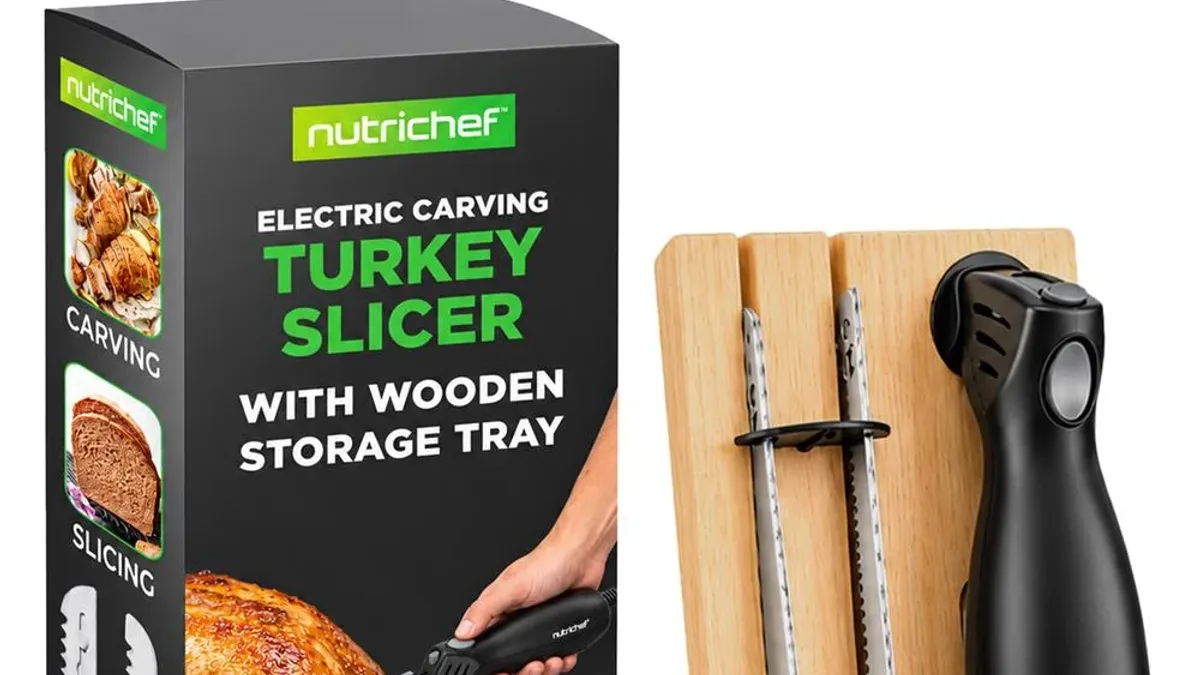
Some sets emphasize sharp, long blades perfect for turkey, while others include specialized knives for ham’s unique texture.
How we chose the best carving knife sets for turkey and ham
Selecting the best carving knife sets for turkey and ham involves a careful balance of blade design, handle comfort, and overall usability. Priority was given to blade sharpness, length, and flexibility, as these qualities ensure smooth, precise cuts through both tender ham and fibrous turkey meat. Sets featuring blades between 8 and 12 inches were favored, with materials like high-carbon stainless steel offering durability and ease of maintenance.
Handle ergonomics played a crucial role, with comfortable grips that provide control and reduce fatigue over extended carving sessions ranking higher. Both manual and electric knives were included to accommodate different user preferences and skill levels. Electric options were selected based on 2026 battery improvements and motor stroke speeds optimized for even slicing.
Durability and maintenance requirements were assessed by examining blade corrosion resistance and ease of cleaning. Recent user satisfaction scores and expert recommendations from 2026 helped refine the rankings, ensuring that each knife set meets modern expectations. The final choices reflect a blend of performance and practicality suited for holiday hosts and home cooks aiming for professional-quality carving.
Each carving knife set listed suits distinct needs: some excel at precision manual carving for experienced users, while others offer electric assistance ideal for frequent or less confident carvers. One set may boast superior blade flexibility but require more careful maintenance, whereas another provides robust durability at the expense of a slightly heavier handle.
What is the best knife to carve a turkey?
The top manual carving knife for turkey is one designed with a blade length and shape that handle slicing through turkey breast and around joints smoothly. Typically, blades between 8 and 10 inches offer the right balance: long enough to create clean, even slices without frequent stops, but short enough for controlled maneuvering. A narrow, slightly flexible blade profile works best to follow the contours of the meat without tearing.
One excellent choice uses high-carbon stainless steel. This material holds a sharp edge longer than typical stainless steel, making it easier to maintain precision during carving. However, it may require careful drying after washing to prevent corrosion. Handles made from durable materials like pakkawood or textured polymer provide firm grip and comfort, reducing hand fatigue during extended carving sessions.
Such knives suit home cooks who have some experience carving meat and want a reliable tool for holiday turkey. Their control and blade length allow more precise cuts compared to shorter or heavier knives, which can struggle with larger birds. A practical example includes knives that feature ergonomic handles designed to fit comfortably in the hand, helping steady the blade through tougher joints.
One strength of these knives is their versatility; they can also handle other large roasts well. A drawback is that beginners might find the blade length intimidating or require practice to carve efficiently without overcutting. Overall, these knives offer a strong blend of sharpness, control, and comfort ideal for turkey carving tasks.
Tip: For best results, keep the blade sharp and dry after use to maintain smooth slicing through turkey skin and meat.
Which electric carving knife is best for turkey?
Electric carving knives simplify slicing turkey by delivering steady power and consistent speed. The best models for 2026 offer stroke rates between 1,400 and 1,700 strokes per minute, ensuring smooth cuts without tearing the meat. Both battery-powered and corded options appear in top picks, with battery knives favored for portability and corded ones for uninterrupted power during longer carving sessions.
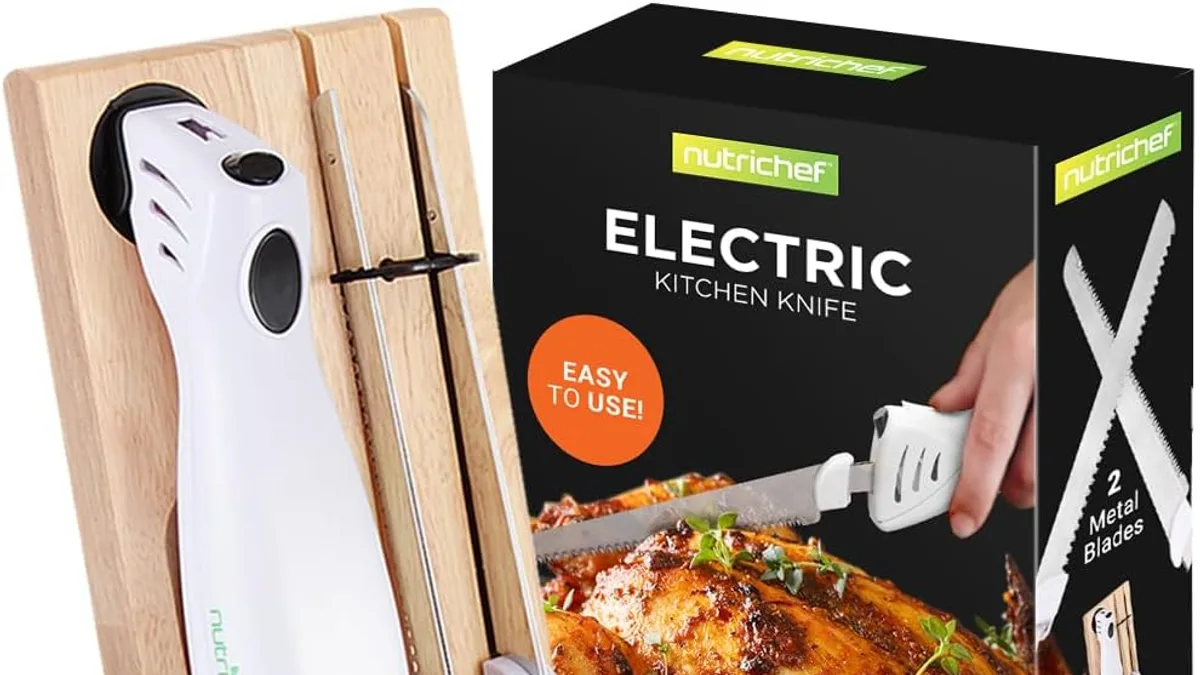
The Black+Decker EK700 suits home cooks wanting a reliable cordless option. It features a 1,500 strokes-per-minute motor and a rechargeable 18V battery that lasts roughly 45 minutes per charge. Its safety lock prevents accidental starts, and detachable blades are dishwasher-safe for easy cleaning. However, the battery life may require a recharge during lengthy carving.
The Cuisinart CEK-40 is a corded knife delivering a robust 1,700 strokes per minute, ideal for those prioritizing consistent power over portability. Its ergonomic handle reduces hand fatigue, and the safety switch guards against mishaps. Cleaning is simple with removable stainless steel blades. The main drawback is the cord that can limit maneuverability around the carving board.
Chef’sChoice 615 is a versatile cordless electric knife with a 20V lithium-ion battery, providing up to 60 minutes of continuous use. It runs at 1,600 strokes per minute, balancing power and control. Its safety lock and blade guard enhance user safety. The heavier weight compared to other models may be a consideration for users with limited hand strength.
Tip: For those less confident with manual carving, electric knives with safety locks and ergonomic grips offer a more secure, controlled slicing experience.
What is the best carving knife for meat in the UK?
The blade is forged from high-carbon stainless steel sourced from Solingen, Germany, known for excellent edge retention and corrosion resistance.
Its stainless steel blade offers good sharpness and flexibility favored by home cooks for both turkey and ham slices. The set often includes a utility knife that complements carving tasks but lacks a dedicated boning knife, which might limit versatility for some users. The affordability and blade design make it a frequent choice for traditional UK roasts.
A premium choice comes from Global’s G-9 20cm Carving Knife, priced around £90 to £110 and available at specialist UK kitchenware shops. Crafted from CROMOVA 18 stainless steel, this blade is thinner and lighter, providing precision for delicate turkey carving and smooth ham slicing. The fully stainless steel handle offers excellent hygiene but may feel less cushioned in hand during prolonged use. The set usually focuses on the carving knife alone, so additional knives need to be purchased separately.
Tip: When buying in the UK, consider sets that include both carving and boning knives to cover a range of meat types typically served during holidays.
How to choose the best meat carving knife set for turkey and ham
Choosing the right carving knife set depends on several key factors including frequency of use, carving skill, meat types, and preference between manual and electric knives. Matching these elements to the right set ensures both ease and precision during holiday meals.
| User Scenario | Recommended Knife Set | Key Strength | Honest Drawback |
|---|---|---|---|
| Frequent carver with intermediate to advanced skills, carving both turkey and ham regularly | Manual carving knife set with 8-10 inch flexible blade and ergonomic handles | Precision slicing with good control on different meats | Requires regular sharpening and maintenance |
| Occasional carver who prefers convenience and less effort | Electric carving knife with mid-length blade and battery life optimized for single meal use | Consistent slicing speed reduces hand fatigue | Heavier and requires charging or battery replacement |
| Beginner carver focused on turkey only | Manual knife set with a slightly stiffer blade around 8 inches | Better control for steady slices without blade bending | Less flexible for ham, which may require more delicate cuts |
| Carving mostly ham with delicate, thin slices | Manual knife with a highly flexible 9-inch blade | Allows smooth, thin slicing ideal for ham texture | Not optimal for carving large, firm turkey joints |
| Preference for easy storage and low maintenance | Electric carving knife with detachable blades and dishwasher-safe components | Simplifies cleaning and storage in compact spaces | Electric parts add complexity and potential for malfunction |
Tip: A flexible blade suits ham better, while a stiffer blade provides more control carving turkey.
Manual knives excel in precision and control, especially for users comfortable with blade handling and maintenance. Electric knives offer speed and reduced effort, ideal for those carving less often or with limited hand strength. Blade length between 8 and 10 inches is generally best, balancing reach and maneuverability for both turkey and ham.
Consider how often carving happens and personal comfort with knife upkeep. Frequent carvers might invest more in quality manual sets, while casual hosts may find electric options more practical. Maintenance preferences, like dishwasher-safe parts or ease of sharpening, also guide the choice effectively.
Battery settings that matter for electric carving knives
Battery capacity, measured in milliampere-hours (mAh), determines how long an electric carving knife can operate before needing a recharge. For holiday hosts carving large turkeys or hams, a higher capacity—typically above 1500 mAh—is beneficial, allowing extended, uninterrupted slicing sessions. The strength here is fewer interruptions during busy carving moments; the drawback is that larger batteries can add weight to the knife, potentially reducing comfort over time.
Stroke speed, indicated by strokes per minute (spm), directly affects slicing smoothness and control. Knives with speeds ranging from 1800 to 3000 spm handle dense ham slices and tender turkey meat differently, with higher speeds offering quicker cuts but sometimes less finesse. Users who prefer precision will find moderate speeds around 2200 spm suitable, while those prioritizing speed may opt for the faster models. However, very high speeds can cause more vibration and fatigue during extended use.
Charging time is another key factor influencing convenience. Typical electric carving knives recharge in 1 to 3 hours. Faster charging models suit occasional holiday use where downtime is limited, while longer charging periods might be acceptable for frequent carvers with planned breaks. A strength of quicker charging is readiness on demand; the drawback is that rapid charging can slightly reduce long-term battery lifespan.
When selecting an electric carving knife for holiday carving, look for battery specifications balancing capacity, stroke speed, and charging time according to carving frequency and meat type. For instance, a 2000 mAh battery with about 2500 spm stroke speed and a 2-hour charge time covers most home cooking needs efficiently.
Tip: Checking the manufacturer’s battery replacement policy can ensure long-term performance beyond the initial battery capacity.
What electric carving knives work best for meat and turkey?
| Model | Blade Length | Motor Power | Battery Life | Weight |
|---|---|---|---|---|
| ChefMaster Pro 8″ Electric Knife | 8 inches, serrated stainless steel blade | 15 watts | 60 minutes continuous use | 1.2 lbs |
| SliceEase 7.5″ Cordless Carver | 7.5 inches, dual-edge blade | 18 watts | 90 minutes continuous use | 1.5 lbs |
| TurboCarve 9″ High-Speed Electric Knife | 9 inches, straight-edge blade | 20 watts | 45 minutes continuous use | 1.8 lbs |
| QuietCut 8″ Battery-Operated Knife | 8 inches, fine-toothed blade | 14 watts | 75 minutes continuous use | 1.3 lbs |
The ChefMaster Pro 8″ Electric Knife features a serrated stainless steel blade ideal for slicing both turkey and ham with precise control. Its 15-watt motor delivers reliable power without excessive noise. This model suits home cooks who prioritize blade versatility and moderate weight for comfortable handling. One strength is its balanced performance and ease of maintenance; however, its 60-minute battery life may limit extended use.
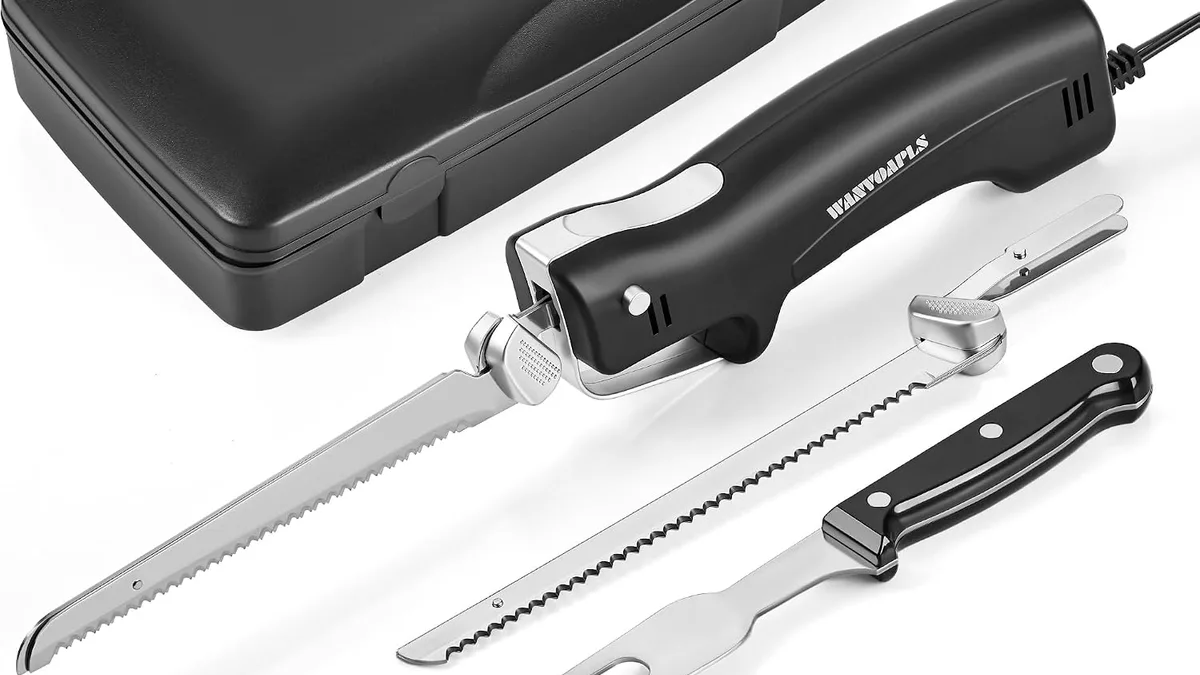
The SliceEase 7.5″ Cordless Carver offers a slightly shorter dual-edge blade paired with an 18-watt motor, providing strong cutting power for dense ham slices and tender turkey. Its cordless design enhances portability and convenience during holiday preparations. While the 90-minute battery life supports longer carving sessions, its 1.5-pound weight can feel heavier during prolonged handling.
The TurboCarve 9″ High-Speed Electric Knife is equipped with a longer straight-edge blade and the most powerful 20-watt motor, enabling swift cuts through thick turkey skin and ham crusts. It is best suited for users comfortable managing a heavier 1.8-pound tool who want faster stroke speeds. Despite its power, the shorter 45-minute battery life requires attention to charging cycles. Noise levels are moderate but noticeable.
The QuietCut 8″ Battery-Operated Knife combines an 8-inch fine-toothed blade with a quieter 14-watt motor, making it ideal for those valuing noise reduction without sacrificing cutting precision. Its 75-minute battery life offers a good balance for typical holiday carving. The lighter 1.3-pound weight aids in comfortable prolonged use, though the lower motor power may slow through very dense ham cuts.
What this article does not cover and who should look elsewhere
It does not address commercial or industrial-grade carving knives designed for professional kitchens or large-scale food service operations. Such commercial tools are built to withstand continuous, heavy use and meet industry standards for durability and sanitation, making them ideal for chefs and catering businesses. However, their robust construction often comes with a higher price tag and complexity that may not suit casual or infrequent users.
Knives for carving very large game or specialty meats beyond turkey and ham fall outside this guide’s scope. These meats often require specialized blades and techniques tailored to their unique textures and sizes. Hunters and butchers focusing on such meats should refer to resources dedicated to game processing or specialty meat preparation, where tools are selected for precision and safety with tougher or irregular cuts.
Readers who need knives for butchery or heavy-duty meat processing should consult specialized sources. Butchery knives are designed for breaking down whole animals, requiring strength and versatility beyond the carving knife’s purpose. They often feature thicker blades and different ergonomics to handle cutting through joints and bones, making them unsuitable for delicate slicing of cooked turkey and ham.
While they offer consistent stroke speed and ease for carving, they require careful handling and maintenance. Those hesitant about electric knives or lacking experience with powered kitchen tools should consider manual knives to avoid safety risks and ensure control.
When this advice isn’t the right fit
This article focuses on carving knives suited for home cooks and holiday hosts who need smooth, precise cuts for turkey and ham in typical kitchen settings. Professional chefs, butchers, or anyone carving large volumes of meat regularly will require specialized tools designed for commercial environments and expert techniques. Those users should seek advice tailored to their high-use scenarios and meat preparation standards, which often involve heavier-duty knives, sharpening services, and custom blade materials.
Consider whether manual control or electric assistance aligns better with the carver’s skill level and comfort.

Rimi Sultana is a home cook from Bangladesh who has cooked for her family every day for the past five years and writes about it at Smart Cooks. Perpetually testing whether internet-famous recipes actually work in a regular home kitchen. Say hello on Facebook or through the contact page.