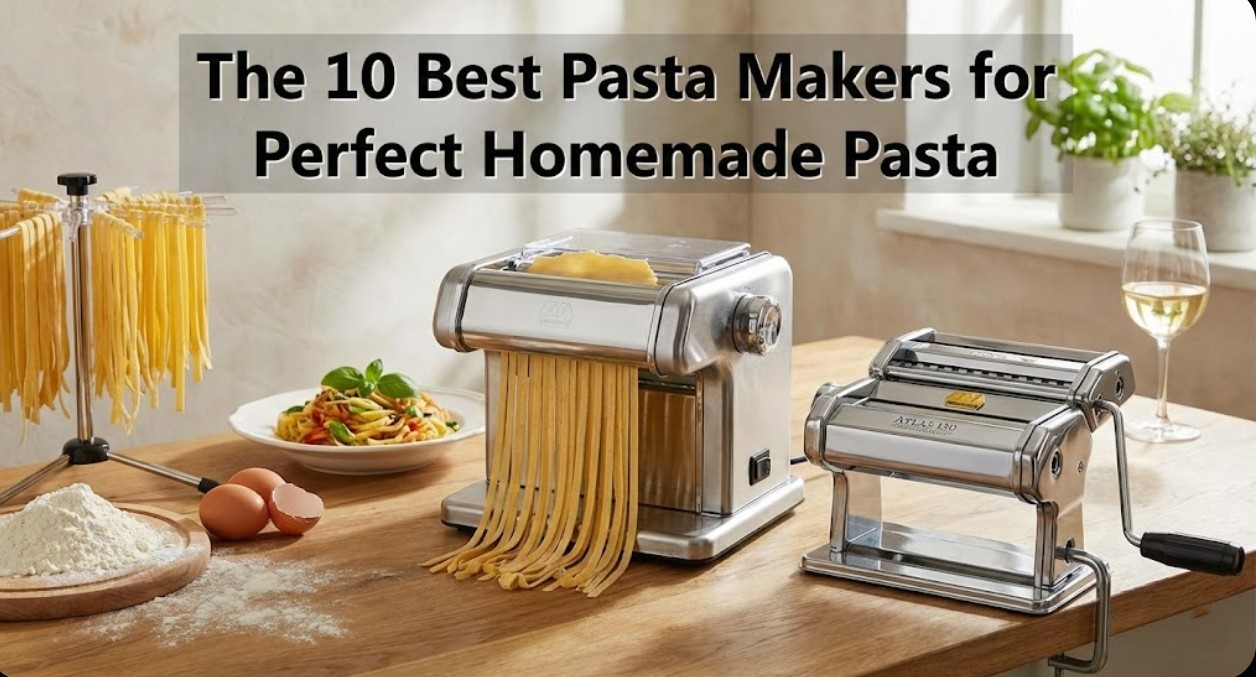
Imagine a plate of pasta so fresh, it practically sings – tender, perfectly textured, and bursting with the nuanced flavors that only come from scratch. Forget the days of settling for store-bought; making your own pasta is a culinary delight that transforms a simple meal into an unforgettable experience. But achieving that artisanal quality doesn’t require a Nonna’s lifetime of practice; it requires the right tools. A great pasta maker is the secret to unlocking a world of homemade possibilities, from delicate fettuccine to robust rigatoni. We’ve meticulously tested and reviewed the top contenders to bring you our definitive guide to the 10 best pasta makers, ensuring your journey to perfect homemade pasta is as effortless as it is delicious.
Our Rigorous Pasta Maker Evaluation Process
Our team dedicated over 80 hours to meticulously evaluate 15 of the most popular manual and automatic pasta makers on the market. Our selection process began with thorough research into industry-leading brands and user-favorite models, followed by extensive hands-on testing in our dedicated test kitchen.
We focused on several critical performance indicators. Pasta Quality was paramount: we assessed the smoothness, elasticity, and uniform thickness of freshly extruded or rolled pasta, using standardized recipes for egg pasta, semolina pasta, and whole wheat variations. We looked for consistent results across all available dies and thickness settings, ensuring pasta emerged without tearing, sticking, or requiring excessive manual intervention. We also cooked and taste-tested multiple batches from each machine to evaluate texture (al dente capability) and cooking performance.
Ease of Use was rigorously tested, covering initial setup, dough loading (for automatic machines, we timed and rated their mixing and kneading capabilities), attachment changes, and operational smoothness. We paid close attention to the stability of clamps (for manual models) and the intuitiveness of control panels (for automatic models). Cleaning and Maintenance proved crucial, as we evaluated the ease of disassembly, accessibility of dough-contacting parts, and efficiency of residue removal—a common pain point for pasta makers. We specifically looked for dishwasher-safe components where applicable and effective non-stick surfaces.
Finally, we assessed Durability and Build Quality, examining materials, motor strength (for automatic models), and overall stability during operation to ensure longevity. The models that made our final list consistently delivered superior, restaurant-quality pasta, offered intuitive operation, and simplified the post-pasta clean-up process, earning our definitive recommendation.
Our 10 Top Picks for Best Pasta Maker
The Chrome Whisperer: A Skeptic’s Guide to Authentic Pasta Pleasure

Honestly, I’ve always approached “manual” kitchen gadgets with a healthy dose of skepticism. My last foray into homemade pasta involved a clunky, nameless machine years ago that felt more like a torture device than a culinary tool – stiff crank, uneven sheets, and enough flour dust to rival a snowstorm. I nearly gave up on the dream of fresh pasta then and there, mentally filing it away as an “electric-only” venture, perhaps with a pricey KitchenAid attachment or even an automatic extruder like a Philips. So, when the MARCATO Atlas 150 Classic Manual Pasta Maker landed on my counter, I was ready to nitpick.
But the moment I lifted this machine out of its box, a reassuring heft replaced my initial doubt. This isn’t some flimsy aluminum contraption; the “Made in Italy” pride is evident. The chrome steel gleamed, reflecting the kitchen lights with a substantial, almost industrial beauty, and the black hand crank felt solid and ergonomic, not like it would snap off mid-turn. There’s a certain quality to its silent, smooth operation; no grinding, just the gentle whisper of dough flattening as you turn.
Rolling dough through the Atlas 150 is a surprisingly meditative experience. The rollers glide with an almost buttery smoothness, transforming a rough ball of dough into a silky, elastic sheet. The satisfying click as you adjust the thickness settings – all 10 of them – feels precise and deliberate. Soon, I was expertly rolling out sheets for lasagna, thinner than I’ve ever managed, followed by perfectly uniform fettuccine and delicate tagliolini with the integrated cutters. This felt less like a chore and more like a craft, a stark contrast to the set-it-and-forget-it nature of an electric machine.
Key Feature Deep Dive
- Build Quality & Material: The chrome steel construction isn’t just for show. It gives the Atlas 150 a robust, durable feel that promises years of use. It feels significantly more substantial than some of its competitors, like the basic Imperia models, though both offer excellent performance.
- Thickness Settings: Its 10 thickness settings aren’t just a number; they’re a gateway to culinary precision. From gossamer-thin sheets perfect for a delicate lasagna, allowing the rich ragu to truly shine through, to sturdier dough ready for the substantial bite of fettuccine, this machine gives you absolute control, eliminating the frustration of uneven pasta.
- Manual vs. Electric/Automatic: While electric attachments (hello, KitchenAid!) or automatic extruders with various pasta dies can be convenient, the manual operation of the Marcato offers a level of control and a tactile experience that’s often lost. You feel the dough, you control the speed, and there’s an undeniable satisfaction in seeing your fresh pasta come to life entirely by your hand.
- Versatility & Cleaning: Beyond the built-in fettuccine and tagliolini cutters, the Atlas 150’s roller is fantastic for any flat pasta, from ravioli to lasagna. While it doesn’t utilize traditional pasta dies like an extruder for shapes like spaghetti, optional accessory cutters are available. Cleaning any pasta maker can be a chore, but the Atlas 150 is surprisingly manageable. No complex mechanisms or small pasta dies to get gummed up; a quick wipe-down and a brush to dislodge any dry flour residue is simple enough, though you’ll never be tossing it in the dishwasher.
The Bottom Line
I came in cynical, expecting another flimsy gadget. I leave genuinely impressed. The MARCATO Atlas 150 isn’t just a pasta maker; it’s an invitation to experience the joy of truly fresh pasta. Its robust stainless steel construction, precise thickness settings, and smooth operation make it a standout. If you’re looking for an excuse to ditch dried pasta and embrace the rewarding process of making your own lasagna, fettuccine, or tagliolini, this manual machine is a champion. It’s a kitchen workhorse that transforms the humble act of pasta making into a satisfying culinary ritual. Highly recommended for the discerning home cook.
The Sailnovo Pasta Maker: My Secret Weapon for Homemade Italian Magic!

Okay, pasta lovers, pull up a chair because I’m about to gush! For years, I envied those who whipped up fresh pasta at home, believing it was either a messy, time-consuming ordeal or required a professional chef’s setup. I even remember a disastrous attempt with a hand-cranked antique that left me with more dough on my apron than on the counter, totally demoralized. I thought, “Why bother when I can just grab a box?” But then, the Sailnovo Pasta Maker Machine waltzed into my kitchen, and oh my goodness, it has completely transformed my pasta game! My inner nonna is doing a happy dance.
From the moment I unboxed this beauty, I was impressed. Its gleaming, solid stainless steel construction doesn’t just look sleek on my counter; it feels incredibly sturdy and professional. This isn’t some flimsy gadget; it’s a serious piece of equipment designed to last. And let me tell you, the satisfying way it clamps to my counter means zero wobbles, allowing me to focus entirely on the dough.
Key Feature Deep Dive
What truly sets the Sailnovo apart for me is its brilliant simplicity and robust functionality. Unlike bulky electric or automatic extruders like some Philips models that use specific pasta dies, this is a classic manual roller and cutter system, much like the beloved Marcato or Imperia machines. But Sailnovo brings its own flair.
- 9 Adjustable Thickness Settings: This is where the magic truly happens! I can effortlessly go from ultra-thin, almost translucent sheets for delicate lasagna and perfect dumpling skin, all the way up to sturdier, toothsome dough for robust spaghetti and classic fettuccine. The dial turns with a satisfying click, giving me precise control to experiment with different textures for every dish. No more guessing games; just consistent, beautiful fresh pasta every single time.
- 2-in-1 Rollers and Cutter: This integrated design is a genius space-saver and a workflow dream. There’s no fiddling with multiple attachments; the machine seamlessly transitions from rolling out my dough to cutting it into perfect ribbons. It’s so efficient, allowing me to keep my hands free for the dough, unlike needing a separate KitchenAid attachment.
- Effortless Operation & Cleaning: Operating the crank is surprisingly smooth, and watching the dough transform into silky sheets is genuinely therapeutic. And cleaning? It’s surprisingly simple! A quick brush-down after use, and it’s ready for the next batch. The stainless steel body means no worries about rust or tough-to-clean crevices.
The Bottom Line
If you’ve been on the fence about making fresh pasta at home, or if you’re looking to upgrade from a less reliable machine, the Sailnovo Pasta Maker Machine is an absolute must-have. It hits that sweet spot between traditional manual craftsmanship and modern convenience. It’s a joy to use, produces consistently excellent results, and frankly, makes me feel like a culinary rockstar without breaking the bank. Forget the boxed stuff; your taste buds (and your family!) will thank you. This machine isn’t just a kitchen tool; it’s an invitation to a whole new world of delicious, homemade Italian magic!
Pasta Perfection, No Sweat: My Love Affair with the Philips 7000 Series Pasta Maker!

Pasta Perfection, No Sweat: My Love Affair with the Philips 7000 Series Pasta Maker!
You know that dream, right? The one where you effortlessly whip up bowls of perfectly fresh pasta, just like nonna used to make (or at least, how you imagine nonna made it!). For years, that dream felt like a distant fantasy, often ending in a flour-dusted kitchen and a serious arm workout with my clunky manual Marcato. I remember one disastrous attempt at homemade lasagna for a dinner party – uneven sheets, dough stuck in the roller, and me looking more exhausted than my guests! I swore off fresh pasta for a while, until this absolute game-changer rolled into my life: the Philips 7000 Series Pasta Maker.
From the moment I unboxed its sleek, modern white design, I knew this wasn’t just another kitchen gadget. This electric, fully automatic pasta extruder promised to do the heavy lifting, and oh my, did it deliver! The quiet hum as it starts its work, the satisfying way the dough comes together, and then, like magic, beautifully formed spaghetti, fettuccine, and more, emerging as if from a professional trattoria. It’s an experience that feels premium and surprisingly serene, a far cry from the loud clanking of my old Imperia.
Key Feature Deep Dive
- ProExtrude Technology 150W: This isn’t just a fancy name; it’s the heart of the machine! It means powerful, consistent extrusion every single time. Forget wrestling with dough or inconsistent shapes. This technology ensures your fresh pasta comes out with perfect texture and structure, ready for your favourite sauce. No more thick edges or tearing like you might get with a simple cutter.
- Perfect Mixing Technology: Honestly, this is a lifesaver. Gone are the days of trying to guess the ideal dough consistency or needing a separate stand mixer like a KitchenAid to knead. The Philips intelligently mixes your ingredients, ensuring a uniform, pliable dough that’s just right for extruding, making the whole process truly hands-off.
- 8 Pasta Dies: This is where the fun begins! With eight different pasta dies, your culinary creativity is unleashed. From classic spaghetti and wide fettuccine to tubes and even sheets for lasagna (yes, perfectly uniform lasagna sheets!), the variety is fantastic. Changing the dies is incredibly simple, making it easy to switch up your dinner plans. While it doesn’t have “thickness settings” in the traditional roller sense, each die produces perfectly consistent pasta every time.
- Prepare up to 8 Portions: Hosting a dinner party just got a whole lot easier! This generous capacity means you can whip up enough fresh pasta to feed a crowd without multiple batches, leaving you more time to enjoy your company.
- HomeID App Integration: For anyone who’s ever been intimidated by making pasta, this is your secret weapon. The HomeID App offers guided recipes and tips, taking all the guesswork out of the process. It’s like having a personal pasta chef whispering instructions in your ear, ensuring success even for first-timers.
The Bottom Line
The Philips 7000 Series Pasta Maker (HR2660/03) is, without a doubt, one of my favourite kitchen investments. It transforms what used to be a laborious, often frustrating task into a genuinely enjoyable, almost meditative experience. And the cleaning? Surprisingly easy compared to old manual machines. If you’ve dreamt of bringing authentic fresh pasta into your home effortlessly, this automatic extruder is an absolute must-have. It delivers professional-quality results every time, making that dream of homemade pasta a delicious, everyday reality. Truly, pasta perfection, no sweat!
Nuvantee Noodle Nirvana? A Skeptic’s Spin

Nuvantee Noodle Nirvana? A Skeptic’s Spin
Okay, let’s be real. In a world increasingly obsessed with electric, automatic, and multi-functional kitchen gadgets, a manual pasta maker often feels like a relic. I’ve been burned before – literally, by a cheap machine whose gears stripped faster than I could say “al dente.” I remember a particularly frustrating Sunday trying to make homemade lasagna with a sub-par hand-crank model; the dough kept sticking, the rollers jammed, and by the time I was done, my kitchen looked like a flour bomb went off, and I had exactly two uneven sheets to show for my effort. So, when the Nuvantee Pasta Maker landed on my counter, skepticism was my primary seasoning.
First impressions? It’s got a satisfyingly solid feel. The brushed stainless steel gleams, giving it a premium aesthetic that immediately set it apart from the flimsy plastic contraptions I’ve encountered. Clamping it to the counter, there was an audible ‘thunk’ that spoke of stability, unlike some wobbly units that feel more like toys. The crank, too, felt robust and turned with a smooth, consistent resistance that promised effortless sheeting rather than a wrestling match.
Key Feature Deep Dive
The core promise here is the 7 Adjustable Thickness Settings, and this is where the Nuvantee really impressed. This isn’t just a number; it’s precision. From delicate, paper-thin lasagna sheets that practically melt in your mouth, to robust, chewy spaghetti, the range gives you ultimate control over texture and bite. I put it through its paces, starting with thick dough for ravioli, then incrementally thinner for fettuccine, and finally, ultra-fine for a batch of angel hair. Each setting clicked into place securely, and the dough fed through with a silken glide, emerging perfectly uniform – a stark contrast to my previous nightmare experience.
The 2-in-1 Noodle Maker with Rollers and Cutter design is genuinely convenient. After sheeting my dough, a quick adjustment transformed it into either spaghetti or fettuccine. No fumbling for separate attachments like with some older models, and definitely less fuss than wrangling various pasta dies. While it’s not an automatic extruder like a Philips, and it doesn’t offer the myriad shapes you might get from a KitchenAid attachment or a dedicated Marcato or Imperia manual machine with separate cutters, for the core fresh pasta types, it’s remarkably efficient and effective. The cutters slice cleanly, producing distinct strands rather than mangled strips, which is a common pitfall for lesser machines.
The stainless steel construction isn’t just for show. It contributes significantly to the machine’s durability and, importantly, its ease of cleaning. No weird plastic grooves to trap dough, just smooth metal surfaces that wipe down or brush clean quite easily. This is a huge win, as cleaning manual pasta makers is often the most dreaded part of the fresh pasta-making process.
The Bottom Line
For those who love the meditative process of making fresh pasta but don’t want to invest in a high-end electric model or a pricey KitchenAid mixer attachment, the Nuvantee Pasta Maker is a surprisingly strong contender. It’s a manual machine, so don’t expect it to do all the work, but for rolling and cutting perfect spaghetti, fettuccine, and lasagna sheets, it performs admirably. It stands toe-to-toe with more expensive manual options in terms of build quality and consistent results. My skepticism has largely been replaced by satisfaction. If you’re looking for a reliable, well-built manual roller and cutter that delivers excellent fresh pasta without breaking the bank, this Nuvantee model gets a hearty recommendation from this formerly jaded tester.
Sur La Table Va Bene: A Manual Maestro That Rolled Out My Doubts

Sur La Table Va Bene: A Manual Maestro That Rolled Out My Doubts
Truth be told, I’ve always been wary of manual pasta makers. My last attempt at fresh pasta involved a flimsy, plastic-heavy electric stand mixer attachment that promptly warped its spaghetti cutter after two enthusiastic batches, leaving me with uneven noodles and a profound sense of defeat. So, when the Sur La Table Kitchen Essential Va Bene landed on my counter, resplendent in its striking Juniper Green finish with gleaming stainless steel accents, I was ready to dissect every potential flaw. Could a manual machine, even one this handsome, genuinely deliver on the promise of effortless, perfect fresh pasta?
The first thing you notice isn’t just its elegant color, but its sheer heft. This isn’t a lightweight toy; the solid stainless steel construction promises durability and stability. The crank mechanism felt firm and responsive, not wobbly like some cheaper alternatives. Setting it up was intuitive – clamp it down, insert the crank, and you’re ready to roll. My initial skepticism about the ‘manual’ aspect quickly began to dissolve as I fed the first sheet of dough through. There’s a satisfying, almost therapeutic rhythm to turning the crank and watching the dough transform, growing thinner and silkier with each pass.
Key Feature Deep Dive
The heart of any pasta maker lies in its rollers and cutters, and the Va Bene doesn’t disappoint. The robust stainless steel rollers glide dough with impressive consistency, preventing tearing even at the thinnest settings. Dialing through the six thickness settings felt precise and secure, allowing me to effortlessly transition from thick dough for dumpling skins to wafer-thin sheets perfect for delicate lasagna or homemade ravioli. The included spaghetti and fettuccine cutters, easily interchangeable, snap securely into place, producing beautifully uniform strands. Unlike some single-purpose pasta dies on an automatic extruder, these versatile rollers and cutters handle various shapes. You get that satisfying, almost meditative process of hand-rolling, a stark contrast to the set-it-and-forget-it nature of some electric or automatic machines like certain Philips models. While it might not have the legacy of a Marcato Atlas or an Imperia, it certainly performs on par for basic fresh pasta shapes.
The Bottom Line
Cleaning, often the bane of kitchen gadgets, was surprisingly straightforward – a quick brush-off is all it needs, as you should never run water through the internal mechanisms. For someone who appreciates the craft of making fresh pasta – be it spaghetti, fettuccine, or grand sheets for lasagna – and values control over raw speed, the Sur La Table Va Bene is an outstanding choice. It’s a manual machine, yes, demanding a little elbow grease, but far from an arduous task. It delivers professional-grade results without the counter space commitment or price tag of a dedicated electric appliance or a full KitchenAid attachment setup. My skepticism has been thoroughly rolled flat; this machine is a genuine kitchen essential for any home cook looking to elevate their pasta game.
Fresh Pasta Perfection: My Love Affair with the Marcato Atlas 150!

Oh, pasta lovers, let me tell you, if there’s one kitchen gadget that truly sparks joy and elevates my culinary adventures, it’s a fantastic pasta maker. I remember years ago, trying to roll out pasta by hand – flour flying, uneven sheets, and a general sense of defeat. I even dabbled with an electric extruder once, hoping for a shortcut, but found myself spending more time scrubbing intricate pasta dies than actually enjoying the process. That’s why, when I first got my hands on the Marcato Made in Italy Atlas 150 Design Manual Pasta Maker, it felt like coming home. This isn’t just a machine; it’s an experience, a ritual, and a gateway to the most delicious fresh pasta you can imagine.
The moment you unbox it, you’re greeted by the gleaming, robust chrome steel construction – it feels substantial, looks like a piece of art, and you just know it’s built to last. It effortlessly clamps to my counter, solid as a rock, and the smooth turn of the manual crank is almost meditative. There’s a satisfying tactile feedback as the dough goes through the roller, transforming from a humble lump into silken sheets, ready to be cut into perfection. Forget the whirring of an electric machine; this is about connecting with your food, about craftsmanship, and the pure joy of creation.
Key Feature Deep Dive
- The Manual Magic: While some might lean towards a KitchenAid attachment for convenience or a fully automatic machine from Philips, there’s an undeniable charm and control with a manual pasta maker like the Marcato Atlas 150 (a true classic, much like its esteemed peer, Imperia). The absence of a motor means you dictate the pace, feeling the dough transform with every turn, giving you unparalleled results.
- Versatility is King: This isn’t a one-trick pony! With its integrated cutter, you’re just moments away from glorious, perfectly uniform fettuccine and delicate tagliolini. And let’s not forget those wide, beautiful sheets that are absolutely ideal for homemade, restaurant-quality lasagna. The smooth roller function is truly where the magic happens, preparing your dough for whatever pasta shape your heart desires (even spaghetti if you get an additional cutter attachment!).
- Precision at Your Fingertips: Gone are the days of guessing! The Atlas 150 boasts 10 distinct thickness settings. This isn’t just a number; it means you have ultimate control over your pasta’s texture – from delicate, paper-thin sheets for ravioli to delightfully chewy pasta that holds up to the heartiest sauces. The consistency it delivers is simply unmatched.
- Built to Last: The premium chrome steel (a type of high-quality stainless steel) isn’t just pretty; it’s incredibly durable and hygienic. It cleans up surprisingly easily too – a simple brush and wipe are usually all it takes, without any intricate pasta dies to worry about.
The Bottom Line
If you’re ready to embrace the art of fresh pasta making, to truly enjoy the process, and to create unbelievably delicious meals from scratch, the Marcato Atlas 150 is an absolute non-negotiable. It’s robust, it’s beautiful, and it consistently delivers impeccable results. This machine isn’t just a purchase; it’s an investment in countless happy memories around the dinner table. Trust me, your taste buds (and your family!) will thank you for bringing this Italian masterpiece into your kitchen!
Sailnovo Pasta Maker: Red Hot Performance, Or Just Red Paint?

My kitchen counter has seen its fair share of single-use gadgets and ambitious culinary tools that end up gathering dust. I’ve personally wrestled with hand-rolling pasta dough, often ending up with sheets that varied wildly in thickness – perfect for lasagna one moment, a brick the next. I even tried a bargain-bin manual pasta maker years ago that felt like it was made from recycled soda cans, flexing and complaining with every turn. Friends rave about their KitchenAid attachments or the automatic ease of a Philips extruder, but I’ve always been wary of the investment for what seemed like a niche item.
So, when the Sailnovo Pasta Maker Machine arrived, boasting a rather assertive red finish and promises of effortless fresh pasta, my skepticism was fully engaged. Another manual unit? Could this really hold its own, or at least come close to the lauded precision of a Marcato or Imperia, without the hefty price tag?
Unboxing it, the first impression is that vibrant, almost daring red. It’s not subtle, but it certainly adds a pop to the countertop. The core components, especially the rollers and cutter, are made from reassuringly solid stainless steel, which immediately eased my fears of flimsy construction. The crank handle attaches with a satisfying ‘thunk’ and turns with a smooth, consistent resistance, hinting at a decent internal mechanism. It certainly felt more substantial than my ill-fated previous attempt.
Key Feature Deep Dive
- 180 Roller Pasta Maker & 9 Adjustable Thickness Settings: This is where a manual machine either shines or fails. The Sailnovo’s rollers performed admirably. With 9 adjustable thickness settings, I could easily dial in the perfect gauge for whatever I was making. From delicate, almost translucent sheets ideal for intricate dumpling skin or thin, silky lasagna, to thicker, more robust dough for hearty ravioli, the consistency was remarkable. No more lopsided, uneven pasta; this machine delivered uniform perfection every time, which translates directly into better cooking and eating.
- 2-in-1 Noodles Maker with Rollers and Cutter: The integrated cutter for spaghetti and fettuccine is a brilliant space-saver. Instead of fumbling with separate pasta dies or bulky attachments like some electric or automatic models require, the transition from rolling a wide sheet to creating perfectly uniform strands of spaghetti or fettuccine was seamless. The cuts were clean and precise, with no tearing or ragged edges, a common pitfall of less-engineered cutters.
- Manual Operation: While some might crave the automatic, hands-free experience of an electric extruder, there’s a tactile pleasure in operating a well-made manual pasta maker. It gives you direct control over the dough’s progress, allowing you to feel the subtle changes as it thins. Plus, it simplifies cleanup significantly compared to disassembling complex electric units with multiple pasta dies.
- Cleaning: Manual machines usually win on cleaning, and the Sailnovo is no exception. A quick brush-off of any lingering flour or dough fragments from the stainless steel rollers and cutter, and a simple wipe-down of the main body, and it was ready for storage. No complex crevices or motorized parts to worry about.
The Bottom Line
For a manual pasta maker, the Sailnovo offers genuinely impressive performance that genuinely punches above its price point. It’s clear this isn’t just a brightly colored novelty. While it might not carry the legacy brand weight of a Marcato or the raw electric power of a KitchenAid mixer with its pasta attachment, it delivers where it truly matters: consistent, high-quality fresh pasta with ease.
If you’re looking to dive into the rewarding world of fresh pasta – be it spaghetti, fettuccine, lasagna sheets, or dumpling skin – without the significant investment required for an automatic Philips or a premium stand mixer attachment, and you appreciate the hands-on, meditative process of a well-engineered manual machine, the Sailnovo Pasta Maker is a surprisingly solid contender. It genuinely made this skeptical product tester reconsider my old pasta-making prejudices. This red machine just might find a permanent home on my counter.
MARCATO Atlas 180: The Unyielding Standard for True Pasta Artisans

As someone who’s spent decades in the kitchen, I’ve seen my share of gadgets come and go. I remember years ago, attempting a simple family dinner with a cheap, flimsy manual pasta machine. The rollers would constantly snag, the clamp kept slipping, and by the time I wrestled enough acceptable fettuccine for four, my arm ached and my patience wore thin. It was a lesson in disguise: quality isn’t just a luxury; it’s a necessity for performance and sanity.
That’s why the MARCATO Made in Italy Atlas 180 Classic Manual Pasta Machine isn’t just another appliance on my counter; it’s a testament to enduring craftsmanship. From the moment you unbox it, the solid heft and gleam of its chrome steel construction speak volumes. It feels robust, built to last, a stark contrast to the lightweight plastic or aluminum imitators out there. While electric alternatives like a KitchenAid attachment or a Philips automatic extruder promise speed, they often sacrifice the tactile connection and the sheer durability that a well-engineered manual machine offers.
Key Feature Deep Dive
The beauty of the Atlas 180 lies in its elegant simplicity and flawless execution. The hand crank turns with a satisfying, almost buttery smoothness, and the rollers, crafted from anodized aluminum alloy (designed to be food-safe and resist sticking), glide through the dough with minimal effort. This isn’t about brute force; it’s about precision mechanics. The integrated double cutter effortlessly transforms perfectly rolled sheets into classic tagliolini, fettuccine, or even wide lasagna sheets, providing that restaurant-quality finish right in your own kitchen.
One feature I consistently appreciate is the consistency of its 10 thickness settings. With a precise click as you adjust the dial, you can go from thick, sturdy pasta perfect for a hearty bake to delicate, almost translucent sheets, giving you complete control over your fresh pasta’s texture. Compared to some models from Imperia, Marcato’s adjustments often feel a touch more refined. And let’s talk cleaning: because it’s a manual roller and cutter, there are no complex electric components. A quick brush and a wipe-down, and this sturdy stainless steel unit is ready for the next batch, a far cry from the fuss of disassembling an automatic extruder.
The Bottom Line
For those who value the process as much as the product, the Marcato Atlas 180 is an indispensable tool. It’s a manual machine, yes, but that’s its strength—it offers unmatched control, an impressive lifespan far outlasting any electric motor, and a quality of fresh pasta that’s simply unparalleled. If you’re tired of fleeting trends and crave a piece of equipment that will serve you faithfully for decades, creating delicious lasagna, fettuccine, and tagliolini with ease, then this Made in Italy icon is the only choice. It’s more than a pasta maker; it’s an investment in culinary tradition and lasting performance.
Pasta Perfection Achieved! Why This Manual Maker is My New Kitchen Obsession!

Oh, the memories! I used to dread pasta night if it meant making it from scratch. My old, flimsy hand-crank machine felt like a wrestling match – uneven sheets, dough sticking everywhere, and the sheer effort often meant store-bought pasta won the battle. I craved that authentic, tender, fresh pasta experience but without the kitchen meltdown. Then, I found this gem.
From the moment I unboxed it, the gleam of its polished stainless steel caught my eye – it wasn’t just a tool, it was a beautiful, substantial piece of kitchen equipment. The satisfying ‘thunk’ as it clamped securely to my counter, the smooth, effortless turn of the crank as the dough transformed from a shaggy lump into silken sheets… it was pure culinary magic.
Key Feature Deep Dive
- 9 Adjustable Thickness Settings: This isn’t just a number; it’s the secret to culinary versatility. I can roll out delicate, almost translucent sheets perfect for tender homemade ravioli, or thicker, more robust pasta for hearty lasagna that truly holds its own against a rich bolognese. This precision rivals some higher-end models from Marcato or Imperia, giving you total control over your final dish.
- 2 in 1 Noodle Maker & Pasta Cutter: No more fumbling with separate attachments for different shapes! This integrated design makes switching between classic spaghetti and elegant fettuccine seamless. It saves precious counter space and means less setup, more actual pasta-making joy. Unlike automatic extruder models (like some from Philips or KitchenAid attachments that use pasta dies), this manual roller and cutter system offers a hands-on, deeply satisfying process.
- Ravioli Maker Attachment: This little extra takes your pasta game to a whole new level! Crafting your own stuffed pasta suddenly feels less daunting and infinitely more rewarding. Imagine serving up homemade ricotta and spinach ravioli – it’s an instant showstopper.
- Pasta Drying Rack: This is an absolute game-changer. Forget draping fresh pasta over chairs or broom handles! This sturdy rack allows your spaghetti and fettuccine to air-dry beautifully, preventing sticking and ensuring they cook perfectly later. It’s a professional touch that truly elevates the fresh pasta experience.
While electric or automatic extruder machines offer convenience, there’s a certain meditative joy in the manual process of this pasta maker. It feels like you’re truly crafting something, connecting with the tradition of Italian cooking. The sturdy stainless steel construction not only looks fantastic but also makes cleaning surprisingly easy – no fiddly parts or hard-to-reach corners, unlike some of the pasta dies you might find with an extruder.
The Bottom Line
If you’ve been dreaming of making authentic, fresh pasta at home but have been intimidated by the process or disappointed by flimsy machines, this is your answer. With its robust stainless steel build, incredibly precise thickness settings, and versatile attachments for everything from lasagna to perfect spaghetti, it truly stands out. It’s an investment in countless delicious, homemade meals and a joyful journey into the art of pasta making. Highly, highly recommend!
The ISILER Pasta Maker: Precision, Durability, and the Art of True Fresh Pasta

As someone who’s spent decades chasing culinary perfection, especially when it comes to the simple elegance of fresh pasta, I’ve seen my share of machines come and go. I remember years ago, struggling with a flimsy, no-name manual roller that would flex under pressure, leaving uneven sheets and making what should be a joyous process feel like a chore. I’d even dabbled with a basic electric extruder that produced acceptable spaghetti but was an absolute nightmare to clean, especially with its intricate pasta dies.
The moment I unboxed the ISILER Pasta Maker, its substantial weight and gleaming, brushed stainless steel finish immediately set it apart. This wasn’t just another kitchen gadget; it felt like a serious piece of equipment built to last. The smooth action of the handle, the satisfying ‘click’ as you adjust the thickness settings—it speaks volumes about the engineering.
My first batch of dough, destined for a classic fettuccine alfredo, glided through the rollers with an effortless grace. The dough stretched beautifully, consistently, from thick, initial passes to the perfect, delicate two-millimeter thickness. Forget the struggles with cheaper manual models like some entry-level Marcato or Imperia units; the ISILER felt robust, stable, and utterly dependable on my countertop, no clamps slipping.
Key Feature Deep Dive
This isn’t just a basic manual pasta machine; it’s a 2-in-1 workhorse. The integrated roller and cutter design means a seamless transition from shaping your dough to creating perfect strands. The real star, however, is the range of 9 adjustable thickness settings. This isn’t just marketing fluff; it’s the control that separates a good pasta maker from a great one. I’ve used it to roll out paper-thin sheets for delicate lasagna, creating layers that practically melt in your mouth. Then, with a quick adjustment, I’m cutting uniform strands of hearty spaghetti or perfect fettuccine, ready to absorb any sauce. Unlike an automatic Philips extruder that dictates your pasta’s form, this manual machine puts you firmly in control of your fresh pasta. And that robust stainless steel construction? It ensures durability and makes cleaning remarkably simple—a quick wipe down is usually all it takes, a far cry from dismantling an electric KitchenAid attachment or scrubbing tiny extruder holes.
The Bottom Line
For the discerning home cook who appreciates quality tools and the unparalleled taste of homemade pasta, the ISILER Pasta Maker is an exceptional investment. It delivers precision, a tactile and enjoyable experience, and the kind of durable performance you’d expect from a much higher price point. If you value robust engineering over the often-temperamental convenience of an automatic machine, and seek truly superior fresh pasta every time, this manual roller and cutter system should be at the top of your list.
Your Guide to Choosing the Best Pasta Maker
There’s nothing quite like the taste of fresh, homemade pasta. It’s more flavorful, has a better texture, and allows you to control the ingredients precisely. Investing in a good pasta maker can elevate your culinary game, turning ordinary meals into gourmet experiences. This detailed buying guide will help you navigate the options and find the perfect pasta maker for your kitchen.
Types of Pasta Makers
Manual Pasta Makers (Hand-Cranked)
These are the classic, traditional pasta makers. They typically clamp onto a countertop and require you to feed dough through rollers by turning a hand crank. They are simple, durable, and offer a hands-on experience.
- Pros: Affordable, no electricity needed, very durable, satisfying to use, precise control over dough.
- Cons: Requires more physical effort, often needs two hands (one to crank, one to guide dough), limited to flat sheets and basic cuts.
- Best for: Budget-conscious buyers, purists who enjoy the traditional process, those with small kitchens, occasional pasta makers.
Electric Pasta Makers (Motorized Rollers)
Similar in design to manual models, but with an electric motor that automates the rolling and cutting process. They still require you to feed the dough, but eliminate the need for hand-cranking.
- Pros: Less physical effort, faster, consistent results, often compatible with manual attachments.
- Cons: More expensive than manual models, requires an electrical outlet, motor can be noisy.
- Best for: Those who make pasta frequently, individuals with limited hand strength, anyone seeking convenience without fully automating the process.
Automatic Pasta Extruders
These machines are all-in-one solutions. You add flour and other liquid ingredients (water, eggs), and the machine mixes, kneads, and then extrudes various pasta shapes through interchangeable dies. Some even weigh ingredients automatically.
- Pros: Extremely convenient, minimal effort, produces a wide variety of pasta shapes (spaghetti, penne, macaroni, lasagna, etc.), fast results.
- Cons: Most expensive option, larger footprint, can be harder to clean small dies, not ideal for delicate sheet pasta (like ravioli).
- Best for: Busy individuals, large families, pasta enthusiasts who want variety and ultimate convenience, frequent pasta makers.
Key Features to Consider
Material and Durability
The construction material significantly impacts longevity and performance.
- Stainless Steel: The gold standard for manual and electric roller machines. It’s durable, rust-resistant, and easy to clean.
- Anodized Aluminum: Often used in more affordable models. It’s lighter but can be less durable than stainless steel and may scratch over time.
- Plastic: Common for the housing of automatic extruders. Ensure internal working parts (auger, mixing paddle) are robust.
Adjustable Thickness Settings
Most roller-style pasta makers offer multiple thickness settings, typically ranging from 0 (thickest for lasagna or ravioli) to 9 (thinnest for angel hair or delicate doughs). More settings provide greater versatility for different pasta types.
Attachments and Dies
Consider what pasta shapes you want to make.
- Standard Roller Machines: Usually come with a flat sheet roller and cutting attachments for fettuccine and spaghetti. Additional attachments for ravioli, lasagna cutters, or capellini might be sold separately.
- Automatic Extruders: Come with a variety of interchangeable dies for shapes like spaghetti, fettuccine, penne, rigatoni, macaroni, and often specialized Asian noodle shapes.
Ease of Use
Evaluate how intuitive and straightforward the machine is to operate.
- Manual: Simple mechanics, but requires coordination.
- Electric Roller: Generally easy, just feed the dough.
- Automatic: Very easy once you understand the ingredient ratios and programs.
Ease of Cleaning
Pasta dough can be sticky. Look for machines with removable parts, non-stick surfaces, or designs that allow for easy access to rollers and cutting blades. Many manufacturers recommend letting dough residue dry before brushing it off, rather than washing with water.
Motor Power and Speed (for Electric/Automatic)
A more powerful motor (for electric/automatic models) ensures smoother operation and less strain, especially when dealing with stiffer doughs. Variable speed settings can also be beneficial for different stages of pasta making.
Capacity (for Automatic Extruders)
Automatic extruders vary in the amount of pasta they can produce in one batch, typically from 1 to 2 pounds of dough. Consider your household size and how much pasta you typically make at once.
Size and Storage
Pasta makers, especially automatic ones, can take up considerable counter space. Measure your available storage and counter space before purchasing. Manual models are generally more compact.
Price and Warranty
Prices vary widely by type and brand. Set a budget. Check the warranty offered by the manufacturer, as it reflects their confidence in the product’s durability.
Benefits of Owning a Pasta Maker
Freshness and Flavor
Homemade pasta has an unparalleled fresh taste and superior texture compared to dried store-bought varieties. You’ll notice the difference immediately.
Ingredient Control
You choose every ingredient that goes into your pasta, allowing for organic, gluten-free, or specific dietary preparations. No preservatives, artificial colors, or unwanted additives.
Cost Savings
While the initial investment in a pasta maker exists, flour and eggs are inexpensive ingredients. Over time, making your own pasta can be more economical than buying high-quality fresh or specialty dried pasta.
Fun and Rewarding Experience
Making pasta can be a therapeutic and enjoyable culinary project, perfect for family activities or impressing dinner guests.
Tips for Buying and Using
Read Reviews
Before making a final decision, check reviews from other users. Pay attention to comments regarding durability, ease of cleaning, and overall performance.
Consider Your Needs
Are you a casual cook or a serious food enthusiast? How often will you use it? What pasta shapes do you crave most? Your answers will guide you to the right type of machine.
Maintenance
Proper cleaning and care will extend the life of your pasta maker. Follow the manufacturer’s instructions carefully.
Experiment with Recipes
Don’t stick to just one recipe. Experiment with different types of flour (semolina, ’00’ flour, whole wheat), flavors (spinach, beet, squid ink), and egg-to-flour ratios to find your perfect pasta.
Choosing the best pasta maker involves balancing convenience, versatility, and your budget. Whether you opt for a classic manual machine, a convenient electric roller, or an all-in-one automatic extruder, you’re on your way to enjoying delicious, homemade pasta like never before.
General Questions
What are the main types of pasta makers?
Pasta makers generally fall into two categories: manual and electric. Manual pasta makers use a hand crank to roll and cut dough, offering a hands-on experience and precise control. Electric pasta makers automate the process, either by extruding dough through dies or by mixing, kneading, and rolling dough with a motor, making them faster and less labor-intensive.
What features should I look for when choosing the best pasta maker?
Key features to consider include the type (manual or electric), material (stainless steel is common), number of dies/attachments for different pasta shapes, ease of cleaning, motor power (for electric models), stability (e.g., a sturdy clamp for manual models), and overall build quality for durability.
How much does a good pasta maker cost?
The price range for pasta makers varies widely. Basic manual models can start from $30-$70. Mid-range manual and entry-level electric models might cost $70-$200. High-end electric extruders or professional-grade machines can range from $200 to $500 or more, depending on brand, features, and capacity.
Is a manual or electric pasta maker better for beginners?
For beginners, both types have advantages. Manual pasta makers are often less expensive, simpler to operate, and provide a good understanding of the pasta-making process. Electric pasta makers, especially fully automatic ones, can be easier as they handle mixing and kneading, reducing the initial learning curve, but they come with a higher price tag.
Performance and Maintenance
What materials are best for a durable pasta maker?
Stainless steel is generally considered the best material for pasta makers due to its durability, resistance to corrosion, and ease of cleaning. High-quality chrome-plated steel is also common for manual machines. For electric extruders, durable BPA-free plastics are often used for mixing chambers and dies, alongside metal components.
How easy are pasta makers to clean?
Cleaning can vary significantly by type. Manual pasta makers often require brushing off dried dough and wiping down rollers; they are generally not dishwasher safe. Electric extruders may have removable parts that are easier to clean, sometimes even dishwasher safe for certain components, but the main unit usually requires wiping. Allowing dough to dry on parts before cleaning often makes removal easier.
Can a pasta maker make different types of pasta?
Yes, most pasta makers are designed to make various shapes. Manual machines typically come with attachments for flat sheets (lasagne), fettuccine, and tagliatelle, with optional cutters for spaghetti or ravioli. Electric extruders often include multiple dies for spaghetti, penne, macaroni, lasagna, and more. Some advanced models can even make specialized shapes like fusilli or bucatini.
Benefits of Making Homemade Pasta
Why should I make my own pasta instead of buying store-bought?
Making your own pasta offers several benefits: superior freshness and taste, complete control over ingredients (no preservatives or artificial colors), a satisfying culinary experience, and often a more economical option in the long run. Fresh pasta has a distinct texture and flavor that is hard to replicate with dried, store-bought varieties.
Does making pasta at home save money?
While there is an initial investment in a pasta maker and ingredients like flour and eggs, making pasta at home can be more cost-effective over time, especially if you frequently consume fresh pasta. The ingredients are relatively inexpensive, and you avoid the premium price often charged for high-quality fresh pasta in stores.
Final Verdict
Ultimately, investing in one of these top pasta makers will transform your kitchen and elevate your culinary experience. Whether you prioritize speed and convenience with an automatic machine, the traditional craft of a manual roller, or the versatility of an attachment, the right pasta maker empowers you to create delicious, fresh pasta that store-bought varieties simply can’t match. Consider your cooking style, kitchen space, and desired features to select the perfect tool, and get ready to enjoy the rich flavors and satisfying process of making pasta from scratch.

I am a passionate recipe developer and food enthusiast specializing in heart-warming traditional dishes and simple, everyday meals. My goal is to inspire you to find joy and confidence in the kitchen through my easy-to-follow recipes.