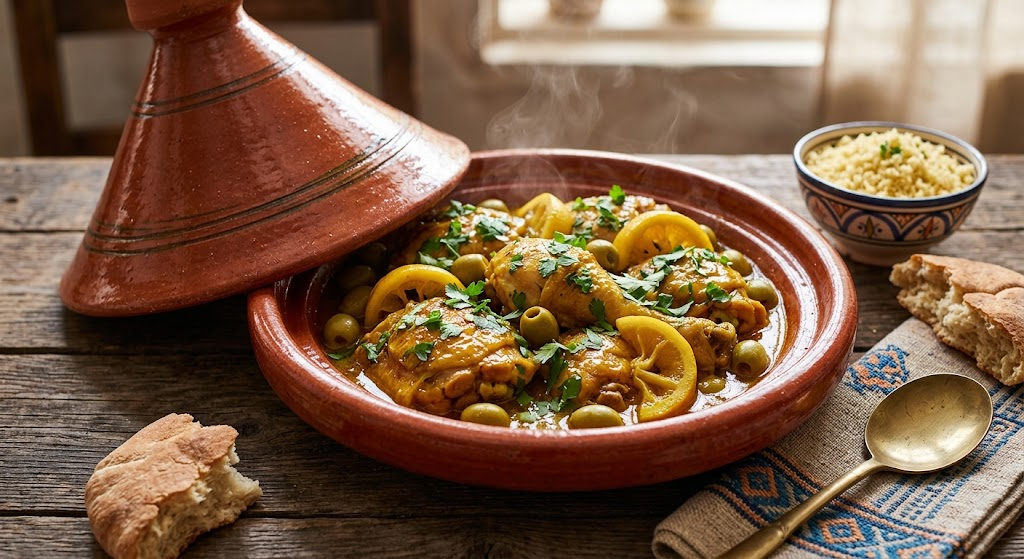
Tagine gets talked about like it’s just “Moroccan stew,” and that undersells it. The cone-shaped lid isn’t decoration — it’s the whole mechanism. Steam rises off the chicken and onions, hits the cool inside of the cone, and drips straight back down onto the food instead of escaping. That’s why a proper tagine turns out fall-apart chicken in a sauce that tastes reduced and concentrated, using barely any added liquid. This version uses the classic combination of preserved lemon and green olives, which is the flavor most people actually mean when they picture chicken tagine.
Ingredients You’ll Need
- 2 lbs (900g) bone-in chicken thighs and drumsticks, skin removed
- 3 tbsp olive oil
- 2 yellow onions, thinly sliced
- 4 garlic cloves, minced
- 1 tbsp fresh ginger, grated
- 1⁄2 tsp saffron threads, steeped in 2 tbsp warm water (optional but worth it)
- 1½ tsp ground cumin
- 1½ tsp ground ginger
- 1 tsp turmeric
- 1 tsp sweet paprika
- ½ tsp ground cinnamon
- 1 preserved lemon, pulp scraped out, rind thinly sliced
- ¾ cup green olives (picholine or Castelvetrano), pitted
- 1½ cups chicken stock or water
- 2 tbsp chopped fresh cilantro
- 2 tbsp chopped fresh parsley
- Salt and black pepper, to taste
How to Make Moroccan Chicken Tagine
- Season the chicken pieces generously with salt, pepper, and about half of the spice mix (cumin, ginger, turmeric, paprika, cinnamon). Let it sit at room temperature for 15–20 minutes while you prep everything else.
- Heat the olive oil in the base of your tagine (or a heavy Dutch oven if you don’t have one yet) over medium heat. Add the sliced onions and cook slowly, stirring occasionally, until they’re soft and just starting to turn golden — about 10 minutes. Don’t rush this; the onions are doing most of the sauce-building work here.
- Stir in the garlic, fresh ginger, the rest of the spice mix, and the saffron with its soaking water. Cook for about a minute, just until fragrant — spices burn fast, so keep it moving.
- Nestle the chicken pieces into the onions, skin-side down first, then pour in the stock. It should come about a third of the way up the chicken, not cover it — the tagine lid handles the rest.
- Bring everything to a bare simmer, then cover with the tagine lid and drop the heat to low. Let it cook undisturbed for 45–55 minutes, until the chicken is tender enough to pull apart with a fork.
- Uncover, tuck in the preserved lemon slices and olives, and cook uncovered for another 8–10 minutes to let the sauce settle and thicken slightly.
- Scatter the cilantro and parsley over the top just before serving. Taste the sauce and adjust salt — preserved lemon and olives are both salty, so go easy until the end.
From My Kitchen: The Mistake That Taught Me How a Tagine Actually Works
The first time I made this, I didn’t own a real tagine yet, so I used a Dutch oven with the lid propped slightly open — I was nervous about it boiling over onto the stove. Bad idea. Without a fully sealed lid, the steam that’s supposed to recirculate just escaped instead, and by the 40-minute mark the bottom of the pot had gone dry and started catching on the base while the chicken on top was still tough. I ended up adding stock in a panic halfway through, which diluted the sauce and made it taste thin instead of concentrated. Once I actually cooked it in a sealed tagine — lid on, no peeking — the difference wasn’t subtle. The same amount of liquid produced a glossy, clingy sauce because none of the moisture had a way to leave the pot. If you’re using a Dutch oven as a stand-in, at least make sure the lid seals tight and resist the urge to lift it and check.
Tips for the Best Chicken Tagine
- Low and slow is not optional. High heat scorches the onions on the bottom before the chicken has had time to soften.
- Preserved lemon has a completely different, fermented flavor from fresh lemon — it’s not really substitutable. If you can’t find it, use fresh lemon zest plus a bit of extra salt, knowing it’ll taste brighter and less complex.
- Bone-in, skin-removed thighs and drumsticks give you the best combination of flavor from the bone and a sauce that isn’t greasy from rendered skin fat.
- If you’re cooking in a clay tagine for the first time, season it according to the manufacturer’s instructions (usually a slow soak followed by gradual heating) before you use it, or it can crack from thermal shock.
What to Serve With Chicken Tagine
Warm, crusty bread for scooping up the sauce is the traditional approach, and honestly the best one — you don’t want to waste a drop of it. Couscous is the other classic pairing if you want something more substantial. A simple chopped tomato and cucumber salad on the side cuts through the richness nicely.
Frequently Asked Questions
Can I make chicken tagine without an actual tagine pot?
Yes, a heavy Dutch oven with a tight-fitting lid will get you most of the way there. You’ll lose some of the condensation-recycling effect of the cone shape, so the sauce may reduce a little more than it would in a true tagine — keep an eye on the liquid level and add a splash of stock if it looks like it’s drying out.
What’s the real difference between clay and cast iron tagines?
Clay tagines heat more gently and evenly, which suits the slow, low simmer this dish needs, but they’re fragile and need to be seasoned and cared for. Cast iron tagines are far more durable and work on more stovetop types, but they hold and transfer heat more aggressively, so you have to watch the heat level more closely to avoid scorching.
Can I use chicken breast instead of thighs?
You can, but it’s not the better choice here. Breast meat dries out over the long simmer time this dish needs, while thighs and drumsticks stay moist and practically fall off the bone.
How long does leftover tagine keep?
Stored in an airtight container in the fridge, it keeps for 3–4 days, and the flavor actually improves by the second day. It also freezes well for up to 3 months.
If you don’t already have the right pot for this, we compared clay and cast iron options in our guide to the best tagine pots, including which size actually makes sense for a family meal.

Rimi Sultana is a home cook from Bangladesh who has cooked for her family every day for the past five years and writes about it at Smart Cooks. Perpetually testing whether internet-famous recipes actually work in a regular home kitchen. Say hello on Facebook or through the contact page.