As an Amazon Associate, Smart Cooks earns from qualifying purchases. Product prices and availability are shown on Amazon and may change.
Global flavor fusion is one of the biggest food trends of 2026 — Korean condiments showing up in kitchens that have never made bibimbap, gochujang folded into everything from mac and cheese to marinades. As a Bengali home cook, I kept seeing this trend and thinking about how naturally gochujang actually fits into the flavor logic we already use. Bengali cooking leans hard on mustard, chili, and a certain fermented depth — shorshe, kasundi, fermented hilsa — so a fermented Korean chili paste isn’t really a foreign idea dropped into our food. It’s a cousin ingredient, and it turns out gochujang makes an excellent marinade for the kind of grilled or pan-seared fish and chicken we already cook at home.
Some links in this post are affiliate links. If you buy through them we may earn a small commission at no extra cost to you — it never changes which products we recommend.
What Actually Matters
Why Gochujang Works With Bengali Flavors
Gochujang is fermented chili paste built on glutinous rice, fermented soybean, and red chili — it’s sweet, salty, savory, and slow-building spicy all at once, with an umami depth that comes from the fermentation, not just added sugar. That profile overlaps more than you’d expect with kasundi (our fermented mustard-and-chili condiment) and with the way we build marinades using mustard oil, ginger, garlic, and chili paste. The difference is gochujang brings a rounder sweetness and a stickier glaze quality, which makes it especially good on fish and chicken that you want to char slightly at the edges.
Balancing It So It Doesn’t Taste Like Someone Else’s Recipe
The mistake people make with fusion cooking is using the new ingredient exactly the way its home cuisine does and calling it fusion. For this to taste like a Bengali kitchen made it, gochujang needs to sit alongside our actual aromatics — fresh ginger-garlic paste, a real hit of mustard oil (not a neutral oil substitute), and a green chili or two for a sharper, fresher heat than gochujang’s slow burn provides on its own. A small spoon of kasundi mixed in bridges the two flavor systems instead of just placing them side by side.
What to Marinate
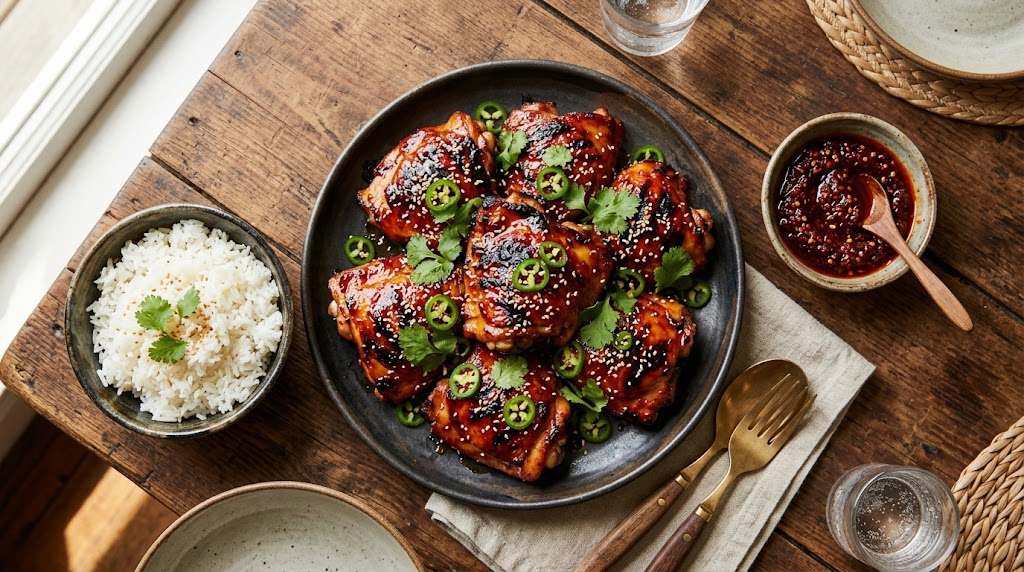
Bhetki (barramundi) or any firm white fish holds up beautifully to a gochujang-mustard marinade and a hot pan or grill. Bone-in chicken thighs are even more forgiving — the fermented paste tenderizes slightly as it sits, and the skin gets a proper sticky char. I wouldn’t use this marinade on something delicate like prawns; it’s a bit heavy for that and mustard-kasundi based marinades do that job better on their own.
From My Kitchen
The first time I made this, I used way too much gochujang because I was trying to taste “Korean” instead of trusting the balance, and the chicken thighs came out tasting almost exclusively sweet, with the mustard barely registering. My mother, who has strong opinions about mustard oil being under-used in general, tried a bite and just said “kasundi kothay?” — where’s the kasundi. She was right. The version that actually worked was two tablespoons of gochujang balanced against one tablespoon of kasundi, a full tablespoon of mustard oil, and enough grated ginger-garlic that you could smell it before you could taste the sweetness. I marinate the thighs for at least four hours now, sometimes overnight, and finish them under the broiler for the last few minutes specifically to get the edges properly charred and slightly bitter against all that sweetness — that contrast is what makes it work instead of just tasting like a sweet glaze.
Worth Considering
Any standard gochujang works for this, but the consistency and heat level vary more between brands than you’d expect. Bibigo Korean-Style Hot & Sweet Gochujang is the most widely available option and a reliable starting point if this is your first jar — it’s on the sweeter, milder end, which is actually easier to balance against mustard oil the first time you try this. If you want something closer to traditional fermentation with more funk and less added sweetness, O’Food Gochujang is a good step up once you know how much heat you actually want.
Serve it the way you’d serve any Bengali grilled fish or chicken — a simple bhat (rice), a sharp onion-lemon salad to cut the sweetness, and maybe a wedge of lime on the side. I’ve also had good luck flaking leftover gochujang chicken into a paratha wrap the next day with a smear of plain yogurt, which cools down the sweetness-heat combination nicely for a lunch that isn’t trying to be a full meal.
Bibigo Korean-Style Hot & Sweet Gochujang — milder and sweeter, which is easier to balance against mustard oil the first time.
O’Food Gochujang — more traditional fermentation, less added sweetness, once you know the heat you want.
Frequently Asked Questions
Can I use this marinade on vegetables instead of fish or chicken?
Yes, particularly on eggplant (begun) or cauliflower (fulkopi). Cut them into thick pieces so they hold together under the broiler, cut the marinating time to about 30-45 minutes since vegetables absorb flavor faster than protein, and expect a slightly different result — the char and stickiness work the same way, but without the fat from chicken skin the glaze can catch and burn a little faster, so watch it closely in the last few minutes.
Is gochujang very spicy, and can I make this milder?
Most standard gochujang sits in a moderate heat range — noticeable but not aggressive, closer to a mild-to-medium chili paste than a hot sauce. If you want it milder, cut the gochujang slightly and add a touch of honey or brown sugar to keep the sweetness the recipe depends on. If you want it hotter, that’s where a fresh green chili chopped into the marinade belongs, rather than adding more gochujang, since more gochujang just adds more sweetness alongside the heat.
Does this marinade work in an air fryer instead of a broiler?
Yes, and it’s actually a good use case — run bone-in thighs skin-side up at around 380°F for 20-25 minutes, checking at the 18-minute mark since the sugar in gochujang can go from perfectly charred to burnt quickly in the concentrated heat of an air fryer basket. Keep a close eye on it the first time you try it in your specific machine, since air fryer wattage varies enough that timing isn’t perfectly transferable between models.

Rimi Sultana is a home cook from Bangladesh who has cooked for her family every day for the past five years and writes about it at Smart Cooks. Perpetually testing whether internet-famous recipes actually work in a regular home kitchen. Say hello on Facebook or through the contact page.