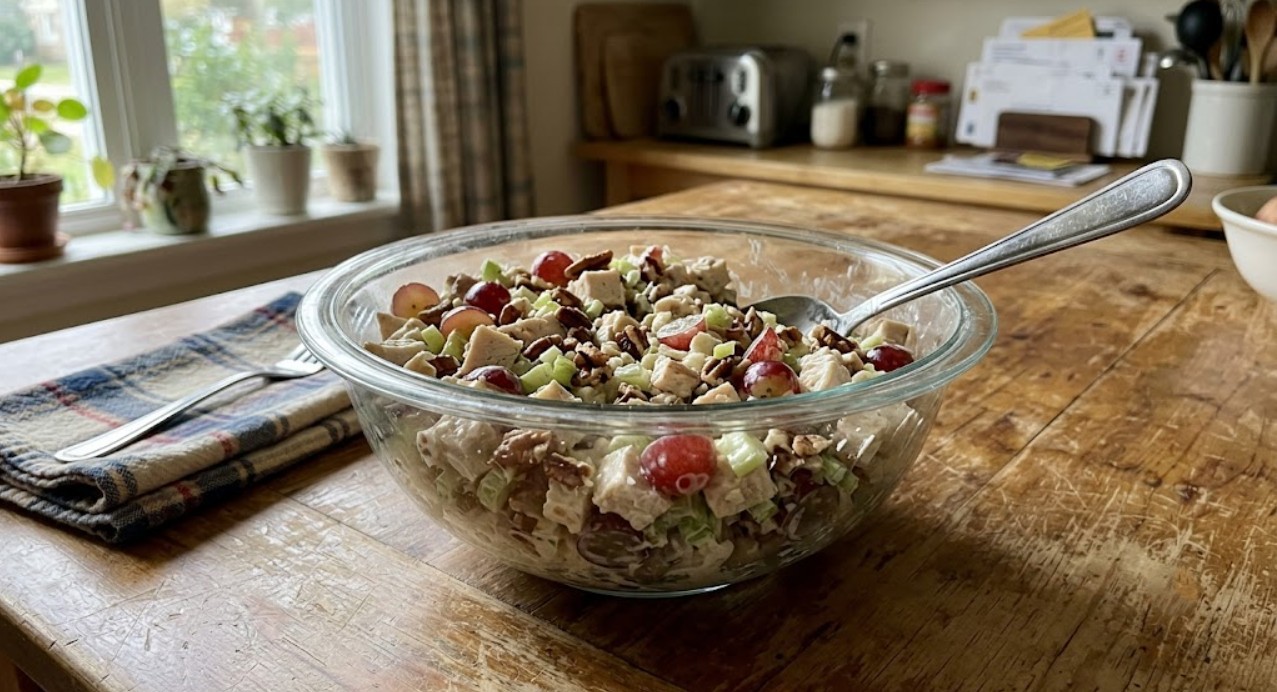
Let’s clear something up first, because most pages about this recipe won’t: there is no verified historic “Arlington” chicken salad. Some sites claim it came from a hotel in Virginia, others say Texas — none of them cite a real source, and the stories contradict each other. What the name actually refers to, as it’s used today, is a style: the classic Southern chicken salad with tender poached chicken, sweet grapes, crunchy celery and toasted pecans in a creamy, lightly tangy dressing. That salad is very real, very good, and this is how to make it properly.
Ingredients
| Ingredient | Amount | Notes |
|---|---|---|
| Chicken breasts | 2 large (about 700g) | Or 3 cups shredded rotisserie chicken. |
| Mayonnaise | ½ cup | |
| Plain Greek yogurt or sour cream | ¼ cup | Lightens the dressing and adds tang. All mayo also works. |
| Dijon mustard | 2 teaspoons | |
| Lemon juice | 1 tablespoon | |
| Celery | 2 stalks, finely diced | |
| Red grapes | 1 cup, halved | |
| Pecans | ½ cup, toasted and chopped | Toasting is not optional — it’s the difference. |
| Red onion | 2 tablespoons, minced | Soak in cold water 5 minutes to mellow the bite. |
| Salt and black pepper | to taste |
Instructions
1. Poach the chicken gently. Place the breasts in a pot, cover with cold water (or stock) by 3 cm, add a big pinch of salt, and bring to a bare simmer — small bubbles, never a rolling boil. Cook 12–15 minutes until 74°C (165°F) inside. Boiled-hard chicken turns stringy; gently poached chicken stays silky, and in a salad where chicken is the whole show, this step decides everything.
2. Cool completely, then dice. Let the chicken rest until fully cool (refrigerate 20 minutes if you’re impatient). Warm chicken melts the dressing into an oily mess. Dice into small, even cubes — about 1 cm.
3. Toast the pecans. Dry skillet, medium heat, 2–3 minutes, stirring, until they smell nutty. Cool before mixing so they stay crunchy.
4. Make the dressing and combine. Whisk mayo, yogurt, Dijon, lemon juice, ½ teaspoon salt and plenty of black pepper. Fold in chicken, celery, grapes, onion, and pecans until just coated — don’t overmix or the grapes bruise.
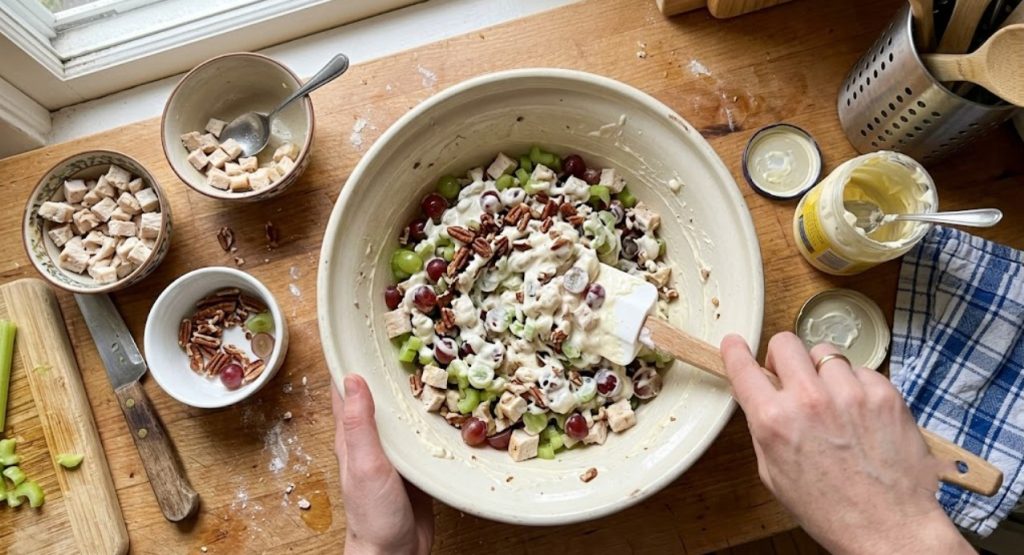
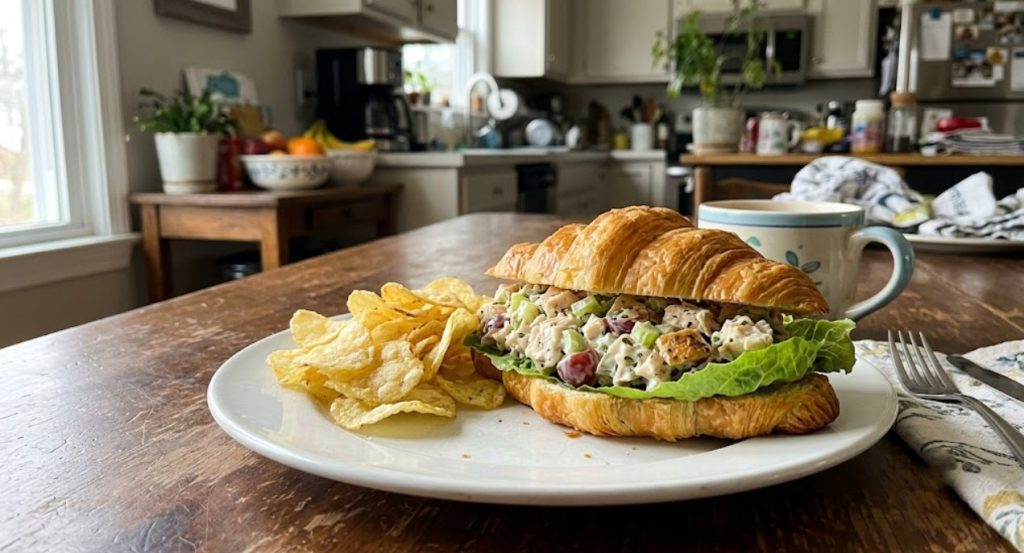
5. Chill 30 minutes before serving. This rest transforms it from “ingredients in dressing” into an actual chicken salad. Serve on croissants, toasted sourdough, lettuce cups, or with crackers.
Make It Yours
Apples + walnuts instead of grapes + pecans for an autumn version; a teaspoon of curry powder in the dressing for a Coronation-style twist; fresh dill or tarragon if you like it herby.
Storage
Airtight in the fridge, 3–4 days. Don’t freeze — mayonnaise-based salads separate and weep when thawed. If meal-prepping, store the pecans separately and stir in when serving.
FAQ
What is Arlington chicken salad?
As the term is commonly used, it’s the classic Southern-style chicken salad with grapes, celery, and pecans in a creamy dressing — not a documented recipe from a specific restaurant, despite what some sites claim.
Can I use canned chicken?
You can, but texture suffers noticeably. Rotisserie chicken is the better shortcut.
Why is my chicken salad watery?
Usually under-drained ingredients: pat the chicken dry after poaching and dry the celery and grapes after washing.
What Makes It Specifically Arlington Chicken Salad
The version that gets called Arlington chicken salad is defined by restraint rather than additions. It is poached chicken, good mayonnaise, celery for crunch, and enough acid and seasoning to keep it from tasting flat — no grapes, no apple, no curry powder, no toasted almonds. Those versions are all perfectly good chicken salads, but they are different dishes. The Southern classic leans on texture and seasoning rather than competing flavours.
That restraint is also what makes it easy to get wrong. With four main ingredients, a dry chicken breast or a bland mayonnaise has nowhere to hide. The two things that separate a very good version from an ordinary one are how the chicken is cooked and how finely everything is cut.
Poaching Is What Keeps the Chicken Tender
Roasted or pan-seared chicken makes a drier salad, because the surface has lost a lot of moisture before it is ever chopped. Poaching gently — bringing the water to a bare simmer, then taking it off the heat and letting the breasts finish in the residual heat — keeps the meat moist enough that it does not need extra mayonnaise to compensate. Cooking to 74°C and no further is the target; every degree beyond that is squeezed-out moisture.
Let it cool in the poaching liquid rather than on a plate. The meat reabsorbs a little of what it lost, and it seasons slightly as it sits, particularly if you salted the water properly. Then shred or dice while it is cool, never while hot — warm chicken breaks down into strings and warm mayonnaise separates.
Texture: Dice, Do Not Shred
| Element | Cut | Why |
|---|---|---|
| Chicken | Small dice, about 1 cm | Holds shape in a sandwich, does not turn pasty |
| Celery | Fine dice | Crunch in every bite rather than occasional strings |
| Onion or shallot | Very fine mince | Flavour without raw bite |
| Herbs | Roughly chopped, added last | Stay fresh rather than bruising |
Season in stages and taste as you go. Salt, black pepper, a squeeze of lemon and a small amount of Dijon do most of the work; the lemon in particular stops the mayonnaise tasting heavy. Add the mayonnaise gradually rather than all at once, because how much you need depends on how moist the chicken is, and an over-dressed chicken salad cannot be rescued.
Make-Ahead and Serving
It is better after an hour or two in the fridge, which lets the celery soften very slightly and the seasoning settle through. Beyond about three days it starts to weep as the salt draws water out of the celery and onion. If you are making it well ahead, hold back the herbs and a spoonful of the mayonnaise and stir them in just before serving, which brings it back to tasting freshly made.
Serve it on soft white bread for the classic sandwich, in a buttery croissant, on crackers as an appetiser, or in lettuce cups. The one thing worth avoiding is heavily flavoured bread — sourdough or rye compete with a salad built specifically around restraint.
Can I use rotisserie chicken instead of poaching?
Yes, and it is the practical shortcut most people use — just be aware it makes a different salad. Rotisserie meat is drier and already seasoned, often heavily, so hold back on the salt and expect to need a little more mayonnaise or a spoonful of the pan juices. Use the breast and thigh meat together rather than breast alone, since the thigh keeps the mixture from feeling dry.
How long does chicken salad keep in the fridge?
Three days in an airtight container, kept properly cold. Past that the celery and onion release water and the texture goes loose and slightly watery, even though it may still be safe. Do not leave it out at room temperature for more than an hour or two, particularly in warm weather — a mayonnaise-based salad with cooked chicken is exactly the kind of food that should stay cold. It does not freeze well; the mayonnaise splits on thawing.

Rimi Sultana is a home cook from Bangladesh who has cooked for her family every day for the past five years and writes about it at Smart Cooks. Perpetually testing whether internet-famous recipes actually work in a regular home kitchen. Say hello on Facebook or through the contact page.