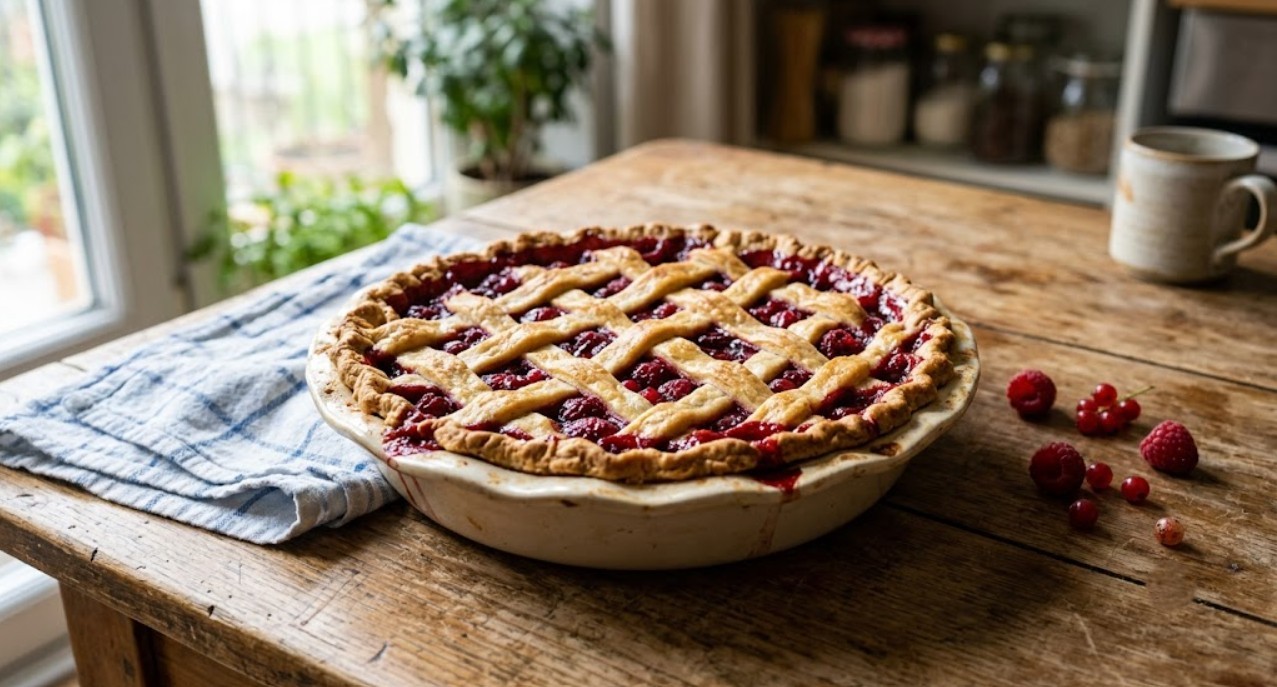
If you have a goumi bush, you know the annual problem: for two weeks in late spring it buries itself in speckled red berries, and then you have to figure out what to do with several kilos of fruit that’s too tart to snack on in quantity. The answer is pie. Goumi’s bright, sour-cherry-meets-cranberry flavor turns into a spectacular filling once it meets sugar and heat — but there are two things this fruit demands that ordinary berry pie recipes won’t tell you: you have to deal with the seeds, and you have to pick the berries properly ripe. Get those two right and everything else is easy.
What Are Goumi Berries?
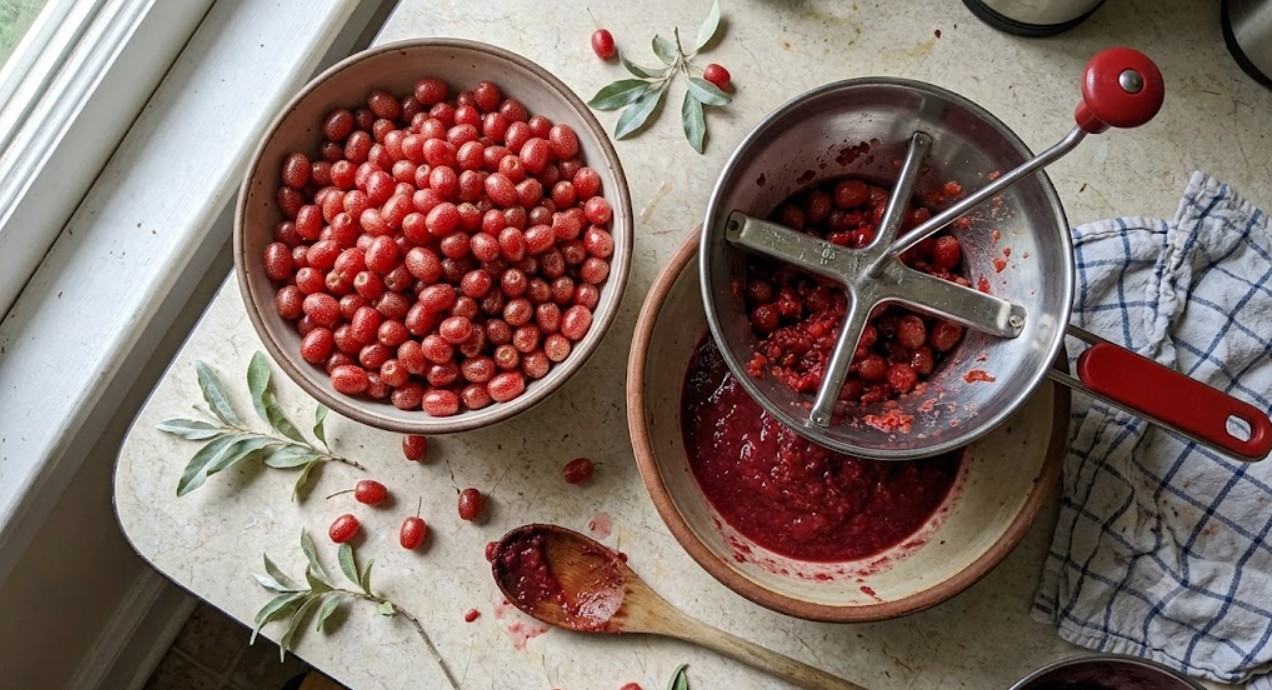
Goumi (Elaeagnus multiflora) is a hardy shrub originally from East Asia, increasingly planted in North American permaculture gardens because it fixes nitrogen and produces heavily with zero fuss. The berries are small, bright red with silvery-gold speckles, and each contains one soft, elongated seed. Underripe goumi is mouth-puckeringly astringent; fully ripe goumi — when the berry is deep red, slightly soft, and lets go of the branch with a gentle tug — is pleasantly tart with a plummy sweetness. That difference is the whole game for pie: astringent berries make an astringent pie, and no amount of sugar fixes it.
The Seed Question
Every goumi berry has a seed, and they’re too big to ignore in a pie. Two ways to handle it:
- The food mill route (recommended): simmer the berries 5 minutes with a splash of water until they burst, then pass through a food mill or coarse sieve. You get a thick seedless pulp — this makes a smooth, jammy pie filling and takes 15 minutes total.
- The patience route: pit them raw by squeezing each berry. Only worth it if you want whole-berry texture and have a podcast queued up. For a full pie you’ll need to squeeze roughly a thousand berries. The food mill exists for a reason.
Ingredients
Filling:
| Ingredient | Amount | Notes |
|---|---|---|
| Ripe goumi berries | 6 cups (about 900g) | Yields roughly 3 cups of pulp after milling. |
| Sugar | ¾ to 1 cup | Start at ¾; goumi batches vary in tartness. Taste the pulp. |
| Cornstarch | 4 tablespoons | Goumi pulp is juicy — don’t reduce this. |
| Lemon juice | 1 tablespoon | Sharpens the fruit flavor. |
| Vanilla extract | 1 teaspoon | Rounds out the tartness. |
| Salt | ¼ teaspoon | |
| Butter | 1 tablespoon, cubed | Dotted over the filling. |
Crust: Your favorite double-crust pastry (homemade or two store-bought rounds). A lattice top is ideal — goumi filling releases steam and the lattice shows off the deep ruby color.
Egg wash: 1 egg beaten with 1 tablespoon water.
Instructions
- Make the pulp. Rinse the berries, tip them into a pot with 2 tablespoons of water, and simmer over medium heat about 5 minutes, stirring, until they collapse. Run through a food mill or press through a coarse sieve. Discard the seeds. You want about 3 cups of thick pulp.
- Taste and season. Stir sugar into the warm pulp starting at ¾ cup — it should taste boldly sweet-tart, a touch sweeter than you’d want to eat with a spoon (baking mutes sweetness). Whisk in cornstarch, lemon juice, vanilla, and salt. Let it cool 15 minutes; a warm filling melts pastry.
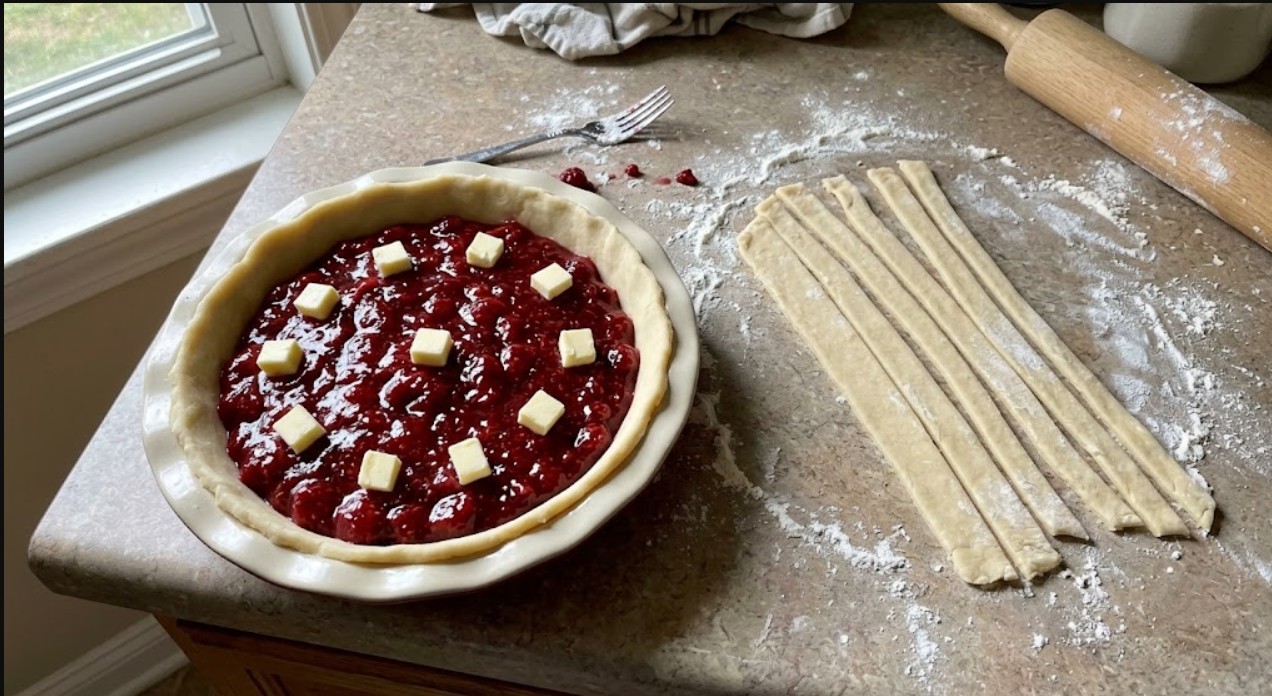
- Fill and top. Pour the filling into a pastry-lined 9-inch pie dish, dot with butter, and weave the lattice (or add a full top crust with 4–5 generous vents). Crimp the edges, brush with egg wash, and sprinkle coarse sugar over the top if you have it.
- Bake hot, then moderate. Start at 220°C (425°F) for 15 minutes to set the bottom crust, then reduce to 180°C (350°F) and bake another 35–40 minutes, until the crust is deep golden and the filling bubbles thickly through the lattice. Bubbling is your doneness signal — cornstarch doesn’t fully thicken until it boils.
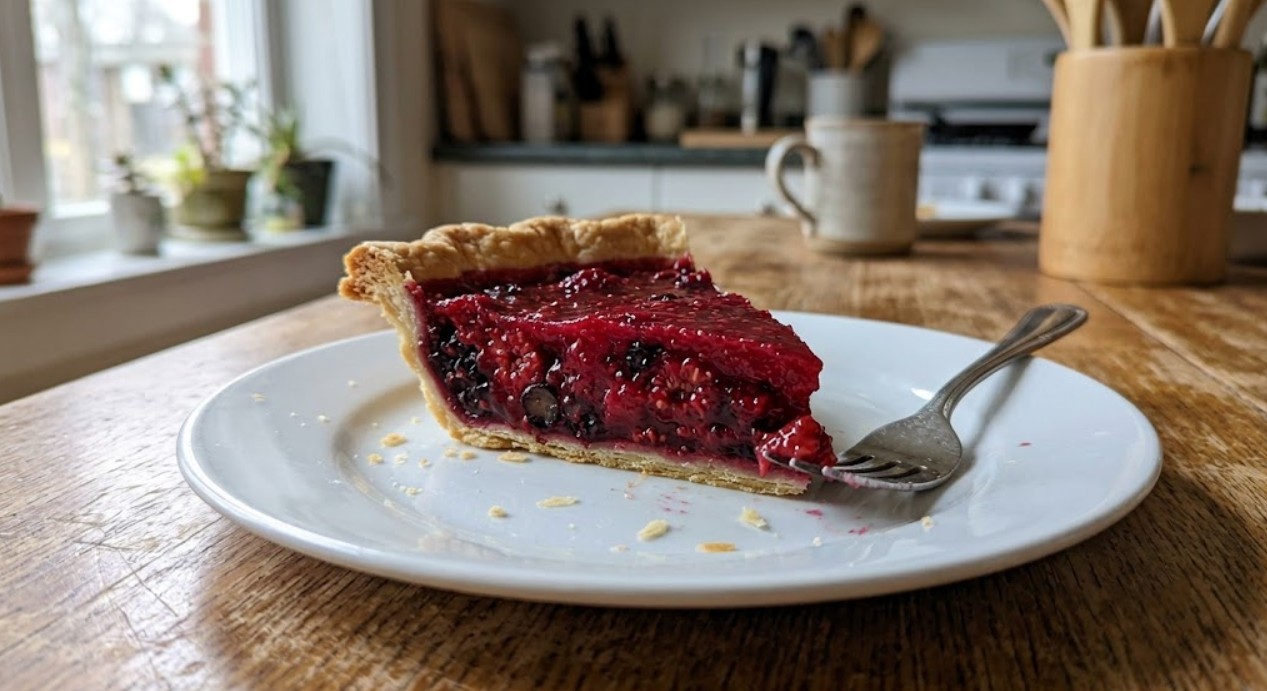
- Cool completely. Really. At least 3 hours at room temperature. Goumi filling is loose when warm and sets to a perfect sliceable jelly as it cools. Cut early and you’ll have goumi soup in a crust — delicious, but not a photo you’d post.
If Your Pie Tastes Astringent
That dry, tannic grip on the tongue means underripe berries got in. For the current pie: serve it warm with vanilla ice cream — or a spoonful of thick schlag, which masks astringency remarkably well. For next time: pick only berries that fall into your hand with a light touch, and when in doubt, leave the bush alone for three more days. Ripe goumi is dramatically better than almost-ripe goumi.
What to Do with Leftover Pulp
Milled goumi pulp keeps 4–5 days refrigerated and freezes for a year. Beyond pie: stir it into jam (equal weight sugar, boil to 104°C), swirl it through yogurt, shake it into a goumi lemonade, or reduce it with a little honey into a sauce that’s outstanding over roast pork or duck.
FAQ
Can I use frozen goumi berries?
Yes — freeze them raw right after picking, then simmer and mill straight from frozen. The pie is indistinguishable.
Can I substitute goumi in a cherry pie recipe?
Roughly, yes — goumi pulp behaves like a juicier, tarter sour cherry filling. Keep the full amount of thickener and expect to use a bit more sugar.
Are goumi berries safe to eat raw?
Completely, once ripe. The seed is also technically edible but unpleasant; that’s what the food mill is for.
When are goumi berries ripe?
Typically late May through June depending on climate — deep red, speckled, slightly soft, and detaching with almost no resistance.

Rimi Sultana is a home cook from Bangladesh who has cooked for her family every day for the past five years and writes about it at Smart Cooks. Perpetually testing whether internet-famous recipes actually work in a regular home kitchen. Say hello on Facebook or through the contact page.