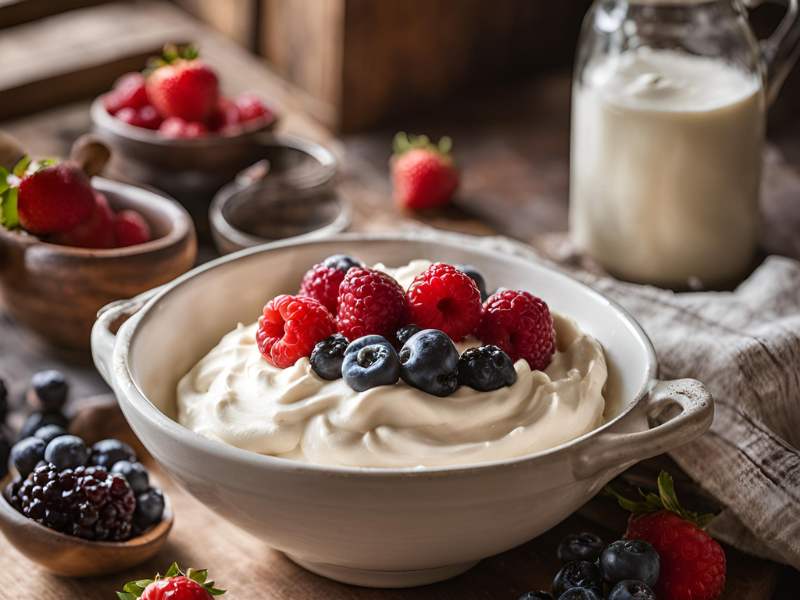
If you’ve ever finished a meal at Peter Luger with a slice of pecan pie buried under a mountain of schlag, you know it’s nothing like the whipped cream from a can. It’s dense, cold, barely sweet, and thick enough to hold a spoon upright. The good news: you can get very close at home with three ingredients and about ten minutes. The trick isn’t a secret ingredient — it’s restraint with the sugar and knowing exactly when to stop whipping.
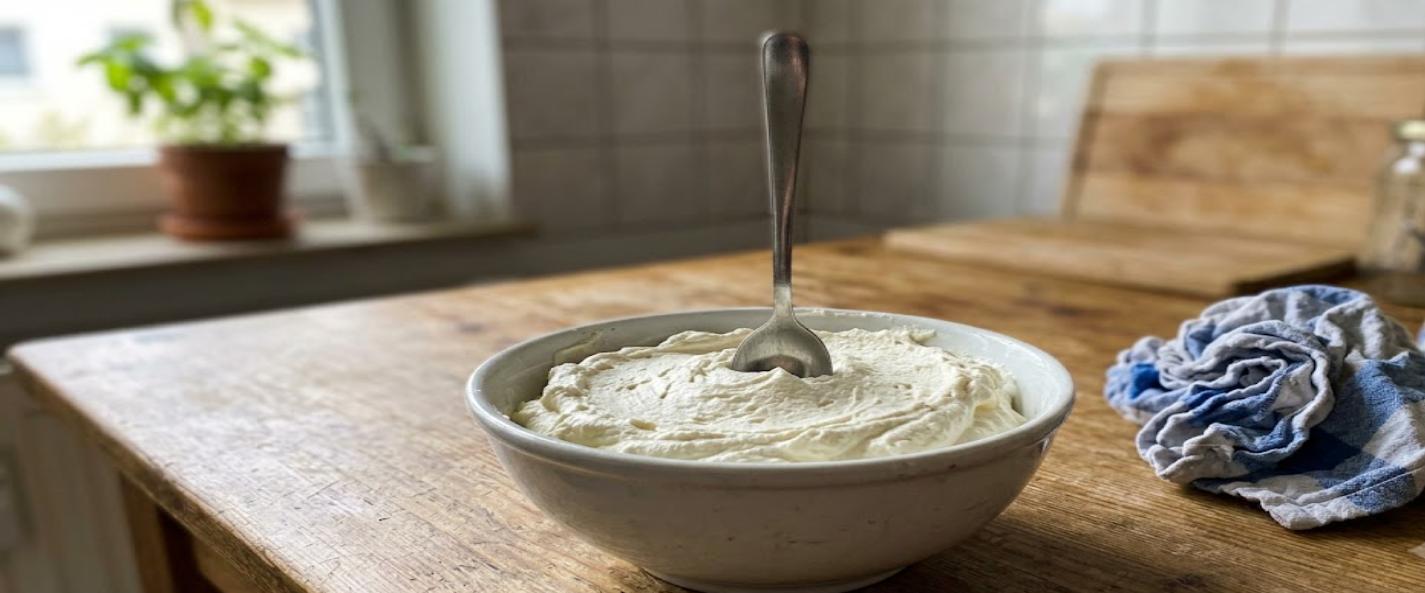
What Makes Peter Luger’s Schlag Different
“Schlag” is short for the German Schlagsahne — whipped cream. But what Peter Luger serves in Brooklyn is a specific style of it, and three things set it apart from ordinary whipped cream:
It’s whipped past soft peaks into firm, dense territory. Regular dessert whipped cream is airy and billowy. Schlag is heavy and spoonable, closer to a soft frosting than a cloud.
It’s barely sweetened. This is the part most copycat recipes get wrong. If your schlag tastes like the topping on a sundae, you’ve added too much sugar. Luger’s version lets the cream itself carry the flavor.
It’s served very cold, in large quantities. A polite dollop misses the point.
Ingredients
| Ingredient | Amount | Notes |
|---|---|---|
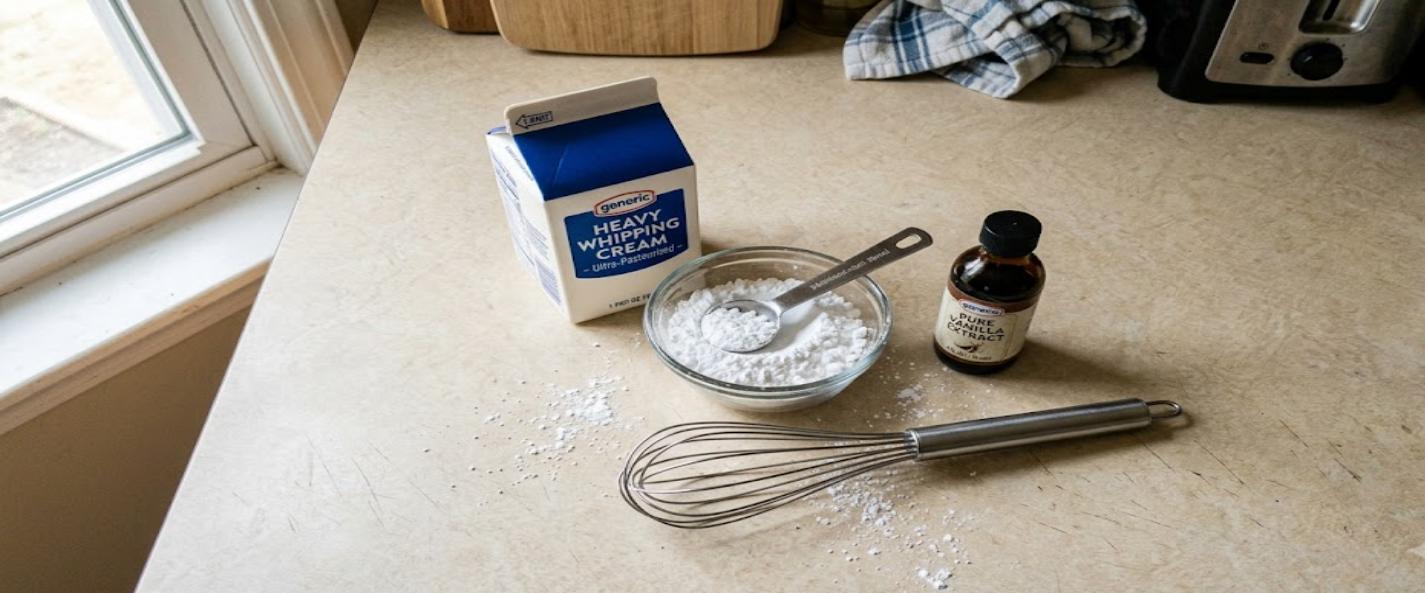
| Heavy cream (36%+ fat) | 2 cups (475 ml) | Cold from the fridge. Higher fat = denser schlag. Avoid “whipping cream” (30-35%) if you can find heavy cream. |
| Powdered sugar | 2 tablespoons | Start here. Taste before adding more — the ceiling is 3 tbsp. |
| Vanilla extract | ½ teaspoon | Optional. Luger’s version is very subtle; some argue there’s none at all. |
That’s it. No gelatin, no cream cheese, no stabilizers. Those tricks are for whipped cream that has to sit out at a party — schlag is meant to be eaten cold and fresh.
Instructions
1. Freeze your bowl and beaters for 15 minutes. This is the step people skip, and it’s the difference between whipping for 3 minutes and whipping for 8. Cold cream in a cold metal bowl whips faster and holds a tighter, denser structure. Glass works too; plastic is the worst option because it holds onto warmth and traces of oil.
2. Pour in the cold cream and start on low speed. With a hand mixer or stand mixer with the whisk attachment, begin on low for about 30 seconds — this prevents cream from spraying across your kitchen and builds smaller, more stable bubbles.
3. Increase to medium-high and whip to soft peaks (2–3 minutes). Soft peaks means the cream mounds up and the peak flops over when you lift the whisk. Most whipped cream recipes stop here. For schlag, keep going.
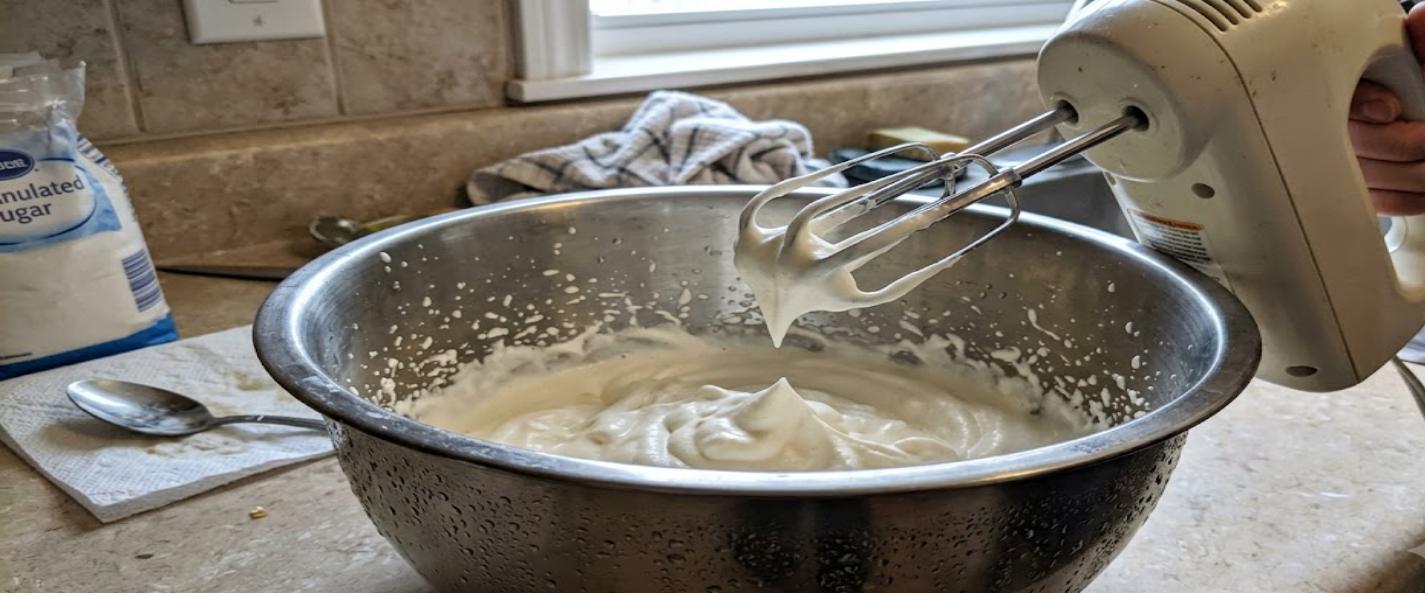
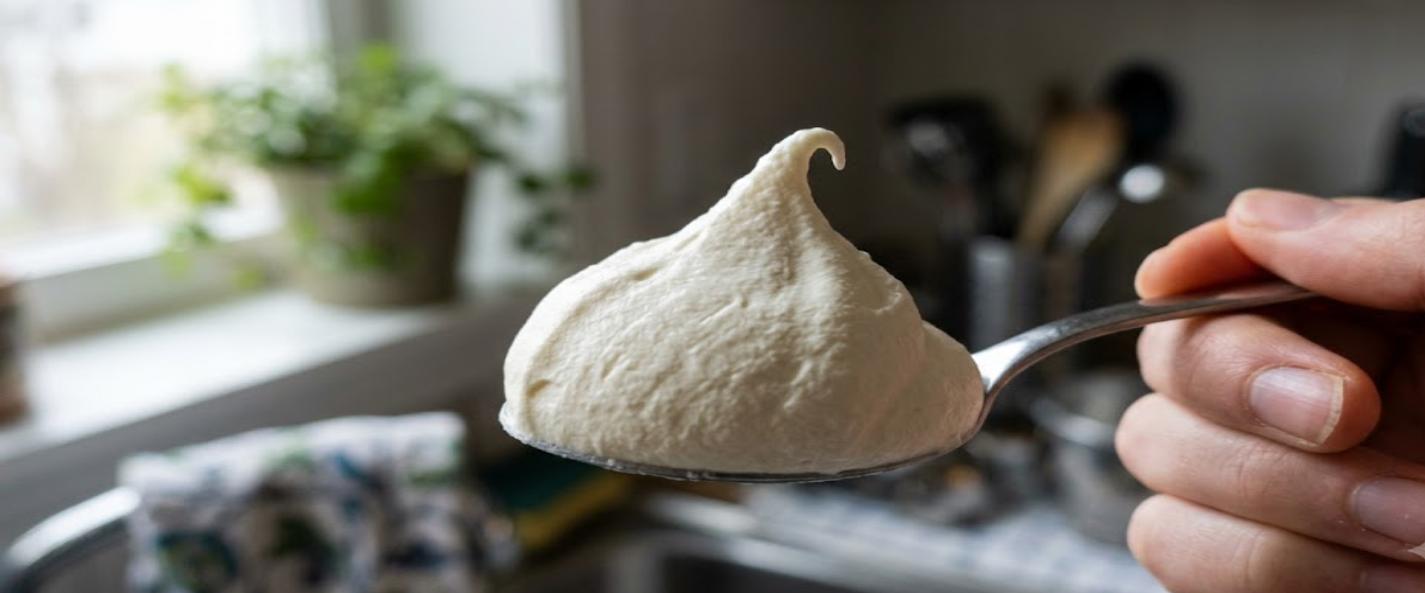
4. Add sugar and vanilla, then whip to firm peaks — and stop early. Sprinkle in the powdered sugar and vanilla, then continue on medium (not high — you want control now). You’re looking for the moment the cream turns from glossy to slightly matte, and the whisk leaves defined trails that don’t melt back. The peak should stand mostly upright with just a slight bend at the tip.
The stop signal: the instant the surface loses its shine and looks matte, stop. From matte, you are roughly 20–30 seconds of whipping away from grainy, separated cream (the first stage of butter). If you’re unsure, stop and check — you can always whip 10 more seconds, but you can’t un-whip.
5. Chill for 20–30 minutes before serving. Straight out of the mixer, schlag is good. After half an hour in the fridge, it tightens up into that dense, cold, scoopable texture that makes it feel like the real thing. Serve it cold, and serve too much.
If You Over-Whip It
It happens. If the cream turns grainy but hasn’t fully separated: pour in 2–3 tablespoons of fresh cold cream and fold it in gently by hand with a spatula. This usually smooths it back out. If it has visibly separated into clumps and liquid, you’ve made the first stage of butter — keep whipping, rinse it, and at least you’ll have very good butter for toast.
What to Serve It With
At Peter Luger it comes with pecan pie, cheesecake, apple strudel, and the hot fudge sundae. At home, it’s just as good on:
- Fresh strawberries or peaches (the barely-sweet cream lets the fruit taste louder)
- A slice of chocolate cake, where sweet frosting would be too much
- Strong black coffee, spooned on top and left to melt in
- Honestly, a spoon
- Crisp, hot Armenian beeshee (fried dough), where a cold spoonful balances the crackly fried edges
Storage
Covered in the fridge, schlag holds its texture for about 24 hours. After that it starts to weep liquid at the bottom — you can re-whip it by hand for 20–30 seconds to bring it back once. Don’t freeze it; the texture doesn’t survive.
FAQ
Is schlag just whipped cream?
Technically yes — the word means whipped cream in German. But the Peter Luger style refers to a denser, less sweet, firmly whipped version, which is what this recipe makes.
Can I make it without a mixer?
Yes, with a balloon whisk, a cold bowl, and about 6–8 minutes of serious arm work. The cold-bowl step matters even more by hand.
Why is my whipped cream not thickening?
Almost always one of three things: the cream is too warm, the fat content is too low (check the label — you want 36% or higher), or the bowl was warm/greasy. Ultra-pasteurized cream also whips slower than regular pasteurized cream.
How is schlag different from Chantilly cream?
Chantilly is the French style: soft peaks, noticeably sweet, often heavy on vanilla. Schlag (Luger style) is the opposite direction — firm, dense, and barely sweetened.

Rimi Sultana is a home cook from Bangladesh who has cooked for her family every day for the past five years and writes about it at Smart Cooks. Perpetually testing whether internet-famous recipes actually work in a regular home kitchen. Say hello on Facebook or through the contact page.