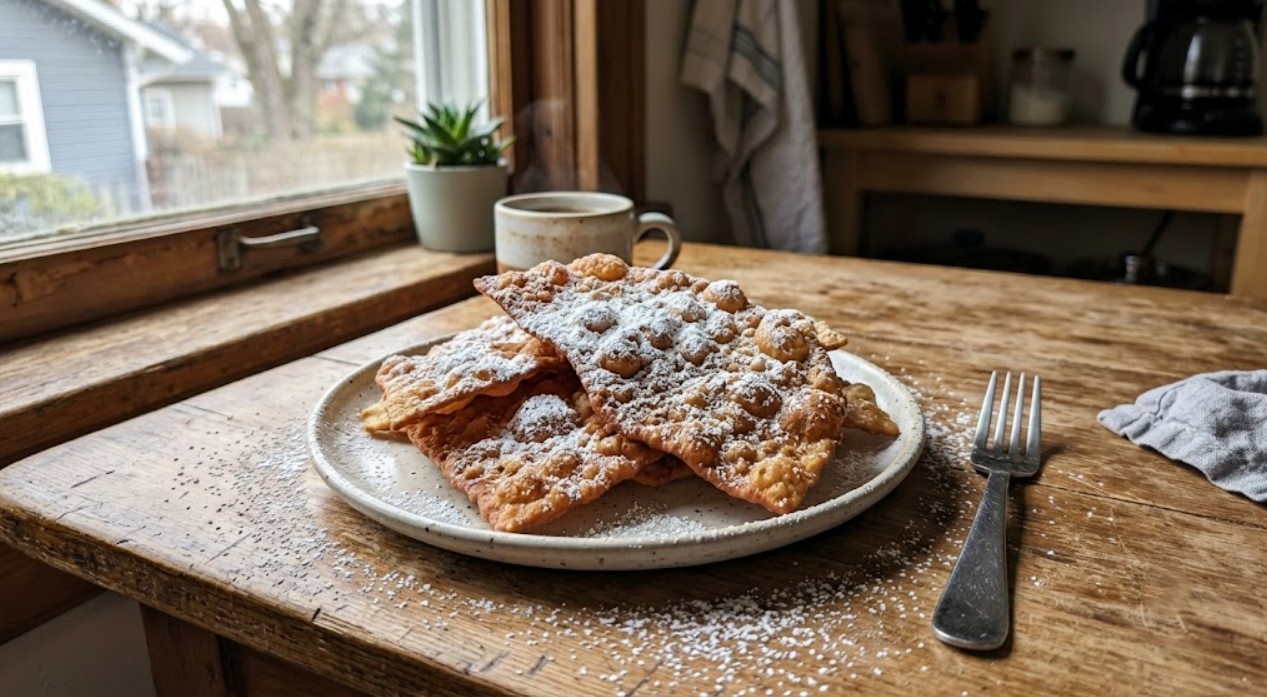
Beeshee (also spelled bishi) is a traditional Armenian fried dough — thin, crispy at the edges, chewy in the middle, and served hot with a generous snowfall of sugar. If you’ve heard the word recently, it’s almost certainly because of the Kardashians: beeshee is their family’s Christmas-morning tradition, a recipe passed down from their Armenian grandmother Helen Kardashian, and every December when Kourtney posts about making the dough, thousands of people search the word for the first time. The family keeps their exact recipe private — but beeshee itself is a well-known dish in Armenian home cooking, and this version follows the traditional method.
What Exactly Is Beeshee?
Think of it as sitting somewhere between a crepe, a doughnut, and fry bread. A simple yeasted batter or soft dough rests until bubbly, then gets fried in hot oil until it puffs and blisters — golden brown and crisp outside, tender and slightly chewy inside. It’s eaten immediately, usually buried in granulated or powdered sugar, sometimes with honey, jam, or syrup instead. In different Armenian families you’ll hear related names for close cousins of the dish — bishi, zing-a-ling, ponchik — all variations on the theme of fried dough made for special mornings. It’s a special-occasion food precisely because it demands to be eaten fresh from the pan; beeshee that sits around loses its magic within the hour.
Why the Overnight Rest Matters
The traditional method — the same one the Kardashians describe — makes the dough the night before and fries it in the morning. That long, slow rise does two things: the yeast develops real flavor (a faint tang that plain quick doughs never get), and the well-fermented batter blisters dramatically in hot oil, which is where those crispy bubbled edges come from. You can shortcut it with a 1.5–2 hour warm rise, and it will still be good — but the overnight version is noticeably better, and it makes the morning easy: heat oil, fry, eat.
Ingredients
| Ingredient | Amount | Notes |
|---|---|---|
| All-purpose flour | 2 cups (250g) | |
| Warm water | 1¼ cups | Warm to the touch, not hot (about 40°C / 105°F). |
| Active dry yeast | 2 teaspoons | |
| Sugar | 1 tablespoon (for the dough) | Plus lots more for serving. |
| Eggs | 2 | Room temperature. |
| Salt | ½ teaspoon | |
| Neutral oil for frying | 2–3 cups | Enough for about 2 cm depth in the pan. |
Instructions
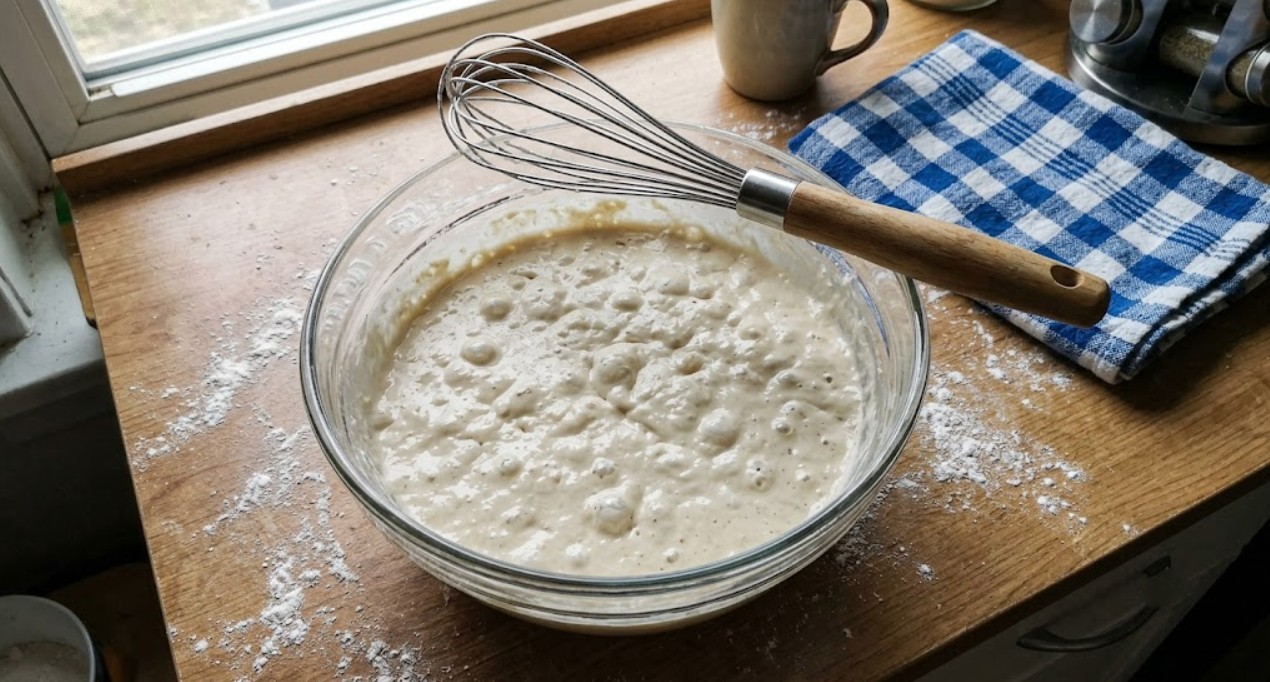
- Make the batter (5 minutes, the night before). Dissolve the yeast and sugar in the warm water and let it sit 5–10 minutes until foamy. Whisk in the eggs, then the flour and salt, until you have a smooth, thick, pourable batter — thicker than pancake batter, looser than bread dough.
- Rest it. Cover the bowl and refrigerate overnight (8–14 hours). Short version: cover and leave in a warm spot for 1.5–2 hours until doubled and bubbly. If refrigerated, let it sit at room temperature for 30–45 minutes before frying.
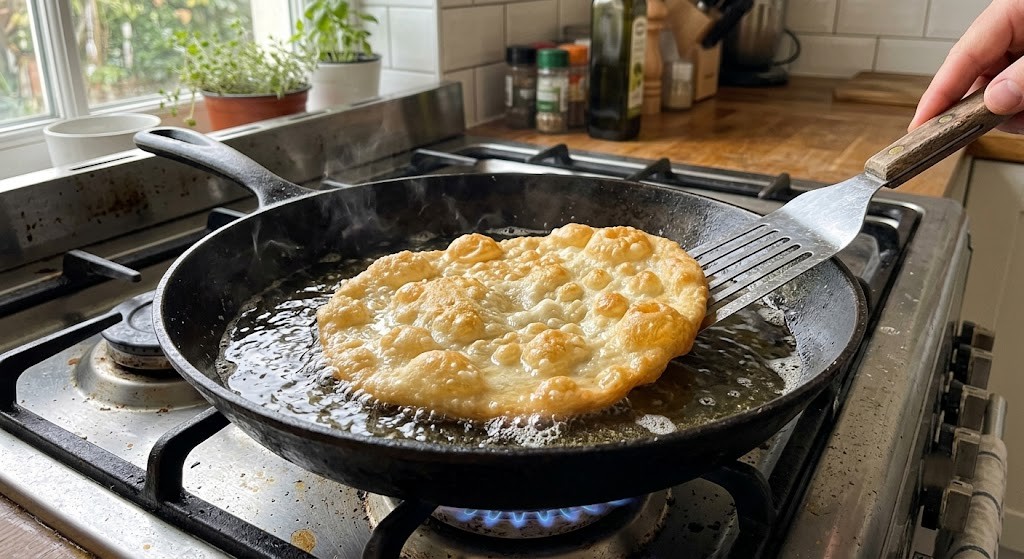
- Heat the oil. In a wide, deep skillet, heat about 2 cm of neutral oil to 175°C (350°F). No thermometer? Drop in a bit of batter — it should sizzle immediately, rise to the surface within a couple of seconds, and brown in about a minute. If it browns instantly, the oil is too hot.
- Fry in thin pours. Scoop or pour a small ladle of batter into the oil, tilting or spreading it thin — beeshee should be closer to a thin blistered pancake than a fat doughnut. Fry 1–2 minutes per side until deep golden and bubbled. Work in batches; don’t crowd the pan.
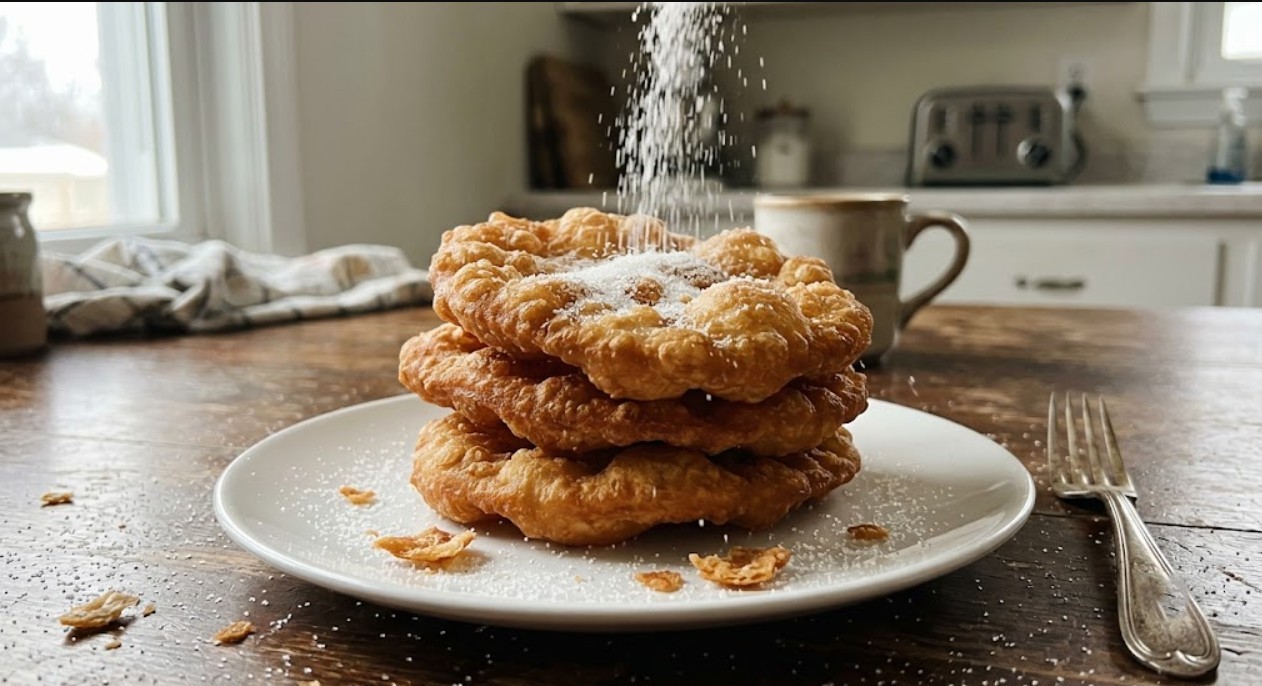
- Drain and sugar immediately. Move each beeshee to a paper-towel-lined plate for a few seconds, then hit it with sugar while it’s still hot and glistening — that’s what makes the sugar cling. Powdered sugar for delicate sweetness, granulated for crunch. Serve right now, at the table, standing in the kitchen — anywhere, as long as it’s within minutes.
Toppings, Ranked by Tradition
Sugar is classic. Honey drizzled while hot is common. Jam on the side turns it into breakfast. Kris Jenner has said she takes hers with syrup while the kids use sugar — proof that even within one family this argument never gets settled. If you want to gild it, try a spoonful of barely-sweet schlag alongside for a soft, creamy contrast to the crisp fried edges.
Common Mistakes
- Oil too hot → dark outside, raw and doughy inside. 175°C is the target; adjust between batches.
- Batter too thick → dense, bready beeshee. It should pour slowly off a ladle. Add a spoon of water if needed.
- Frying too thick → same problem. Thin is the whole point.
- Sugar added after cooling → it slides right off. Sugar the hot ones.
FAQ
What does “beeshee” mean?
It’s the Armenian name (commonly transliterated bishi) for this style of fried dough. There’s no deeper hidden meaning — the word simply refers to the dish itself.
Is beeshee the same as the Kardashian recipe?
Their exact family recipe has never been published. This is the traditional Armenian method that beeshee recipes, theirs included, descend from.
Can I make it without yeast?
You can fry a baking-powder batter and it will taste fine, but you lose the blistered texture and the flavor from fermentation — the two things that make beeshee beeshee.
Is beeshee a pancake or a doughnut?
Both and neither. It’s fried in oil like a doughnut but thin and irregular like a rustic pancake. “Thin, crispy fried pancake” is the closest short description.

Rimi Sultana is a home cook from Bangladesh who has cooked for her family every day for the past five years and writes about it at Smart Cooks. Perpetually testing whether internet-famous recipes actually work in a regular home kitchen. Say hello on Facebook or through the contact page.