As an Amazon Associate, Smart Cooks earns from qualifying purchases. Product prices and availability are shown on Amazon and may change.
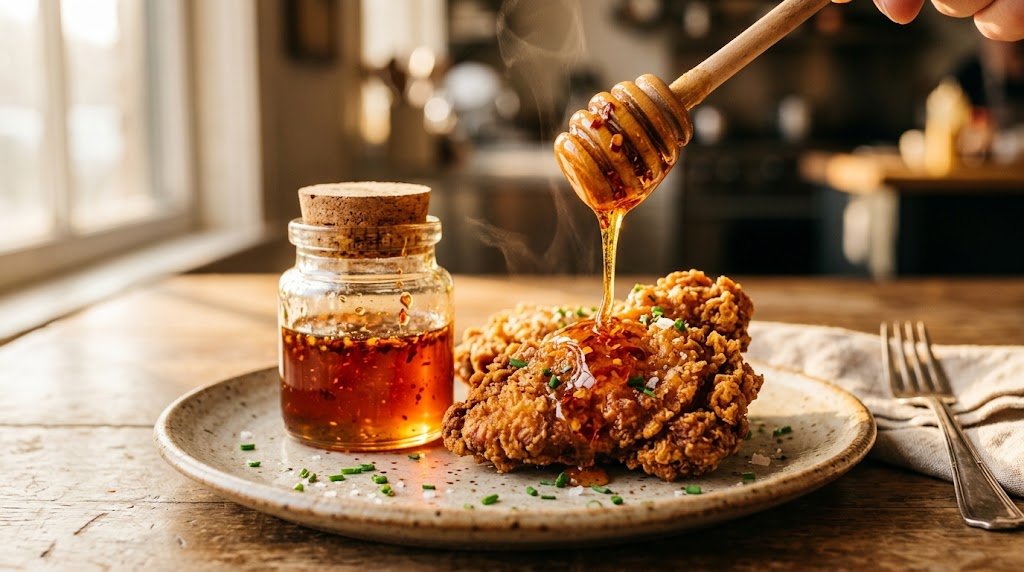
If you’ve noticed “swicy” showing up on menus and in your feed this year, it’s not a typo — it’s the food-trend shorthand for sweet-and-spicy combinations, and hot honey is the ingredient carrying most of that trend right now. It’s on pizza, drizzled over fried chicken, stirred into cocktails, spooned onto cheese boards. What most people don’t realize is how little there is to it: honey infused with chili, full stop. Once you know that, paying $9-12 a bottle for it starts to feel optional, especially if you cook with chili and honey regularly anyway.
Some links in this post are affiliate links. If you buy through them we may earn a small commission at no extra cost to you — it never changes which products we recommend.
What Actually Matters
Why This Trend Actually Has Staying Power
A lot of flavor trends are one-note — they work in exactly one application and disappear once people get bored of putting truffle oil on everything. Swicy is different because sweet-and-spicy is one of the oldest, most stable flavor pairings in cooking, showing up independently in Bengali mishti-jhal combinations, Thai and Vietnamese cooking, Southern hot honey chicken, and Mexican chili-mango. Hot honey is just this year’s specific, convenient delivery mechanism for a pairing that was never actually new.
Store-Bought vs. Homemade: What You’re Actually Paying For
Commercial hot honey brands are consistent and shelf-stable, and the good ones balance heat, sweetness, and a bit of acidity carefully — that’s real product development, not nothing. What you’re not paying for is complexity of ingredients: it’s honey, chili (fresh, dried, or extract), and sometimes a splash of vinegar. Homemade hot honey lets you control the exact chili you use — dried chili flakes, fresh Thai bird’s eye, even a spoon of Kashmiri mirch powder for color without overwhelming heat — and it costs a fraction of the bottled version for a much larger batch.
The One Technique Mistake That Ruins a Batch
Boiling honey hard, or heating chili directly in it for too long over high heat, breaks down the honey’s flavor and can make the chili taste scorched and bitter instead of clean and hot. The right method is a gentle warm-through — enough heat to let the chili’s oils infuse into the honey over 10-15 minutes, never a rolling simmer. Patience here matters more than any specific chili you choose.
A Simple Base Recipe
This is the ratio I actually use, scaled up or down as needed: 1 cup honey, 2-3 tablespoons dried red chili flakes (or 3-4 fresh Thai bird’s eye chilies, sliced), and 1 teaspoon apple cider vinegar. Warm the honey gently in a small saucepan over the lowest heat your stove has — you’re looking for small bubbles at the edge, never a simmer. Add the chili, stir once, and take it off the heat entirely after 10-15 minutes of gentle warmth. Stir in the vinegar once it’s cooled slightly, strain if you don’t want visible chili flakes in the final jar, and let it sit sealed for at least four to five days before judging the heat level.
- Warm honey on the lowest possible heat until small bubbles form at the edges.
- Add chili flakes or sliced fresh chilies, stir once, remove from heat after 10-15 minutes.
- Stir in a small splash of apple cider vinegar once slightly cooled.
- Strain if desired, transfer to a clean jar, and seal.
- Wait at least 4-5 days before tasting for real heat — it builds over time.
From My Kitchen
I started making hot honey at home mostly out of stubbornness after buying a small bottle for $11 and running out of it in about a week and a half on eggs alone. My first homemade batch used way too much dried red chili flake because I didn’t trust that a gentle infusion would actually extract enough heat, and it turned out fine — almost too fine, disappointingly mild — until I let it sit, sealed, for four more days after straining. The heat kept building the whole time. I now make it a full week ahead of when I actually want to use it, in a jar I don’t touch, and it’s consistently hotter on day seven than it tastes on day one straight off the stove. That waiting period is the part nobody mentions, and it’s the difference between a hot honey that tastes flat and one that actually has the slow-building heat the trend is built around.
Worth Considering
If you’d rather skip making it yourself, or just want something to compare your homemade version against, Mike’s Hot Honey is the brand that arguably started this entire trend and remains the most balanced, reliable option on shelves. For a version with a more distinct, almost smoky habanero edge and a thicker, rawer honey base, Savannah Bee Company Hot Honey is worth trying, especially if you want something that reads a little more artisanal on a cheese board.
Mike’s Hot Honey — the most balanced, reliable bottled version, and a good benchmark for your homemade batch.
Savannah Bee Company Hot Honey — thicker raw honey base with a smokier habanero edge, good on a cheese board.
Frequently Asked Questions
How long does homemade hot honey actually last?
Stored in a sealed jar at room temperature, it easily keeps for a month or more — honey itself is naturally shelf-stable, and the small amount of chili infused into it doesn’t meaningfully change that. If you used fresh chili rather than dried, keep an eye out for any cloudiness or fermentation at the surface after a few weeks, though with a properly gentle infusion and a clean jar this is rare.
What are the best uses beyond pizza and fried chicken?
The combination that surprised me most is hot honey over paneer or halloumi that’s been pan-seared until it has a real crust — the honey’s sweetness against the salty, slightly squeaky cheese and its own heat does something similar to what it does with fried chicken, but lighter. It’s also genuinely good stirred into a vinaigrette in place of plain honey, or drizzled over a fried egg the way Mike’s Hot Honey is famously used on pizza.
Can I use liquid honey straight from the bear-shaped bottle, or does the honey type matter?
Regular clover or wildflower honey works fine and is what most hot honey recipes and commercial brands actually use as a base — you don’t need a specialty raw or single-origin honey for this to work. A thicker, more distinctly flavored honey (like a dark buckwheat honey) will come through more in the final result, which can be good or can compete with the chili depending on your taste, so start with a neutral honey the first time.

Rimi Sultana is a home cook from Bangladesh who has cooked for her family every day for the past five years and writes about it at Smart Cooks. Perpetually testing whether internet-famous recipes actually work in a regular home kitchen. Say hello on Facebook or through the contact page.