Choosing a 2 burner gas cooktop often comes down to limited space and the need for efficient, controllable heat. But beyond size, there are real differences in burner power, materials, and installation that affect daily cooking performance.
Some links in this post are affiliate links. If you buy through them we may earn a small commission at no extra cost to you — it never changes which products we recommend.
Many buyers focus on looks or brand names, missing how factors like burner design or surface material influence heat distribution, cleaning ease, and durability. This guide cuts through marketing claims to focus on what actually changes your cooking experience.
What actually matters
Several technical features distinguish 2 burner gas cooktops. Understanding them helps pick a model that matches your cooking style and kitchen setup.
Burner power and flame control
Burner power is measured in BTUs (British Thermal Units). Most 2 burner gas cooktops range from about 5,000 to 18,000 BTU per burner. Higher BTU allows quicker heating but needs compatible cookware and careful flame adjustment.
Flame control depends on the burner valve and design. Precise control means you can simmer at low heat (around 1,000°F/540°C at the pan surface) without extinguishing the flame, which is important for delicate tasks like melting chocolate or simmering sauces.
Mechanically, the burner valve regulates gas flow to the burner head, which mixes gas with air before combustion. High-quality valves provide smooth, incremental adjustments, allowing the flame size to be finely tuned. This is crucial for cooking techniques requiring low, stable heat over long periods.
For example, a burner rated at 18,000 BTU can bring 1 liter of water to boil in approximately 4 minutes, whereas a 5,000 BTU burner might take closer to 15 minutes. This difference significantly impacts cooking efficiency, especially when preparing meals quickly.
However, very high BTU burners can produce uneven heating if cookware is thin or incompatible. Thus, matching burner power with appropriate pots and pans is essential to avoid hotspots or burnt food.
Cooktop surface material
Common surfaces include tempered glass, stainless steel, and enamel-coated steel. Tempered glass looks sleek but can scratch or shatter if hit hard; it also shows smudges easily. Stainless steel is durable and resists corrosion but can discolor and show water spots. Enamel surfaces resist stains but may chip with heavy use.
The surface material affects cleaning and heat reflection. For example, stainless steel reflects more heat outward, potentially heating your countertop more, while glass absorbs some heat but can crack under thermal shock.
Tempered glass surfaces have a thermal resistance limit; rapid temperature changes can cause fractures. For instance, placing a hot pan directly from the burner onto a cold glass surface risks cracking due to thermal shock. Users must avoid sudden temperature shifts and use cookware with flat, smooth bases to distribute weight evenly.
Stainless steel surfaces, while more robust, can develop discoloration from prolonged exposure to high heat or acidic spills. Using mild detergents and polishing agents helps maintain their appearance. Enamel-coated steel offers a balance by providing a stain-resistant finish, but chips expose underlying metal, which can rust if not promptly treated.
Heat reflection properties influence kitchen comfort and energy efficiency. Stainless steel’s high reflectivity means more radiant heat escapes the cooktop, which can raise ambient kitchen temperatures, potentially increasing cooling costs. Conversely, glass surfaces absorb some heat, reducing heat loss but necessitating careful handling to prevent damage.
Cooktop installation and size
Most 2 burner cooktops are designed as built-in units, fitting into cutouts in your countertop. The standard width is about 12 inches (30 cm), but depth and cutout dimensions vary and must match your cabinet specs precisely.
Some models are freestanding or portable but usually lack the sealed burner design that prevents spills from entering the cooktop body, making cleanup harder.
Installation involves precise measurements to ensure the cooktop sits flush with the countertop, preventing gaps where food debris could accumulate. Typical cutout depths range from 20 to 22 inches (50 to 56 cm), and the height clearance below the countertop must accommodate gas connections and ventilation requirements.
Gas supply connections must comply with local codes, often requiring professional installation to ensure safety. Improper installation risks gas leaks or poor burner performance.
Portable models offer flexibility but usually have exposed burners and lack sealing, increasing maintenance needs. They are ideal for temporary setups or small spaces without built-in gas lines but may sacrifice durability and ease of cleaning.
From my kitchen
Once, I installed a 2 burner cooktop with tempered glass surface. I underestimated the need for stable cookware placement. The glass cracked when a cast iron pan, slightly uneven on the base, was rocked too hard while stirring. Replacing it meant switching to stainless steel for peace of mind despite the extra fingerprints. Since then, I’ve been careful matching cookware to cooktop surface and using medium weight pans with flat bases.
This experience highlighted how important it is to consider the interaction between cookware and cooktop materials. Cast iron, while excellent for heat retention, can be unforgiving on fragile surfaces. Stainless steel surfaces, though prone to fingerprints, provide a more forgiving platform for heavy or uneven cookware.
Moreover, I noticed that burner power affected cooking times significantly. On the stainless steel cooktop, the burners rated at 12,000 BTU each boiled water in about 6 minutes, which suited my daily cooking needs well. However, when attempting to simmer delicate sauces, the flame control allowed me to maintain a low, steady heat without flameouts, which tempered glass cooktops had struggled with due to less precise valves.
Cleaning routines also changed; stainless steel required more frequent wiping to avoid water spots, especially in humid climates, but was less prone to permanent stains or cracks. Overall, the practical trade-offs between aesthetics and durability became clear through hands-on use.
| Feature | Tempered glass | Stainless steel | Enamel-coated steel |
|---|---|---|---|
| Durability | Resistant to scratches but can shatter if dropped | Highly durable, resists corrosion and dents | Reasonably durable but prone to chipping |
| Cleaning | Smooth surface cleans easily but shows streaks | Wipes clean but water spots and fingerprints visible | Smooth finish resists stains but chips trap dirt |
| Heat reflection | Absorbs some heat, less countertop heating | Reflects heat, may warm surrounding surfaces | Moderate heat reflection |
| Weight | Lighter than metal options | Heavier and sturdy | Medium weight |
| Installation | Usually built-in, requires careful cutout | Built-in or drop-in, standard sizes common | Built-in with standard cutouts |
Worth Considering
Best for style: Gas Cooktop 2 Burner, 12 Inch Propane Cooktop, Black Tempered Glass

This cooktop offers a sleek black tempered glass surface that is visually appealing and easy to wipe down. It suits kitchens where style is a priority but requires care with heavy or uneven cookware to avoid cracking. Not ideal if you need rugged durability or rough handling.
| Brand | Amzgachfktch |
| Price when checked | $118.99 |
| Rating | 4.2 out of 5 (36 ratings) |
Pros
- Tempered glass surface for a modern look
- Compact 12 inch width fits small spaces
- Two burners with propane compatibility
Cons
- Glass surface can crack with impact
- Shows fingerprints and smudges clearly
Best budget stainless steel: VancEpic 2 Burner Gas Cooktop, 12 Inch Stainless Steel
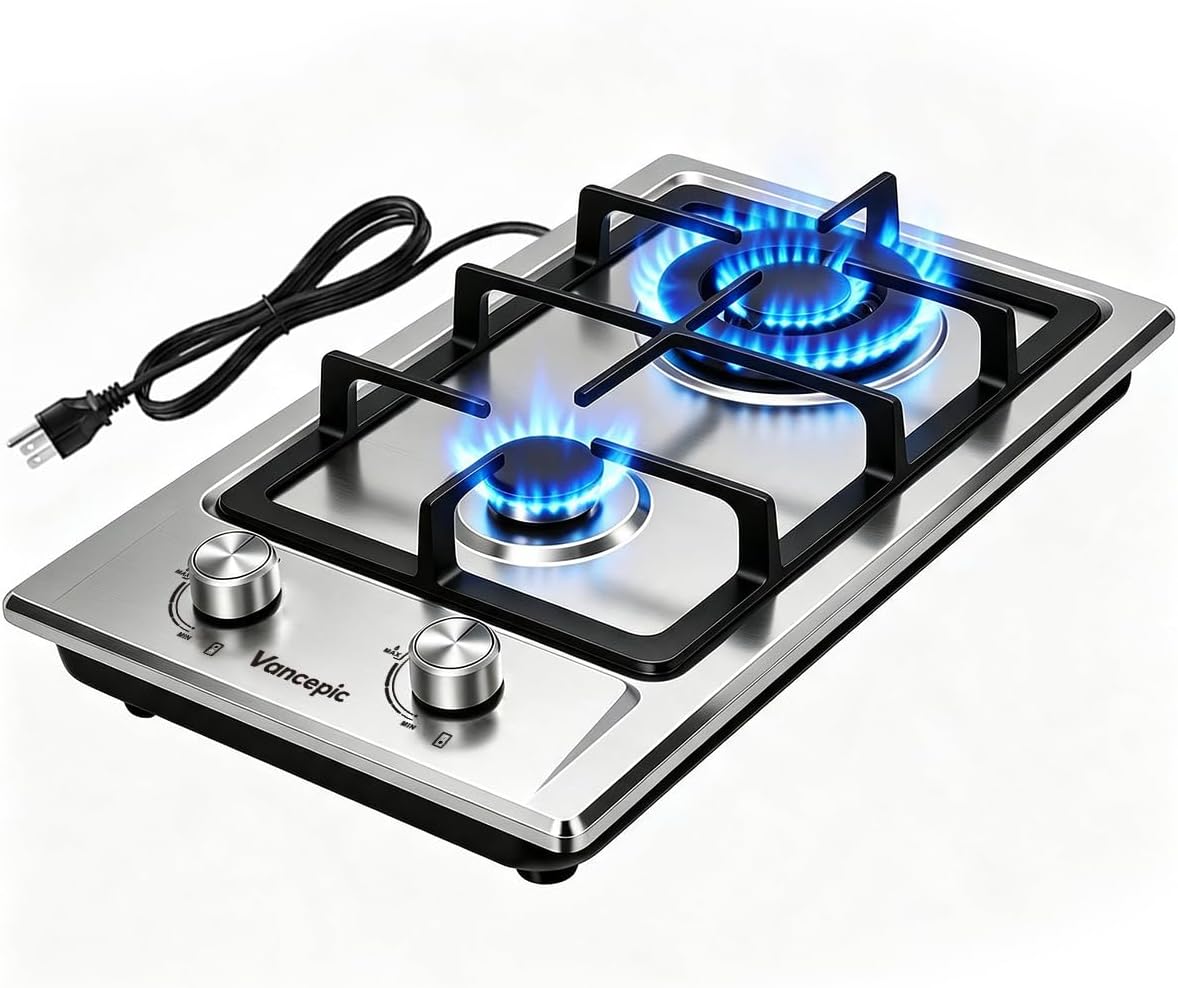
This is a no-frills, durable stainless steel cooktop that works well in tight kitchens or as a portable stove. The surface resists corrosion and scratches better than glass but requires frequent wiping to manage water spots. The burner power is sufficient for typical home cooking but not for high-BTU strong searing.
| Brand | VancEpic |
| Price when checked | $84.99 |
| Rating | 5.0 out of 5 (168 ratings) |
Pros
- Stainless steel surface resists corrosion
- Lightweight and easy to install
- Excellent user rating for reliability
Cons
- Surface shows water spots and fingerprints
- Lower max BTU limits very high heat cooking
Best balanced choice: TOPWISH 12 Inch Gas Cooktop, 2 Burners Built-in Stainless Steel

This cooktop balances durability and performance with a quality stainless steel surface and two burners rated for efficient heat output. The built-in design fits standard cutouts. It is a good all-rounder but pricier than budget options and has no tempered glass aesthetic.
| Brand | TOPWISH |
| Price when checked | $139.99 |
| Rating | 4.4 out of 5 (168 ratings) |
Pros
- Durable stainless steel construction
- Two burners provide versatile heat levels
- Built-in design fits common 12-inch cutouts
Cons
- No glass surface for a premium look
- Requires regular cleaning to avoid surface marks
When not to buy a 2 burner gas cooktop
If you regularly cook for large families or entertain often, a 2 burner cooktop may feel limiting due to the small cooking surface and burner count. Larger cooktops with 4 or more burners provide flexibility for multiple pots and pans.
Also, if your kitchen layout cannot accommodate built-in installation or you do not have propane or natural gas supply, a gas cooktop may not be practical. Electric or induction options could be better in those cases.
Many buyers mistakenly prioritize aesthetic features like tempered glass without considering durability or cleaning ease, leading to frustration with cracked surfaces or constant smudging.
Frequently Asked Questions
What gas types do 2 burner gas cooktops support?
Most 2 burner gas cooktops support either natural gas or propane, sometimes with adjustable jets or conversion kits included. Propane runs at a higher pressure requiring different orifices than natural gas. Always check the model’s compatibility and ensure professional installation to match your home’s gas supply.
How do sealed burners improve gas cooktop performance?
Sealed burners have a design where the burner head and gas outlet are enclosed to prevent spills and crumbs from entering the cooktop’s internal parts. This reduces cleaning difficulty and potential damage from food or liquids, extending the cooktop’s working life and keeping flame distribution consistent.
Can I use cast iron pans on a tempered glass cooktop?
You can use cast iron on tempered glass surfaces but with caution. Cast iron is heavy and often has uneven bases, which increases the risk of cracking the glass if the pan is dropped or moved roughly. Using lighter, flat-based cookware is safer for glass surfaces.

Rimi Sultana is a home cook from Bangladesh who has cooked for her family every day for the past five years and writes about it at Smart Cooks. Perpetually testing whether internet-famous recipes actually work in a regular home kitchen. Say hello on Facebook or through the contact page.