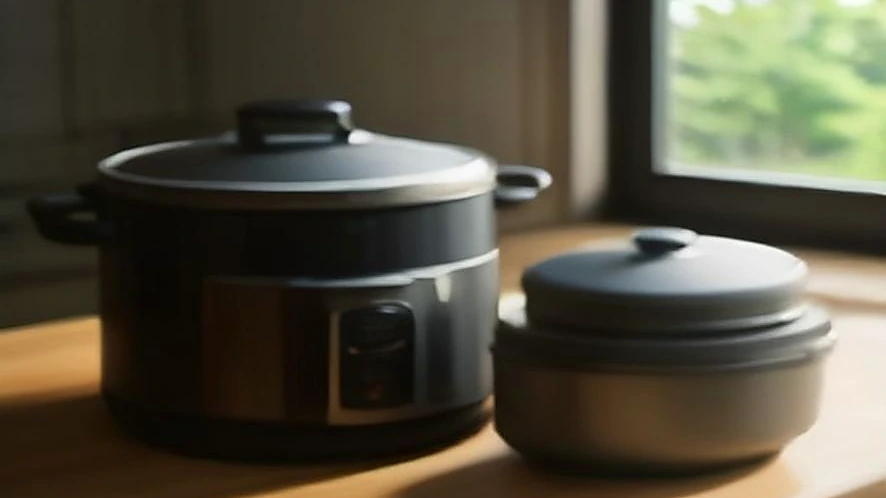
Slow cookers and Dutch ovens often get lumped together because both are used for long, low-temperature cooking. But the way they cook and how the heat is delivered to your food is fundamentally different. This affects everything from the texture of the dish to the flexibility in the kitchen.
Some links in this post are affiliate links. If you buy through them we may earn a small commission at no extra cost to you — it never changes which products we recommend.
Choosing between these two depends on what you want to cook, how much hands-on control you want, and your kitchen setup. Understanding their construction and heat transfer mechanisms helps explain why they excel in different tasks.
Where each one wins
Dutch ovens excel in recipes that start with browning meat or vegetables and then require oven cooking or stovetop simmering. Their ability to reach and maintain high temperatures makes them ideal for developing complex flavours through Maillard reactions and controlled liquid reduction. For example, when searing beef, a Dutch oven can reach temperatures up to 500°F (260°C), allowing the surface of the meat to caramelize and create a rich fond that enhances the final sauce. The heavy cast iron construction ensures even heat distribution, minimizing hot spots and allowing for consistent cooking throughout the pot. This also means dishes like braises or pot roasts can cook evenly over 2 to 4 hours, with moisture retained inside the pot due to the tight-fitting lid.
Slow cookers shine when you need a set-it-and-forget-it option for tenderising tough cuts over several hours without constant monitoring. The low, steady heat is perfect for stews, soups, and casseroles that benefit from gentle cooking to break down connective tissue without drying out. Slow cookers typically operate at temperatures around 190°F to 280°F (88°C to 138°C), maintaining a moist environment that slowly converts collagen in meat into gelatin, resulting in tender, succulent textures. The electric heating element surrounds the ceramic insert, providing uniform heat but without the ability to sear or brown. Cooking times range from 4 to 10 hours depending on the recipe and temperature setting, making slow cookers especially useful for busy households or meal prep.
Both appliances have trade-offs in energy use and convenience. Slow cookers generally consume less power, often between 70 and 250 watts during operation, compared to the higher energy demands of heating a Dutch oven on an electric stove or oven, which can exceed 1000 watts. However, the Dutch oven offers more versatility, including the ability to start cooking on the stovetop to develop flavors before transferring to the oven for slow braising. This hands-on approach can yield richer, more complex flavors but requires more attention and skill.
In terms of maintenance, Dutch ovens, especially unenameled cast iron versions, require careful cleaning and seasoning to prevent rust and maintain their non-stick properties. Enamel-coated Dutch ovens reduce this burden but are heavier and can chip if mishandled. Slow cookers feature removable ceramic inserts that are dishwasher safe, simplifying cleanup and making them more user-friendly for everyday use.
| Attribute | Dutch oven | Slow cooker |
|---|---|---|
| Material | Thick cast iron with or without enamel coating | Ceramic or porcelain insert with metal exterior housing |
| Heat source | External: stovetop or oven heating | Internal: electric heating element surrounding pot |
| Max temperature | Up to 500°F (260°C) allowing searing and roasting | Typically maxes at ~280°F (138°C), no searing possible |
| Heat distribution | Conductive and radiant heat through heavy walls | Low, consistent heat from element, no direct flame or conduction |
| Cooking time | Variable; braises 2-4 hours, stews 1-3 hours | Long; usually 4-10 hours at low temperature |
| Portability and setup | Requires stove or oven access, heavier and hotter to handle | Plug-in appliance, easy to set and leave unattended |
| Cleaning and maintenance | Can be prone to rust if not enamelled, requires seasoning if bare | Removable insert is dishwasher safe, easier cleanup |
From my kitchen
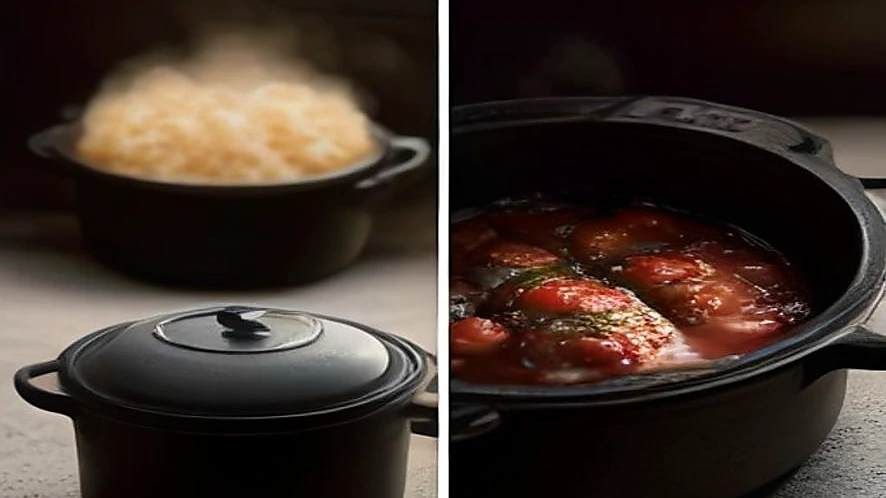
Once, I tried making a beef stew overnight in a slow cooker and woke up to find the broth thin and the meat not as flavourful as expected. The slow cooker’s lower max temperature didn’t allow the initial sear that normally locks in juices. Later, I used a Dutch oven to brown the meat first on the stovetop and then transferred it to the oven to braise for three hours. The difference was clear: the broth was richer and thicker because the fond (browned bits) on the pot’s surface dissolved into the sauce during cooking, something the slow cooker couldn’t replicate. This experience highlighted how the Maillard reaction, which occurs at higher temperatures, contributes significantly to the depth of flavor and mouthfeel in slow-cooked dishes. Additionally, the controlled oven environment allowed for gradual reduction of liquids, concentrating flavors without burning or drying out the ingredients.
Worth Considering
Best for hands-on braising and searing: Dutch oven
A Dutch oven is great if you want cookware that can start on the stove and finish in the oven, especially for recipes requiring browning before slow cooking. It’s heavier and needs more care but offers versatility beyond slow cooking.
Pros
- High heat tolerance allows searing and oven roasting
- Excellent heat retention ensures stable cooking temperatures
- Can be used for a wide range of cooking methods beyond slow cooking
Cons
- Heavy and hot to handle, requiring oven mitts
- Needs careful cleaning and seasoning if not enamelled
Best for unattended slow simmering: slow cooker
Slow cookers are ideal if you want to prepare meals in advance and leave them cooking all day without supervision. They offer convenience and energy efficiency but cannot brown or reduce sauces effectively.
Pros
- Simple to use: plug in and set the timer
- Low risk of burning food thanks to controlled low heat
- Removable insert is easy to clean
Cons
- Limited to slow simmering; no searing or high-heat cooking
- Long cooking times may not suit last-minute meal prep
When neither is the right answer
If you want precision temperature control or the ability to cook sous vide or at very high heat quickly, neither a Dutch oven nor a slow cooker will suffice. For example, recipes that require fast stir-frying, deep frying, or quick boiling are better suited to skillets, woks, or dedicated electric appliances like pressure cookers or air fryers. Also, if you need to cook for large groups efficiently, a commercial burner or multi-pot setup might be more practical than relying on these single-piece devices.
Related reading
- The 10 Best Oven Mitts of 2026 (Tested and Reviewed)
- Best Joie Meow Cat 60-Minute Kitchen Timers for Home Decor
- Precision & Performance: An Expert’s In-Depth Review of Insulated Thermal Cookers for Electricity-Free Slow Cooking
Frequently Asked Questions
Can I use a Dutch oven as a slow cooker?
You can mimic slow cooker results in a Dutch oven by cooking on the lowest stovetop setting or in an oven set between 200°F and 300°F (93°C to 150°C). However, it requires more attention to maintain steady temperatures and avoid burning. Unlike slow cookers, Dutch ovens don’t have automatic temperature control, so it’s less convenient for unattended cooking.
Is a slow cooker more energy efficient than a Dutch oven?
Generally yes. Slow cookers use low wattage (around 70-250 watts) to maintain a steady simmer for hours, consuming less energy than heating a large cast iron Dutch oven on an electric or gas stove or oven which can use 1000 watts or more during cooking.
Which is easier to clean: a Dutch oven or a slow cooker?
Slow cookers usually have removable ceramic inserts that are dishwasher safe, making cleanup simpler. Dutch ovens, especially unenameled cast iron, require hand washing and drying to prevent rust, and may need periodic seasoning. Enamel-coated ones are easier but still heavier to handle.
Rimi Sultana is a home cook from Bangladesh who has cooked for her family every day for the past five years and writes about it at Smart Cooks. Perpetually testing whether internet-famous recipes actually work in a regular home kitchen. Say hello on Facebook or through the contact page.