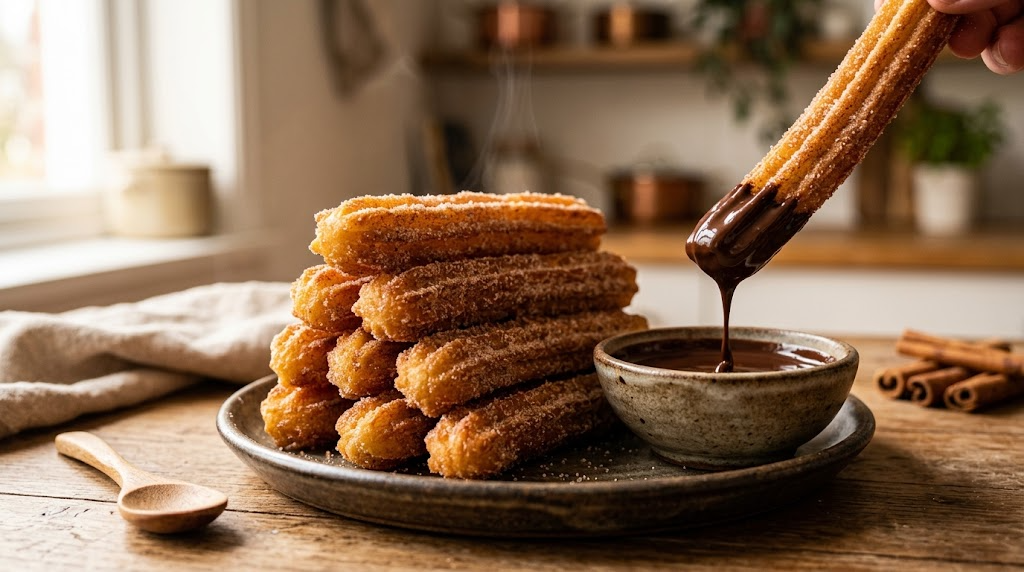
Good churros come down to getting the dough (a choux-style paste, technically) thick enough to hold its ridged shape when piped, but not so thick that it won’t puff and crisp properly in the oil. Most home attempts go wrong either at the piping stage — using a bag with no proper star tip means you get smooth, dense churros instead of the ridged kind that crisp up around all those grooves — or at the frying stage, with oil that’s too hot or too cool. This version walks through both, plus the classic cinnamon-sugar coating.
Ingredients You’ll Need
- 1 cup water
- 2½ tbsp granulated sugar
- ½ tsp salt
- ⅓ cup unsalted butter
- 1 cup all-purpose flour
- 2 large eggs
- 1 tsp vanilla extract
- Vegetable or canola oil, for frying (enough for 2–3 inches depth)
- ½ cup granulated sugar, for coating
- 1½ tsp ground cinnamon, for coating
How to Make Homemade Churros
- In a saucepan, combine the water, sugar, salt, and butter. Bring to a boil over medium heat, stirring until the butter fully melts.
- Remove from heat and add the flour all at once, stirring vigorously with a wooden spoon until the mixture forms a smooth ball and pulls cleanly away from the sides of the pan.
- Let the dough cool for about 5 minutes — it needs to be warm, not hot, or it will scramble the eggs in the next step.
- Beat in the eggs one at a time, mixing thoroughly after each addition, then stir in the vanilla. The finished dough should be smooth, thick, and glossy, holding its shape but still soft enough to pipe.
- Transfer the dough to a piping bag fitted with a large star tip — this is what creates the ridges that make churros crisp properly and hold the sugar coating.
- Heat oil in a deep pot to 350–360°F (175–182°C). Use a thermometer; guessing the temperature is the single biggest cause of bad churros.
- Pipe 4–5 inch lengths of dough directly into the hot oil, using scissors or a knife to cut the dough at the piping tip. Fry in small batches, 2–3 minutes per side, until deep golden brown.
- Remove with a slotted spoon or spider strainer onto a paper-towel-lined tray to drain briefly.
- While still warm, roll each churro in the cinnamon-sugar mixture until fully coated. Serve immediately.
From My Kitchen: The Batch That Came Out Raw Inside
The first time I made these, I didn’t have an oil thermometer, so I just guessed based on how the oil looked — shimmering, a little smoke starting, seemed hot enough. It wasn’t; it was closer to 400°F than I realized. The outsides of the churros went dark brown and almost bitter within about 90 seconds, which I mistook for “done,” but when I cut one open, the center was still wet, gluey dough. The problem was heat transfer: oil that’s too hot cooks the surface so fast that a crust forms before enough heat has had time to travel through to the middle. Once I started actually using a thermometer and holding the oil steady in the 350–360°F range, the timing became predictable — a full 2–3 minutes per side, letting the heat move all the way through before the outside browns too far. I don’t fry these anymore without a thermometer clipped to the pot.
Tips for the Best Churros
- Use a genuine star-tip nozzle, not a round one — the ridges aren’t just decorative, they create more surface area that crisps up and holds the sugar coating.
- Fry in small batches. Crowding the pot drops the oil temperature fast, which leads straight back to the raw-center problem.
- Coat churros in the cinnamon sugar while they’re still hot and glistening with oil — the sugar won’t stick properly once they’ve cooled and the surface oil has soaked in.
- If your dough feels too stiff to pipe smoothly, beat in a small amount of extra egg, a teaspoon at a time, until it loosens slightly.
What to Serve With Churros
Thick Mexican hot chocolate or dulce de leche for dipping is the classic pairing, and either one turns this into a proper dessert rather than just a fried snack. A simple bowl of melted dark chocolate works nearly as well if that’s what’s on hand.
Frequently Asked Questions
What kind of piping tip do I actually need for churros?
A large open star tip, generally in the 1M or similar size range, is what creates the classic ridged churro shape. A closed star tip or a plain round tip will still produce edible churros, just without the same ridges or crispness.
Can I bake churros instead of frying them?
You can, but the texture is genuinely different — baked churros come out closer to a choux pastry (like a cream puff) than the crisp-shelled, chewy-centered result you get from frying. If crispness is the point for you, frying isn’t really optional.
Why did my churros turn out dense and heavy instead of light?
This is usually a piping or dough issue — dough that’s overmixed or too stiff, or a piping tip without ridges, both lead to denser results. Make sure the dough is glossy and holds soft peaks in the piping bag rather than being stiff and dry.
How long do leftover churros keep, and can I reheat them?
They’re really at their best eaten fresh within an hour of frying, since the crisp exterior softens as they sit. Leftovers can be re-crisped for a few minutes in a hot oven or air fryer, though they won’t be quite as good as fresh.
If you want the ridged shape without wrestling a piping bag, we compared dedicated churro makers and presses in our guide to the best churro makers.

Rimi Sultana is a home cook from Bangladesh who has cooked for her family every day for the past five years and writes about it at Smart Cooks. Perpetually testing whether internet-famous recipes actually work in a regular home kitchen. Say hello on Facebook or through the contact page.