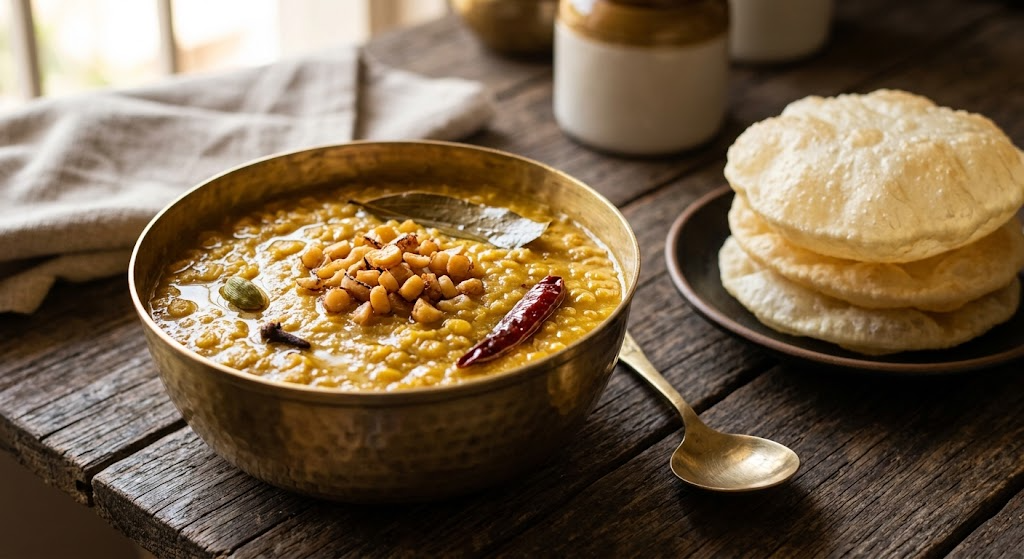
Prep time: 2 hrs soaking + 10 min | Cook time: 30 min | Serves: 4–5 | Serve with: luchi, or plain rice
Cholar dal is the dal Bengalis make when something is being celebrated. It turns up at weddings, at Puja lunches, and on the kind of Sunday where somebody has decided to fry luchi. It is chana dal, but if you have only had chana dal as a north Indian dal it will not prepare you for this one: it is faintly sweet, scented with whole garam masala and ghee, and studded with pieces of coconut fried until they are golden and slightly chewy.
Two things make it. The coconut has to be fried, not raw. And the sugar is not a rounding-off pinch — it is a real quantity, and a version made timidly tastes like ordinary chana dal wearing a costume.
Ingredients
For the dal
- Chana dal (Bengal gram, split) – 1 cup (200 g), soaked 2 hours
- Turmeric – ½ tsp
- Salt – to taste
- Water – 3 cups for boiling
For the coconut
- Fresh coconut – ½ cup, cut into small thin pieces (narkel kucho), not grated
- Ghee – 1 tbsp for frying it
For the tempering and finishing
- Ghee – 2 tbsp
- Bay leaves – 2
- Dried red chillies – 2, whole
- Cumin seeds – 1 tsp
- Cinnamon – 1 inch stick
- Green cardamom – 4, lightly crushed
- Cloves – 4
- Ginger paste – 1 tsp
- Cumin powder – 1 tsp
- Sugar – 1½ tbsp (yes, really)
- Garam masala – ½ tsp, for the end
- Raisins – 1 tbsp, optional
Equipment
- A pressure cooker, or a heavy pot and more patience
- A small pan for frying the coconut
- A ladle
Method
- Boil the dal. Drain the soaked chana dal and cook it with the turmeric, salt and 3 cups of water. In a pressure cooker, 2 whistles then rest; in a pot, 40–50 minutes. You want the grains soft enough to crush against the roof of your mouth but still holding their shape. Mushy chana dal is the wrong texture for this dish.
- Fry the coconut. Heat 1 tbsp ghee in a small pan and fry the coconut pieces over medium-low heat, stirring, until they are golden at the edges — 3–4 minutes. Watch it closely; coconut goes from golden to burnt very fast. Lift out and set aside.
- Temper. In the pan you will finish the dal in, heat 2 tbsp ghee. Add bay leaves, dried chillies, cumin seeds, cinnamon, cardamom and cloves. Wait for the cumin to sizzle and the whole spices to smell fragrant.
- Aromatics. Add the ginger paste and cumin powder. Cook for a minute until the raw edge is gone, adding a spoonful of water if it catches.
- Combine. Pour in the boiled dal with its water. Add the sugar and the raisins if using. Simmer uncovered for 8–10 minutes, stirring occasionally, until it thickens to a consistency that coats the ladle but still pours.
- Add the coconut. Stir in most of the fried coconut, keeping a spoonful back for the top. Simmer 2 more minutes.
- Finish. Turn off the heat, sprinkle the garam masala, add a final teaspoon of ghee, and cover for five minutes. Scatter the reserved coconut over the top when serving.
From My Kitchen
The first time I made cholar dal on my own I skipped frying the coconut. It seemed like a fussy extra step for something that was going into a pot of dal anyway, so I stirred the raw pieces straight in. The dal was fine. It was also completely forgettable, and I could not work out why until someone pointed out what I had left out. Raw coconut goes soft and disappears into the dal; fried coconut stays slightly firm and chewy and tastes toasted, and those small golden pieces are most of what people remember about the dish.
I also underdid the sugar for years, because a tablespoon and a half of sugar in a dal sounds absurd written down and my instinct was to halve it. The result was consistently flat — not savoury exactly, just unresolved, as though the dish had been interrupted. Cholar dal is meant to sit in the sweet-savoury middle, the way a lot of Bengali cooking does. Measure it properly the first time and adjust after tasting, rather than adjusting on principle before you have tried it.
On the boiling: I now stop the pressure cooker a whistle earlier than feels right. Chana dal keeps softening in its own residual heat, and then it simmers again with the tempering, so dal that looked slightly firm when I opened the lid is exactly right by the time it reaches the table. Two whistles and a natural release has been reliable for me; three gave me a purée more than once.
Adjusting to Taste
- Thinner or thicker: this dal thickens noticeably as it stands. Aim slightly looser than you want it, and keep hot water nearby.
- Without raisins: plenty of households leave them out. They push the dish sweeter, so if you use them, hold the sugar back slightly.
- Dried coconut: if fresh is not available, use unsweetened desiccated coconut, but fry it for less time — it colours in under a minute.
- Heat: the dried chillies flavour the ghee without adding much heat. For real warmth, slit a green chilli into the simmer.
Storage
Cholar dal keeps well — 3 to 4 days in the fridge, and it arguably tastes better on day two once the whole spices have had longer in it. It thickens a great deal when cold, so reheat with hot water and stir until it loosens. It freezes reasonably for up to a month, though the fried coconut softens; refresh it with a little freshly fried coconut on top.
FAQ
What is the difference between cholar dal and regular chana dal?
Cholar dal is the Bengali preparation: whole garam masala tempered in ghee, a noticeable amount of sugar, and fried coconut pieces stirred through. Other regional chana dal recipes lean savoury, often with onion, garlic and tomato, none of which appear here.
Can I make cholar dal without coconut?
You can make a perfectly good chana dal without it, but it stops being cholar dal in the sense most Bengalis mean. The fried coconut is the signature.
Why is my cholar dal mushy?
Overcooking at the boiling stage. Chana dal continues to soften in residual heat and again during the final simmer, so stop while the grains still hold their shape distinctly — typically 2 whistles in a pressure cooker rather than 3.
What is cholar dal served with?
Luchi is the classic pairing, especially at festival meals. It is also good with plain rice, and with radhaballabhi — the lentil-stuffed fried bread — if you are making a proper occasion of it.
If you’re making the fried coconut garnish for this dal, a good heavy tawa gives you far more even toasting than a thin nonstick pan. See our guide to the best tawas for cast iron vs nonstick options.
Rimi Sultana is a home cook from Bangladesh who has cooked for her family every day for the past five years and writes about it at Smart Cooks. Perpetually testing whether internet-famous recipes actually work in a regular home kitchen. Say hello on Facebook or through the contact page.