Soda makers and seltzer bottles are both designed to add carbonation to water, but they achieve this in fundamentally different ways that affect convenience, control, and maintenance. Understanding these technical differences helps clarify which tool fits your lifestyle and kitchen setup more appropriately.
Some links in this post are affiliate links. If you buy through them we may earn a small commission at no extra cost to you — it never changes which products we recommend.
This comparison goes beyond marketing claims to explain exactly how each device carbonates water, their construction differences, and practical implications for everyday use. Neither is better in every situation, so the goal is to pinpoint where each option shines and where it falls short.
Where each one wins
Seltzer bottles excel for users who need a simple, portable solution without the bulk of a countertop machine or large CO2 cylinders. They are also preferable if you want quick carbonation in small quantities without committing to a larger system. Their compact size and manual operation make them ideal for occasional sparkling water or small gatherings.
The carbonation mechanism in seltzer bottles involves manually releasing CO2 from small 8g cartridges into a sealed bottle chamber. This process relies on the user pressing a lever or trigger to inject gas, which means the level of carbonation depends heavily on how many times the lever is pressed and how fresh the cartridge is. Due to the limited amount of CO2 in each cartridge, carbonation capacity is restricted to approximately one litre per cartridge, and repeated use requires frequent cartridge replacements. This can lead to increased costs and inconvenience during extended use.
Soda makers, on the other hand, suit households or individuals who consume sparkling water regularly and want more consistent, adjustable carbonation. The larger CO2 cylinders, typically around 60 litres in capacity, significantly reduce the frequency of refills and provide a more cost-effective solution over time. The carbonation process involves pressurised CO2 being injected via a valve into a specially designed PET bottle, allowing users to control the carbonation level by pressing a button multiple times. This adjustability enables finer control over bubble size and fizz intensity, catering to personal preferences or different drink recipes.
The ease of producing multiple carbonated drinks quickly also makes soda makers better for entertaining or daily use. However, the setup is more complex due to the installation of the CO2 cylinder and the need for regular cleaning of the bottle and machine parts. Additionally, the soda maker’s countertop footprint requires dedicated space, which could be a consideration for smaller kitchens.
In terms of portability, seltzer bottles have a clear advantage. Their compact and lightweight design, free from bulky CO2 cylinders and external power requirements, make them highly portable and convenient for outdoor activities, picnics, or travel. Conversely, soda makers are generally designed as stationary countertop appliances, making them less suitable for on-the-go use.
Maintenance also differs between the two devices. Seltzer bottles require frequent replacement of the small CO2 cartridges and cleaning of the siphon components to prevent clogging and ensure proper sealing. Over time, seals and gaskets may wear out, leading to gas leaks and diminished carbonation efficiency. Soda makers, while requiring less frequent CO2 refills due to larger cylinder capacity, demand regular cleaning of bottles and occasional inspection of the valve and seals to maintain optimal performance.
Practical experiences and consequences
From personal experience, using a seltzer bottle during a cocktail party highlighted some limitations. After about ten refills, the small CO2 cartridges ran out, necessitating a pause to replace them mid-event, which disrupted service and guest satisfaction. Additionally, the mechanical seals in the siphon wore down over time, causing gas leaks and weaker fizz, which affected drink quality. This experience underscores the importance of having spare cartridges and spare parts on hand when relying on seltzer bottles for frequent use.
Switching to a soda maker resolved these issues by providing continuous carbonation without interruption, thanks to the larger CO2 cylinder capacity. The ability to adjust carbonation levels allowed tailoring the fizz intensity for different drinks, enhancing the overall beverage experience. However, the soda maker’s size required reorganising kitchen space to accommodate the machine, which was a minor inconvenience compared to the benefits gained. This trade-off between space and performance is a key consideration for potential users.
From an environmental and cost perspective, the larger CO2 cylinders used in soda makers tend to be more sustainable and economical over time compared to the numerous small cartridges required by seltzer bottles. Frequent disposal of single-use 8g cartridges contributes to waste, whereas refillable 60L cylinders reduce plastic and metal consumption. Users who prioritize sustainability may find soda makers more aligned with their values, despite the higher upfront investment.
In terms of carbonation efficiency, water temperature plays a significant role for both devices. Carbonating water chilled to around 39°F (4°C) enhances CO2 absorption, resulting in better fizz and longer-lasting bubbles. Using room temperature water leads to faster gas escape and weaker carbonation. Therefore, pre-chilling water before carbonation is recommended to achieve optimal results regardless of the device used.
Overall, the choice between a soda maker and a seltzer bottle depends on usage frequency, portability needs, budget, and space availability. Understanding the mechanisms and practical implications helps users make informed decisions that suit their lifestyle and preferences.
| Attribute | Seltzer bottle (ScrollSavor 1L Soda Siphon) | Soda maker (My-Cap Soda Maker Machine) |
|---|---|---|
| Carbonation mechanism | Manual release of CO2 from 8g cartridges into sealed bottle chamber | Pressurised CO2 cylinder injects gas via valve into water bottle |
| CO2 source | Small single-use 8g CO2 cartridges | Standard 60L CO2 cylinders (replaceable/refillable) |
| Control over carbonation level | Limited to number of cartridges and manual lever presses | Adjustable by multiple presses, allowing finer bubble control |
| Bottle capacity | 1 litre reusable glass or metal bottle | Typically 1 litre PET bottle designed for the machine |
| Setup and maintenance | Simple to use but requires replacing small cartridges frequently and cleaning siphon parts | More complex setup with CO2 cylinder installation but fewer cartridge changes, bottle cleaning needed |
| Portability | Compact and portable with no external power or bulky cylinder | Generally countertop unit, less portable due to CO2 cylinder and size |
From My Kitchen
Once, I tried using my seltzer bottle for a cocktail party, expecting it to keep up with guests’ sparkling water demands. After about ten refills, the cartridges ran out, and I was left fumbling with replacements mid-party. On another occasion, the seal wore down, causing gas leaks and weak fizz. Switching to a soda maker with a larger CO2 cylinder solved the issue by allowing continuous carbonation without interruption, and its adjustable pressure gave me better control over bubble intensity for different drinks. However, the soda maker’s countertop footprint meant I had to reorganise my kitchen space, which was a minor inconvenience.
Worth Considering
Best for portability and simplicity: 1L Soda Siphon, Portable Carbonated Soda Maker, White Seltzer Bottle
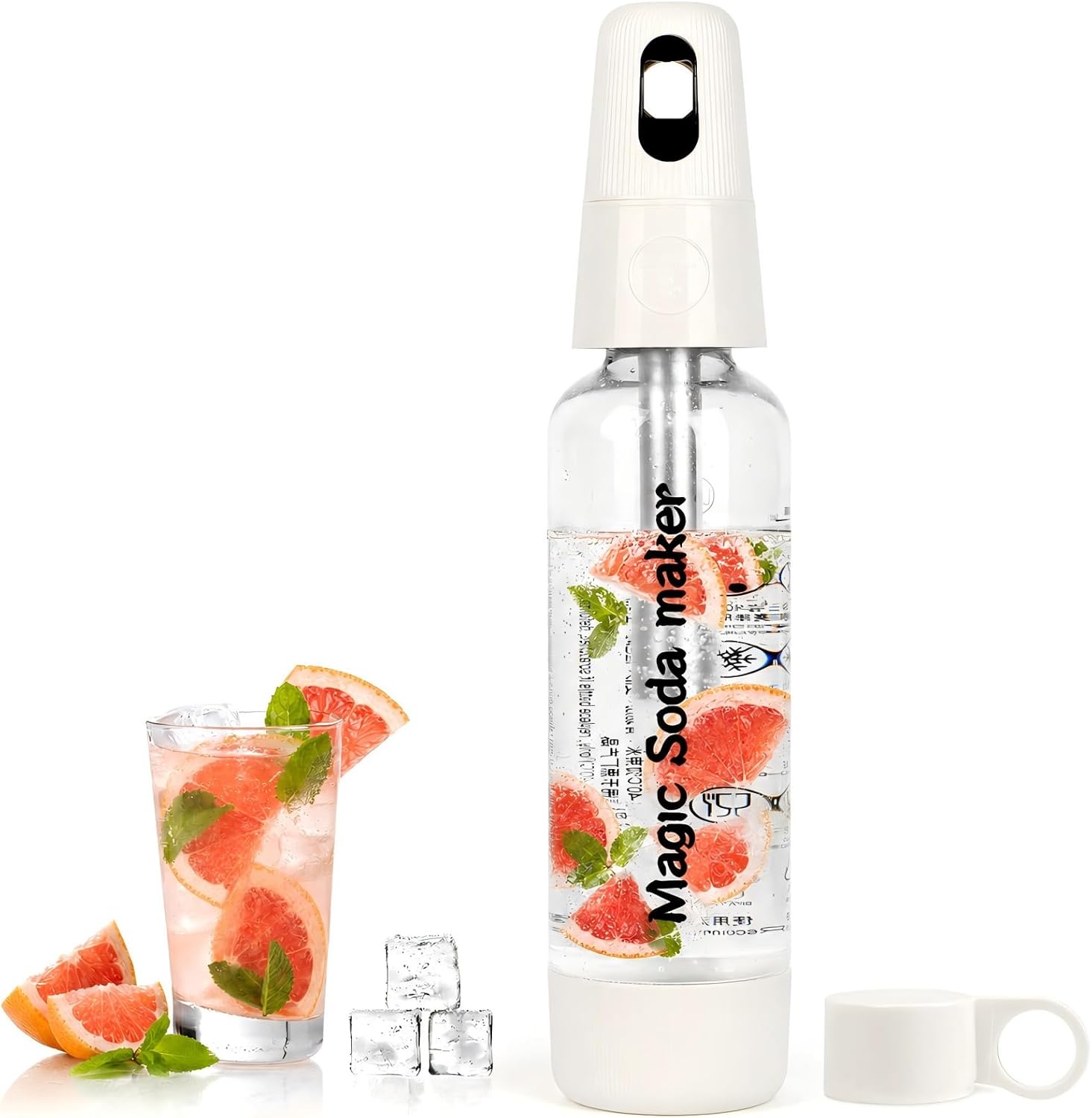
This seltzer bottle is easy to carry and requires minimal setup, making it good for occasional sparkling water or on-the-go use. It is not ideal if you want frequent carbonation or precise bubble control.
Brand: Brand: ScrollSavor · Price when checked: $29.99 · Rating: 5.0 out of 5 (1,240 ratings)
Pros
- Compact and lightweight, easy to store
- No need for bulky CO2 cylinders
- Simple manual carbonation mechanism
Cons
- Small CO2 cartridges run out quickly
- Seals wear out over time causing leaks
Best for regular use and versatile carbonation: My-Cap Soda Maker Machine – Sparkling Water Maker

This soda maker fits well on a kitchen counter and offers adjustable carbonation via a pressurised CO2 cylinder, ideal for households consuming sparkling drinks regularly. It requires more space and initial setup.
Brand: My-Cap · Price when checked: $49.40 · Rating: 4.8 out of 5 (122 ratings)
Pros
- Uses large 60L CO2 cylinders reducing refills
- Adjustable carbonation level for different drinks
- Elegant, space-saving design for countertop use
Cons
- Less portable due to size and cylinder
- CO2 cylinder not included and must be refilled or replaced
When neither a soda maker nor a seltzer bottle is the right answer
If you rarely drink carbonated water or prefer the taste and convenience of commercially canned or bottled sparkling drinks, investing in a soda maker or seltzer bottle might not be worthwhile. Both require ongoing costs for CO2 refills or cartridges and some maintenance effort. Additionally, if you want consistent carbonation with minimal effort and no equipment upkeep, buying ready-made sparkling water is more practical despite its environmental and cost drawbacks.
Another alternative is using a carbonation cap on standard bottles combined with a separate CO2 tank, but this adds complexity and is mostly suited for enthusiasts comfortable with DIY carbonation setups.
Related reading
- Best Tofu Presses for Making Extra-Firm Tofu
- Budget vs Premium Ice Cream Makers: What the Price Actually Buys You
- French Press vs Pour-Over: Which Coffee Method Should You Buy Into?
Frequently Asked Questions
How long do CO2 cartridges last in a seltzer bottle?
Small 8g CO2 cartridges used in seltzer bottles typically carbonate about one litre of water per cartridge, though this varies with desired fizziness. Frequent use means replacing cartridges often—sometimes multiple times per day if you consume several sparkling drinks. This can add to ongoing costs and requires keeping extra cartridges on hand.
Can I use any CO2 cylinder with a soda maker?
Most soda makers, including the My-Cap Soda Maker, are designed to work with standard 60L CO2 cylinders, but compatibility depends on the valve connection type. Non-standard cylinders or third-party brands may not fit correctly or could cause leaks. Always ensure your soda maker specifies compatible cylinders to avoid safety hazards and to maintain correct pressure.
Does water temperature affect carbonation?
Yes, colder water (around 39°F or 4°C) absorbs CO2 more efficiently than warmer water, resulting in better fizz and bubble retention. Both soda makers and seltzer bottles perform best when carbonating chilled water. Using room temperature water leads to faster gas escape and weaker carbonation, so pre-chilling water improves results consistently.

Rimi Sultana is a home cook from Bangladesh who has cooked for her family every day for the past five years and writes about it at Smart Cooks. Perpetually testing whether internet-famous recipes actually work in a regular home kitchen. Say hello on Facebook or through the contact page.