Electric griddles and stovetop griddles both provide flat cooking surfaces but differ fundamentally in how they generate and maintain heat. The electric griddle uses an embedded heating element powered by electricity, while the stovetop griddle relies on the heat from a gas or electric burner underneath.
Some links in this post are affiliate links. If you buy through them we may earn a small commission at no extra cost to you — it never changes which products we recommend.
These differences affect temperature control, heat distribution, cooking versatility, and cleaning. Understanding the mechanisms behind these differences helps clarify which griddle suits particular cooking styles and kitchen setups.
Where each one wins
Electric griddles excel in consistent temperature control and ease of use. Their embedded heating elements and thermostats allow rapid heating to precise temperatures, making them ideal for cooking breakfast items like pancakes, eggs, and grilled sandwiches without constant burner adjustments. The ceramic nonstick surface eases cleanup, and the large flat surface accommodates cooking for multiple people simultaneously.
The mechanism behind this precision lies in the electric griddle’s embedded heating element combined with a temperature probe and thermostat. The heating element, typically a metal coil or plate beneath the cooking surface, heats up quickly when powered, while the thermostat constantly monitors the temperature and cycles power on and off to maintain a set heat level. This system can maintain temperatures within a few degrees Fahrenheit, enabling consistent cooking results. For example, an electric griddle rated at 1500 watts can reach 375°F within 5 to 7 minutes, depending on ambient conditions and surface size.
However, electric griddles have limitations in heat retention. The aluminum or steel base with ceramic coating heats quickly but also cools rapidly when food is added in large quantities or when the lid is opened frequently. This can cause uneven browning or temperature dips when cooking for many guests simultaneously, as the heat source must cycle to recover the temperature.
Stovetop griddles shine in versatility and durability. Their cast iron construction holds and distributes heat well once fully warmed, creating excellent sear marks and flavour development that electric griddles cannot replicate. The reversible ribbed and flat sides allow for varied cooking techniques, such as grilling steaks or flat cooking fajitas. They perform better on camp stoves or outdoor burners and do not require electricity, which can be a significant advantage in some settings.
Cast iron’s high thermal mass means it absorbs and retains heat from the burner effectively. For example, a 16 x 24 inch cast iron griddle weighing around 10 pounds can store enough heat to maintain stable cooking temperatures even when cold food is added, minimizing temperature fluctuations. This is essential for searing meat, where surface temperatures above 400°F are needed to trigger the Maillard reaction, which develops complex flavours and attractive grill marks.
However, the heat distribution on a stovetop griddle depends heavily on burner size and heat output. Uneven burner flames or electric coil hotspots can cause temperature variations across the surface, requiring the cook to adjust food placement or burner settings during cooking. Preheating times are longer, often 10 to 15 minutes, to ensure the entire griddle reaches an even temperature.
Cleaning and maintenance also differ significantly. Cast iron griddles require regular seasoning — applying a thin layer of oil and heating to polymerize it — to maintain a natural nonstick surface and prevent rust. This seasoning layer can improve with use, enhancing cooking performance but demanding more care from the user.
Practical experience and consequences of choice
From my kitchen experience, cooking a large breakfast batch on the electric griddle highlighted both strengths and limitations. While the griddle heated quickly and maintained a steady temperature, pushing it to cook 15 eggs and a full batch of pancakes at once caused some uneven browning. This was due to the thermal capacity of the aluminum base and ceramic coating being insufficient to sustain uniform heat under heavy load, leading to slight temperature drops in areas where food was densely packed.
Switching to the stovetop cast iron griddle for the second half of the meal demonstrated its superior heat retention. The cast iron’s mass kept the surface temperature stable, allowing me to sear bacon strips effectively and keep fried items warm without overcooking. The reversible ribbed side also added versatility for grilling. However, the stovetop griddle required more attention to burner adjustment to avoid hot spots and sticking. I resolved these issues by regularly seasoning the cast iron and carefully managing burner heat to balance the temperature across the griddle.
The consequences of these differences extend to cooking outcomes and user convenience. Electric griddles simplify temperature management and cleanup, making them suitable for casual home cooks or those prioritizing convenience. Conversely, stovetop griddles reward users willing to invest time in seasoning and heat management with superior flavour development, versatility, and suitability for outdoor or off-grid cooking.
In terms of numbers, electric griddles typically consume 1200 to 1800 watts of power, which can translate to about 1.2 to 1.8 kWh for an hour of cooking. Stovetop griddles’ energy use depends on the burner type: gas burners average around 7,000 to 10,000 BTU per hour, while electric coil burners vary but often consume similar power to electric griddles. Efficiency varies as stovetop heat often dissipates into the surrounding air, while electric griddles focus heat directly on the cooking surface.
Choosing between these griddles involves weighing factors such as cooking style, kitchen setup, and maintenance willingness. For example, a family that frequently cooks large breakfast batches indoors might prefer the electric griddle’s ease and consistency. In contrast, a backyard chef valuing searing and versatility might opt for the cast iron stovetop griddle despite its maintenance demands.
| Attribute | Electric griddle | Stovetop griddle |
|---|---|---|
| Heat source | Embedded electric heating element with temperature probe | Gas or electric burner heat transferred through griddle material |
| Temperature control | Precise dial control with thermostat regulating element | Manual burner adjustment, less precise surface temperature control |
| Heat distribution | Uniform surface temperature due to embedded element and flat plate | Dependent on burner size and griddle material thickness; potential hot spots |
| Cooking surface size | Commonly large flat surfaces, e.g., 22 x 12 inches (56 x 30 cm) | Varies; often larger but depends on stove and griddle size, e.g., 16 x 24 inches (41 x 61 cm) |
| Material and finish | Ceramic nonstick coating on aluminum or steel base | Cast iron, pre-seasoned or bare, with optional ribbed side |
| Portability and setup | Requires electrical outlet, plug and play | Requires compatible stove burner, no power needed, heavier and bulkier |
| Cleaning | Detachable griddle plate and drip tray dishwasher safe | Hand wash recommended; seasoning may be required on cast iron |
From My Kitchen
Once, I wanted to cook a large batch of breakfast for guests using the electric griddle. While it heated quickly and maintained a steady temperature that prevented burning, the ceramic nonstick surface developed some uneven browning when pushing the capacity to cook 15 eggs and a full batch of pancakes at once. Switching to the stovetop cast iron griddle for the second half of the meal gave better heat retention under heavy load, especially for searing bacon strips and keeping fried items warm without overcooking.
However, the stovetop griddle required more attention to burner adjustment during cooking to avoid hot spots and some sticking, which I resolved by seasoning the cast iron regularly and managing burner heat carefully.
Worth Considering
Best for consistent temperature and easy cleanup: Martha Stewart 12″x 22″ XL Electric Griddle
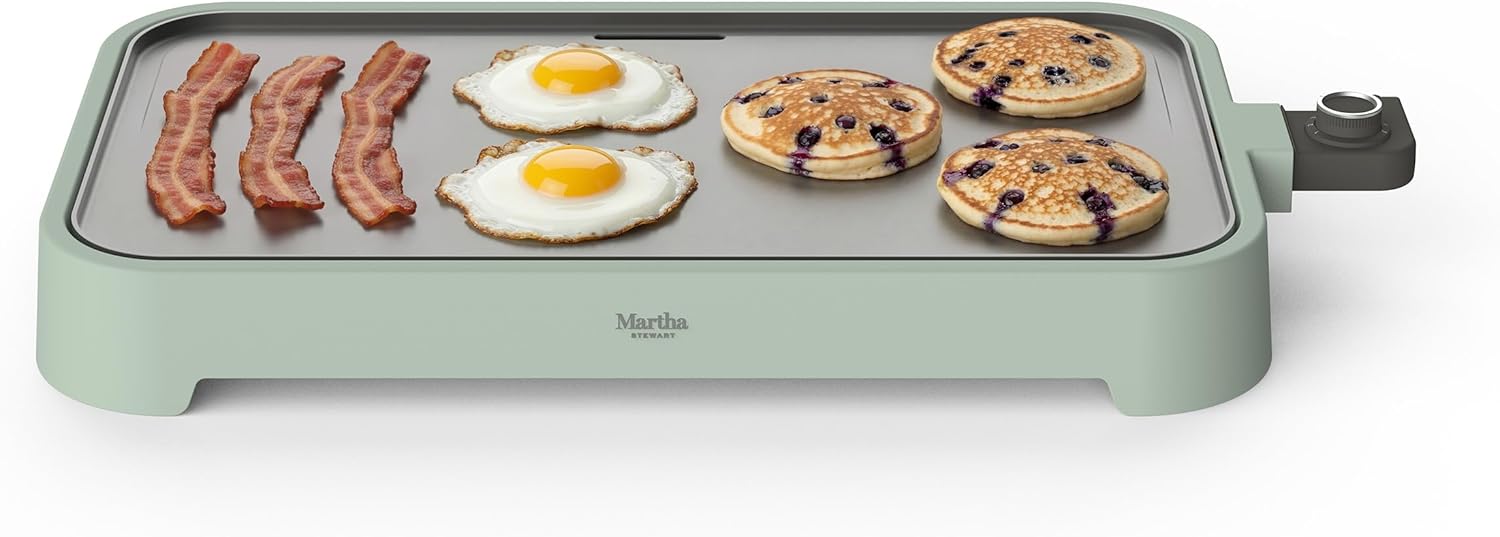
This electric griddle suits cooks who want precise temperature control and a large, flat surface for batch cooking breakfast or grilled sandwiches without fussing over burner settings. It is not ideal if you prefer the flavour and sear of cast iron or need a griddle for outdoor use without electricity.
Brand: Martha Stewart · Price when checked: $69.99 · Rating: 4.5 out of 5 (336 ratings)
Pros
- Embedded heating element with temperature probe for precise heat
- Extra-large 22 x 12 inch ceramic nonstick surface
- Dishwasher-safe griddle and drip tray for easy cleaning
Cons
- Requires access to a power outlet, limiting portability
- Ceramic coating less suited for high-heat searing or heavy-duty use
Best for heat retention and versatility: Camp Chef Cast Iron Griddle – 16 x 24

The cast iron stovetop griddle is a durable choice for those who value heat retention and want the option of ribbed grilling or flat cooking. It works well on various stove types and outdoor burners but demands more care in seasoning and cleaning, and lacks precise temperature control.
Brand: Camp Chef · Price when checked: $85.99 · Rating: 4.7 out of 5 (535 ratings)
Pros
- Reversible ribbed and flat sides for versatile cooking
- Pre-seasoned cast iron holds and distributes heat well
- Large 16 x 24 inch cooking area suitable for family meals
Cons
- Requires manual heat management and longer preheating
- Heavier and more cumbersome to clean and maintain
When neither electric nor stovetop griddles are the right answer
If you need quick heat-up times, ultra-precise temperature control, and minimal cleanup but want to avoid electricity or bulky cast iron, a nonstick electric skillet or an induction-compatible flat pan might be better. They offer some temperature control without the large footprint. Conversely, for outdoor cooking where electricity is unavailable and portability is critical, a lightweight aluminium griddle designed for open flames or camping stoves might outperform both options.
Similarly, if you require multi-zone temperature control for different foods simultaneously, a griddle with separate heating zones or a multi-pan setup may serve better than a single flat griddle surface.
Related reading
- Best Home Water Carbonator Systems: Top SodaStream Alternatives
- Best Portable Induction Cooktops with Precise Temperature Control
- Fluffy Gluten Free Pancakes (Easy Recipe!)
Frequently Asked Questions
Does an electric griddle use more energy than a stovetop griddle?
Electric griddles consume electricity directly through their embedded heating elements, typically rated between 1200 to 1800 watts. Stovetop griddles rely on gas or electric burners, whose efficiency depends on stove type and burner size. While electric griddles may seem less energy efficient because they heat a specific plate, they often reach and maintain cooking temperatures faster without heat loss to surrounding air, potentially balancing out energy use during typical cooking times.
Can I use a stovetop griddle on any type of stove?
Most stovetop griddles designed for cast iron or steel work well on gas, electric coil, and electric ceramic glass stoves. However, induction stoves require magnetic materials and flat bottoms for proper heating. Some cast iron griddles fit induction cooktops, but check the manufacturer’s guidance. The griddle’s size relative to the burner also affects heat distribution and efficiency.
How do I prevent sticking on a stovetop cast iron griddle?
Proper seasoning of cast iron is essential to create a nonstick surface. This involves coating the griddle with a thin layer of cooking oil and heating it to polymerise the oil into a hard finish. Before cooking, preheat the griddle gradually and apply a small amount of fat, like butter or oil, to the surface. Avoid cooking acidic foods frequently, as they can degrade the seasoning. Regular cleaning with hot water and a stiff brush without soap helps preserve the seasoned layer.

Rimi Sultana is a home cook from Bangladesh who has cooked for her family every day for the past five years and writes about it at Smart Cooks. Perpetually testing whether internet-famous recipes actually work in a regular home kitchen. Say hello on Facebook or through the contact page.