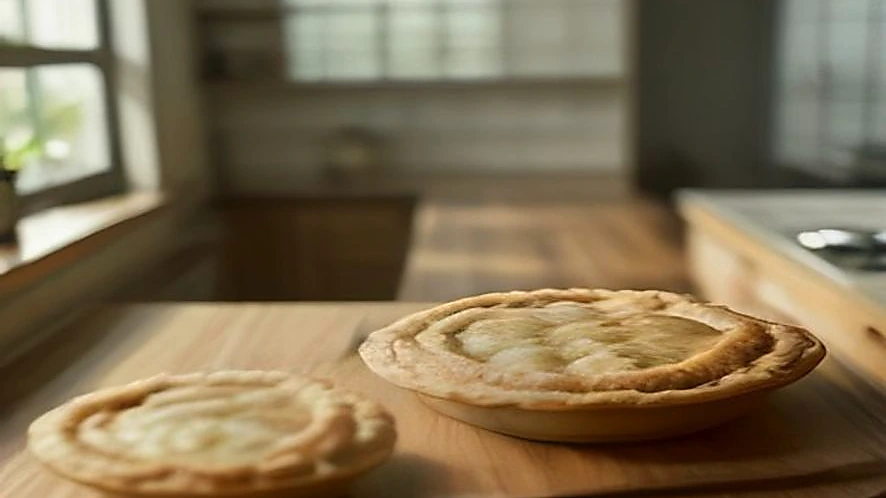
Pie dishes and tart pans look similar but differ significantly in shape, construction, and how they affect baking. These differences influence crust texture, ease of removal, and presentation. Choosing one over the other impacts whether your crust stays crisp or soggy, and how cleanly your finished dessert comes out.
Some links in this post are affiliate links. If you buy through them we may earn a small commission at no extra cost to you — it never changes which products we recommend.
While both are used for crust-based desserts, the variations in wall angle, depth, and removable bottoms mean they are not always interchangeable. Understanding what these design choices do to heat distribution and crust structure helps avoid common baking pitfalls.
Where each one wins
Pie dishes excel for recipes with high-moisture fillings that benefit from the sloped sides allowing more filling volume and a deeper crust. The sloped design also helps accommodate lattice or crumb toppings that need anchoring. Their fixed bottom works well when you want to bake and serve from the same vessel without worrying about structural collapse.
Tart pans are ideal where presentation matters and a clean, sharp edge is desired, such as for fruit tarts, quiches, and custard tarts. The removable bottom lets you unmold the tart without cracking the crust or ruining fluted edges. Their construction supports even browning and crisp crusts, particularly when using shortcrust or pâte sablée doughs that are more delicate.
Mechanically, the sloped walls of pie dishes, typically angled between 30–45°, allow heat to distribute in a way that encourages a thicker crust base and thinner edges. This design can trap steam from moist fillings, leading to soggy edges if the baking time or temperature is not carefully managed. In contrast, tart pans with their straight, vertical sides and fluted edges promote uniform heat exposure along the crust walls, enhancing browning and crispness. The removable bottom reduces handling stress during unmolding, preserving the structural integrity of delicate doughs.
Quantitatively, pie dishes often hold between 8 to 10 cups of filling due to their deeper and wider shape, supporting recipes like deep-dish fruit pies or custards that require substantial volume. Tart pans, especially those around 9 inches in diameter with 1 to 1.5 inches depth, typically hold less filling—around 6 to 7 cups—making them better suited for thinner, more refined desserts. The material composition also plays a critical role: ceramic and glass pie dishes heat more slowly but retain heat longer, which can extend baking times by 10-15%, requiring bakers to adjust accordingly. Metal tart pans, often carbon steel with non-stick coatings, heat quickly and evenly, reducing baking times and improving crust texture.
The consequences of choosing the wrong pan can be significant. Using a pie dish when a tart pan is ideal may result in crusts that are difficult to remove cleanly, leading to broken edges and a less attractive presentation. Conversely, using a tart pan for high-moisture fillings can cause soggy crusts due to shallower depth and less steam retention. Understanding these functional differences helps bakers optimize texture, appearance, and ease of serving.
From My Kitchen
Once, I tried making a classic lemon tart using a standard pie dish because I lacked a tart pan with a removable bottom. The fluted edges I had carefully shaped pressed against the sloped, fixed walls and distorted during baking. When I removed the tart, the crust cracked badly and the edges looked uneven. Switching to a tart pan with a removable bottom resolved this immediately. The crust kept its shape, and lifting the tart out was clean and simple, saving me from extra plating work and preserving the look.
In another instance, I baked a berry pie in a ceramic pie dish. The thick walls and slower heat conduction resulted in a crust that was golden but slightly soft on the edges, especially after cooling overnight. This experience highlighted how material and pan shape influence not only baking time but also post-bake texture. Using a metal pan or a tart pan might have yielded a crisper crust, but at the cost of reduced filling volume and a different presentation.
These personal experiments underscore the importance of selecting the right pan based on recipe requirements and desired outcomes. For example, when making quiches with delicate custard fillings, the even heat distribution and easy release of tart pans prevent cracking and ensure a professional look. Conversely, for rustic fruit pies with juicy fillings, pie dishes accommodate larger volumes and provide a homely, hearty appearance, albeit with some risk of soggy edges if not baked carefully.
From a practical standpoint, cleaning and maintenance also differ. Ceramic and glass pie dishes are generally dishwasher safe and resistant to scratching but can be heavy and fragile. Metal tart pans, while lighter and more durable, often require hand washing to preserve non-stick coatings. Understanding these trade-offs helps bakers maintain their tools and prolong their lifespan.
| Pie dish | Tart pan | |
|---|---|---|
| Wall angle | Sloped sides at 30–45° flaring outward | Straight, vertical sides usually fluted |
| Bottom | Fixed bottom integral to the dish | Removable bottom for easy tart release |
| Typical depth | 2 to 1.5 inches (5 to 4 cm) | Shallower, around 1 to 1.5 inches (2.5 to 4 cm) |
| Material commonality | Ceramic, glass, metal (aluminium or steel) | Carbon steel with non-stick coating |
| Effect on crust | Thicker at base, thinner at rim; risk of soggy edges if underbaked | Even crust thickness; better structural support for fillings |
| Ease of serving | Cut and serve from the dish; crust stuck to bottom | Can lift entire tart cleanly from pan |
From My Kitchen
Once, I tried making a classic lemon tart using a standard pie dish because I lacked a tart pan with a removable bottom. The fluted edges I had carefully shaped pressed against the sloped, fixed walls and distorted during baking. When I removed the tart, the crust cracked badly and the edges looked uneven. Switching to a tart pan with a removable bottom resolved this immediately. The crust kept its shape, and lifting the tart out was clean and simple, saving me from extra plating work and preserving the look.
In another instance, I baked a berry pie in a ceramic pie dish. The thick walls and slower heat conduction resulted in a crust that was golden but slightly soft on the edges, especially after cooling overnight. This experience highlighted how material and pan shape influence not only baking time but also post-bake texture. Using a metal pan or a tart pan might have yielded a crisper crust, but at the cost of reduced filling volume and a different presentation.
These personal experiments underscore the importance of selecting the right pan based on recipe requirements and desired outcomes. For example, when making quiches with delicate custard fillings, the even heat distribution and easy release of tart pans prevent cracking and ensure a professional look. Conversely, for rustic fruit pies with juicy fillings, pie dishes accommodate larger volumes and provide a homely, hearty appearance, albeit with some risk of soggy edges if not baked carefully.
From a practical standpoint, cleaning and maintenance also differ. Ceramic and glass pie dishes are generally dishwasher safe and resistant to scratching but can be heavy and fragile. Metal tart pans, while lighter and more durable, often require hand washing to preserve non-stick coatings. Understanding these trade-offs helps bakers maintain their tools and prolong their lifespan.
Worth Considering
Best for batch tart baking: OBreezify 6 Pcs 9.06 Inch Deep Tart Pans with Removable Bottom

This set of six deep tart pans is well suited for making multiple tarts or quiches with crisp edges. The removable bottoms ease unmolding, but the pans are relatively deep for tarts and may not suit recipes requiring shallow crusts. The non-stick surface simplifies cleaning but requires gentle utensils to preserve coating.
Brand: Brand: OBreezify · Price when checked: $34.99 · Rating: 4.6 out of 5 (831 ratings)
Pros
- Removable bottom allows neat tart release
- Deep sides support larger filling volumes
- Non-stick coating aids cleaning and release
Cons
- Depth may be too much for some tart recipes
- Non-stick coating can scratch if mishandled
Best budget single tart pan: Maywe Tanso 9 Inch Tart Pan with Removable Bottom

An affordable tart pan that balances size and convenience. Its carbon steel construction transfers heat well for even crust browning. The removable bottom is standard but may be less sturdy than higher-end models. Not ideal for very deep fillings or pies needing sloped sides.
Brand: Maywe Tanso · Price when checked: $18.99 · Rating: 4.5 out of 5 (1,701 ratings)
Pros
- Carbon steel for good heat conduction
- Non-stick surface for easier cleaning
- Removable bottom for clean tart removal
Cons
- Single pan only, no set
- May require careful handling to avoid warping
When neither pie dish nor tart pan is right
For some recipes, neither a pie dish nor a tart pan is the best choice. Deep-dish pizzas, layered casseroles, or certain crumb-topped desserts benefit more from straight-sided cake pans or springform pans. Springform pans, with their fully removable sides and bottom, allow cakes or cheesecakes with delicate textures to be released without damage.
Glass or ceramic pie dishes excel at slow, even baking for custards and fruit pies but lack the sharp edges needed for tarts. Conversely, tart pans are poor for soft doughs that require sloped walls to support rising crusts, like some rustic fruit pies or pot pies. Knowing your recipe’s structural needs helps pick the right vessel rather than relying on shape alone.
Related reading
- Easy Sausage Breakfast Casserole (The BEST Recipe!)
- The Ultimate Keto Twins Chicken Crust Pizza (Sturdy & Delicious!)
- Budget vs Premium Espresso Machines: What the Price Actually Buys You
Frequently Asked Questions
Can I use a pie dish instead of a tart pan?
You can substitute a pie dish for a tart pan in many cases, but expect some differences. Pie dishes have sloped sides and fixed bottoms, which means your tart crust might be thicker at the base and can be harder to remove cleanly. Delicate crusts or fluted edges may lose shape. Adjust baking times slightly, as pie dishes often retain heat differently.
Why do tart pans have removable bottoms?
Removable bottoms in tart pans allow you to lift the baked tart out of the pan without flipping or forcing it, preserving delicate crust edges and fluted sides. This design reduces the risk of cracking or breaking the crust during removal and helps with presentation, especially for tarts with fragile fillings or decorative crusts.
Does material affect how pie dishes and tart pans bake?
Yes, material impacts heat conduction and baking results. Ceramic and glass pie dishes heat more slowly and retain heat longer, which can help prevent burning but may yield softer crusts. Metal tart pans, especially carbon steel with non-stick coatings, conduct heat quickly and evenly, promoting crisp crusts but requiring careful temperature control to avoid overbrowning.

Rimi Sultana is a home cook from Bangladesh who has cooked for her family every day for the past five years and writes about it at Smart Cooks. Perpetually testing whether internet-famous recipes actually work in a regular home kitchen. Say hello on Facebook or through the contact page.