Honing rods are essential for maintaining a knife’s cutting edge between full sharpenings. The key difference is how well the rod realigns the blade’s microscopic edge without removing too much metal. A good honing rod has the right material, grit, and shape to keep knives functional and safe with minimal wear.
Some links in this post are affiliate links. If you buy through them we may earn a small commission at no extra cost to you — it never changes which products we recommend.
Many rods claim to sharpen or polish, but effective honing is about edge realignment through consistent angle and contact. Avoid rods that are too coarse or too short, as they can damage or fail to cover the entire blade length. Understanding the construction and intended use helps avoid common pitfalls.
What actually matters
Honing rods differ primarily in material composition, shape, and length. These factors determine how they interact with your knife edge and how often you should use them. Understanding these variables helps you select a rod that maintains your knives effectively and extends their lifespan.
Material choice affects the honing mechanism and how much metal is removed or realigned. Steel rods, especially high carbon steel, work by gently removing microscopic amounts of metal, which helps realign the edge without significant wear. Ceramic rods have a harder surface that can remove tiny burrs and polish the edge, providing a finer finish. Diamond-coated rods are the most abrasive, capable of sharpening dull blades but can wear edges faster if used improperly. The grit rating, when available, quantifies the abrasiveness; for example, ceramic rods with 1200 grit provide a smooth finish that is gentler on edges compared to coarser steel rods.
The shape and diameter of the rod influence how the blade contacts the surface. Most rods have a round cross-section that complements the typical bevel angle of kitchen knives. A larger diameter rod can engage more of the blade at once, reducing the risk of edge rolling or uneven honing. However, very thick rods might be cumbersome to handle and may not suit all knife profiles. Oval or tapered rods are less common but can offer different honing dynamics, sometimes better for specific blade types.
Length and handle design are critical for effective honing. The rod should be at least as long as your longest knife blade to ensure full edge coverage. Typical lengths range from 8 to 12 inches (20-30 cm), with 10 to 12 inches preferred for chef’s knives and larger blades. Short rods risk missing parts of the edge, leading to uneven wear and reduced cutting performance. Handles should provide a secure, ergonomic grip to maintain a consistent angle and pressure during honing. Slippery or poorly balanced handles increase the chance of accidents or ineffective honing. Some rods feature textured grips or finger guards to enhance safety and control.
Material and grit
Steel rods, often made from high carbon steel, realign edges by gently removing minimal metal. This process straightens microscopic bends and folds in the blade edge caused by regular use. Steel rods vary in surface texture, with finer grits producing smoother edges and coarser grits offering more aggressive realignment. Ceramic rods have a harder surface that can remove tiny burrs and polish the edge but feel less abrasive than diamond-coated rods, which are more aggressive and can wear down edges faster if overused. The grit rating, where available, indicates how fine or coarse the surface is; for example, 1200 grit ceramics offer a smoother finish than most steels, ideal for delicate blades or finishing touches.
Shape and diameter
Most honing rods have a round cross-section, which matches the typical edge bevel shape better than oval rods. The round shape allows for consistent contact along the blade edge, promoting even honing. A larger diameter rod engages more of the blade surface at once, potentially reducing the risk of edge rolling or uneven honing by distributing pressure more evenly. However, very thick rods may be less comfortable to hold or maneuver, especially for users with smaller hands or when working with smaller knives. Some rods taper slightly towards the tip to provide versatility for different blade lengths and styles.
Length and handle design
The rod length should at least match the longest knives you own, typically between 8 to 12 inches (20-30 cm). Short rods risk missing part of the blade, causing uneven upkeep and premature edge wear. For professional or frequent use, longer rods (10-12 inches) are recommended to cover larger blades fully and facilitate smooth honing strokes. Handles should provide a secure, ergonomic grip to maintain consistent angle and pressure; slippery or poorly balanced handles increase the chance of accidents or ineffective honing. Materials like rubberized grips or textured plastics enhance control, while some rods include finger guards to protect hands during use. Proper handle design reduces user fatigue during repeated honing sessions.
| Pick | Best for | Material and length | Watch out for |
|---|---|---|---|
| TUO Honing Rod | Daily quick maintenance | High carbon steel, 8″ (20 cm) | Smaller length may not suit larger knives |
| SHARPAL 111H Ceramic Rod | Angle-sensitive precision honing | Ceramic, 11.3″ (28.7 cm) with adjustable angle guide | Ceramic rods are more fragile, can chip if dropped |
| ALLWIN-HOUSEWARE W 12-Inch | Budget fine honing | Fine carbon steel, 12″ (30 cm) | Basic handle ergonomics |
| Cutluxe Honing Rod | Consistent length for all knives | Steel, 10″ (25.4 cm) | Handle shape may not suit all grips |
| HOSHANHO 10 Inch | Professional kitchen use | High carbon steel, 10″ (25.4 cm) | Heavier, may tire users |
| Kimura Ceramic Rod | Fine finish on Japanese knives | Ceramic, 10″ (25.4 cm), 1200 grit | Slippery handle if wet |
| HOSHANHO 12 Inch | Longer edge coverage | High carbon steel, 12″ (30.5 cm) | Higher price point |
| Monbalcon 10” | Premium steel with presentation | German high carbon steel, 10″ (25.4 cm) | Limited rating data |
| WÜSTHOF 10″ Ceramic Rod | Trusted brand ceramic honing | Ceramic, 10″ (25.4 cm) | Fragile, no handle features listed |
| TMiT 10-Inch Stainless Steel | Professional stainless steel rod | Stainless steel, 10″ (25.4 cm) | Limited user feedback |
From my kitchen
Once, while using a standard steel honing rod, I noticed my chef’s knife edge wasn’t quite as sharp after honing as I expected. The culprit was that the rod was too short for the blade, so the tip was never fully realigned. Switching to a longer 12-inch rod fixed this; honing the entire edge at a consistent angle restored the edge’s performance. This taught me never to underestimate length and consistent contact in daily knife upkeep.
In addition, consistent honing frequency is just as important as technique. Regular use of a honing rod—typically once a week for home cooks—helps maintain a straight edge and delays the need for full sharpening. The microscopic edge of a knife bends and folds during cutting tasks, which dulls its performance. Honing rods work by realigning these microscopic deformations without removing significant metal, preserving blade life. Overuse or incorrect technique, such as applying excessive pressure or inconsistent angles, can accelerate blade wear or cause uneven edges.
Quantitatively, a well-maintained knife honed weekly can extend the interval between full sharpening sessions from a few weeks to several months, depending on usage. For professional chefs who use knives intensively daily, honing may be required every day or even multiple times per day to maintain peak performance. Conversely, occasional home cooks may hone less frequently but should pay attention to proper rod selection and technique to avoid damage.
The consequences of poor honing practices include accelerated blade dulling, increased risk of edge chipping, and potentially unsafe knives due to inconsistent edges. Using a honing rod that is too coarse, too short, or poorly designed can exacerbate these issues. For example, diamond-coated rods, while effective for sharpening, can remove metal aggressively if used improperly for honing, shortening blade lifespan. Ceramic rods provide finer polishing but require careful handling to avoid chipping and are best suited for delicate knives such as Japanese styles.
Therefore, selecting the right honing rod involves balancing material, grit, length, and handle ergonomics to match your knife types and usage patterns. Incorporating proper honing technique with consistent frequency ensures knives remain sharp, safe, and efficient for all kitchen tasks.
Worth Considering
Best for daily quick maintenance: TUO Honing Rod

This 8-inch high carbon steel rod is thicker than many competitors, which helps protect the edge from rolling during quick weekly realignments. Its ergonomic handle offers a comfortable grip, though the shorter length might not cover very large knives completely. It suits cooks who prioritize fast upkeep without sharpening.
Brand: TUO · Price when checked: $29.99 · Rating: 4.7 out of 5 (161 ratings)
Pros
- Larger diameter reduces edge roll
- Ergonomic handle for grip
- High carbon steel is durable
Cons
- 8-inch length may be too short for large chef knives
- Handle may feel bulky to some
Best for angle-sensitive precision: SHARPAL 111H Ceramic Honing Rod

The SHARPAL 111H stands out with a built-in adjustable angle guide from 14° to 25°, which helps maintain consistent edge angles for different knives. The 11.3-inch ceramic rod rotates to distribute wear evenly. It is ideal for users who want to control the honing angle but must be handled carefully as ceramic can chip if dropped.
Brand: SHARPAL · Price when checked: $39.99 · Rating: 4.5 out of 5 (1344 ratings)
Pros
- Adjustable angle guide for precision
- Rotating ceramic rod extends life
- Long length accommodates most knives
Cons
- Ceramic material is brittle and can chip
- Angle guide adds complexity to use
Best budget fine honing: ALLWIN-HOUSEWARE W 12-Inch Knife Sharpening Rod
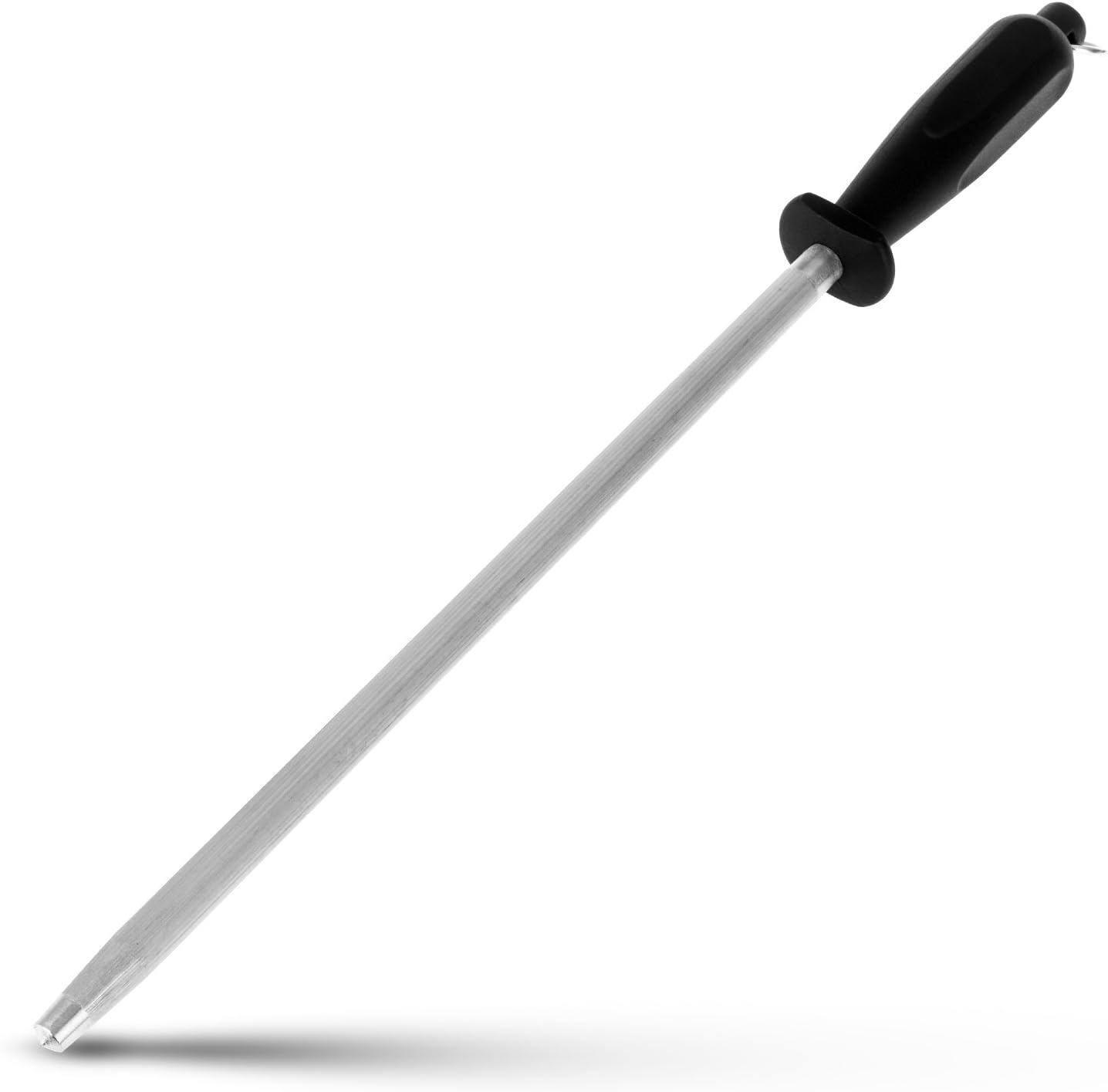
This 12-inch fine carbon steel rod offers full blade coverage at an affordable price. The handle is basic but functional. It’s a no-frills option for those who want reliable steel honing without extra features or ergonomic considerations.
Brand: ALLWIN-HOUSEWARE W · Price when checked: $14.99 · Rating: 4.5 out of 5 (808 ratings)
Pros
- Full 12-inch length covers all knives
- Fine carbon steel surface
- Affordable price point
Cons
- Simple handle lacks ergonomic design
- Not suited for prolonged use due to handle comfort
Best consistent length for all knives: Cutluxe Honing Rod
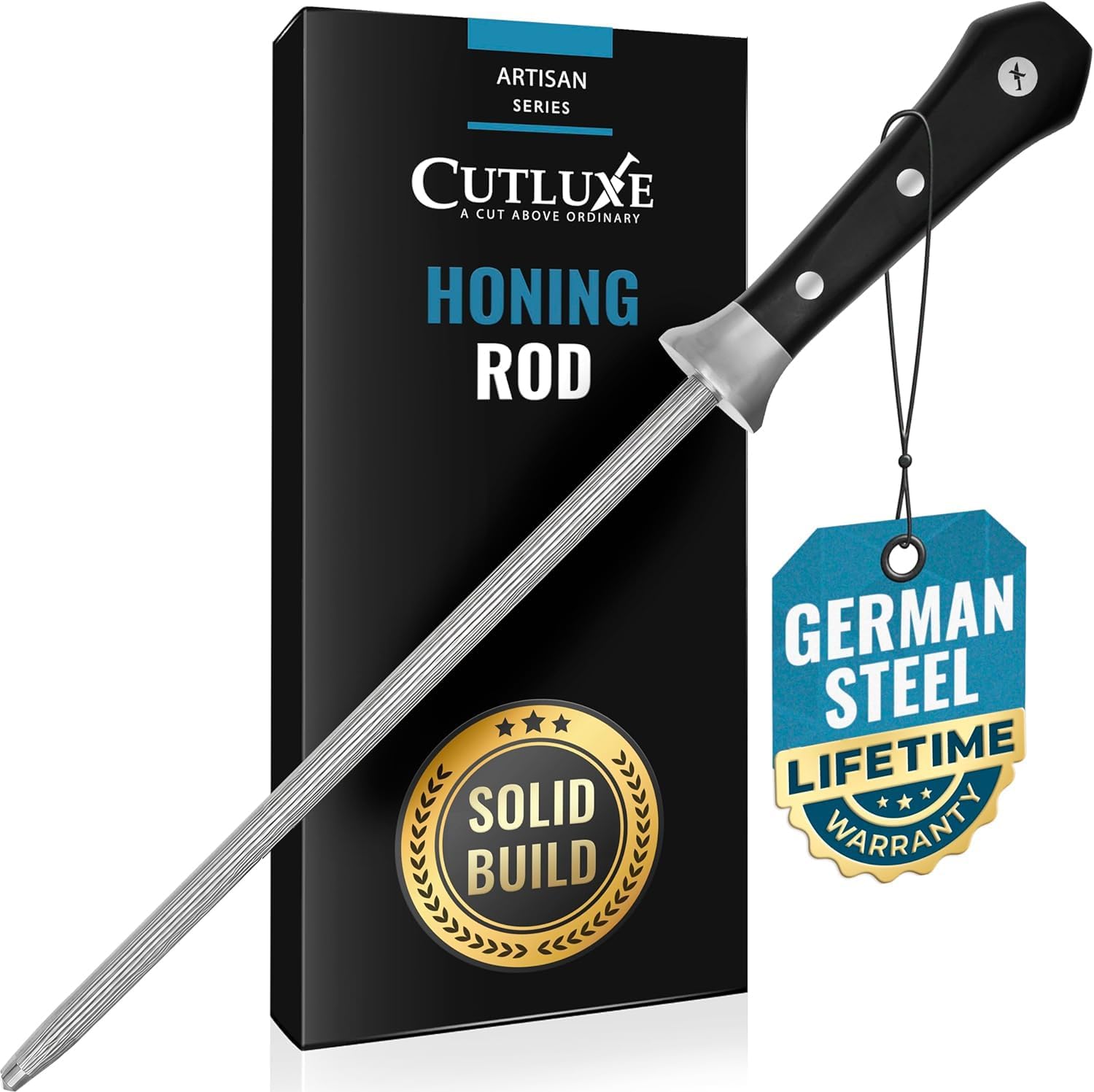
The Cutluxe rod is a classic 10-inch steel honing rod that balances length and usability well for most kitchen knives. It has a clean design with a lifetime warranty. The handle is straightforward and may not fit all hand sizes perfectly but provides steady use for regular honing.
Brand: Cutluxe · Price when checked: $29.99 · Rating: 4.7 out of 5 (1596 ratings)
Pros
- 10-inch length fits most knives
- Lifetime warranty
- Sleek, simple design
Cons
- Handle grip may not be ideal for all
- No special angle guides or coatings
Best professional kitchen use: HOSHANHO Honing Rod 10 Inch

With a solid high carbon steel construction, this 10-inch rod is designed for professional kitchens where durability and consistent edge realignment matter. It’s heavier than budget options, which can cause fatigue but also contributes to stable honing pressure.
Brand: HOSHANHO · Price when checked: $59.99 · Rating: 4.6 out of 5 (8,372 ratings)
Pros
- High carbon steel for durability
- 10-inch length for wide blade coverage
- Professional-grade build quality
Cons
- Heavier, may tire hands during use
- Higher price than basic rods
Best fine finish on Japanese knives: Kimura Professional Ceramic Honing Rod

Kimura’s 10-inch ceramic rod finished to 1200 grit offers a smooth, fine honing surface suited to Japanese-style knives with delicate edges. The polypropylene handle is ergonomic but can become slippery when wet, so care is needed during use.
Brand: Kimura · Price when checked: $29.99 · Rating: 4.6 out of 5 (1344 ratings)
Pros
- 1200 grit ceramic for fine honing
- Ergonomic polypropylene handle
- Ideal for delicate or Japanese blades
Cons
- Handle may become slippery when wet
- Ceramic fragility requires careful handling
Best longer edge coverage: HOSHANHO Honing Rod 12 Inch

This 12-inch version of the HOSHANHO rod provides extra length for thorough edge maintenance on larger knives or long blades. It shares the durable high carbon steel construction but comes at a higher price. Its length benefits chefs with diverse knife sizes.
Brand: HOSHANHO
Pros
- Long 12-inch length covers large knives
- Durable high carbon steel
- Professional-grade quality
Cons
- Price higher than shorter models
- Weight may affect comfort
Best premium gift option: Monbalcon Honing Rod 10”

Monbalcon’s 10-inch German high carbon steel rod comes in a premium gift box, making it suitable for gifting or special occasions. Its professional-grade steel ensures good edge realignment, though there is limited user feedback to confirm long-term durability.
Brand: Monbalcon · Rating: 4.4 out of 5
Pros
- Premium German high carbon steel
- Attractive presentation box
- Professional steel sharpener
Cons
- Limited customer rating data
- Possibly higher cost due to packaging
Best trusted brand ceramic honing: WÜSTHOF 10″ Ceramic Sharpening Rod

WÜSTHOF’s 10-inch ceramic rod leverages the brand’s cutlery heritage. It offers a consistent ceramic surface for regular maintenance but requires careful handling to avoid chipping. The handle design and durability details are less documented, so it suits users who trust established brands.
Brand: WÜSTHOF · Rating: 4.4 out of 5
Pros
- Reputable brand with knife expertise
- Ceramic surface for fine polishing
- 10-inch length covers most knives
Cons
- Fragile ceramic prone to chipping
- Limited info on handle ergonomics
Best stainless steel professional rod: TMiT 10-Inch Honing Rod

This stainless steel rod offers professional-grade hardness and corrosion resistance for users who prefer steel over ceramic. It has an ergonomic handle designed for comfort during frequent honing. Limited user ratings suggest testing before relying on it for heavy use.
Brand: TMiT · Rating: 4.4 out of 5
Pros
- Corrosion-resistant stainless steel
- Ergonomic handle for control
- 10-inch length suitable for kitchen knives
Cons
- Limited user feedback available
- May be too hard for delicate blades
How to choose the right honing rod for your kitchen
Choosing a honing rod depends on the knives you own and how you use them. Steel rods are versatile and durable but require some technique to avoid edge damage. Ceramic rods offer finer polishing but are brittle and need careful handling. Length should at least match your longest blade to ensure complete edge maintenance. If you cook occasionally or have only small knives, a shorter rod may suffice, but frequent users with large chef’s knives should opt for 10 to 12-inch rods.
Avoid honing rods if your knives are very dull or damaged; honing realigns edges but does not sharpen severely worn blades. For those cases, a sharpening stone or professional sharpening service is necessary. Also, if you find maintaining a consistent angle difficult, consider rods with angle guides or invest in professional sharpening tools instead.
Related reading
- 7+ Best Ceramic Honing Rods: Top Picks & Reviews
- Top 5 knife sharpeners for dull German knives: precise edge restoration
- Knife sharpener vs whetstone: understanding their differences
Frequently Asked Questions
How often should I use a honing rod on my kitchen knives?
For regular home cooking, using a honing rod once a week helps maintain a straight edge and prolongs the time between full sharpenings. Professional chefs or frequent users might hone daily. The key is to realign the microscopic edge without removing significant metal, which honing rods are designed for, unlike sharpening stones that grind edges.
Can I use a ceramic honing rod instead of a steel one?
Ceramic rods provide a finer surface that can polish and straighten edges gently, making them suitable for knives requiring delicate maintenance, such as Japanese blades. However, ceramic rods are more brittle and prone to chipping if dropped. Steel rods are more robust and better for general use but may feel coarser. Choose based on your knife type and how careful you are during use.
What angle should I hold the knife when honing?
Most kitchen knives have an edge angle between 15° and 20° per side. Holding the knife at this angle relative to the honing rod ensures the edge is realigned correctly. Some honing rods, like the SHARPAL 111H, offer adjustable angle guides to help maintain consistent angles. Without guides, it takes practice to hold the angle steady for effective honing.
Related: Top 6 ladles for soup: practical picks for everyday use

Rimi Sultana is a home cook from Bangladesh who has cooked for her family every day for the past five years and writes about it at Smart Cooks. Perpetually testing whether internet-famous recipes actually work in a regular home kitchen. Say hello on Facebook or through the contact page.