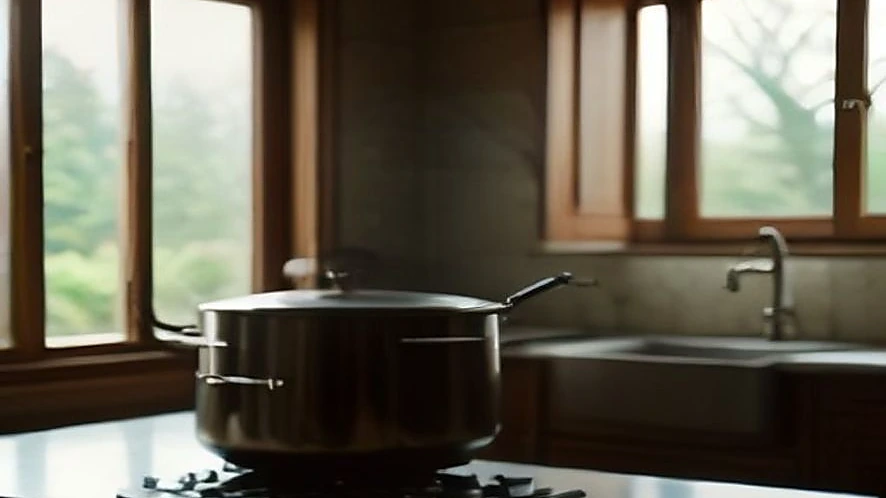
A good tawa for roti and chapati depends primarily on how it manages and distributes heat, as well as its build material and surface texture. These factors influence how the flatbread cooks — whether it puffs properly, browns evenly without burning, and retains softness.
Some links in this post are affiliate links. If you buy through them we may earn a small commission at no extra cost to you — it never changes which products we recommend.
Choosing the right tawa involves understanding how thickness, material conductivity, and shape affect heat retention and contact with the dough. A tawa that heats unevenly or has a warped surface will produce inconsistent chapatis, while one that is too heavy or poorly finished can be cumbersome or require special care.
What actually matters
Not all tawas are created equal, and the deciding features come down to how they interact with heat and dough. The mechanisms of heat conduction, material reactivity, and surface finish determine performance more than any marketing buzzwords.
Material and heat conduction
Cast iron tawas have high thermal mass, meaning they take longer to heat but retain heat steadily, allowing uniform cooking. Thin aluminium or non-stick tawas heat quickly but may have hot spots causing uneven browning. Steel tawas lie somewhere in between but may warp if thin.
The material also affects how quickly the tawa cools when the chapati is placed on it, influencing puffing and cooking time. Cast iron’s heat retention helps maintain temperature even with repeated chapatis.
Quantitatively, cast iron tawas can weigh between 2.5 to 3.5 kg for a 30 cm diameter, providing significant heat capacity. Aluminium tawas typically weigh around 1 to 1.5 kg for similar sizes, heating faster but cooling quickly. This difference means cast iron tawas maintain surface temperature with repeated chapati cooking, preventing temperature drops that cause uneven puffing.
In terms of thermal conductivity, aluminium has around 205 W/m·K, significantly higher than cast iron’s 55 W/m·K. This means aluminium tawas heat up rapidly but also lose heat quickly, requiring more attentive temperature control during cooking.
Consequences of poor heat conduction include uneven cooking, resulting in chapatis with burnt spots or undercooked areas. This affects texture and taste, making the choice of material critical for consistent results.
Surface texture and seasoning
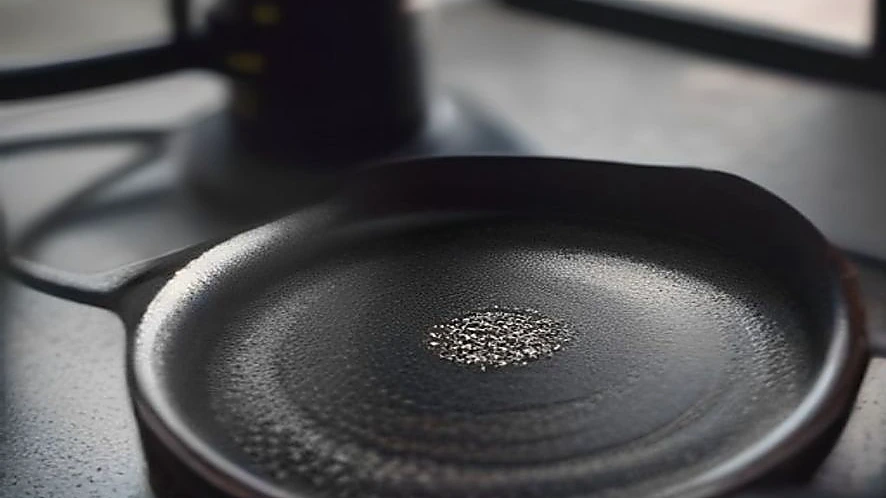
A smooth, properly seasoned surface prevents dough from sticking and helps form an even contact layer with the flatbread. Some tawas come pre-seasoned; others require manual seasoning to build a natural non-stick patina. Non-stick coatings provide convenience but wear out over time and can limit high-heat cooking.
Surface concavity or flatness also affects how the roti cooks. Slightly concave surfaces help the dough sit in the centre with even heat exposure, but excessive curvature can impede rolling or flipping.
Seasoning a cast iron or traditional iron tawa involves polymerising oil at high temperature to create a durable, hydrophobic layer. This process improves with repeated use, enhancing non-stick properties and reducing rust risk. Without proper seasoning, iron tawas are prone to sticking and corrosion.
Non-stick coatings, typically PTFE or ceramic, offer initial non-stick benefits but degrade after approximately 1 to 3 years depending on usage. High-heat cooking above 260°C can damage these coatings, limiting their application for certain recipes requiring intense heat.
Surface roughness is measured in microns; a finely polished tawa surface (~0.5 microns roughness) promotes even contact with dough and better browning. Rough or pitted surfaces trap dough, causing sticking and uneven cooking.
Concave tawas, with a curvature radius designed to keep batter or dough pooled in the center, are particularly effective for dishes like dosas and parathas. However, for chapatis, the flat surface is preferred as it facilitates rolling and flipping without dough distortion.
Size, weight and handle design
Diameter generally ranges from 24 to 33 cm for home use; a larger tawa offers more working space but takes longer to heat. Weight influences handling—heavier tawas hold heat better but are harder to manoeuvre and clean.
Handles should provide a secure grip and remain cool enough to handle safely, especially on gas stoves where flame contact is possible. Riveted handles tend to be more durable than welded ones.
A 28 cm diameter tawa is often considered optimal for home kitchens, balancing sufficient cooking surface area with manageable weight. Larger tawas (30-33 cm) are preferred for batch cooking but can weigh upwards of 3 kg, which might be cumbersome.
Handle length typically ranges from 15 to 20 cm, designed to keep hands away from heat. Materials such as Bakelite or silicone-coated handles offer heat resistance, while metal handles require insulation or protective gloves.
Weight differences impact cooking endurance; a heavier tawa maintains constant temperature during multiple chapati rounds, reducing cooking time variability. However, increased weight can cause fatigue during flipping and cleaning, especially for elderly users.
Poor handle design can lead to accidents or burns. Handles that become hot or loosen over time reduce safety and user comfort, emphasizing the importance of secure rivet attachments and heat-resistant materials.
How to choose the right tawa for you
If you primarily cook on gas stoves and want versatility, a hard anodised aluminium tawa offers a good balance of heat conduction and durability. For induction cooktops, check compatibility carefully as many aluminium tawas are not suitable. Cast iron tawas excel at consistent heat retention and traditional cooking but require more maintenance and patience to heat up.
Non-stick tawas simplify cleaning but their coatings wear out and limit high-heat cooking techniques. Consider the size and weight to match your comfort in handling and storage. If you prefer authentic seasoning and developing a patina over time, iron tawas are worth the extra care. For occasional use or small batches, lightweight options provide convenience but may sacrifice even cooking.
In making a choice, consider your cooking volume: heavy cast iron tawas are ideal for families cooking multiple chapatis in quick succession due to their thermal inertia, while lightweight non-stick tawas suit occasional cooks or small batches.
Budget is another factor; cast iron tawas often require seasoning and ongoing maintenance but last decades, whereas non-stick tawas may need replacement every few years due to coating degradation.
Environmental considerations include the material’s recyclability and manufacturing impact. Cast iron tawas have a longer lifespan and are fully recyclable, whereas non-stick coatings involve synthetic chemicals with environmental footprints.
Ultimately, the right tawa balances your cooking style, stove type, maintenance willingness, and desired cooking results.
| Pick | Best for | Material & Size | Watch out for |
|---|---|---|---|
| Hawkins Futura 24 cm Hard Anodised Induction Tawa | Everyday flatbread cooking | Hard anodised, induction, 24 cm | Small for large parathas or dosas |
| SENSARTE 12-Inch Nonstick Dosa Pan | Nonstick dosa and roti | Nonstick, granite, 12-inch | Coating will not last as long as iron |
| Hawkins Futura 28 cm Hard Anodised Tawa | Durability and even cooking | Hard anodised, stainless steel, 28 cm | Heavier than thin aluminium tawas |
| Victoria 12-Inch Cast Iron Tawa | Traditional cast iron heat retention | Cast iron, 12-inch | Heavy |
| Innerwell 12-Inch Honeycomb Dosa Pan | Stainless body with nonstick | Stainless steel, nonstick, 12-inch | Costs more than plain nonstick |
| Hawkins Futura 26 cm Extra-Thick Tawa | Extra-thick base | Hard anodised, 26 cm | 26 cm is small for large dosas |
| Mrigakshi Handmade Iron Tawa | Authentic iron tawa enthusiasts | Unseasoned iron, 28 cm flat | Needs seasoning and drying to prevent rust |
From my kitchen
Once, I tried cooking chapatis on a lightweight non-stick tawa that heated up quickly but had inconsistent temperature across its surface. Some chapatis puffed nicely while others burnt spots quickly. Switching to a cast iron tawa with a bit more weight and seasoning fixed this by providing stable heat retention, resulting in evenly puffed, soft rotis even during busy cooking sessions.
In extended cooking sessions, the cast iron tawa maintained a consistent surface temperature of approximately 180°C, which is ideal for chapati puffing. In contrast, the lightweight non-stick tawa’s temperature fluctuated between 150°C and 210°C, causing uneven cooking results. This experience highlights the importance of thermal mass and seasoning in achieving consistent flatbread quality.
Worth Considering
Best for everyday flatbread cooking: Hawkins Futura 24 cm Hard Anodised Induction Tawa Hard Anodised Induction Tawa

A 24 cm hard anodised tawa from Hawkins’ Futura range with an induction-compatible base. Hard anodised aluminium heats quickly and evenly, which suits a steady run of rotis.
Price when checked: $28.36 · Rating: 4.2 out of 5 (905 ratings)
Pros
- Hard anodised surface
- Works on induction
- Compact 24 cm size
Cons
- Small for large parathas or dosas
- Needs gentle cleaning to protect the finish
Best for nonstick dosa and roti: SENSARTE 12-Inch Nonstick Dosa Pan

Not a traditional tawa but a flat 12-inch granite-coated nonstick pan sold for crepes and dosa. The coating needs very little oil, and the wide surface handles large dosas.
Price when checked: $29.99 · Rating: 4.3 out of 5 (6.9K ratings)
Pros
- Granite nonstick coating needs little oil
- Wide 12-inch cooking surface
- Thousands of positive reviews
Cons
- Coating will not last as long as iron
- Avoid metal utensils
Best for durability and even cooking: Hawkins Futura 28 cm Hard Anodised Tawa

A 28 cm hard anodised tawa from Hawkins’ Futura range with a stainless steel handle. Hard anodised aluminium heats evenly, and the larger size suits bigger rotis and parathas.
Price when checked: $32.99 · Rating: 4.1 out of 5 (3.7K ratings)
Pros
- Tough hard anodised surface
- 28 cm cooking area
- Stainless steel handle
Cons
- Heavier than thin aluminium tawas
- Needs gentle cleaning to protect the finish
Best for traditional cast iron heat retention: Victoria 12-Inch Cast Iron Tawa
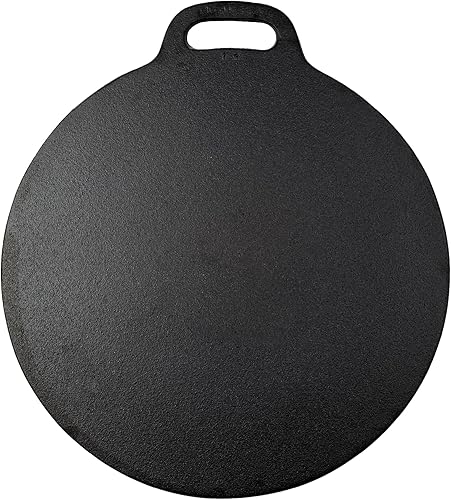
A 12-inch cast iron tawa with a loop handle from Victoria, the Colombian foundry. Cast iron holds its heat, so the third roti cooks as evenly as the first.
Price when checked: $30.79 · Rating: 4.4 out of 5 (1.9K ratings)
Pros
- Excellent heat retention
- 12-inch surface
- Doubles as a pizza or crepe pan
Cons
- Heavy
- Must be dried and oiled to prevent rust
Best for stainless body with nonstick: Innerwell 12-Inch Honeycomb Dosa Pan

A 12-inch pan with a stainless steel body and a honeycomb nonstick coating, sold for crepes and dosa. The raised steel pattern protects the coating better than a plain nonstick surface.
Price when checked: $41.99 · Rating: 4.3 out of 5 (314 ratings)
Pros
- Stainless steel body
- Honeycomb nonstick pattern
- PFOA-free coating
Cons
- Costs more than plain nonstick
- Flat rather than concave like a classic tawa
Best for extra-thick base: Hawkins Futura 26 cm Extra-Thick Tawa

Hawkins’ 26 cm hard anodised tawa is made extra thick, which evens out hot spots and helps parathas cook through without scorching.
Price when checked: $37.56 · Rating: 4.3 out of 5 (564 ratings)
Pros
- Extra-thick base
- Hard anodised finish
- Stainless steel handle
Cons
- 26 cm is small for large dosas
- Heavier than standard tawas
Best for authentic iron tawa enthusiasts: Mrigakshi Handmade Iron Tawa

A handmade plain iron (loha) tawa, the kind many Indian kitchens have used for generations. Plain iron needs seasoning but improves with use.
Price when checked: $26.99 · Rating: 3.2 out of 5 (10 ratings)
Pros
- Traditional handmade iron
- No coating to wear off
- Low price
Cons
- Needs seasoning and drying to prevent rust
- Very few reviews so far
How to choose the right tawa for you
If you primarily cook on gas stoves and want versatility, a hard anodised aluminium tawa offers a good balance of heat conduction and durability. For induction cooktops, check compatibility carefully as many aluminium tawas are not suitable. Cast iron tawas excel at consistent heat retention and traditional cooking but require more maintenance and patience to heat up.
Non-stick tawas simplify cleaning but their coatings wear out and limit high-heat cooking techniques. Consider the size and weight to match your comfort in handling and storage. If you prefer authentic seasoning and developing a patina over time, iron tawas are worth the extra care. For occasional use or small batches, lightweight options provide convenience but may sacrifice even cooking.
In making a choice, consider your cooking volume: heavy cast iron tawas are ideal for families cooking multiple chapatis in quick succession due to their thermal inertia, while lightweight non-stick tawas suit occasional cooks or small batches.
Budget is another factor; cast iron tawas often require seasoning and ongoing maintenance but last decades, whereas non-stick tawas may need replacement every few years due to coating degradation.
Environmental considerations include the material’s recyclability and manufacturing impact. Cast iron tawas have a longer lifespan and are fully recyclable, whereas non-stick coatings involve synthetic chemicals with environmental footprints.
Ultimately, the right tawa balances your cooking style, stove type, maintenance willingness, and desired cooking results.
Related reading
- Best Cutting Board Materials That Won’t Dull Your Knives
- Best Kitchen Table Finishes: Durable & Protective Options
- Best Portable Induction Cooktops with Precise Temperature Control
Frequently Asked Questions
What material is best for a tawa to cook soft chapatis?
Cast iron tawas are often preferred for soft chapatis because their high thermal mass retains and distributes heat evenly, allowing the bread to cook slowly and puff properly. However, they require seasoning and maintenance to keep the surface non-stick and rust-free. Hard anodised aluminium tawas heat faster and are easier to handle but may not retain heat as steadily, which can affect puffing.
Can I use a non-stick tawa on an induction stove?
Most non-stick tawas are made with aluminium bases, which are not magnetic and therefore incompatible with induction cooktops. Some manufacturers offer induction-compatible models with a stainless steel base layer, so check product specifications before purchase. Using an incompatible tawa on induction will result in no heating.
How do I maintain and season a traditional iron tawa?
To season an iron tawa, clean it thoroughly and dry completely, then apply a thin layer of cooking oil all over the surface. Heat the tawa on medium flame for about 10-15 minutes until the oil polymerises, creating a blackened patina that prevents sticking and rust. Regular seasoning after use and avoiding soap during cleaning helps maintain this protective layer.

Rimi Sultana is a home cook from Bangladesh who has cooked for her family every day for the past five years and writes about it at Smart Cooks. Perpetually testing whether internet-famous recipes actually work in a regular home kitchen. Say hello on Facebook or through the contact page.