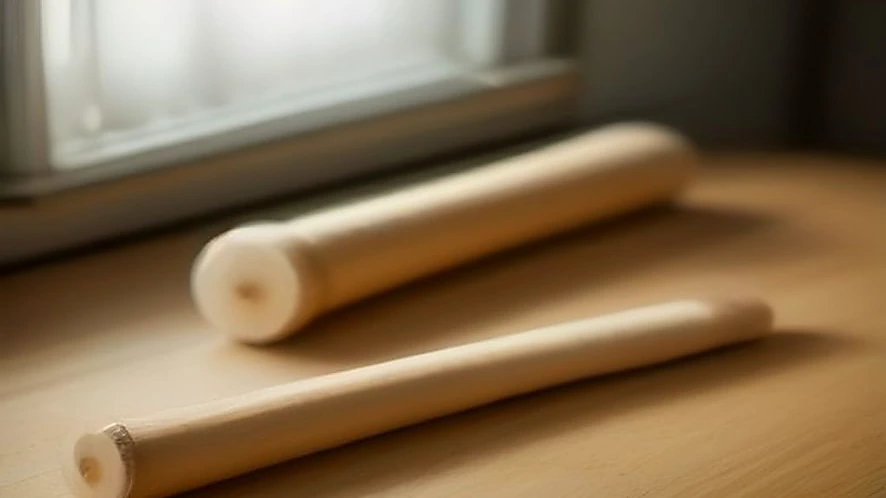
A rolling pin for pie crust is not just a wooden cylinder; its effectiveness depends on how it interacts with dough, distributing pressure evenly and maintaining the right contact surface. Key factors include the rolling pin’s size, shape, weight, and how it handles dough temperature and stickiness.
Some links in this post are affiliate links. If you buy through them we may earn a small commission at no extra cost to you — it never changes which products we recommend.
A poor rolling pin can cause uneven dough thickness leading to inconsistent baking, or it can stick and tear delicate pastry. Understanding the mechanical differences among rolling pins is essential to choosing one that suits your specific baking habits and dough types.
What actually matters
Choosing a rolling pin involves more than just picking a design. The construction and shape directly affect how dough is rolled out, impacting thickness control and ease of use.
The physics of rolling dough involves pressure distribution, friction, and temperature control. A rolling pin’s weight influences the amount of force applied; heavier pins require less downward pressure but can be tiring to use for extended periods. Conversely, lighter pins demand more manual effort, which can result in inconsistent thickness if the pressure varies.
Friction between the rolling pin and dough surface is crucial. Too much friction causes sticking and tearing, while too little results in slipping and uneven rolling. Surface texture and material affect this balance significantly.
Temperature plays a key role, especially for butter-rich pie crusts. Keeping dough cold prevents butter from melting prematurely, which is vital for flaky texture. Rolling pins made of materials with high thermal mass, like marble, help maintain dough temperature during rolling.
Shape and size
French-style rolling pins are tapered and typically lack handles, allowing bakers to use wrist motion for precise control of pressure and dough thickness. This tapered design enables rolling from centre to edges without catching or tearing the dough.
Straight rolling pins with handles provide a fixed grip but can apply uneven pressure if not handled carefully, sometimes causing thicker edges or thin patches.
Size matters too; longer pins cover more dough surface for faster rolling, while shorter pins offer better control on small batches.
Typical French rolling pins range from 12 to 20 inches in length, with diameters tapering from about 1.5 inches at the center to 1 inch at the ends. This tapering facilitates nuanced pressure adjustments using wrist movements. In contrast, straight rolling pins with handles often measure around 18 inches long with a consistent diameter of about 2 inches, providing stability but less flexibility in pressure modulation.
The weight of rolling pins varies widely: wooden pins usually weigh between 1 to 2 pounds, marble pins can weigh 3 to 5 pounds, and stainless steel pins fall somewhere in between. Heavier pins reduce the effort needed to flatten dough but may increase fatigue over long rolling sessions.
Material and surface texture
Wood is the traditional material, offering a naturally porous surface that grips dough slightly, reducing slipping but sometimes requiring flour to prevent sticking.
Marble pins are heavier, helping spread dough without extra effort, and their cool surface helps keep butter intact in pie crusts. However, they can be slippery and less forgiving on uneven surfaces.
Stainless steel pins resist temperature transfer well if chilled, are easy to clean, and offer a smooth surface that some find sticks less to dough. However, the smoothness can cause dough to cling in certain recipes if not properly floured.
Porosity of wood can absorb some moisture from the dough surface, which can help reduce sticking but also requires proper cleaning to avoid bacterial buildup. Hardwoods like maple and beech are preferred for their durability and fine grain.
Marble’s high thermal conductivity (around 3 W/m·K) allows it to absorb heat quickly from the dough, keeping it cool. This is beneficial for maintaining butter layers in pie crusts but demands a stable, flat surface to prevent slipping. The density of marble (approximately 2.7 g/cm³) adds substantial weight, typically between 3 to 5 pounds for standard pins, which helps in rolling but can cause user fatigue.
Stainless steel, with a thermal conductivity of about 15 W/m·K, can also be chilled before use. Its non-porous surface prevents dough absorption and is hygienic, but the smoothness increases the risk of sticking if the dough is not adequately floured.
Additional features
Adjustable rolling pins come with removable rings or guides to control dough thickness precisely, handy for bakers who need consistent results but add complexity and cleaning considerations.
Ergonomics, such as comfortable handles or balanced weight distribution, affect rolling efficiency and reduce fatigue during extended use.
Thickness rings typically range from 2mm to 10mm, allowing bakers to achieve uniform dough thickness critical for even baking. However, these rings add to the pin’s bulk and require disassembly for thorough cleaning, which can be inconvenient.
Ergonomic designs reduce strain on the wrists and hands, especially important for professional bakers or those preparing large quantities. Balanced weight distribution ensures the rolling pin does not tilt during use, promoting even pressure application.
Choosing the right rolling pin for your kitchen
If you primarily bake delicate pie crusts where precise thickness and temperature control matter, tapered wooden or marble pins are the best choice. Marble pins require a sturdy, level surface and some experience to manage their weight and slipperiness. For those who want consistency without mastering technique, adjustable rolling pins with thickness rings simplify control at the expense of simplicity and ease of cleaning.
If budget is a concern or you prefer traditional designs, a long wooden rolling pin with handles offers versatility for most dough types. However, handle pins reduce the wrist’s ability to modulate pressure, which can be a drawback for flaky pastry.
Some bakers should reconsider buying a rolling pin altogether if they rarely bake pies or prefer no-rolling methods like press-in crusts or refrigerated dough discs. In such cases, investing in a quality rolling pin is less justified.
Considering the baking frequency and dough types is essential. For instance, a home baker making pies monthly may prioritize ease of cleaning and versatility, favoring wooden pins with handles. In contrast, a pastry chef specializing in French-style tarts may invest in multiple pins, including tapered wooden and marble types, to optimize rolling precision and dough temperature control.
Maintenance also varies by material: wooden pins require occasional oiling to prevent cracking, marble pins need careful handling to avoid chipping, and stainless steel pins demand regular cleaning to maintain their finish.
Environmental factors, such as kitchen humidity and counter surface, influence rolling pin performance. Wooden pins may absorb moisture and expand in humid conditions, affecting rolling consistency, while marble and steel pins are less susceptible but can be cold to touch in low temperatures.
| Pick | Best for | Key spec | Watch out for |
|---|---|---|---|
| Geesta Adjustable Wood | Thickness control via rings | 5 thickness rings (mm not specified) | Complex cleaning, bulkier than plain pins |
| KARRYOUNG Natural Rubberwood | Affordable general use | Traditional wood with handles, 17-inch length | Handles limit wrist precision |
| KAFOOR Marble Rolling Pin | Cold doughs needing minimal sticking | 16.7″ x 2″ solid marble, polished surface | Heavy, can slip on uneven surfaces |
| KARRYOUNG French Rolling Pin | Traditional tapered rolling | 17-inch tapered wood, no handles | Requires skill to master pressure control |
| Mrs. Anderson’s Baking | Compact size for small batches and kids | 7″ x 1.5″ German beechwood, ball bearings | Short length limits dough coverage |
| HELFERX Beech Wood | Comfortable grip and balanced weight | 17.6″ wood with ergonomic handles | Handles reduce nuanced control |
| Berglander Stainless Steel | Durable and easy to clean | 16.7-inch matte finish stainless steel | Smooth surface may stick without flour |
From my kitchen
Once I tried rolling a pie crust with a marble pin straight out of the fridge, aiming to keep the butter cold. The dough stuck despite the polished surface, and the pin slipped on my uneven countertop, causing a tear. I resolved this by warming the marble slightly in my hands to reduce the chill just enough and adding a light dusting of flour to the dough, preventing sticking and improving control.
Worth Considering
Best for precision thickness: Geesta Adjustable Wood

This rolling pin is designed to help bakers achieve exact dough thickness using five removable rings, which prevent over-rolling. It’s ideal for those who want consistency in pie crust thickness without guesswork. However, it is bulkier and more complex to clean than a simple pin.
Brand: Geesta · Price when checked: $33.29 · Rating: 4.6 out of 5 (385 ratings)
Pros
- Provides consistent dough thickness control
- Includes measurement guide for precision
- Suitable for various dough types
Cons
- More parts to clean and store
- Bulkier than traditional rolling pins
Best budget general use: KARRYOUNG Natural Rubberwood
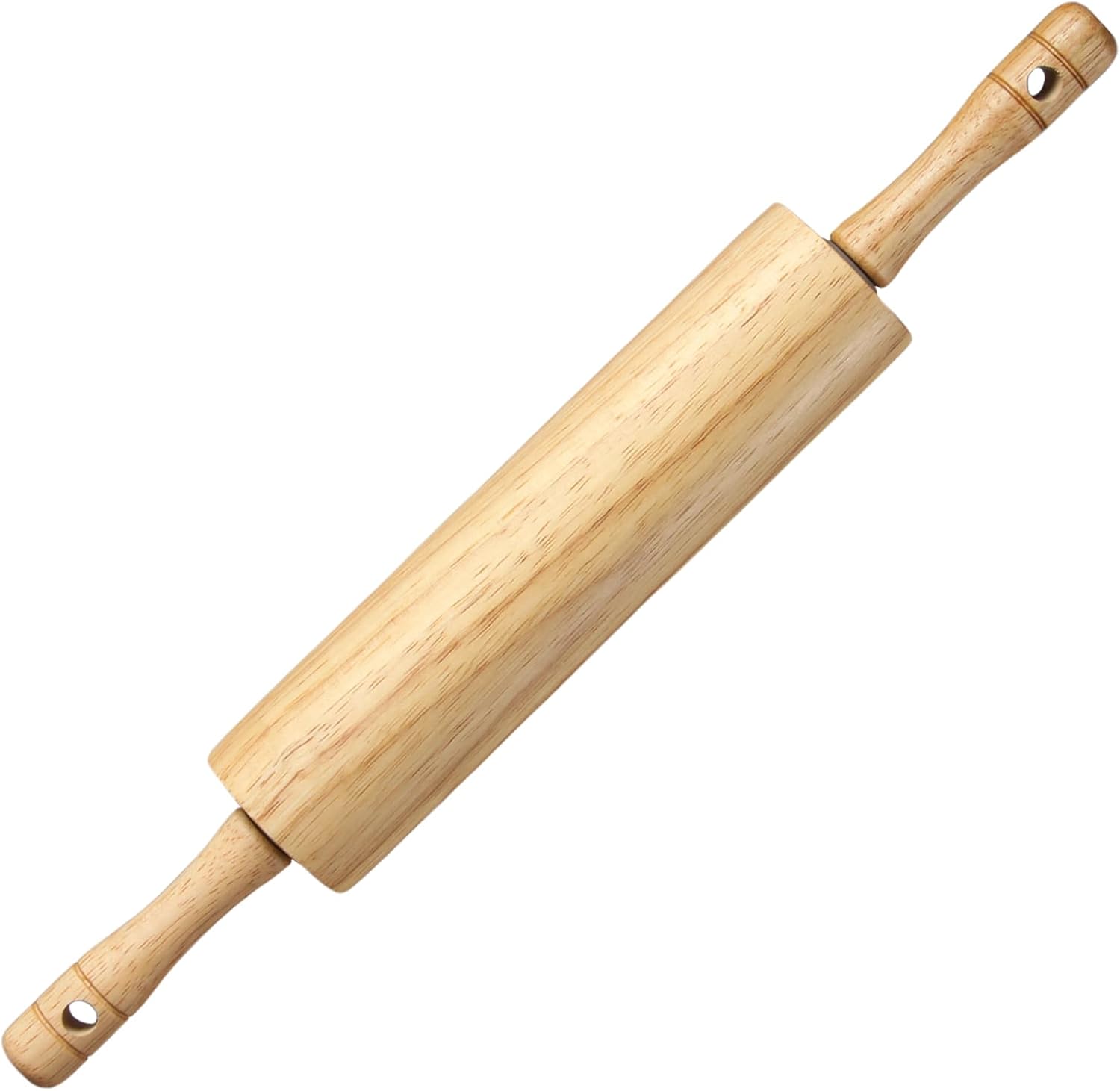
A straightforward wood rolling pin with handles, it offers a smooth surface and enough length to roll out most pie crusts efficiently. Its affordability and traditional design suit everyday bakers, though the fixed handles limit wrist motion for nuanced pressure.
Brand: KARRYOUNG · Price when checked: $6.99 · Rating: 4.8 out of 5 (1,168 ratings)
Pros
- Affordable and widely available
- Smooth rubberwood surface
- Comfortable handles for grip
Cons
- Handles reduce wrist control
- Requires flour to prevent sticking
Best for cold dough and heavy crusts: KAFOOR Marble Rolling Pin

Heavy marble construction keeps the dough cool, preserving butter layers critical for flaky pie crusts. The polished surface reduces sticking without much flour, but its weight can tire the user and the smoothness means it may slip on uneven counters.
Brand: KAFOOR · Price when checked: $20.99 · Rating: 4.5 out of 5 (385 ratings)
Pros
- Retains cool temperature for better dough handling
- Polished non-stick surface
- Includes wooden cradle for storage
Cons
- Heavy to use for extended periods
- Can slip without careful handling
Best for experienced bakers: KARRYOUNG French Rolling Pin

The classic tapered design allows precise control through wrist motion, ideal for those accustomed to traditional French rolling pins. It is lightweight and smooth but requires practice to avoid uneven dough thickness, making it less suitable for beginners.
Brand: KARRYOUNG · Price when checked: $8.99 · Rating: 4.8 out of 5 (385 ratings)
Pros
- Tapered shape supports nuanced rolling
- Lightweight and easy to manoeuvre
- Smooth wood surface
Cons
- Not beginner-friendly
- No handles may feel awkward initially
Best for small batches and kids: Mrs. Anderson’s Baking

Its compact size and German beechwood construction with steel ball bearings allow smooth rolling with minimal effort, perfect for children or small batch doughs. Its length limits coverage for larger crusts, so it’s best as a niche tool rather than an all-purpose pin.
Brand: Mrs. Anderson’s Baking · Price when checked: $14.99 · Rating: 4.6 out of 5 (139 ratings)
Pros
- Smooth rolling action due to ball bearings
- Compact size easy for kids to use
- Durable German beechwood
Cons
- Short length limits dough coverage
- Not ideal for larger pastry projects
Best for comfort and control: HELFERX Beech Wood

Designed with ergonomic handles and balanced weight distribution, this pin offers a comfortable grip for extended rolling sessions. While handles provide control, they restrict the wrist’s ability to vary pressure, which may not suit all dough types.
Brand: HELFERX · Price when checked: $9.99 · Rating: 4.6 out of 5 (385 ratings)
Pros
- Ergonomic handles reduce hand fatigue
- Balanced weight for consistent rolling
- Durable beech wood construction
Cons
- Handles limit wrist pressure control
- May require extra flour to prevent sticking
Best for durability and hygiene: Berglander Stainless Steel

Stainless steel offers a hygienic, easy-to-clean surface that resists dough absorption and staining. Its matte finish reduces glare and slipping, but the smooth surface can cause certain sticky doughs to cling unless well-floured.
Brand: Stainless · Rating: 4.7 out of 5
Pros
- Durable, non-porous surface
- Easy to sanitize and maintain
- Cool metal helps keep dough firm
Cons
- Smoothness can cause sticking without flour
- Heavier than wooden pins
Choosing the right rolling pin for your kitchen
If you primarily bake delicate pie crusts where precise thickness and temperature control matter, tapered wooden or marble pins are the best choice. Marble pins require a sturdy, level surface and some experience to manage their weight and slipperiness. For those who want consistency without mastering technique, adjustable rolling pins with thickness rings simplify control at the expense of simplicity and ease of cleaning.
If budget is a concern or you prefer traditional designs, a long wooden rolling pin with handles offers versatility for most dough types. However, handle pins reduce the wrist’s ability to modulate pressure, which can be a drawback for flaky pastry.
Some bakers should reconsider buying a rolling pin altogether if they rarely bake pies or prefer no-rolling methods like press-in crusts or refrigerated dough discs. In such cases, investing in a quality rolling pin is less justified.
Related reading
- Best Large & Easy-to-Clean Spoon Rests
- Best Under Cabinet Smart Lights with Motion Sensor for Your Kitchen
- Budget vs Premium Espresso Machines: What the Price Actually Buys You
Frequently Asked Questions
Why is a tapered rolling pin better for pie crust?
A tapered rolling pin allows you to apply pressure more precisely by using wrist movements rather than arm movements. This helps roll dough evenly from the center outward, reducing the risk of tearing or overworking the edges, which is essential for a tender, flaky pie crust.
Can I use a marble rolling pin for all types of dough?
Marble rolling pins are excellent for cold, butter-rich doughs like pie crust because they stay cool and prevent butter from melting. However, their weight and smooth surface can make them less ideal for very sticky or soft doughs unless you use enough flour and a stable surface.
How do adjustable rolling pins work and are they worth it?
Adjustable rolling pins come with removable rings that set a fixed gap between the pin and the surface, ensuring uniform dough thickness. They are useful for bakers needing repeatable precision but add complexity in cleaning and may feel bulky compared to simpler pins.
Related: Top 8 marinade injectors for turkey: precise tools for juicy results

Rimi Sultana is a home cook from Bangladesh who has cooked for her family every day for the past five years and writes about it at Smart Cooks. Perpetually testing whether internet-famous recipes actually work in a regular home kitchen. Say hello on Facebook or through the contact page.