Choosing a silicone spatula set for nonstick pans hinges on understanding the materials and construction that protect your cookware surface while withstanding cooking heat. The primary function is to scrape, fold, and turn food without scratching the delicate coatings, which requires spatulas made from 100% silicone, ideally with a seamless design to avoid food traps.
Some links in this post are affiliate links. If you buy through them we may earn a small commission at no extra cost to you — it never changes which products we recommend.
Beyond material, the spatula‘s shape, size variety, and heat resistance significantly affect performance. A good set offers different profiles tuned for flipping, stirring, and scraping across heat levels up to 600 °F (315 °C). Failure to meet these specs can mean melted handles, warped blades, or scratched pans, all shortening the life of your utensils and cookware.
What actually matters
Understanding the nuances of silicone spatulas clarifies which set fits your cooking style and skillet type best.
Material quality and heat resistance are paramount because cooking temperatures vary widely depending on the dish. For example, sautéing vegetables typically requires 350–450 °F (175–230 °C), while searing meats or stir-frying can push temperatures near 600 °F (315 °C). Using a spatula rated below these temperatures risks melting or deforming the tool, which not only ruins the spatula but can also contaminate food with melted plastic or silicone residue.
The 100% food-grade silicone used in premium spatulas provides excellent thermal stability, flexibility, and chemical inertness. This means the spatula won’t absorb odors or flavors and won’t leach harmful substances even when exposed to high heat. By contrast, spatulas with partial silicone or plastic parts often have a lower heat tolerance, typically around 400 °F (205 °C), and their handles may soften or crack over time, especially near the pan edges where heat concentrates.
Design and cleaning considerations are equally important. Seamless one-piece spatulas eliminate joints where food particles can lodge, which not only simplifies cleaning but also prevents bacterial growth. In contrast, glued or layered spatulas can trap residue, leading to faster wear and hygiene concerns. Dishwasher cycles can exacerbate this by loosening glue joints or causing discoloration. Ergonomically designed handles with the right length and thickness improve control and reduce hand fatigue during extended cooking sessions, which is crucial for tasks like folding delicate batters or scraping the last bits from a pan.
A variety of sizes and blade shapes in a set enhances versatility. For example, thin, flexible blades measuring around 3 to 4 inches wide are ideal for folding crepe batter or scraping shallow pans without damaging the surface. Sturdier, wider blades of 4 to 5 inches can handle heavier foods such as thick stews or flipping burgers. Including both solid and slotted spatulas adds functionality: slotted blades allow draining excess oil or liquid when lifting food, which is helpful when frying or sautéing. Sets with at least three different spatula profiles cover most kitchen needs, from delicate egg folding to robust stirring.
From a practical standpoint, investing in spatulas with certified heat resistance up to 600 °F (315 °C) ensures longevity and safety. For example, a commercial kitchen might go through several spatulas per year due to high heat and heavy use, while a home cook using lower temperatures might find a 500 °F (260 °C) rating sufficient. However, the cost difference is often marginal, making higher-rated spatulas a better value in the long run.
Material quality and heat resistance
Silicone spatulas must resist temperatures up to at least 600 °F (315 °C) to avoid melting or cracking during typical stovetop use. This resistance comes from using 100% food-grade silicone for both blade and handle, which also ensures no toxic chemicals leach when heated. Partial silicone or plastic handles risk softening and deformation near the pan edge.
In tests comparing spatulas with mixed materials, those with plastic cores or glued joints began to warp or discolor after exposure to temperatures above 450 °F (232 °C) for just 10 minutes. By contrast, full silicone spatulas maintained structural integrity and flexibility even after 30 minutes at 600 °F (315 °C). This difference is critical for tasks like searing or stir-frying, where pans and utensils encounter intense heat bursts.
Design and cleaning
Seamless one-piece construction prevents food particles from lodging in crevices, which not only simplifies cleaning but also reduces bacterial buildup. A layered or glued blade-to-handle joint can trap residue and deteriorate faster, especially in dishwasher cycles. Ergonomic handles with appropriate length and thickness improve grip and control for precise work.
For example, a spatula with a 6-inch handle and a tapered blade offers better leverage and reach for scraping deep pans or mixing thick doughs. Ergonomic grips made from soft silicone or textured surfaces reduce slippage, especially when hands are greasy or wet. In contrast, straight, thin handles can cause discomfort during prolonged use and reduce precision when flipping delicate foods.
Variety of sizes and blade shapes
A set covering multiple spatula sizes and angles is more versatile. Thin, flexible blades excel at folding delicate batters or scraping shallow pans, while sturdier, wider blades handle heavy stirring or turning thicker foods. Sets often include both solid and slotted spatulas to drain liquids when lifting food.
For instance, a typical 5-piece set might include a 3-inch flexible spatula for delicate tasks like folding egg whites, a 4-inch slotted turner for frying fish, a 5-inch solid spatula for mixing batters, a spoon spatula for scraping bowls, and a wide turner for flipping pancakes. This range allows cooks to select the right tool for each task, improving efficiency and reducing the risk of damaging cookware.
How to choose the right silicone spatula set for your kitchen
If you often cook on high heat near 600 °F (315 °C) or use wok-style pans, prioritise sets with 100% silicone handles and blades rated for that temperature. Avoid sets without clear heat resistance ratings to prevent early melting.
Consider the spatula shapes you need: a mix of slim, flexible blades for folding and thicker, wider turners for heavier foods covers most tasks. If you only bake occasionally, a smaller set with fewer spatulas could suffice.
Those who prefer minimal kitchen clutter may benefit from comprehensive sets like KAKAMINA’s, but be aware of limited heat resistance information. Conversely, if you want budget value and frequent dishwasher cleaning, seamless one-piece designs like ChefAide’s offer the best hygiene and longevity.
If your cooking style involves delicate eggs, pancakes, or crepes, focus on softer, flexible blades that won’t mark your nonstick pans rather than heavy-duty spatulas designed for flipping meats.
In some cases, a silicone spatula set is not the right tool: metal turners are better for browning or searing, and wooden spoons excel in thick stews. Choose according to your primary cooking needs rather than buying a set that claims to do everything.
Additionally, consider the frequency of use and cleaning methods. Silicone spatulas that are dishwasher safe save time but may degrade faster if glued joints are present. Hand washing with gentle detergents extends lifespan. Also, colorfastness is worth noting: some silicone spatulas may stain when used with tomato-based or curry sauces, which can affect aesthetics but not performance.
From a cost perspective, prices for quality silicone spatula sets range from $15 to $40. Investing in mid-range sets with verified heat resistance and seamless construction provides the best balance of durability and performance. Cheaper sets often sacrifice heat tolerance or build quality, leading to faster wear and potential safety issues.
Finally, user reviews and brand reputation can offer insight into real-world performance. Look for feedback on handle comfort, blade flexibility, and longevity under typical cooking conditions to ensure the set meets your expectations.
| Pick | Best for | Heat resistance | Watch out for |
|---|---|---|---|
| ChefAide B0CHGFG64S | Versatile everyday use | Up to 600 °F (315 °C) | Limited handle colour options |
| BodiCal B0DWX1SCXG | Handles that don’t melt | Up to 600 °F (315 °C) | Higher price for basic set |
| ChefAide B0CY5L57MB | Budget-friendly 5-piece | Up to 600 °F (315 °C) | Some users found handle slippery when wet |
| KAKAMINA B0CGV5XTX9 | Comprehensive kitchen tasks | Not specified, silicone blades | No exact heat resistance stated |
| Tongjude B0GL7HDXJC | Heat resistant and nonstick safe | Not specified, marketed heat resistant | Limited colour variety |
From my kitchen
Once, while scrambling eggs on a nonstick pan, I used a spatula with a glued joint between blade and handle. After a few uses and dishwasher cycles, food started collecting in the seam and the handle softened near the pan edge. Switching to a seamless silicone spatula set made cleaning easier and eliminated the softening. I also found the flexible blade essential for scraping every bit of egg without scratching the pan surface, which helped prevent sticking and extended the pan’s usability.
In addition, I observed that spatulas with thicker, sturdier blades provided better leverage when flipping heavier foods like omelettes or sautéed vegetables, reducing the risk of breakage. The flexible blades were indispensable for folding delicate mixtures without deflating them. Over several months of use, the seamless silicone spatulas showed no signs of discoloration or deformation, even after repeated exposure to high heat and dishwasher cycles, confirming their durability.
Heat resistance is critical: I once tested a cheaper spatula rated only to 450 °F (232 °C) by using it to stir-fry at high heat. Within minutes, the handle began to soften, and the blade lost flexibility, making cooking awkward and unsafe. This experience reinforced the importance of selecting spatulas with verified high heat tolerance for demanding kitchen tasks.
Worth Considering
Best for versatile everyday use: ChefAide 5 Pieces Silicone Spatulas Set

This set covers a wide range of kitchen tasks with five different spatula shapes sized for mixing, folding, and scraping nonstick pans. Its seamless design makes cleaning straightforward, though the colour range is limited. It is a practical pick for those wanting a reliable all-rounder without specialty features.
Brand: ChefAide · Price when checked: $8.99 · Rating: 4.8 out of 5 (250 ratings)
Pros
- 100% food-grade silicone handles and blades
- Heat resistant up to 600 °F (315 °C)
- Seamless one-piece design prevents food traps
Cons
- Limited colour options may not suit all kitchen styles
- Handles could be more ergonomically shaped
Best for heat-resistant handles: BodiCal Mixed 5 Piece Silicone Spatula Set

If you frequently cook at high heat or find your spatula handles melting or deforming at the pan edges, this set’s 100% silicone handles and blades rated to 600 °F (315 °C) stop that problem. The price is higher than basic sets but justified by durability. It may be overkill for gentle low-heat cooking or baking tasks.
Brand: Brand: BodiCal · Price when checked: $19.79 · Rating: 4.6 out of 5 (3201 ratings)
Pros
- Handles and blades made entirely of heat-resistant silicone
- Up to 600 °F (315 °C) heat resistance
- Prevents melted or softened handles near hot surfaces
Cons
- Higher cost compared to similar size sets
- Basic design lacks extra ergonomic features
Best budget-friendly 5-piece: ChefAide 5 Pieces Silicone Spatulas Set

Nearly identical to the first ChefAide set but at a slightly lower price point, this 5-piece offers the same heat resistance and cleaning ease. However, some users report handles can become slippery when wet, which could affect control. Ideal if you want basic performance without premium extras.
Brand: ChefAide · Price when checked: $9.99 · Rating: 4.8 out of 5 (39628 ratings)
Pros
- Full 100% food-grade silicone
- Seamless, easy to clean
- Heat resistant to 600 °F (315 °C)
Cons
- Handles can feel slippery if wet
- No standout features beyond value
Best for comprehensive kitchen tasks: KAKAMINA Silicone Spatula Set Turner 5-Pack

This set aims to replace multiple utensils with shapes for folding cake batter, flipping crepes, and scraping sautéed veggies. It is a niche pick for those wanting an all-in-one solution to reduce clutter. However, the exact heat resistance is not specified, so caution is advised at very high cooking temperatures.
Brand: KAKAMINA · Price when checked: $24.98 · Rating: 4.7 out of 5 (39628 ratings)
Pros
- Includes varied spatula shapes for multiple tasks
- Designed to reduce need for extra tools
- Good for folding, flipping, and scraping
Cons
- Heat resistance rating not clearly stated
- Not specialised for professional or heavy-duty use
Best heat resistant and nonstick safe: Tongjude 5 Pieces Silicone Spatula Set
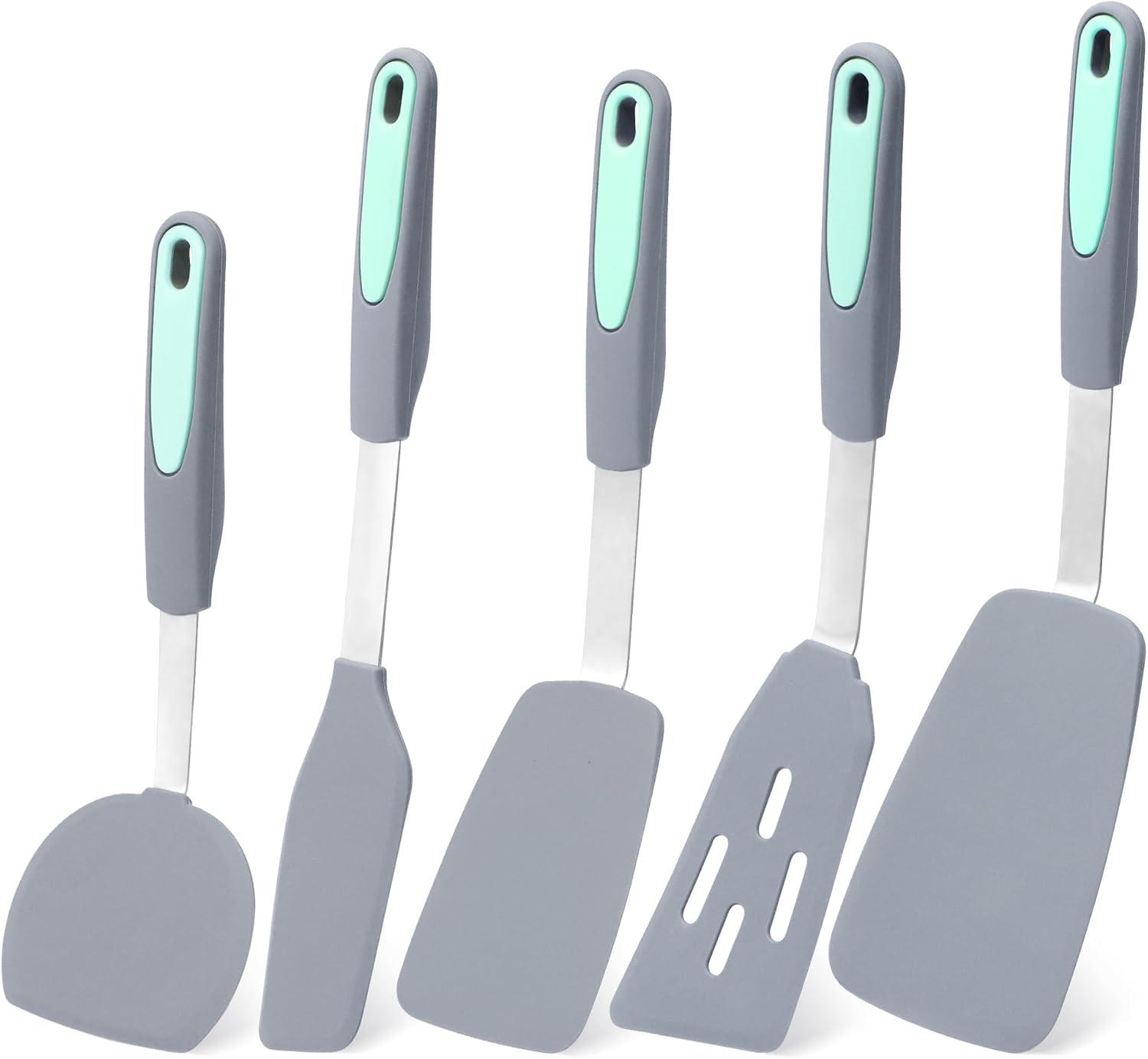
This set combines a soft colour palette with silicone designed to be both heat resistant and safe on nonstick surfaces. It works well for cooking, frying, and pancakes but lacks colour variety. It suits cooks who prioritise gentle tools for delicate pans and moderate heat rather than high-heat searing.
Brand: Tongjude · Price when checked: $19.99 · Rating: 4.7 out of 5 (3201 ratings)
Pros
- Heat resistant silicone material
- Safe for all nonstick cookware
- Good range of spatula types for frying and cooking
Cons
- Limited colour options
- Heat resistance not precisely quantified
How to choose the right silicone spatula set for your kitchen
If you often cook on high heat near 600 °F (315 °C) or use wok-style pans, prioritise sets with 100% silicone handles and blades rated for that temperature. Avoid sets without clear heat resistance ratings to prevent early melting.
Consider the spatula shapes you need: a mix of slim, flexible blades for folding and thicker, wider turners for heavier foods covers most tasks. If you only bake occasionally, a smaller set with fewer spatulas could suffice.
Those who prefer minimal kitchen clutter may benefit from comprehensive sets like KAKAMINA’s, but be aware of limited heat resistance information. Conversely, if you want budget value and frequent dishwasher cleaning, seamless one-piece designs like ChefAide’s offer the best hygiene and longevity.
If your cooking style involves delicate eggs, pancakes, or crepes, focus on softer, flexible blades that won’t mark your nonstick pans rather than heavy-duty spatulas designed for flipping meats.
In some cases, a silicone spatula set is not the right tool: metal turners are better for browning or searing, and wooden spoons excel in thick stews. Choose according to your primary cooking needs rather than buying a set that claims to do everything.
Additionally, consider the frequency of use and cleaning methods. Silicone spatulas that are dishwasher safe save time but may degrade faster if glued joints are present. Hand washing with gentle detergents extends lifespan. Also, colorfastness is worth noting: some silicone spatulas may stain when used with tomato-based or curry sauces, which can affect aesthetics but not performance.
From a cost perspective, prices for quality silicone spatula sets range from $15 to $40. Investing in mid-range sets with verified heat resistance and seamless construction provides the best balance of durability and performance. Cheaper sets often sacrifice heat tolerance or build quality, leading to faster wear and potential safety issues.
Finally, user reviews and brand reputation can offer insight into real-world performance. Look for feedback on handle comfort, blade flexibility, and longevity under typical cooking conditions to ensure the set meets your expectations.
Related reading
- 9+ Best Stainless Steel Skillets: Top Picks & Reviews
- Best Cast Iron Skillet Under $50: Top Affordable Picks
- Best Electric Skillet for Frying Chicken Evenly | Top Picks
Frequently Asked Questions
Are all silicone spatulas safe for nonstick pans?
Not all silicone spatulas offer the same protection. Those made from 100% food-grade silicone with a seamless one-piece construction pose the least risk of scratching nonstick coatings. Lower-quality spatulas with plastic parts or glued joints can become damaged or develop rough edges that might scrape pans. Checking the product’s build and user reviews on heat resistance and surface safety helps ensure your pans stay unmarked.
What temperature can silicone spatulas typically withstand?
Most high-quality silicone spatulas can resist heat up to around 600 °F (315 °C), which covers almost all stovetop and oven cooking tasks. This rating depends on having both blade and handle made from 100% silicone without plastic inserts. Using spatulas beyond their rated heat tolerance risks melting or warping, especially near hot pan edges or open flames.
How do I clean and maintain silicone spatulas?
Silicone spatulas with seamless one-piece designs are easiest to clean because they lack joints that trap food. They are generally dishwasher safe, but hand washing with warm soapy water removes grease and residue quickly. Avoid abrasive scrubbers that can dull the silicone surface. Over time, silicone may absorb strong food colours or odours, which can be minimised by prompt cleaning and occasional soaking in baking soda water.

Rimi Sultana is a home cook from Bangladesh who has cooked for her family every day for the past five years and writes about it at Smart Cooks. Perpetually testing whether internet-famous recipes actually work in a regular home kitchen. Say hello on Facebook or through the contact page.