
Choosing an effective pot rack for a small kitchen boils down to how well it manages limited space without creating new clutter or access problems. The best racks use their shape, mounting style, and tier design to store cookware vertically or in underutilized areas, making pots and pans easy to reach while freeing up cabinet or countertop space.
Some links in this post are affiliate links. If you buy through them we may earn a small commission at no extra cost to you — it never changes which products we recommend.
Not all pot racks are made equal in this regard. A rack that looks compact may not fit your cookware‘s dimensions, or it may rely on wall mounts that require solid anchors few small kitchens have. Understanding the physical design and installation constraints separates a helpful pot rack from one that just adds visual bulk and installation headaches.
What actually matters
Pot racks for small kitchens differ primarily in their mounting method, capacity, and adjustability. These factors determine how much cookware you can store, whether the rack fits your kitchen’s physical constraints, and how flexible it is to changes in your collection or kitchen layout.
Mounting method is critical because it directly affects how much space remains usable in the kitchen. Wall-mounted racks, for example, free up floor space but require a solid surface capable of holding the load, which can be an issue in rented or older homes with weak walls. The weight of a fully loaded pot rack can easily exceed 30 pounds (13.6 kg), and when combined with dynamic forces from removing or replacing pots, the mounting hardware must be robust. Under-cabinet racks use existing cabinetry space above counters but need clearance and depth compatible with your pots and lids. Freestanding racks do not rely on wall strength but consume precious floor space, which can be at a premium in small kitchens. For instance, a freestanding rack measuring 23 by 15 inches occupies about 345 square inches of floor area, which can be significant in a kitchen with under 100 square feet of total floor space.
Capacity is not just about the number of pots or pans a rack can hold but also how it manages different shapes and sizes. Multi-tier racks increase vertical storage density but can make accessing items on lower tiers less convenient. For example, a rack with three tiers can store up to 50% more pots than a single-tier rack of similar footprint, but the bottom tier may require bending or kneeling to access. Adjustable dividers and hooks let you tailor storage to your specific cookware, which is crucial when kitchen space demands efficiency. This adaptability can improve space utilization by up to 20%, as you avoid wasted gaps between items.
Build quality and installation ease significantly impact the rack’s longevity and your satisfaction. A rack’s materials affect both durability and the safety of your cookware. Steel with powder coating resists rust and abrasion better than plastic alone but can be heavier to install. For example, steel racks often weigh between 8 to 15 pounds (3.6 to 6.8 kg), whereas plastic racks may weigh under 5 pounds (2.3 kg). Installation methods range from straightforward hook-and-screw mounts to more involved assemblies needing precise measuring and tools. A complicated installation can negate the time saved by added organisation, with some racks requiring up to an hour to install properly. Furthermore, improper installation can lead to rack failure, causing damage to cookware and kitchen surfaces.
Mounting method and space usage
Wall-mounted racks free up floor space but require a solid surface capable of holding the load, which can be an issue in rented or older homes with weak walls. The weight capacity of these racks often ranges from 20 to 50 pounds (9 to 23 kg), depending on the hardware and wall anchors used. For drywall installations, locating studs is essential to ensure stability; otherwise, specialized anchors rated for heavy loads must be used.
Under-cabinet racks use existing cabinetry space above counters but need clearance and depth compatible with your pots and lids. Typical cabinet depths range from 12 to 24 inches, and the rack must fit within this space without obstructing cabinet doors or countertop activities. Some under-cabinet racks have adjustable widths to fit within 15 to 25 inches, allowing for flexible installation in various cabinet sizes.
Freestanding racks do not rely on wall strength but consume precious floor space, which can be at a premium in small kitchens. For example, a rack occupying a footprint of 23 by 15 inches consumes about 2.4 square feet, which may be significant in kitchens under 100 square feet. However, they often offer higher weight capacities, sometimes exceeding 250 pounds (113 kg), suitable for heavy cookware like cast iron.
Capacity and tier design
Capacity is measured not only by the number of pots and pans but also by how well the rack accommodates different shapes and sizes. Multi-tier racks increase vertical storage density, allowing you to store up to 50% more cookware compared to single-tier racks of similar floor footprint. However, accessing items on lower tiers may require bending or kneeling, which can be inconvenient for frequent use.
Adjustable dividers and hooks enhance the rack’s versatility by allowing customization according to your cookware. For example, dividers can be moved to accommodate larger lids or pans, preventing wasted space. This flexibility can improve storage efficiency by approximately 20%, especially in kitchens where every inch counts.
The height between tiers is also a factor; racks with adjustable tier heights can accommodate taller pots or stack lids more effectively. Typical tier spacing ranges from 6 to 12 inches, with adjustable models offering increments of 1 to 2 inches.
Build quality and installation ease
Material choice impacts durability and maintenance. Steel racks with powder coating resist rust and wear better than plastic or untreated metal. Steel racks generally weigh between 8 and 15 pounds (3.6 to 6.8 kg), requiring sturdy mounting hardware. Plastic racks are lighter but less durable and may deform under heavy loads.
Installation complexity varies widely. Some racks come with simple hook-and-screw mounts that can be installed in under 30 minutes, while others require assembly of multiple parts and precise measurements, potentially taking up to an hour or more. Incorrect installation can lead to rack failure, risking damage to cookware and kitchen surfaces.
Choosing a rack with clear instructions and included hardware reduces installation time and errors. Additionally, considering the type of wall or cabinet material is crucial; for example, plaster walls may need specialized anchors, while particleboard cabinets require careful screw placement to avoid damage.

Choosing the right pot rack for your small kitchen
Before buying, measure your available wall, cabinet, and floor space carefully. Consider whether your wall material can support mounted racks or if you need freestanding options. For example, walls made of drywall typically support racks up to 50 pounds if mounted into studs, while plaster or hollow walls may require specialized anchors rated for 30 pounds or less. Freestanding racks, while heavier and bulkier, do not depend on wall strength but require at least 2 to 3 square feet of floor space.
Think about your cookware types and sizes: do you need more space for lids, heavy pans, or a mix? Heavy cast iron pans can weigh over 10 pounds each, requiring racks with high weight capacity and sturdy hooks. Adjustable racks can adapt over time but often require more assembly and initial setup.
If your kitchen is extremely small or you rent without permission to drill walls, over-door racks or compact lid organizers might be more suitable, though these are niche picks and won’t hold large pots. For example, lid organizers typically hold up to 10 lids and occupy less than 1 square foot of shelf space but cannot accommodate heavier pans.
In some cases, simply reorganising your existing cabinets or downsizing cookware may be more effective than adding racks. For instance, removing duplicate pots or investing in nesting cookware can free up significant space without additional hardware. Understanding these trade-offs helps avoid investing in hardware that ends up unused or inconvenient.
| Pick | Best for | Mounting type and size | Watch out for |
|---|---|---|---|
| FOXLEN Multi-Tier Bakers Rack | Multi-level storage of pots and pans | Freestanding, approx. 23 x 15 x 34 inches | Consumes floor space; bulky for cramped kitchens |
| Audmore 15.6” Wall Mount Rack | Compact wall-mounted hanging rack | Wall-mounted, 15.6 inches long | Limited length; suitable only for small collections |
| LUMERIGIN Expandable Under Cabinet Organizer | Flexible lid and pan storage under cabinet | Under-cabinet expandable, fits various widths | Requires cabinet depth; limited vertical storage |
| Mustorn 2-Tier Adjustable Under Sink Rack | Adjustable height under-cabinet storage | Under-cabinet, adjustable height with 12 dividers | Needs installation space under cabinet; assembly required |
| YouCopia StoreMore Adjustable Lid Organizer | Stable, adjustable lid storage for cabinets | Freestanding, 11.5 x 7.3 x 4.9 inches | Small capacity, focused on lids only |
| ORDORA 8-Tier Adjustable Under Cabinet | Vertical multi-tier hanging organiser | Under-cabinet, 20.8 inches length | Limited to under cabinet spaces; assembly complexity |
| KES 264 Lbs Capacity Freestanding Rack | Heavy-duty freestanding with hooks and tiers | Freestanding, 6 tiers with hooks | Large footprint; overkill for tiny kitchens |
From My kitchen
Once, I installed a wall-mounted rack in a small kitchen with plaster walls. The rack seemed perfect size-wise but started pulling away from the wall when loaded with cast iron pans. The plaster couldn’t hold the screws properly. I fixed this by installing wall anchors designed for plaster, which distribute the load across a wider area. This episode highlighted the importance of matching mounting hardware to wall material, especially in older homes.
Worth Considering
Best for multi-level storage: FOXLEN Multi-Tier Bakers Rack
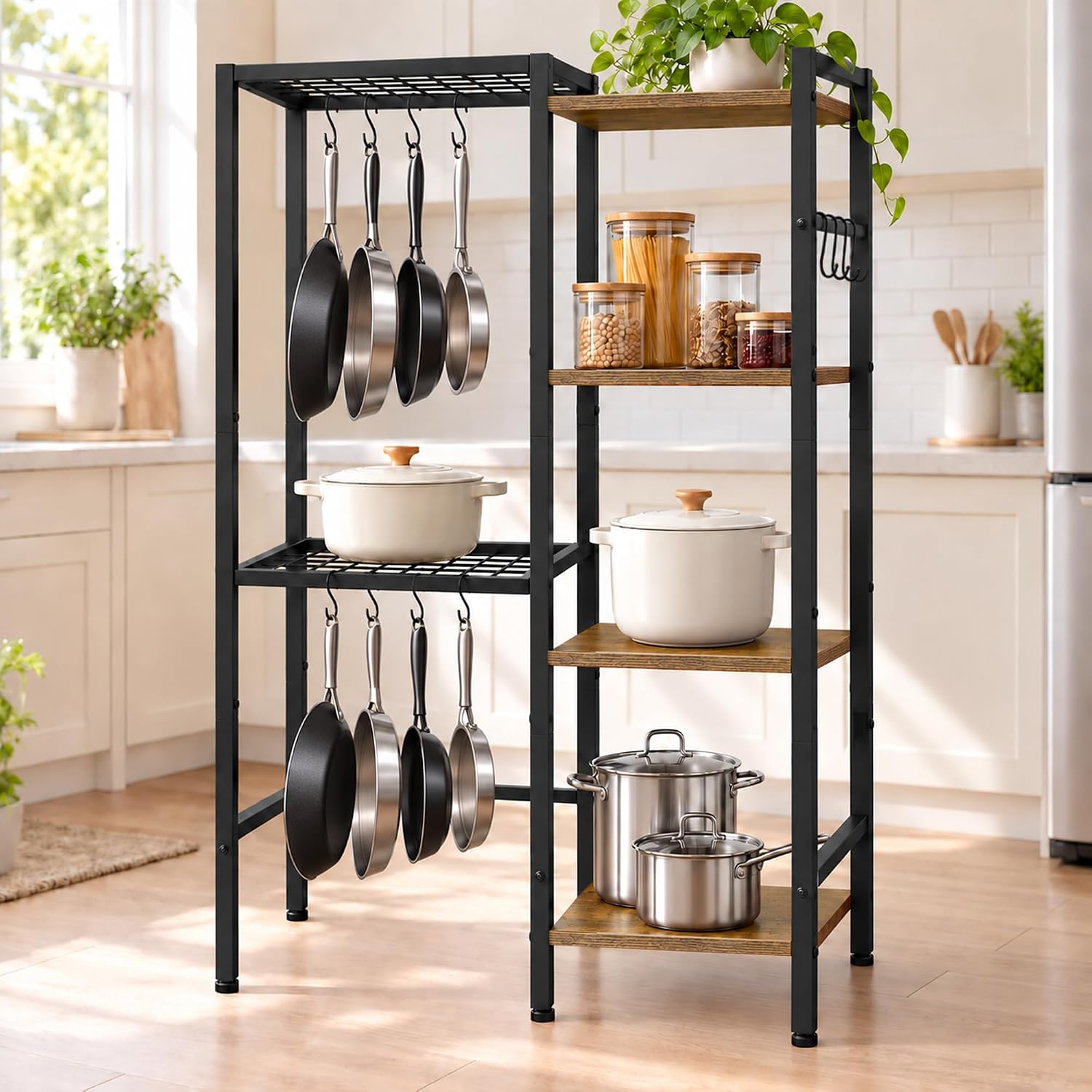
This freestanding rack has multiple shelves that stack pots and pans vertically, making it a practical choice if you have some floor space to spare. It’s not the best for very tight kitchens because it occupies floor area and can feel bulky, but the tiers help organise differently sized cookware.
Brand: Brand: FOXLEN · Price when checked: $79.99 · Rating: 4.4 out of 5 (105 ratings)
Pros
- Multiple levels increase storage density
- Sturdy metal frame supports heavy cookware
- Open design allows easy visual access
Cons
- Consumes valuable floor space
- May be too tall or wide for very small kitchens
Best for renters with wall space: Audmore 15.6” Wall Mount Rack
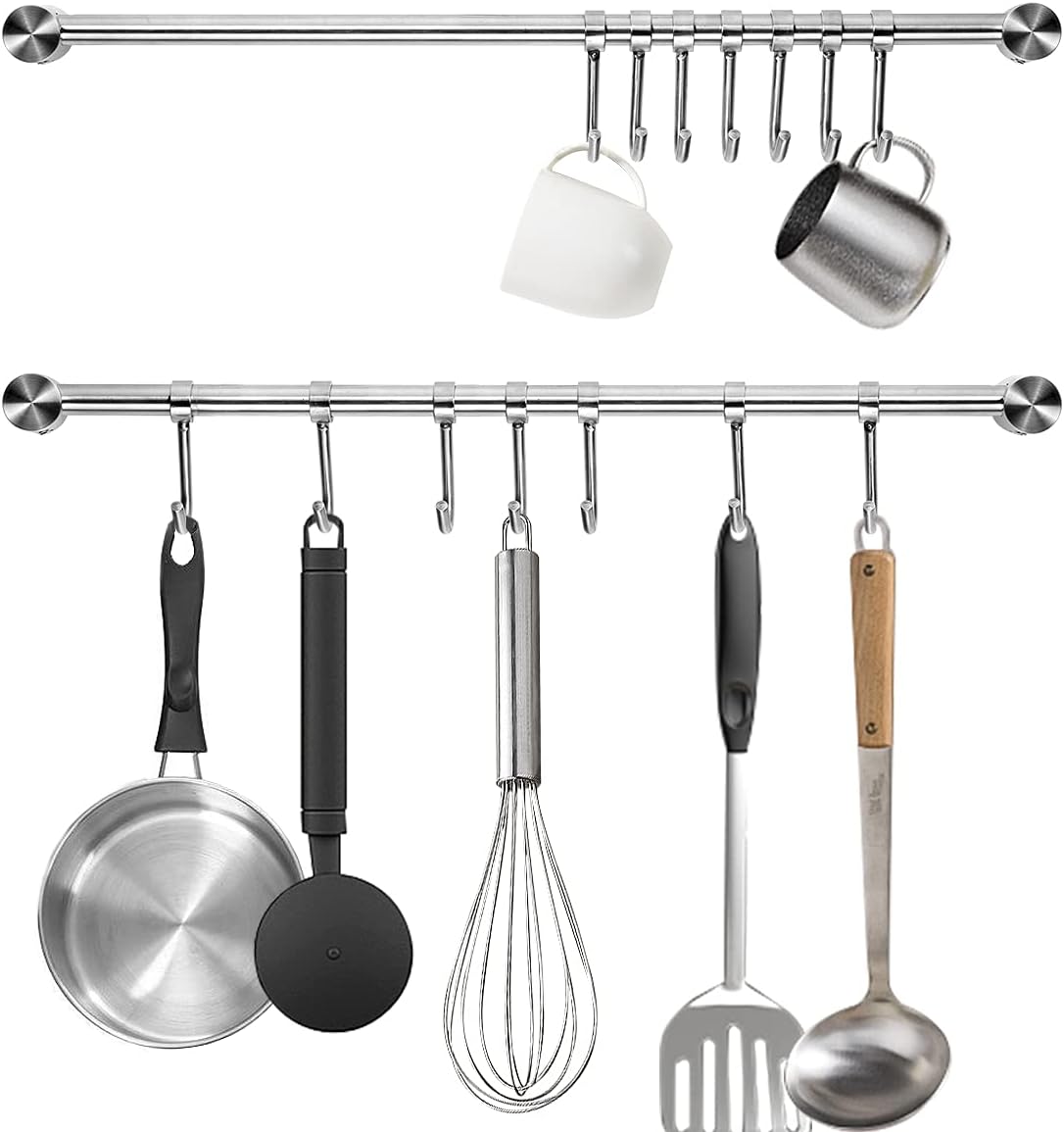
This compact wall-mounted rack is easy to install where wall space is available, perfect for smaller collections or kitchens without room for floor racks. It’s limited to 15.6 inches in length, so it won’t hold many pots or pans and requires a wall that can support the load.
Brand: Audmore · Price when checked: $25.99 · Rating: 4.6 out of 5 (229 ratings)
Pros
- Compact, saves floor and counter space
- Simple installation with included hardware
- High user rating for durability
Cons
- Short length limits capacity
- Not suitable for large or heavy cookware
Best for under-cabinet flexibility: LUMERIGIN Expandable Under Cabinet Organizer

Expandable width and under-cabinet mounting make this rack adaptable to various kitchen setups. It works well for lids and pans but requires sufficient cabinet depth. Assembly is straightforward but measuring is critical to ensure a proper fit.
Brand: LUMERIGIN · Price when checked: $46.99 · Rating: 4.6 out of 5 (257 ratings)
Pros
- Expandable to fit cabinet widths
- Under-cabinet installation frees up counter space
- Good for lid and pan storage
Cons
- Needs enough cabinet clearance
- May not suit very tall pots
Best for adjustable height storage: Mustorn 2-Tier Adjustable Under Sink Rack

This two-tier rack fits under cabinets and includes adjustable dividers for lids and pans, adapting to various cookware sizes. Installation requires some effort but comes with tools and instructions. It’s a solid option if you want to use under-sink or cabinet space efficiently.
Brand: Mustorn · Price when checked: $39.99 · Rating: 4.5 out of 5 (27 ratings)
Pros
- Adjustable height to fit different items
- Includes tools and manual for installation
- Good for lids and pans with 12 dividers
Cons
- Installation can be moderately complex
- Limited to cabinet or under-sink spaces
Best for lid organisation: YouCopia StoreMore Adjustable Lid Organizer

Designed specifically for lids, this compact rack uses coated steel dividers to prevent scratching and keep lids upright. Its small footprint makes it ideal for cabinet or pantry shelves, but it won’t help if you need to store pots or pans alongside your lids.
Brand: YouCopia · Price when checked: $2499 · Rating: 4.5 out of 5 (270 ratings)
Pros
- Adjustable, coated steel dividers protect lids
- Non-slip base prevents sliding
- Fits standard cabinet and pantry sizes
Cons
- Capacity limited to lids only
- Small size not suitable for pots or pans
Best for tiered under-cabinet storage: ORDORA 8-Tier Adjustable Under Cabinet

This rack offers eight adjustable tiers under the cabinet, increasing vertical storage space for smaller pots, pans, or lids. While useful for maximising unused cabinet space, it requires careful installation and adequate clearance. It’s a niche pick for those who want highly customisable vertical storage.
Brand: ORDORA · Price when checked: $27.99 · Rating: 4.4 out of 5 (565 ratings)
Pros
- Eight adjustable tiers for varied storage needs
- Under-cabinet mount frees up counters
- Affordable with good capacity
Cons
- Installation can be time-consuming
- Needs sufficient cabinet clearance
Best for heavy-duty cast iron storage: KES 264 Lbs Capacity Freestanding Rack

This freestanding rack is made for heavy cookware collections, with six tiers and six hooks designed especially for cast iron. It can hold up to 264 lbs (120 kg), but its footprint is large, making it unsuitable for very small kitchens. It’s more a dedicated heavy-duty storage tower than a universal solution.
Brand: KES
Pros
- High weight capacity for heavy cookware
- Multiple tiers and hooks for versatile storage
- Sturdy freestanding design
Cons
- Large footprint not ideal for tiny kitchens
- Overbuilt if you don’t have heavy or many pots
Choosing the right pot rack for your small kitchen
Before buying, measure your available wall, cabinet, and floor space carefully. Consider whether your wall material can support mounted racks or if you need freestanding options. Think about your cookware types and sizes: do you need more space for lids, heavy pans, or a mix? Adjustable racks can adapt over time but often require more assembly.
If your kitchen is extremely small or you rent without permission to drill walls, over-door racks or compact lid organizers might be more suitable, though these are niche picks and won’t hold large pots. In some cases, simply reorganising your existing cabinets or downsizing cookware may be more effective than adding racks. Understanding these trade-offs helps avoid investing in hardware that ends up unused or inconvenient.
Related reading
- Best Over The Fridge Organizers with Hooks & Shelves: Top Picks
- Best Under Sink Organizer for Cleaning Supplies
- Drawer organizer vs drawer insert: what really sets them apart
Frequently Asked Questions
Can I install a pot rack on drywall in a small kitchen?
You can, but drywall alone rarely supports the weight of pots and pans. You need to locate studs behind the drywall for mounting or use specially designed heavy-duty anchors. Failure to use proper supports risks damage to walls and falling cookware. Always check wall type and use suitable hardware.
Are under-cabinet pot racks better than wall-mounted ones for small kitchens?
Under-cabinet racks save wall space and keep pots close to countertops but require sufficient cabinet depth and clearance below. Wall-mounted racks can free up counters but depend on wall strength and available vertical space. The better choice depends on your kitchen’s layout and cookware dimensions.
How do adjustable dividers help in pot racks?
Adjustable dividers let you customise storage slots for different pot or lid sizes, preventing items from tipping or scratching each other. This flexibility maximises usable space by adapting to your cookware’s shape, which is especially valuable in small kitchens where every centimetre counts.

Rimi Sultana is a home cook from Bangladesh who has cooked for her family every day for the past five years and writes about it at Smart Cooks. Perpetually testing whether internet-famous recipes actually work in a regular home kitchen. Say hello on Facebook or through the contact page.