As an Amazon Associate, Smart Cooks earns from qualifying purchases. Product prices and availability are shown on Amazon and may change.
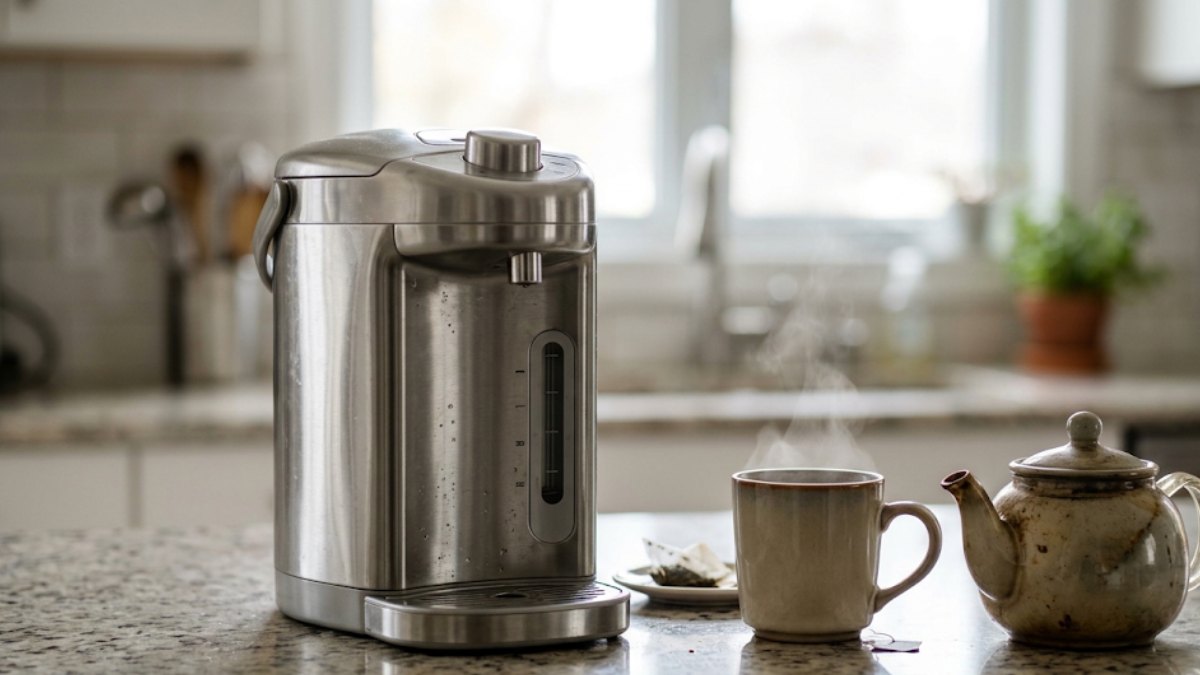
If you make tea, instant oatmeal, pour-over coffee, or baby bottles more than twice a day, the kettle starts to feel like a chore. A countertop hot water dispenser keeps water hot and ready, so a cup is one button press away. The catch is that these machines stay plugged in all day, take up real counter space, and vary a lot in how hot, how fast, and how safe they are.
This guide explains what actually separates a good hot water dispenser from a frustrating one, then walks through five picks for different kitchens.
What Actually Matters in a Hot Water Dispenser
Keep-warm tank vs instant (tankless) heating
There are two designs. Water boilers (Zojirushi, Panasonic) heat a full tank and then hold it at your chosen temperature, often in a vacuum-insulated body. Water is always ready, but they use some power all day. Instant dispensers (Dawnstar, many newer brands) heat water only as it flows out, so standby power is low, but the first cup takes a few seconds and the flow can be slower. If several people pull hot water through the day, a keep-warm boiler is usually the better fit. If you need a cup or two at set times, instant heating wastes less energy.
Temperature settings
Boiling water is not right for everything. Green tea tastes bitter above about 175°F, pour-over coffee likes 195–205°F, and baby formula is usually mixed with water cooled from a boil. Look for at least three presets. Machines that let you hold water at 160–175°F save you from waiting for a kettle to cool down.
Capacity and footprint
A 3-liter tank serves a couple or a small office. A 4-liter or larger tank suits a family that drinks hot drinks all day. Measure the height under your upper cabinets: many dispensers are 11–13 inches tall and need a few inches above them so you can open the lid and refill.
Safety locks and dispensing
If children are around, a dispense lock matters more than any other feature. Also check whether the machine dispenses by a button, an air pump, or both. A pump works during a power cut, which is handy in some homes.
Descaling
Hard water leaves scale inside the tank. Units with a wide opening and a citric-acid cleaning mode are much easier to live with than narrow-necked designs.
From My Kitchen
The first time I lived with a keep-warm boiler, I made a mistake that a lot of people make: I left it on the hottest setting all the time. My green tea tasted harsh, and I had scale building up within a month because our tap water is hard. Dropping the hold temperature to the 175°F setting for most of the day, and only switching to full boil for oatmeal and instant noodles, fixed both problems. The lesson: pick a machine with presets you will actually change, and plan on descaling every few weeks if your kettle already shows white crust.
5 Hot Water Dispensers Worth Considering
Best overall for families: Zojirushi Micom Water Boiler and Warmer (4L)
A long-running favorite: a 4-liter vacuum-insulated tank, four keep-warm settings, and both electric and manual dispensing. It is the one to get if hot water gets used all day long.
Good for
- Households that make tea, coffee, and instant meals throughout the day
- People who want water held at a lower temperature, not just boiling
- Homes with frequent power cuts (manual pump option)
Watch out for
- Tall body: check the clearance under your cabinets
- Keep-warm mode uses some power around the clock
Best smaller Zojirushi: Zojirushi Micom Water Boiler and Warmer (3L)
Same controls and build as the 4L, in a slightly shorter body. A good match for couples or a small office kitchen.
Good for
- Two to three hot-drink drinkers
- Smaller counters
Watch out for
- Refills more often if your household drinks a lot of tea
Best for coffee lovers: Panasonic Electric Thermo Pot NC-EG4000
Panasonic includes a slow-drip mode that pours a gentler stream, which helps when you are blooming coffee grounds or filling a narrow cup.
Good for
- Pour-over and drip coffee at home
- Anyone who wants several temperature presets
Watch out for
- Slow-drip is slower than pouring from a gooseneck kettle
Best instant (tankless) option: Dawnstar D20 Instant Hot Water Dispenser
An instant-heating design with a 100-ounce reservoir. Water is heated as it is dispensed, so it does not hold a full tank hot all day.
Good for
- Lower standby energy use
- People who need hot water at set times, not constantly
Watch out for
- Newer brand with a shorter track record than Zojirushi or Panasonic
- Flow can feel slower than a keep-warm boiler
Best large-capacity budget pick: VEVOR Hot Water Dispenser with 4 Temperatures
A stainless steel boiler-style dispenser with four temperature settings, aimed at busy households, break rooms, and church kitchens.
Good for
- Lots of hot water on a modest budget
- Shared kitchens
Watch out for
- Fewer long-term owner reports than the legacy brands
- Bulky shape
Quick Comparison
| Model | Heating type | Best for |
|---|---|---|
| Zojirushi 4L | Keep-warm boiler | Families, all-day use |
| Zojirushi 3L | Keep-warm boiler | Couples, small offices |
| Panasonic NC-EG4000 | Keep-warm boiler | Coffee, slow pour |
| Dawnstar D20 | Instant heating | Low standby power |
| VEVOR 4-temp | Keep-warm boiler | Big batches on a budget |
If you only need hot water a few times a day, a good kettle may still be the simpler choice. Our electric kettle buying guide covers gooseneck vs standard models, and electric vs stovetop kettles explains the trade-offs.
Frequently Asked Questions
Does a hot water dispenser use a lot of electricity?
Keep-warm boilers use the most power when heating a fresh tank, then much less while holding temperature thanks to insulation. Setting a lower hold temperature, or using a sleep/timer mode overnight, cuts standby use further. Instant models use almost nothing on standby.
Is the water safe for baby formula?
Most pediatric guidance says to bring water to a full boil and then cool it to the temperature your formula maker recommends. A dispenser with a boil cycle and a lower hold setting makes this easier, but always follow your formula and pediatrician’s instructions.
How often should I descale it?
With hard water, every two to four weeks. With soft or filtered water, every one to two months. Use citric acid or the maker’s cleaner, run a full cycle, then rinse with two fresh tanks of water.
Rimi Sultana is a home cook from Bangladesh who has cooked for her family every day for the past five years and writes about it at Smart Cooks. Perpetually testing whether internet-famous recipes actually work in a regular home kitchen. Say hello on Facebook or through the contact page.