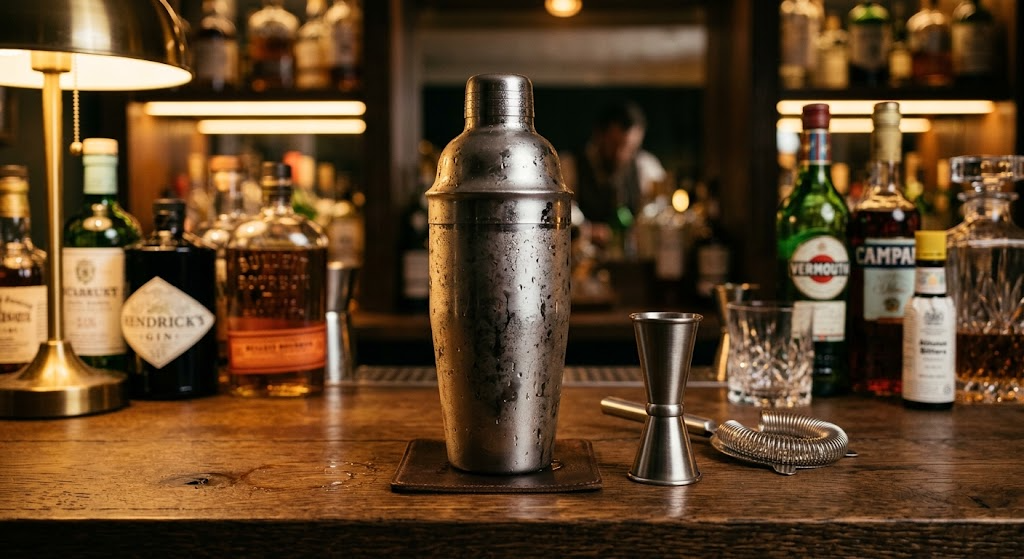
A cocktail shaker set is a small purchase, but a surprising number of first-time buyers end up frustrated with a set that doesn’t actually match how they cook and entertain. These are the mistakes that come up most often.
Some links in this post are affiliate links. If you buy through them we may earn a small commission at no extra cost to you — it never changes which products we recommend.
1. Buying a Cobbler Shaker Without Realizing It’s Harder to Clean
Cobbler shakers (the three-piece type with a built-in strainer cap) are common in starter sets, but the built-in strainer can trap small bits of muddled fruit or herbs, making thorough cleaning more fiddly than a two-piece Boston shaker.
2. Not Checking the Seal Between Pieces
A shaker that doesn’t seal tightly between its tin and glass (or its two tins, for a Boston shaker) leaks during shaking, which is both messy and means you’re losing some of what you’re mixing. This is worth testing with plain water before ever making a real drink.
3. Underestimating How Often You’ll Need a Separate Strainer
Boston shaker sets (two tins, or a tin and glass) don’t have a built-in strainer, so you’ll need a separate hawthorne or julep strainer to actually pour a strained drink. First-time buyers sometimes don’t realize this until they’re mid-recipe.
4. Choosing Based on Looks Over Grip
A shaker that looks sleek but has a smooth, narrow profile can be genuinely hard to grip securely, especially once it’s cold and slightly wet with condensation from ice. A textured or contoured grip matters more in practice than in a product photo.
5. Not Getting a Jigger, and Eyeballing Measurements Instead
Cocktails are more sensitive to ratio than most cooking, and skipping a proper jigger in favor of guessing measurements is one of the most common reasons a first attempt at a classic cocktail tastes off-balance.
From My Kitchen: The Leak I Didn’t Notice Until Too Late
My first shaker set had a subtle seal problem between the two tins that I didn’t catch, because it only leaked slightly under the pressure of a hard, fast shake, not a gentle one. I lost a small but noticeable amount of a cocktail down the side of the shaker more than once before I realized what was happening and tested it properly with plain water and a firm shake over a sink. Now I always test a new shaker with water before trusting it with actual ingredients.
Worth Considering
This complete cocktail shaker set with stand includes a jigger and strainer, avoiding the “need to buy separately” problem.
This 24oz shaker with built-in strainer and jigger is a solid, simpler all-in-one option.
Cobbler or Boston: The Choice Behind Most Regrets
A cobbler shaker is the three-piece one with a built-in strainer and a small cap. It is the shape most people picture, and it is the one most first-time buyers regret. The problem is physics: shaking chills the metal, the metal contracts, and the fitted lid seizes onto the body. Getting it open mid-service is a genuine struggle, and the small built-in strainer clogs with mint or ice shards.
A Boston shaker is two pieces — either two metal tins, or a tin and a glass — that seal by being tapped together at a slight angle. It opens with a firm strike to the heel of your hand at the seam, it holds more, and there is nothing to clog. It needs a separate strainer, which is the one downside and costs very little. Almost every bar uses a Boston for these reasons.
Quick Comparison
| Cobbler (3-piece) | Boston (2-piece) | |
|---|---|---|
| Opening after shaking | Often seizes shut | Opens with a tap |
| Built-in strainer | Yes, but clogs easily | No, needs a separate one |
| Capacity | Usually smaller | Larger, two drinks at once |
| Seal quality | Good until it seizes | Excellent |
| Learning curve | None | A few attempts to seal and open |
The Other Four Mistakes
Buying a large set is the second. Kits advertised with twelve pieces are usually a shaker plus tools you will never touch — two spare spouts, a decorative stand, a second identical strainer. The tools that genuinely matter are a shaker, a jigger, a Hawthorne strainer, a bar spoon and a muddler. A set that gives you five good pieces beats one that gives you twelve indifferent ones.
The third is capacity: a shaker under about 18 ounces cannot hold a drink plus enough ice, and under-iced shaking chills poorly while over-diluting. Twenty-four to twenty-eight ounces is the useful size. The fourth is the glass-half Boston, which looks appealing and breaks — two metal tins are lighter, chill faster and survive being dropped. The fifth is buying a plated or painted finish, where the coating eventually flakes; plain stainless stays looking the same for decades.
Two Sets Worth Considering
Best complete starter set: Complete Cocktail Shaker Set With Stand
Worth it if the set includes the pieces that matter — shaker, jigger, Hawthorne strainer, bar spoon — rather than padding the count with spares. A stand keeps small tools together, which is the practical reason bar kits go unused otherwise.
Pros
- Covers the core tools in one purchase
- Stand keeps everything together and visible
- Cheaper than buying pieces individually
Cons
- Some included pieces will go unused
- Individual tools are not premium quality
Best simple option: 24oz Shaker With Built-in Strainer and Jigger
A sensible capacity with the strainer and measure built in, which suits someone who wants to make a drink occasionally without a drawer of equipment. Be aware of the cobbler seizing issue — a firm tap on the seam usually frees it.
Pros
- Good 24oz capacity
- Strainer and jigger built in, nothing else needed
- Compact to store
Cons
- Cobbler design can seize shut when very cold
- Built-in strainer clogs with mint or fruit
Frequently Asked Questions
Boston shaker or cobbler shaker — which should a beginner get?
A cobbler shaker (with a built-in strainer cap) is generally easier for beginners since it doesn’t require a separate strainer, though a Boston shaker is what most professional bartenders use and offers a better seal for hard shaking.
How do I know if my shaker seal is good enough?
Test it with plain water — assemble it, shake firmly over a sink, and check for any leaking at the seams before trusting it with real ingredients.
Do I really need a jigger, or can I just eyeball it?
A jigger makes a real difference for balance-sensitive cocktails — even small measurement errors can throw off a drink’s flavor more than most people expect from cooking experience alone.
Why does my shaker freeze shut, and how do I open it?
Shaking drops the temperature sharply, the metal contracts around the seal, and a vacuum forms inside as the air cools. With a Boston shaker, hold it with the seam facing you and strike the rim of the bottom tin firmly with the heel of your hand — it breaks the seal instantly. With a cobbler, run the join under warm water for a few seconds so the outer piece expands, or tap around the rim with the back of a spoon.
Do I need a fine strainer as well as a Hawthorne?
For anything with citrus, egg white or muddled fruit, yes — double straining through a small fine mesh strainer as you pour catches the ice shards and pulp that a Hawthorne lets through, and it makes a visible difference to how clean a drink looks and feels. For a spirit-forward shaken drink with no fruit, the Hawthorne alone is fine. A small kitchen tea strainer does the job perfectly well if you already own one.

Rimi Sultana is a home cook from Bangladesh who has cooked for her family every day for the past five years and writes about it at Smart Cooks. Perpetually testing whether internet-famous recipes actually work in a regular home kitchen. Say hello on Facebook or through the contact page.