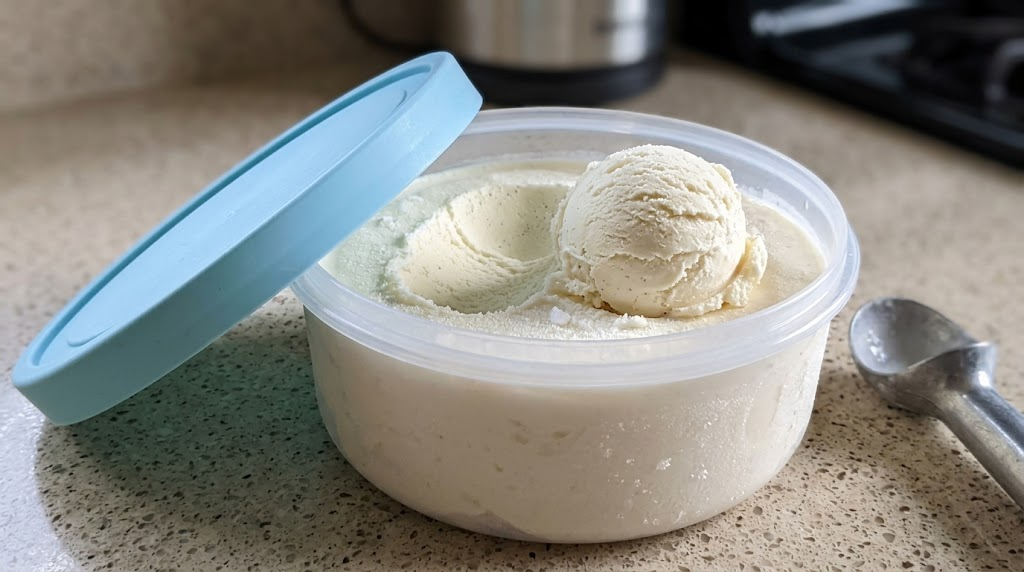
If you’ve ever pulled a tub of homemade ice cream out of the freezer only to find a crust of ice crystals on top, the problem usually isn’t your recipe — it’s the container. Regular plastic tubs and reused yogurt containers let air in, and air is what turns creamy ice cream into a grainy, icy disappointment.
Some links in this post are affiliate links. If you buy through them we may earn a small commission at no extra cost to you — it never changes which products we recommend.
What Actually Matters
Airtight Seal
The single biggest factor in preventing freezer burn is how tightly the lid seals against the container. A snap-on lid with a silicone gasket keeps air out far better than a simple press-fit plastic lid, which shrinks slightly in the cold and lets air seep in over days.
Shape and Stackability
Wide, shallow containers freeze ice cream more evenly than tall narrow ones, which means less time for the outer layer to soften and refreeze into ice crystals every time you scoop. Stackable, uniform shapes also matter if your freezer door shelf is already crowded.
Material
BPA-free plastic is lighter and cheaper, but double-walled containers add an insulating air gap that slows temperature swings when the freezer door opens and closes throughout the day — which matters more than people expect in a household with kids raiding the freezer.
From My Kitchen
I switched to dedicated ice cream tubs after one too many batches of homemade mango ice cream turned into a solid ice block within a week. The difference surprised me — the same recipe, same freezer, but the batch in a proper airtight tub was still scoopable and smooth after two weeks, while the one in a repurposed container had already developed that telltale frosty layer on top.
Worth Considering
The Tovolo ice cream tub has a glide-a-scoop lid design specifically made for homemade batches, and its wide mouth makes scooping straight from the freezer easier. For something more budget-friendly, the BALCI ice cream containers come with a silicone gasket seal and stack neatly, which helped me actually organize my freezer shelf instead of playing tub Tetris every time.
What Freezer Burn Actually Is
Freezer burn is not burning and it is not ice forming from outside. It is sublimation: water molecules leave the surface of the ice cream as vapour, travel to the coldest surface nearby, and redeposit as those large crystals you see on the lid. The ice cream left behind is dehydrated, grainy and tastes of whatever else is in your freezer. The two things that drive it are air contact with the surface and temperature fluctuation.
That explains why the container matters so much, and why the freezer door is the worst place to keep ice cream. Every time the door opens, the contents warm slightly, partially melt at the surface, and refreeze into larger crystals. A container at the back of the freezer sees a far more stable temperature, and stability does more for texture than any container feature.
Quick Comparison
| Insulated ice cream tub | Plain plastic container | Metal loaf pan | |
|---|---|---|---|
| Protects against freezer burn | Very good, tight lid and insulation | Depends entirely on the lid seal | Needs covering separately |
| Freezes the mixture quickly | Moderate | Moderate | Fast — metal conducts well |
| Scoopability straight out | Good, insulation moderates hardness | Variable | Very hard, metal gets extremely cold |
| Shape | Shallow and wide | Varies | Shallow and wide |
| Best for | Storing a finished batch | Occasional use | Freezing a batch fast |
Shape Is Doing More Work Than You Think
A shallow, wide container freezes a batch faster than a deep one, and faster freezing means smaller ice crystals, which means smoother ice cream. It also makes the ice cream easier to scoop, because you are drawing the scoop across a broad surface rather than digging down into a well. Deep round tubs are the worst of both — slow to freeze through and awkward to scoop once you are past the top third.
Two habits matter as much as the container. Press a piece of baking parchment or cling film directly onto the surface of the ice cream before putting the lid on, which removes the air gap where sublimation happens. And smooth the surface flat rather than leaving peaks and valleys from scooping, since the raised edges are exactly where crystals form first.
Two Containers Worth Considering
Best for storing a batch: Tovolo Ice Cream Tub
Insulated body and a tight-sealing lid, in the shallow rectangular shape that both freezes evenly and scoops easily. The insulation is genuinely useful when serving — the tub does not go rock hard the moment it leaves the freezer.
Pros
- Insulated, so it stays scoopable longer out of the freezer
- Shallow, wide shape freezes evenly
- Tight lid seal against freezer burn
Cons
- Bulkier than a plain container
- Hand wash to preserve the seal
Best value multipack: BALCI Ice Cream Containers
Several containers in the right shape at a low price, which suits anyone making ice cream regularly enough to want more than one flavour in the freezer. Not insulated, so give them ten minutes on the counter before scooping.
Pros
- Multiple containers for multiple batches
- Correct shallow shape for even freezing
- Stackable and easy to label
Cons
- No insulation, so they harden more
- Lid seal is good but not premium
Frequently Asked Questions
Can I just use a regular Tupperware container?
You can, but most everyday food storage containers aren’t designed for the temperature swings of a freezer and don’t seal as tightly once the plastic contracts in the cold. They’ll work in a pinch, but expect faster freezer burn than a dedicated ice cream tub.
How long does homemade ice cream actually last in a good container?
With a properly airtight container, homemade ice cream typically stays smooth for 2-3 weeks. Because homemade batches lack the stabilizers used in store-bought pints, they’re more sensitive to temperature fluctuations, so a consistent freezer temperature matters just as much as the container itself.
Why is my homemade ice cream rock hard compared with shop-bought?
Shop ice cream contains stabilisers and is churned with far more air, both of which keep it soft at freezer temperature. Homemade is denser and freezes harder by nature. Two things help: do not cut the sugar, since sugar lowers the freezing point, and add a tablespoon of vodka or a similar neutral spirit per litre of base — the alcohol does not freeze and keeps the whole mixture softer without being detectable in flavour.
Does pressing cling film onto the surface really help?
Yes, and it is the single most effective habit for preventing freezer burn. The crystals form in the air gap between the ice cream and the lid, so removing that gap removes the mechanism. Baking parchment works just as well and is easier to peel off cleanly. Do it every time you put the tub back, not just the first time, since the gap grows as you eat your way down.

Rimi Sultana is a home cook from Bangladesh who has cooked for her family every day for the past five years and writes about it at Smart Cooks. Perpetually testing whether internet-famous recipes actually work in a regular home kitchen. Say hello on Facebook or through the contact page.