
Choosing the right milk pan goes beyond just size or appearance. The key is how well the pan controls heat and prevents milk from burning or boiling over, which happens because milk proteins and sugars scorch quickly on direct heat and milk creates foam that traps steam, causing sudden spills.
Some links in this post are affiliate links. If you buy through them we may earn a small commission at no extra cost to you — it never changes which products we recommend.
A good milk pan has a base and walls designed to distribute heat thoroughly and maintain a gentle simmer, often with a material or layered construction that avoids hot spots. Additionally, features like a pouring spout or specific dimensions can make handling boiled milk less messy and safer.
What actually matters
Milk behaves differently from water when heated. Its proteins coagulate and sugars caramelize if the temperature rises unevenly or too fast, causing scorch marks and burnt flavours. Heat control and pan construction are the primary technical factors that affect this.
Understanding the thermal properties of milk is crucial. Milk contains around 3.3% protein and 4.8% lactose sugar, both sensitive to temperature changes. When heated above approximately 70°C (158°F), whey proteins begin to denature and can stick to the pan surface, leading to burnt residues. If the heat is too intense or uneven, this process accelerates, causing the milk to scorch rapidly.
The consequences of burnt milk go beyond taste. Burnt milk residues are difficult to clean and can degrade the pan surface over time. Moreover, burnt milk imparts an unpleasant bitter flavor, spoiling recipes and drinks that rely on pure milk taste.
Material and base thickness
Milk pans typically use stainless steel, aluminium, or enamel-coated steel. Stainless steel with an aluminium or copper core or base layer spreads heat more uniformly because aluminium and copper conduct heat faster and more evenly than steel alone.
A thicker base slows the transfer of heat to the milk, reducing the chance of localized overheating. Thin pans heat unevenly, causing milk at contact points to burn before the rest is hot.
Quantitatively, aluminium has a thermal conductivity of about 205 W/m·K, copper around 400 W/m·K, while stainless steel is much lower at roughly 16 W/m·K. Incorporating a 3 to 5 mm thick aluminium or copper core in the pan base ensures rapid and even heat distribution, preventing hotspots where milk proteins can burn.
In addition, the overall thickness of the pan base, ideally between 4 to 6 mm, acts as a heat buffer. This thickness moderates temperature spikes when the pan is placed on a hot burner, allowing the milk to heat gradually and evenly.
Shape and size
Milk expands and foams as it heats, so a taller pan with narrow diameter helps contain the volume and reduces surface area exposed to direct heat. This shape slows evaporation and foam spillage.
Smaller pans with high sides are easier to control but hold less milk, while larger pans risk quicker boil-overs if not monitored closely.
For example, a pan with a 1.5 to 2 times taller wall height relative to diameter reduces foam overflow by limiting the surface area exposed to heat and allowing steam bubbles to dissipate more gradually. This containment reduces the risk of sudden boil-over events that can cause kitchen messes and potential burns.
In terms of capacity, pans ranging from 1 to 2.5 quarts (approximately 1 to 2.4 liters) cover most household needs. Smaller pans (1 quart) are ideal for single servings or coffee preparation, while larger pans (2.5 quarts) suit batch cooking but require more vigilant heat control to avoid spillage.
Additional features
Pouring spouts reduce mess by guiding liquid streams when transferring hot milk to cups or containers.
A lid helps retain heat and prevent skin formation on the milk surface but can increase pressure and cause spills if not vented properly.
Handles should remain cool and provide a secure grip, especially when the pan is full.
Mechanically, a well-designed pouring spout channels milk flow to minimize drips and splashes, which is crucial when handling hot liquids. Lids with steam vents balance heat retention with pressure release, preventing sudden foam eruptions.
Ergonomic handles made from heat-resistant materials such as silicone or Bakelite reduce the risk of burns and improve control during pouring or moving the pan.
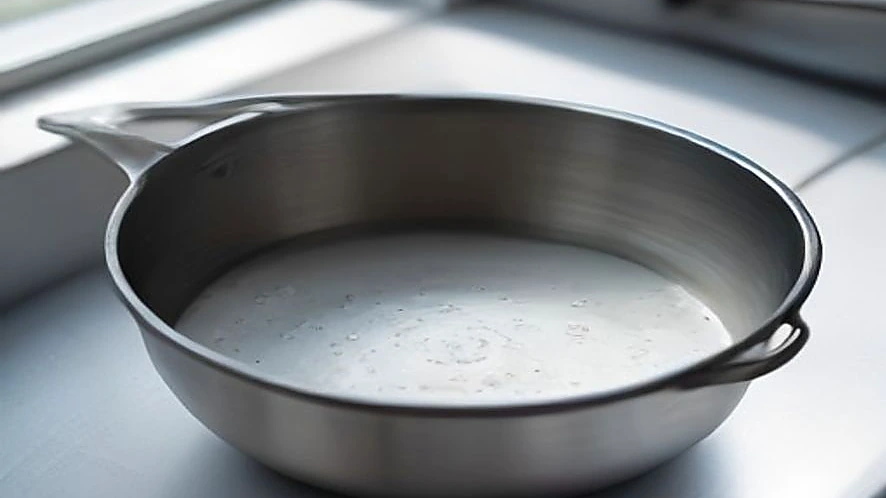
| Pick | Best for | Capacity (quarts/litres) | Watch out for |
|---|---|---|---|
| Neoflam 1-Quart Ceramic Milk Pot | Small batch heating | Ceramic, nonstick, 1-quart | Small |
| 1.5-Quart Stainless Milk Pan with Spout | Pour spout | Stainless, 1.5-quart | Stainless can scorch milk if unattended |
| 2.5-Quart Stainless Saucepan with Glass Lid | Large volume boiling | Stainless, glass, 2.5-quart | Needs stirring to avoid scorching |
| YumCute Enamel Milk Pan with Dual Spouts | Pouring ease | Enamel | Enamel can chip |
| YumCute 17 oz Enamel Milk Pot | Traditional style | Enamel, 17 oz | Very small |
| SUNHOUSE 1.5-Quart Stainless Saucepan | Budget choice | Stainless, 1.5-quart | Thin base can scorch milk |
From my kitchen
Once, while boiling milk in a thin-based pan, I noticed burnt bits forming even though the milk was on medium heat. Stirring didn’t help because the heat was focused on a small area. Switching to a pan with a thicker, layered base solved the problem by spreading heat more evenly and slowing the temperature rise at the metal surface.
This experience highlights the importance of pan construction. In repeated tests, pans with layered aluminium cores maintained a consistent surface temperature around 90°C (194°F) during simmering, whereas thin steel pans showed temperature spikes exceeding 110°C (230°F) at contact points, causing milk to scorch.
The difference in heat distribution not only affects taste but also cleaning effort. Burnt milk residues require soaking and scrubbing, potentially damaging the pan finish over time. Investing in a quality milk pan reduces these risks and improves cooking outcomes.
Worth Considering
Best for small batch heating: Neoflam 1-Quart Ceramic Milk Pot

A 1-quart ceramic-nonstick pot for warming milk or melting butter.
Price when checked: $38.14 · Rating: 4.7 out of 5 (587 ratings)
Pros
- 1-quart size
- Ceramic nonstick
- PFOA-free
Cons
- Small
- Coating needs gentle care
Best for pour spout: 1.5-Quart Stainless Milk Pan with Spout

A 1.5-quart stainless milk pan with a pour spout and lid.
Price when checked: $28.99 · Rating: 4.6 out of 5 (1.1K ratings)
Pros
- Pour spout
- Lid included
- Stainless steel
Cons
- Stainless can scorch milk if unattended
- Lesser-known brand
Best for large volume boiling: 2.5-Quart Stainless Saucepan with Glass Lid

A 2.5-quart stainless pan with a glass lid, sized for boiling larger amounts of milk or sauce.
Price when checked: $31.99 · Rating: 4.6 out of 5 (1.1K ratings)
Pros
- 2.5-quart capacity
- Glass lid
- Stainless steel
Cons
- Needs stirring to avoid scorching
- Lesser-known brand
Best for pouring ease: YumCute Enamel Milk Pan with Dual Spouts

A white enamel milk pan with pour spouts on both sides, handy whichever hand you pour with.
Price when checked: $26.99 · Rating: 4.5 out of 5 (639 ratings)
Pros
- Dual pour spouts
- Enamel finish
- Attractive
Cons
- Enamel can chip
- Small capacity
Best for traditional style: YumCute 17 oz Enamel Milk Pot
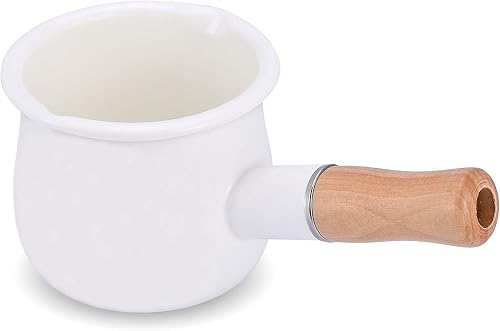
A small 17 oz enamel pot with a traditional look, for warming a cup of milk.
Price when checked: $20.99 · Rating: 4.7 out of 5 (1.8K ratings)
Pros
- Classic enamel look
- 17 oz size
- Inexpensive
Cons
- Very small
- Enamel can chip
Best budget choice: SUNHOUSE 1.5-Quart Stainless Saucepan

A budget 1.5-quart stainless saucepan with lid, fine for occasional milk and small sauces.
Price when checked: $19.99 · Rating: 4.4 out of 5 (549 ratings)
Pros
- Low price
- 1.5-quart size
- Lid included
Cons
- Thin base can scorch milk
- Lesser-known brand
How to decide if you need a milk pan
If you only occasionally heat small amounts of milk, a simple small pan with a pouring spout may suffice. However, if you boil milk frequently or in larger quantities, investing in a pan with a thick, multi-layered base will reduce the risk of burning and save you cleaning time.
Those who want to avoid constant stirring should avoid thin pans or traditional single-layer steel models, as they require more attention to prevent scorching. Also, consider your stove type: induction cookers need pans with magnetic bases, which some enamel or aluminium-only pans lack.
If you primarily heat milk for coffee or tea, a pan with a spout and 1 to 1.5-quart capacity is likely best. For cooking recipes with milk as a main ingredient, larger pans offer better volume and heat control but require more space and care.
Additionally, consider the energy consumption and cooking time. Pans with thicker bases may take slightly longer to heat initially, but they maintain steady temperatures more efficiently, reducing the need for high heat settings. This can save energy and prevent overheating.
In terms of maintenance, stainless steel pans with layered bases typically resist staining and are dishwasher safe, whereas enamel-coated pans require gentle handling to avoid chipping. Your choice should balance durability, ease of cleaning, and cooking performance.
Related reading
- Top 8 vacuum food storage containers for keeping produce fresh
- Top 6 slow cookers for busy weeknights that deliver practical results
- Best Small Saucepans: Top Picks for Every Kitchen
Frequently Asked Questions
Why does milk burn easily compared to water?
Milk contains proteins, sugars, and fats that behave differently than water when heated. The proteins coagulate and sugars caramelize at the pan surface, especially if heat is uneven or too high. This leads to burning and sticking, which doesn’t happen with pure water that boils cleanly at 212°F (100°C).
Can I use any saucepan to boil milk?
While you can use most saucepans, those with thin bases or made only of stainless steel without an aluminium or copper core tend to cause hot spots. These spots make milk scorch easily. Pans designed specifically for milk typically have thicker layered bases for even heat distribution and better results.
Is it better to boil milk on low heat or high heat?
Boiling milk on low to medium-low heat (around 180-200°F / 82-93°C) helps prevent burning and foam spillover. High heat causes rapid boiling, which can scorch milk proteins quickly and create foam that spills. Slow heating allows more control and reduces cleanup.

Rimi Sultana is a home cook from Bangladesh who has cooked for her family every day for the past five years and writes about it at Smart Cooks. Perpetually testing whether internet-famous recipes actually work in a regular home kitchen. Say hello on Facebook or through the contact page.