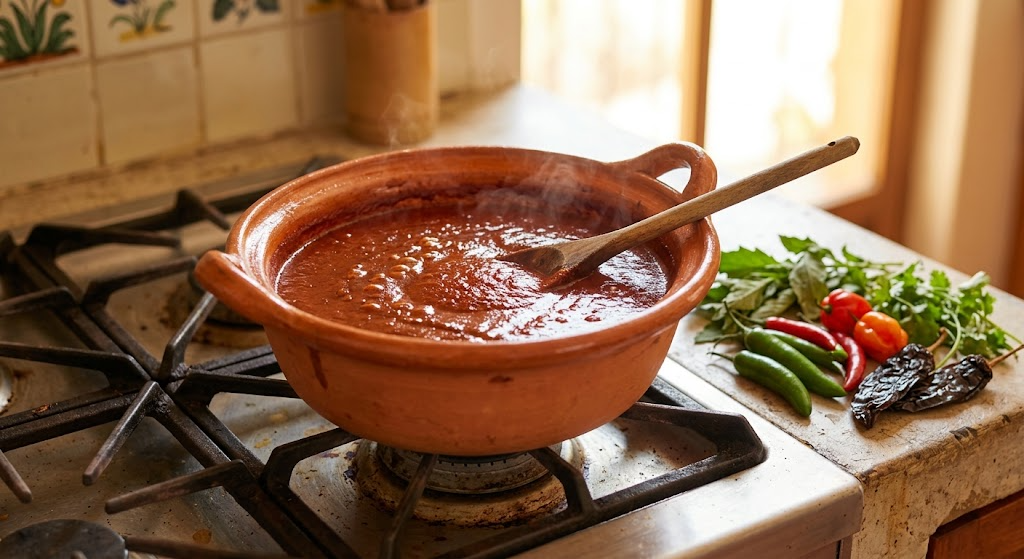
Food cooked in clay tastes different. Not subtly — noticeably. Beans cooked in a barro olla have a rounder, earthier flavour than the same beans in a metal pot, and there is a reason cooks in Mexico have kept using clay for centuries despite having every modern alternative available.
Some links in this post are affiliate links. If you buy through them we may earn a small commission at no extra cost to you — it never changes which products we recommend.
But there is a real problem underneath the romance, and most articles about Mexican clay cookware quietly skip it: traditional lead-glazed pottery can leach lead into your food, and the risk is not theoretical. The FDA states it directly — traditional earthenware often requires lead-containing glazes to seal properly, and when a piece is fired improperly that lead does not bind into the glaze and ends up in your dinner instead. The New York City Health Department has issued public warnings about imported clay pottery found to carry extremely high lead levels. This is a documented, ongoing public-health issue, not internet scaremongering.
So this guide does two things. It recommends seven cazuelas from sellers who document lead-free glazing or avoid glaze altogether — and it tells you how to evaluate any piece yourself, including the ones already in your cupboard. If you want the safe version of clay cooking, you need both halves.
First, The Safety Part — Read This Before You Buy Anything
Why traditional barro can contain lead
Low-fired earthenware needs a glaze to become watertight. Historically, and still today in many workshops, that glaze contains lead oxide, because it melts at a low temperature and produces a beautiful glossy finish. When the piece is fired hot enough and long enough, the lead binds into the glass of the glaze. When it is not — or when the kiln itself carries lead residue from previous firings — the lead stays loose on the surface and transfers into food.
Per FDA guidance on lead-glazed traditional pottery, the highest-risk pieces are:
- Handmade items with a crude or uneven appearance
- Antique pieces
- Damaged, chipped or crazed pieces
- Anything from a flea market, roadside stall, or a seller who cannot tell you who made it
- Brightly decorated wares in orange, red or yellow — these pigments historically carried the most lead
The FDA is also blunt about one thing worth internalising: no amount of washing, boiling or scrubbing removes lead once a glaze is contaminated. You cannot fix a bad piece. You can only stop using it for food.
What increases leaching
Acid and heat both pull lead out of a compromised glaze faster. That is an awkward fact for Mexican cooking specifically, because the classic cazuela dishes are exactly the high-risk combination: tomato, tomatillo, lime, vinegar and long simmering. A cazuela used only to serve dry bread is a far lower risk than one used to simmer salsa for three hours.
The NYC Health factsheet on traditional ceramic ware and the EPA/PEHSU material on lead exposure through traditional Mexican ceramic ware both go further, and both are worth five minutes if you have small children at home. Children absorb lead far more readily than adults, and there is no established safe blood lead level in children — that is the CDC’s position, not ours.
How to check a piece you already own
Home lead test swabs are sold at hardware stores and online. You rub the swab on the food-contact surface, and a colour change indicates leachable lead. They are not laboratory-grade and can miss low-level leaching, so a negative result is not a guarantee — but a positive result is meaningful. If a swab goes positive, stop using that piece for food immediately. For a definitive answer, some local health departments and commercial labs will test ceramic ware for a modest fee.
Our honest limitation
We have not independently lab-tested the pieces below, and neither has anyone else writing an affiliate roundup on this keyword. What we have done is restrict this list to sellers who make an explicit, documented lead-free claim and identify their sourcing — which is a meaningfully different thing from an anonymous marketplace listing with “lead free” in the title and no company behind it. If you are cooking acidic food for young children, swab-test your specific piece regardless of what any seller — or any blog, this one included — tells you.
Our Top 7 Picks for the Best Lead-Free Cazuela
Best Overall: Ancient Cookware Mexican Clay Lidded Cazuela, 4.5 Quart

Ancient Cookware is the most transparent seller in this category. They import traditional Mexican clay cookware, identify the regions and workshops they source from, and make an explicit lead-free claim across their food-use range. That documentation is the reason this is the top pick — more than any feature of the pot itself.
The 4.5-quart lidded cazuela is the workhorse size: deep enough for a full pot of beans, birria or a braise, with a lid that lets you move from a hard simmer to a slow one without losing everything to evaporation. Plain terracotta rather than the bright glossy decorated style — which, given everything above, is a feature and not a compromise.
Key Specifications
- 4.5-quart capacity with lid
- Traditional Mexican clay, plain terracotta finish
- Documented lead-free glazing
- Stovetop with a diffuser, and oven safe
Pros
- The most transparent sourcing of any seller here
- Right size for family braises and a full pot of beans
- Lid included, which most cazuelas are not
- Undecorated finish avoids the highest-risk pigments
Cons
- Requires curing before first use
- Needs a heat diffuser on gas or electric
- Heavy when full — and clay is clay, it breaks if dropped
Best for Braising and Reducing: Ancient Cookware Mexican Clay Flat Cazuela, 3 Quart

The flat cazuela is the shallow, wide shape, and shape genuinely changes what a pot is good at. A wide, low cazuela gives you far more surface area, which means faster reduction and better browning. This is the shape for salsas that need to cook down, for a shallow braise where you want the sauce to concentrate, and for anything going straight from the stove to the table.
Three quarts sounds small until you remember it is spread wide.
The first thing I cooked in mine was a tomato-and-onion base I have made a hundred times in a steel kadai, specifically so I would have something honest to compare it against. It did not reduce faster. It reduced slower — and that turned out to be the point. In steel that masala catches at the edges and I am scraping every two minutes; in the clay it simply sat there and thickened evenly while I did something else, and the finished sauce tasted rounder, less sharp at the finish.
Two things I learned the hard way. Soak a new cazuela overnight before its first use, and never move it straight from a hot burner onto a cold counter. That temperature shock is what cracks them — not the cooking.
Key Specifications
- 3-quart flat, wide cazuela
- Traditional Mexican clay
- Documented lead-free glazing
- Doubles as a serving dish
Pros
- Wide surface reduces sauces much faster
- Beautiful straight from the stove to the table
- Easier to stir and scrape than a deep pot
- Same documented sourcing as the lidded version
Cons
- No lid
- Shallow shape is wrong for soups or stock
- Wide base needs a large burner plus a diffuser
Best Everyday Size: Cazuela de Barro 11.5-Inch with Lid, Lead-Free

The 11.5-inch is the size most home cooks will actually reach for — big enough for a proper dinner, small enough to live on a shelf rather than in a cupboard you never open. It comes with a matching lid, which changes what it can do: covered, you get a genuine slow braise, and that is where clay’s even heat is at its best.
This is a decorated piece with an explicit lead-free designation. Worth repeating the general caution here: the FDA flags brightly decorated wares as historically higher-risk, which does not make any specific modern lead-free-designated piece unsafe, but does mean decorated pieces are the ones where a swab test is most worth the five minutes.
Key Specifications
- 11.5 inches with matching lid
- Traditional decorative floral finish
- Sold with an explicit lead-free designation
- Everyday family size
Pros
- Lid makes it a genuine braising pot
- The most practical everyday size
- Attractive enough to serve from
- Explicitly designated lead-free
Cons
- Decorated finish — the category where swab testing matters most
- Lids are the part that most often arrives chipped
- Not stovetop-safe without a diffuser
Best Large: Cazuela de Barro 14.5-Inch, Lead-Free

For cooking for a crowd — a pot of pozole, a full batch of mole, family-sized birria — the 14.5-inch cazuela is the size that makes sense. It is a decorated traditional piece sold with a documented lead-free designation and marked as food-safe rather than decorative-only, which is the distinction that matters most in this category.
Two practical notes before you buy. A pot this wide needs a genuinely large burner plus a diffuser, and clay this size takes a long time to come up to temperature — plan on preheating gently while you prep rather than expecting it to be ready when you are.
Key Specifications
- 14.5-inch large capacity
- Traditional Mexican clay with decorative finish
- Explicit lead-free designation
- Stovetop with diffuser, and oven
Pros
- Large enough for pozole, mole or a party batch
- Handsome enough to serve from directly
- Explicitly designated food-safe and lead-free
- Traditional decorated appearance
Cons
- Decorated pieces are where testing matters most
- Large and awkward to store
- Long preheat — clay this size takes a while
Best Bean Pot: Mis Jarritos Mexican Clay Bean Pot with Lid (Olla de Barro Frijolera)

The tall, narrow olla frijolera is a different tool from a wide cazuela, and if beans are the reason you want clay, this is the shape to buy. The narrow mouth and tall walls minimise evaporation over a long, slow simmer, so beans cook down without you topping up the water every twenty minutes — which is exactly why the shape has survived unchanged for centuries.
It also produces the specific thing people mean when they say beans taste better in clay. A wide cazuela will cook beans perfectly well, but it will not do it the same way.
Key Specifications
- Traditional olla de barro frijolera with lid
- Tall, narrow bean-pot shape
- Mexican clay construction
- Designed for long, slow simmering
Pros
- The correct traditional shape for beans
- Narrow mouth greatly reduces evaporation
- Lid included
- Genuinely handsome traditional piece
Cons
- Single-purpose shape — poor for braising or reducing
- Narrow opening makes stirring and cleaning fiddly
- Needs curing and a diffuser like all clay
Best for Serving: Ancient Cookware Mexican Clay Tiny Cazuela, 6 Ounce

These little 6-ounce cazuelitas are the ones you will end up using most, and they cost almost nothing. They are for salsa, guacamole, crema, pickled onions and queso — everything that goes around a plate of tacos rather than in the pot. Buy four or six.
Because they are used for serving rather than long cooking, they are also the lowest-risk introduction to clay: no hours of acidic simmering, no thermal cycling. They are the natural companion to a bowl of salsa ground in a molcajete.
Key Specifications
- 6-ounce individual cazuelitas
- Traditional Mexican clay, terracotta
- Documented lead-free glazing
- Serving and small-portion use
Pros
- Inexpensive — easy to buy a set
- Perfect for a taco spread
- Lowest-risk use case: serving, not long acid cooking
- Genuinely charming on a table
Cons
- Too small for any real cooking
- Chip easily in a busy sink
- Hand wash only
Best Unglazed Alternative: Hakan Suphan Handmade 7.6-Quart Natural Unglazed Clay Pot

This one is Turkish, not Mexican — and we are saying so plainly rather than blurring it, because it earns its place for exactly one reason: it is completely unglazed. There is no glaze layer, which means there is no glaze-leaching pathway at all. If the whole lead question has put you off traditional pottery but you still want what clay does to food, this is the way around the problem.
It behaves like any clay pot in the kitchen — slow, even, needs a diffuser, needs curing — and at 7.6 quarts it is the largest capacity here, which suits a big batch of beans or a long stew. It simply is not a cazuela in the Mexican sense, and it will not look like one on your table.
Key Specifications
- 7.6-quart capacity with lid
- Completely unglazed natural terracotta
- Handmade in Turkey
- Oven and stovetop with a diffuser
Pros
- Unglazed — no glaze-leaching pathway whatsoever
- Largest capacity on this list
- Excellent slow, even heat like all clay
- Lid included
Cons
- Turkish rather than Mexican — a different tradition
- Unglazed clay is porous: it stains and absorbs flavours
- Needs careful curing and gentle heating
- Large and heavy to store
The Ultimate Buying Guide for Clay Cazuelas
Glazed vs Unglazed
This is the first decision and it drives everything else. Glazed pottery is watertight straight away, easier to clean and holds no odours — but the glaze is the part that can carry lead. Unglazed pottery has no glaze to leach from at all, but is porous, absorbs flavours, needs proper curing and stains permanently.
If lead is your primary concern, unglazed sidesteps the question entirely. If convenience is, buy glazed from a documented lead-free source.
Shape: Deep vs Flat
- Deep lidded cazuela — beans, stews, birria, pozole, anything that simmers long and covered.
- Flat wide cazuela — salsas that need to reduce, shallow braises, anything you want to brown.
If you are buying one, buy deep. It does more.
Size
- 6 to 8 oz cazuelitas — serving salsa, crema, garnishes
- 2 to 3 quarts — cooking for two or three
- 4 to 6 quarts — family-sized, the everyday sweet spot
- 14 inches and up — pozole, mole, parties
You Need a Heat Diffuser
This is not optional, and it is the reason most new cazuelas crack. Clay cannot take the concentrated point heat of a gas flame or an electric coil — the base heats faster than the walls, the material expands unevenly, and it splits. A cheap metal heat diffuser plate between the burner and the pot fixes this completely.
Clay does not work on induction at all. There is no workaround.
Curing a New Cazuela
Every new clay pot needs curing before its first real use. The traditional method:
- Soak the cazuela in water for several hours, or overnight for a large piece.
- Rub the inside with a cut clove of garlic.
- Fill with water, set it on a diffuser over low heat and bring it up slowly.
- Simmer gently for about an hour, then turn the heat off and let it cool completely in place.
- Many cooks then cook a first batch of plain beans, discard them, and consider it seasoned.
The important word throughout is slowly. Almost every clay pot that dies, dies from thermal shock.
Everyday Care
- Always heat and cool gradually. Never move a hot cazuela onto a cold surface, and never add cold liquid to a hot pot.
- No dishwasher. Hot water and a brush.
- Use soap sparingly on unglazed clay — porous surfaces absorb it.
- Dry completely before storing, and store uncovered so trapped moisture can escape.
- Retire chipped or crazed pieces from food use. Damaged glaze is one of the FDA’s specific risk flags, and a fine network of cracks is exactly where leaching starts.
If you like this style of slow, heavy cooking, the same logic runs through our guide to the best Dutch oven for baking sourdough bread — different material, same relationship with gradual heat.
Frequently Asked Questions About Mexican Clay Cazuelas
Is Mexican clay pottery safe to cook in?
It depends entirely on the piece. Pottery from documented sellers who certify lead-free glazing, or unglazed pottery, is generally safe for cooking. Traditional lead-glazed pottery — particularly handmade, antique, damaged, or brightly decorated orange, red and yellow pieces from unidentified sources — can leach lead into food, and the FDA specifically flags those categories. If you do not know a piece’s origin, do not cook acidic food in it, and test it with a lead swab.
How can I tell if my cazuela has lead in it?
You cannot tell by looking. The only practical home method is a lead test swab from a hardware store, rubbed on the food-contact surface — a colour change indicates leachable lead. Swabs can miss low-level leaching, so a negative result is not a guarantee, but a positive result means stop using it for food immediately. For a definitive answer, some local health departments and commercial labs will test ceramic ware.
Can you use a cazuela on a gas stove?
Yes, but only with a heat diffuser between the flame and the pot, and only with gradual heating. A direct gas flame concentrates heat on one spot, which expands that part of the clay faster than the rest and cracks it. Clay will not work on induction at all, because it is not magnetic.
Do I have to cure a new cazuela before using it?
Yes. Curing seals the porous clay, reduces the chance of cracking, and removes the raw earthy taste a new pot otherwise gives the first thing you cook in it. The traditional method is soaking it in water, rubbing the interior with garlic, then slowly simmering water in it over low heat and letting it cool in place.
Why does food taste different cooked in clay?
Two reasons. Clay heats slowly and holds heat evenly, so food cooks gently from all sides with fewer hot spots than a metal pot — better for beans and long braises. Unglazed clay is also mildly porous and holds a trace of previous cooking, which is why a well-used bean pot is prized. The flavour effect is real but subtle; anyone promising a dramatic transformation is overselling it.
Is unglazed clay safer than glazed?
For lead specifically, yes — there is no glaze to leach from. The trade-off is that unglazed clay is porous, so it absorbs flavours and odours, stains permanently, needs more careful curing, and should not be washed with much soap. It is the right choice if lead is your primary concern.
Final Thoughts
Clay cookware is worth having. Beans really are better in a barro pot, and a cazuela on the table is a nicer object than anything that comes out of a factory. But this is the one category of traditional cookware where “authentic” and “safe” can genuinely pull in opposite directions, and it is worth being clear-eyed about that rather than romantic.
For most people the Ancient Cookware 4.5-quart lidded cazuela is the right buy — documented sourcing, undecorated finish, and the size you will actually use. If lead is your main worry, go unglazed. And whatever you buy, cure it slowly, cook it on a diffuser, and retire it the moment the glaze chips.
Then fill it with something worth the trouble, and serve it with tortillas and a bowl of salsa from your molcajete.
Sources on lead safety
- FDA — Questions and Answers on Lead-Glazed Traditional Pottery
- NYC Health — Ceramic Ware Factsheet
- EPA / PEHSU — Lead Exposure Through Traditional Mexican Ceramic Ware
- CDC — Preventing Lead Poisoning in Children
This article is general information, not medical advice. If you are concerned about lead exposure — particularly for a child or during pregnancy — speak to a healthcare provider about blood lead testing.
As an Amazon Associate we earn from qualifying purchases. We have not independently lab-tested any product on this list; our selection is based on sellers who document lead-free glazing or avoid glaze entirely, and who identify their sourcing. Availability is accurate as of the date of publishing.

Rimi Sultana is a home cook from Bangladesh who has cooked for her family every day for the past five years and writes about it at Smart Cooks. Perpetually testing whether internet-famous recipes actually work in a regular home kitchen. Say hello on Facebook or through the contact page.