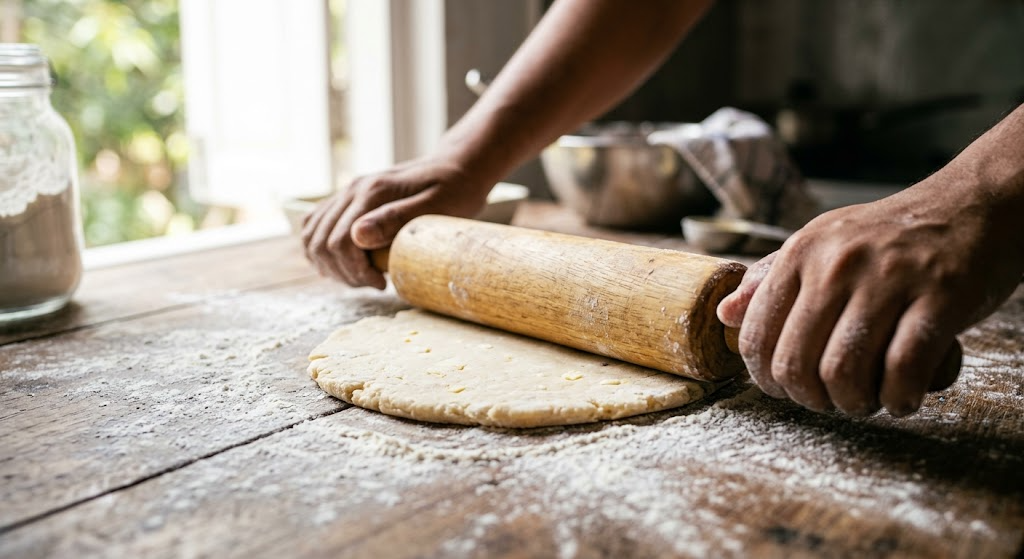
A rolling pin seems like the simplest tool in a baking drawer, which is exactly why people buy the wrong one without realizing it. Here are the mistakes that actually affect how your dough rolls out, not just how the pin looks on a shelf.
Some links in this post are affiliate links. If you buy through them we may earn a small commission at no extra cost to you — it never changes which products we recommend.
What Actually Matters
French Tapered vs Rod-and-Handle Style
A French-style tapered pin (no handles, thinner at the ends) gives you more direct feel and control for delicate doughs like pastry and fondant, while a traditional rod-and-handle pin gives more leverage for heavier bread or cookie doughs. Buying the wrong style for the dough you actually make most is the single most common mismatch.
Weight and Diameter
A very light pin requires more arm pressure to roll evenly, which can make dough thickness inconsistent. A heavier pin does more of the work for you with less pressure, but can feel unwieldy for delicate pastry work where a light touch matters.
Bearing Quality on Handled Pins
On rod-and-handle pins, cheap bearings stick or wobble after repeated use, which makes the roll uneven. This isn’t visible in a product photo, so it’s worth checking reviews specifically for bearing complaints before buying.
From My Kitchen
I bought a heavy rod-and-handle pin for pie crust because it was the first one I saw, and it was genuinely too much pin for delicate, cold butter-based dough — I kept overworking the edges trying to control it. Switching to a thinner tapered French pin for pastry specifically made a noticeable difference in how evenly the dough rolled without warming up too much from handling.
Worth Considering
For pastry, pie crust, and fondant, the muso wood Sapele French Rolling Pin gives the tapered control that delicate doughs benefit from. For everyday bread and cookie dough where you want more leverage, the GoodCook Classic Wooden Rolling Pin with Easy Roll Bearings is a dependable traditional option.
Quick Comparison
| French (tapered) | Straight dowel | Handled with bearings | Marble | |
|---|---|---|---|---|
| Control over shape | Best — tapers let you steer | Good | Least, rolls straight only | Least |
| Feel for the dough | Direct | Direct | Muted by the bearings | Direct but heavy |
| Weight doing the work | No, you press | No | Some | Yes |
| Effect on butter | Neutral | Neutral | Neutral | Stays cold if chilled first |
| Best for | Pastry, pie, control work | All-round, cheap | Beginners, even thickness | Chilled pastry in a warm kitchen |
The Mistakes That Cost You Later
The most common one is buying a heavy pin because heavy feels quality. Weight is only an advantage if the dough wants pressure; for pastry, the weight that matters is your hands, and a heavy pin makes it harder to feel when the dough is resisting. The second mistake is buying a non-stick or coated pin — coatings chip, and a chipped rolling pin is no longer food-safe in the way a scratched wooden one still is.
The third is length. An 18-inch working surface is the minimum for rolling a pie base or a sheet of puff pastry in one pass, and rolling in two passes is how you get uneven thickness across the middle. A 12-inch pin is a cookie-dough pin. The fourth is bearings: handled pins with bearings are genuinely easier for beginners, but cheap bearings seize once flour works into them, and once seized the pin is worse than a plain dowel.
The One Thing That Matters More Than the Pin
Whichever pin you buy, the material it touches matters as much as the pin itself. Rolling between two sheets of baking parchment removes almost every sticking problem without adding flour, and flour added during rolling is the main reason home pastry turns out tough — you are changing the recipe as you go. If you take one habit from this, take that one: less flour on the bench, parchment instead.
Two Rolling Pins Worth Considering
Best for control: muso wood Sapele French Rolling Pin
The tapered shape is what pastry cooks reach for, because the narrower ends let you steer the dough and feel exactly how it is behaving under your hands. No bearings to seize and nothing to go wrong over a decade of use.
Pros
- Tapered ends give real control over shape
- Direct feel for how the dough is responding
- No moving parts to fail
Cons
- Takes a little practice compared with a handled pin
- Needs hand washing and drying, never soaking
Best for beginners: GoodCook Classic Wooden Rolling Pin With Bearings
Handles and bearings make it much easier to get an even thickness without technique, which is the right trade for someone rolling cookie dough and pie bases a few times a year. Keep flour out of the bearing ends and it will last.
Pros
- Easy to use with no learning curve
- Bearings help produce even thickness
- Comfortable for longer rolling sessions
Cons
- Bearings can stiffen if flour works into them
- Less feel for the dough than a French pin
Frequently Asked Questions
Should I refrigerate a wooden rolling pin?
No — wood rolling pins shouldn’t go in the fridge or dishwasher, since moisture and temperature swings can warp or crack the wood over time; just wipe it down and store it dry.
Does rolling pin material (wood vs marble vs silicone) actually matter?
It affects heat retention more than most people expect — marble stays cool, which helps keep butter-based doughs firm while rolling, while wood is neutral and silicone tends to warm slightly with handling.
Should I flour the pin or the counter?
Neither, if you can avoid it — roll between parchment instead. When you do need flour, put a very light dusting on the counter rather than the pin, and brush the excess off the dough before it goes into the tin. Flour on the pin transfers onto the top surface where it sits on the finished pastry as a dusty layer, and every extra gram of flour worked into pastry makes it a little tougher.
How do I stop dough sticking without adding more flour?
Chill it. Sticking is almost always a temperature problem rather than a flour problem — warm butter smears and grabs, cold butter stays in discrete pieces and releases cleanly. If your dough starts sticking halfway through rolling, put it back in the fridge for fifteen minutes rather than adding flour. It feels like a delay, and it is the difference between flaky and tough.

Rimi Sultana is a home cook from Bangladesh who has cooked for her family every day for the past five years and writes about it at Smart Cooks. Perpetually testing whether internet-famous recipes actually work in a regular home kitchen. Say hello on Facebook or through the contact page.