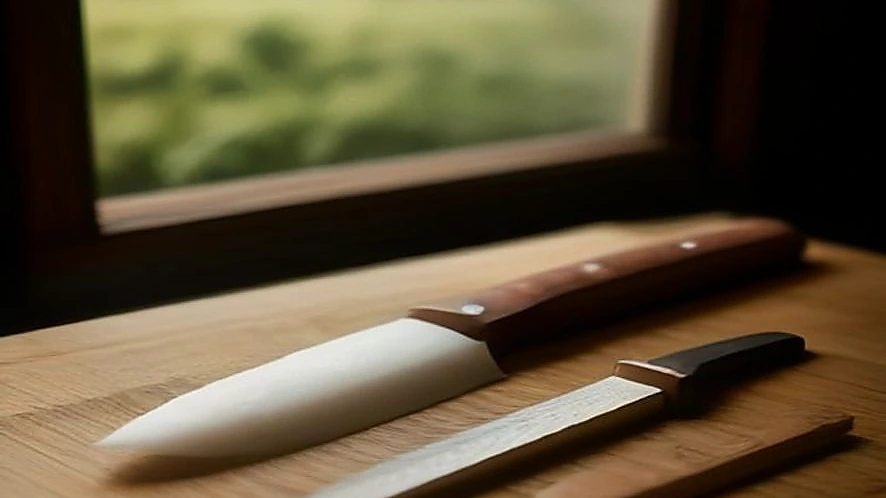
Santoku and nakiri knives are both Japanese-style blades commonly used for vegetable preparation, but they differ in shape, cutting technique, and versatility. The santoku typically features a shorter, wider blade with a curved edge suited to rocking cuts, while the nakiri has a straighter, rectangular blade designed for precise chopping with an up-and-down motion.
Some links in this post are affiliate links. If you buy through them we may earn a small commission at no extra cost to you — it never changes which products we recommend.
These differences arise from their intended uses and blade geometry. Choosing between them depends on the kind of cutting tasks you perform most often and your preferred technique. This article explains how their construction affects function, plus scenarios where one knife outperforms the other.
Where each one wins
The santoku knife excels in versatility. Its curved edge and balanced weight make it suitable for a range of kitchen tasks beyond vegetables, including slicing fish and boneless meats. It handles tasks requiring a rocking motion well, which can speed up prep when working with large quantities.
Nakiri knives perform best in dedicated vegetable prep. Their flat edge and blade height allow for precise, clean chopping through leafy greens, root vegetables, and herbs. The straight cut minimizes bruising and crushing, preserving texture and appearance. Their lightweight, thin blade is ideal for delicate slicing but less suited for tougher or denser food.
If you regularly prepare mixed dishes involving meat and vegetables, a santoku is a practical all-rounder. But if your focus is vegetarian cooking or you value the cleanest cuts of vegetables, the nakiri’s specialized design provides advantages.
Delving deeper into the mechanism, the santoku’s curved edge facilitates a rocking motion that enables continuous contact between blade and cutting board. This not only speeds up chopping but reduces the effort needed per cut. The blade’s double bevel edge, typically sharpened at 15-20 degrees per side, strikes a balance between sharpness and durability, making it resilient for varied tasks including slicing through soft meat fibers without excessive damage.
In contrast, the nakiri’s flat edge, often sharpened at a more acute 10-15 degrees per side, creates an extremely sharp but delicate cutting surface. This allows the blade to slice cleanly through vegetables with minimal cell damage, which is critical for preserving the visual appeal and texture of delicate ingredients like cucumbers or bell peppers. Its thin blade profile also reduces resistance during cuts, enabling precise control especially when dicing or julienning vegetables.
From a numerical standpoint, the santoku’s blade length ranges from 6 to 7 inches (15-18 cm), providing sufficient length for handling medium to large vegetables and boneless meats. The blade’s curvature radius typically measures around 10-15 cm, optimizing the rocking motion. The nakiri, with a blade length of approximately 6.75 to 7 inches (17-18 cm), maximizes vertical cutting surface area due to its rectangular shape, which is beneficial for chopping tall vegetables like leeks or celery efficiently.
The weight and balance also influence usage: santoku knives tend to weigh between 150 to 200 grams, with a well-balanced handle-to-blade ratio that aids in controlled slicing and rocking. Nakiris are lighter, often around 120 to 160 grams, allowing for quick, repetitive chopping motions with less fatigue. However, the thinner blade requires careful handling to avoid bending or chipping, especially when encountering harder vegetables or bones.
Consequences of choosing the wrong knife can include inefficient prep, increased fatigue, and suboptimal food presentation. For example, using a santoku for fine vegetable dicing may result in uneven cuts and bruised produce, while using a nakiri for meat slicing can lead to blade damage and awkward handling. Understanding these mechanisms and numeric details helps cooks select the best tool for their culinary needs.
| Attribute | Santoku knife | Nakiri knife |
|---|---|---|
| Blade shape | Shorter, wider, gently curved edge | Rectangular, long flat edge |
| Cutting motion | Rocking or slicing with slight curve | Straight up-and-down chopping |
| Blade length | Typically 6 to 7 inches (15-18 cm) | Typically 6.75 to 7 inches (17-18 cm) |
| Edge grind | Double bevel, ~15-20° per side | Often thinner double bevel or single bevel, ~10-15° per side |
| Primary use | Versatile: vegetables, meat, fish | Specialised for vegetables and delicate cuts |
| Weight and balance | Moderate weight with balanced handle | Generally lighter with thin blade profile |
From my kitchen
I once tried using a santoku knife to prepare a batch of thinly sliced daikon for pickling. The rocking motion of the santoku worked fine but caused some slices to be uneven, especially near the tip where the blade curves up. Switching to a nakiri with its straight edge suddenly made slicing faster and more consistent; the flat blade pressed cleanly through the daikon without the need to adjust angle or pressure.
However, when I later tried to slice boneless chicken thighs with the nakiri, it felt awkward and less efficient than the santoku. The straight blade lacks the tip control and rocking action needed to handle meat smoothly, confirming that each knife is really tailored for specific kitchen tasks.
Worth Considering
Best for controlled vegetable chopping: Milk Street 6.75-inch Nakiri Knife

This nakiri knife offers a long, flat blade ideal for precise vegetable chopping with minimal bruising. It suits cooks focused on vegetarian prep and clean, straight cuts. Less useful if you need a multipurpose blade for meat or fish.
Brand: Milk
Pros
- Flat edge for clean, even vegetable slices
- Lightweight 1.4116 German steel blade
- Comfortable handle for repeated chopping
Cons
- Not suited for rocking cuts or slicing meat
- Requires careful edge maintenance due to thinner blade
Best for versatile kitchen use: 7” Japanese Nakiri Knife, Damascus VG10 Steel

Though labelled nakiri, this 7-inch knife with layered Damascus VG10 steel is a premium blade designed for sharpness and durability. It works well for vegetable prep and can handle light slicing tasks. Heavier than typical nakiris, it balances durability with precision.
Brand: 7”
Pros
- 67-layer Damascus VG10 steel for sharpness and edge retention
- Long blade length for larger vegetables or batches
- Elegant handcrafted design
Cons
- Heavier than standard nakiri, less nimble
- Less versatile for non-vegetable tasks compared to santoku
When neither santoku nor nakiri is the right choice
Both santoku and nakiri knives have limitations if your cooking involves tasks like breaking down large cuts of meat, filleting fish, or slicing bread. Their blade sizes and designs are not suited for heavy-duty chopping or specialized tasks requiring more length, flexibility, or serration.
For example, a chef’s knife with a longer 8-10 inch (20-25 cm) blade and pronounced curve is better for general-purpose cutting including meat and fish. A fillet knife with a thin, flexible blade works best for delicate fish skinning.
If you often prepare bread or crusty items, a serrated bread knife is necessary since neither santoku nor nakiri can saw through tough crusts effectively. Understanding the limits of these knives helps allocate the right tool for the job and avoid frustration.
Frequently Asked Questions
Can I use a santoku knife for all my vegetable chopping?
A santoku knife can handle most vegetable chopping tasks efficiently due to its curved blade and balanced weight, allowing rocking cuts. However, for very precise, straight slicing or chopping of delicate vegetables without bruising, a nakiri with a flat edge is superior. If you mostly prepare mixed ingredients including meat, santoku is more versatile.
How do I maintain the edge on a nakiri knife compared to a santoku?
Nakiri knives often have thinner, sharper edges which can be more prone to chipping if used on hard foods or improperly sharpened. They may require more frequent honing and careful sharpening at a lower angle (around 10-15° per side). Santoku knives have slightly more robust edges (15-20° angles), making them easier to maintain for everyday use.
Is the length difference between santoku and nakiri significant?
Both knives typically range from about 6 to 7 inches (15-18 cm). The nakiri’s blade length is often around 6.75 to 7 inches and its rectangular shape maximizes cutting surface height, which assists chopping volume. The santoku’s shorter, wider blade offers more blade tip control and versatility but may feel slightly smaller for large batch vegetable prep.
Related: Steamer basket vs bamboo steamer: practical differences explained
Related: Electric griddle vs stovetop griddle: key differences explained
Related: Muffin tin vs silicone mould: practical baking differences explained
Related: Charcoal grill vs gas grill: key differences explained

Rimi Sultana is a home cook from Bangladesh who has cooked for her family every day for the past five years and writes about it at Smart Cooks. Perpetually testing whether internet-famous recipes actually work in a regular home kitchen. Say hello on Facebook or through the contact page.