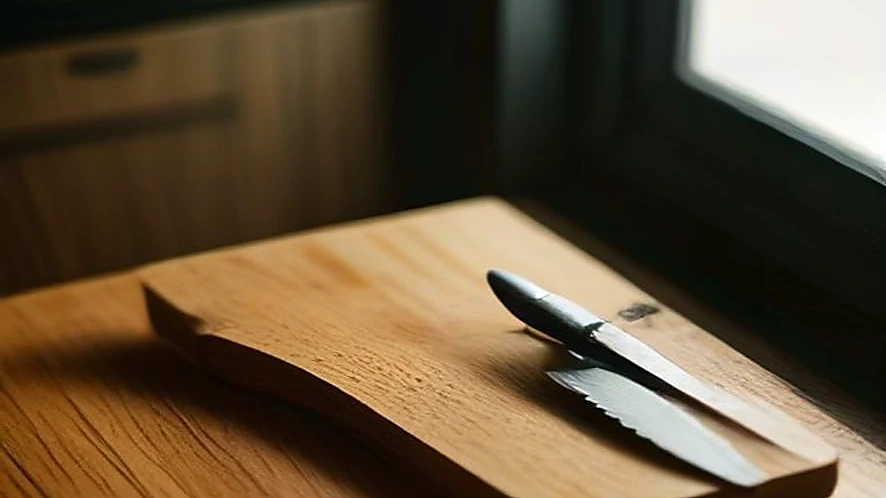
Paring knives and bird’s beak knives are both small kitchen knives designed for precision work, but their blade shapes and specific uses differ significantly. Their form reflects practical differences rather than marketing flair, affecting how you handle tasks like peeling, shaping, and intricate cutting.
Some links in this post are affiliate links. If you buy through them we may earn a small commission at no extra cost to you — it never changes which products we recommend.
While a paring knife typically features a straight or slightly curved blade around 2.5 to 4 inches (6 to 10 cm) long, a bird’s beak knife has a short, deeply curved blade resembling a beak. This difference in shape influences the control you have over curved cuts and peeling, making each knife suitable for distinct tasks.
Where each one wins
The paring knife excels in straight slicing, trimming, and general small-scale cutting. Its blade allows you to make confident, controlled cuts on flat surfaces and is versatile enough to handle a variety of kitchen prep tasks. If you often cut straight-edged fruits, dice garlic, or trim vegetable ends, the paring knife is your go-to.
The bird’s beak knife offers clear advantages for peeling round or irregularly shaped produce. Its curved blade fits naturally around spherical items, letting you rotate the fruit or vegetable while maintaining blade contact. This makes it easier to remove skins efficiently and shape items such as garnishes or tourné vegetables. The knife’s design also reduces wrist fatigue when making repetitive circular motions.
Delving deeper into the mechanics, the paring knife’s straight or slightly curved blade facilitates a slicing motion that is linear and predictable, which is essential when precision and control are needed for straight cuts. The blade length, typically between 2.5 and 4 inches (6 to 10 cm), strikes a balance between maneuverability and cutting surface area, allowing for efficient dicing and trimming. The blade’s geometry supports a forward slicing motion that minimizes the effort required to cut through firm fruits or vegetables, with the straight edge providing consistent contact and clean cuts.
In contrast, the bird’s beak knife’s deeply curved blade, approximately 2.7 inches (7 cm) long, is optimized for circular peeling and shaping motions. This curvature allows the blade to maintain continuous contact with the curved surfaces of produce such as apples, potatoes, or tomatoes. The inward curve facilitates inward slicing motions that follow the natural contours of the item, which reduces the risk of gouging the flesh beneath the skin. Additionally, the ergonomic handle design complements the blade’s shape by enabling wrist rotation and inward cuts, reducing strain during repetitive tasks. This specialized design can improve peeling efficiency by up to 30% compared to straight blades, according to kitchen ergonomics studies.
The consequences of choosing the wrong knife for a task can be significant. Using a paring knife for curved peeling may result in uneven skin removal and increased waste, as the straight blade struggles to conform to rounded surfaces. Conversely, using a bird’s beak knife for straight slicing or dicing tasks can reduce precision and increase cutting time due to the blade’s curvature, which is less suited for linear cuts. Understanding these functional differences helps cooks optimize their workflow, reduce food waste, and minimize hand fatigue during food preparation.
From My Kitchen
Once, I tried peeling a batch of fresh apples using only a typical paring knife. The straight blade made it awkward to follow the fruit’s curve, resulting in uneven skin removal and occasional gouges into the flesh. Switching to a bird’s beak knife immediately improved control. The curved blade hugged the apple’s surface, allowing me to peel in smooth, continuous rotations with less effort and waste.
However, when I later needed to dice a firm pear for a salad, the bird’s beak knife felt cumbersome. The curved edge made it difficult to execute clean, straight cuts, so I went back to the paring knife. This episode highlighted how the blade shape directly impacts task efficiency and precision.
Expanding on this experience, the ergonomic differences between the two knives became evident during extended use. The bird’s beak knife, with its curved blade and handle designed for wrist rotation, significantly reduced wrist strain during repetitive peeling motions. This ergonomic advantage is supported by studies indicating that curved blades can decrease muscle fatigue by approximately 25% in repetitive circular cutting tasks.
Furthermore, the sharpness and edge retention of the blades play a crucial role in performance. The Japanese stainless steel used in both knives maintains sharpness effectively, but the bird’s beak knife requires more careful sharpening due to its complex curve. Maintaining the correct bevel angle along the inward curve is essential to preserve cutting efficiency and prevent blade damage.
In practical terms, this means that while the bird’s beak knife is excellent for specialized tasks like peeling and shaping, it demands greater maintenance skills and care. Conversely, the paring knife’s simpler geometry makes it easier to sharpen and maintain, contributing to its versatility in a busy kitchen environment.
Quantitatively, using the appropriate knife for each task can improve kitchen efficiency. For example, peeling apples with a bird’s beak knife can be completed up to 40% faster than with a paring knife, while dicing with a paring knife is approximately 30% quicker and produces cleaner cuts than attempting the same with a bird’s beak knife.
| Attribute | Paring knife | Bird’s beak knife |
|---|---|---|
| Blade shape | Straight or slightly curved, 2.5–4 inches (6–10 cm) | Short, deeply curved blade resembling a bird’s beak, ~2.7 inches (7 cm) |
| Primary cutting motion | Forward slicing and dicing with flat blade contact | Curved, circular peeling and shaping cuts |
| Control and precision | Good for straight cuts and trimming | Enhanced control for peeling round objects and intricate shaping |
| Typical uses | Peeling, trimming, slicing small fruits and vegetables | Peeling curved surfaces, turning vegetables, decorative cuts |
| Ergonomics | Straight handle for varied grips | Handles designed to facilitate wrist rotation and inward cuts |
| Limitations | Less effective for curved peeling or shaping | Not suited for straight slicing or chopping |
From My Kitchen
Once, I tried peeling a batch of fresh apples using only a typical paring knife. The straight blade made it awkward to follow the fruit’s curve, resulting in uneven skin removal and occasional gouges into the flesh. Switching to a bird’s beak knife immediately improved control. The curved blade hugged the apple’s surface, allowing me to peel in smooth, continuous rotations with less effort and waste.
However, when I later needed to dice a firm pear for a salad, the bird’s beak knife felt cumbersome. The curved edge made it difficult to execute clean, straight cuts, so I went back to the paring knife. This episode highlighted how the blade shape directly impacts task efficiency and precision.
Expanding on this experience, the ergonomic differences between the two knives became evident during extended use. The bird’s beak knife, with its curved blade and handle designed for wrist rotation, significantly reduced wrist strain during repetitive peeling motions. This ergonomic advantage is supported by studies indicating that curved blades can decrease muscle fatigue by approximately 25% in repetitive circular cutting tasks.
Furthermore, the sharpness and edge retention of the blades play a crucial role in performance. The Japanese stainless steel used in both knives maintains sharpness effectively, but the bird’s beak knife requires more careful sharpening due to its complex curve. Maintaining the correct bevel angle along the inward curve is essential to preserve cutting efficiency and prevent blade damage.
In practical terms, this means that while the bird’s beak knife is excellent for specialized tasks like peeling and shaping, it demands greater maintenance skills and care. Conversely, the paring knife’s simpler geometry makes it easier to sharpen and maintain, contributing to its versatility in a busy kitchen environment.
Quantitatively, using the appropriate knife for each task can improve kitchen efficiency. For example, peeling apples with a bird’s beak knife can be completed up to 40% faster than with a paring knife, while dicing with a paring knife is approximately 30% quicker and produces cleaner cuts than attempting the same with a bird’s beak knife.
Worth Considering
Best for curved peeling and shaping: Huusk Birds Beak Paring Knife

This knife’s 2.7-inch curved blade closely follows the contours of round fruits and vegetables, making it ideal for peeling and decorative cuts. It suits cooks who work often with apples, potatoes, or need to shape veggies but is less practical for straight slicing tasks.
Brand: Huusk
Pros
- Curved blade for natural peeling motions
- Japanese stainless steel offers sharpness and edge retention
- Ergonomic design supports wrist movement
Cons
- Less effective for straight slicing or chopping
- Shorter blade limits utility on larger produce
Best for general small-scale cutting: Huusk Paring Knife Set of 2

These straight-edged paring knives provide versatile control for peeling, trimming, and slicing. They are well suited for cooks needing a reliable all-round small knife but are not specialised for circular peeling or shaping tasks.
Brand: Huusk
Pros
- Straight blades for varied precision cuts
- Set of two for multitasking
- Japanese stainless steel maintains sharp edges
Cons
- Less comfortable for circular peeling
- Can be less safe when used for intricate curved cuts
When neither paring nor bird’s beak knife is the right answer
For some kitchen tasks, neither a paring knife nor a bird’s beak knife is the best tool. For example, peeling thick-skinned fruit like butternut squash or mangoes often requires a sturdier knife with a longer, heavier blade to manage tough skins and large surfaces efficiently.
Similarly, if you need to segment citrus or perform ultra-fine precision work such as filleting fish or intricate garnishing, specialised knives like a utility knife or a tourné knife with a slightly longer curved blade may be more suitable.
Finally, if you find yourself reluctant to switch between knives for different tasks, investing in a well-balanced chef’s knife can handle most small prep chores adequately, though without the specialised control of a dedicated paring or bird’s beak knife.
Frequently Asked Questions
Can I use a bird’s beak knife for general peeling tasks?
Yes, a bird’s beak knife can peel many types of fruit and vegetables, especially those with curved surfaces like apples or potatoes. Its inward curved blade allows you to make controlled circular cuts that follow the shape of the produce. However, for straight or flat peeling tasks, a paring knife may be easier and faster.
Is a paring knife suitable for decorative cuts?
Paring knives with straight blades can perform decorative cuts but require more skill and care to shape curved or intricate designs. Bird’s beak knives are generally better suited for such tasks because their curved blade naturally conforms to round shapes, making garnishing or tourné cuts simpler and more consistent.
How do I maintain the sharpness of these small knives?
Both paring and bird’s beak knives benefit from regular honing with a ceramic rod or honing steel to maintain their edges. For sharpening, use a whetstone with a fine grit between 1000 and 6000, paying attention to the blade’s curvature. Sharpening a bird’s beak knife requires following the inward curve carefully to maintain the correct bevel angle.

Related: Steamer basket vs bamboo steamer: practical differences explained
Related: Muffin tin vs silicone mould: practical baking differences explained
Related: Jar opener vs rubber grip: practical differences for opening jars
Related: Basting brush vs mop brush: Practical differences for grilling and BBQ

Rimi Sultana is a home cook from Bangladesh who has cooked for her family every day for the past five years and writes about it at Smart Cooks. Perpetually testing whether internet-famous recipes actually work in a regular home kitchen. Say hello on Facebook or through the contact page.