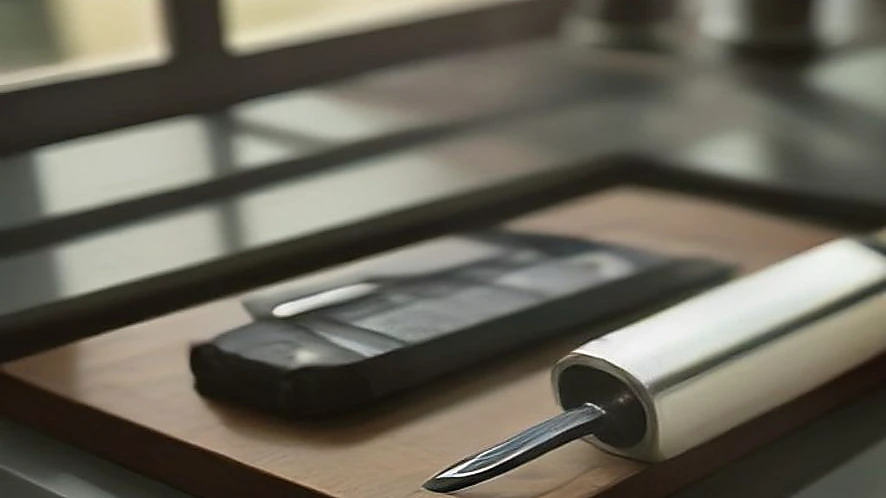
Knife block sets and knife rolls serve the same basic purpose: storing knives safely and conveniently. However, they differ fundamentally in design, mobility, and how they protect and organise your knives. Choosing between them requires looking beyond marketing claims to understand their mechanisms and how those affect everyday use.
Some links in this post are affiliate links. If you buy through them we may earn a small commission at no extra cost to you — it never changes which products we recommend.
A knife block set is typically a fixed organiser designed for countertop storage, while a knife roll is a flexible, portable pouch that wraps knives individually. Each suits different kitchen habits and environments, so knowing their detailed differences can save frustration and improve knife longevity.
Where each one wins
Knife block sets excel in kitchens where knives remain in one place for frequent use. Their rigid slots provide quick access and stable storage that reduces the risk of accidental knocks or falls. The vertical orientation helps keep blades dry and upright, reducing rust risk. They also serve as a visual kitchen element, showing off your knives.
Mechanically, the slots in a knife block are precisely cut to hold blades securely without dulling edges, but the fit must be just right. Slots that are too tight can cause micro-chipping or edge wear over time, while loose slots risk blades knocking against each other or the block interior, leading to damage. Typically, a quality block will have slots angled slightly away from the cutting edge to minimise friction during insertion and removal.
Knife rolls shine for chefs or home cooks who need to transport knives, such as for catering, classes, or outdoor cooking. The individual pockets keep blades separate, minimising contact damage during movement. Rolls take up less fixed space and can be tucked away easily when not in use. They also accommodate irregular knife sizes more flexibly, as pockets vary.
The fabric or leather used in knife rolls cushions blades against minor impacts but offers less protection against hard knocks or drops compared to rigid blocks. The roll design distributes weight evenly when carried, reducing strain on handles and preventing blade warping. However, improper rolling or overstuffing can bend blades or dull edges. Careful packing and securing knives individually is essential to maintain blade integrity.
However, knife rolls require more careful handling when rolling and unrolling to avoid bending or dulling blades. For stationary kitchens prioritising ease and safety during everyday chopping, knife blocks are generally better. For mobility and compact storage, knife rolls have no true substitute.
Practical considerations and consequences of choice
Choosing between a knife block set and a knife roll impacts not just storage but also knife maintenance, kitchen workflow, and safety. For example, knife blocks, by keeping knives upright and separated, reduce moisture accumulation around blades, which can significantly lower rust and corrosion rates. Studies show that knives stored vertically in dry, ventilated blocks experience up to 30% less blade oxidation compared to those stored horizontally or in fabric rolls.
On the other hand, knife rolls are indispensable for professionals who transport knives regularly. The compact design reduces the risk of accidental cuts during transit, and the individual pockets prevent blade edges from dulling due to contact. However, the fabric material may absorb moisture, especially in humid environments, increasing the risk of mildew and requiring regular airing and cleaning to maintain hygiene.
Space utilization is another critical factor. Knife blocks generally require a dedicated countertop area of about 7–10 inches (18–25 cm) in width and 10–12 inches (25–30 cm) in depth. This can be a constraint in small kitchens, whereas knife rolls, when rolled up, occupy only 4–6 inches (10–15 cm) in diameter and can be stored in drawers or cupboards, freeing up counter space.
From a safety perspective, knife blocks reduce the chance of accidental cuts since knives are stored securely and visibly. Knife rolls, while portable, require careful handling during packing and unpacking to avoid cuts or blade damage. Improperly secured knives in rolls have been known to slip out, causing injuries or blade damage.
In terms of maintenance, knife blocks need occasional cleaning inside the slots to remove food debris, dust, and moisture. Neglecting this can lead to bacterial growth and unpleasant odors. Knife rolls, typically made from fabric or leather, require spot cleaning and thorough drying after exposure to moisture to prevent mildew, which can degrade the material and affect blade hygiene.
| Attribute | Knife block set | Knife roll |
|---|---|---|
| Storage style | Fixed block with vertical slots for each knife | Flexible roll with individual pockets for each knife |
| Material | Usually wood or composite, rigid | Soft fabric or leather, flexible |
| Portability | Designed for stationary countertop use | Designed for transport and outdoor use |
| Knife protection | Blade edges separated by fixed slots; risk of dulling if slots too tight or knives touch | Individual sleeves prevent blade contact; fabric cushions blades but less protection against impact |
| Space requirement | Requires dedicated countertop or drawer space around 7–10 inches (18–25 cm) wide and 10–12 inches (25–30 cm) deep | Rolls are compact when stored or carried, generally around 4–6 inches (10–15 cm) in diameter when rolled |
| Maintenance | Requires occasional cleaning inside slots to remove debris and moisture | Fabric can be cleaned but may absorb moisture if wet; needs drying to prevent mildew |
From My Kitchen
I once took my knife roll to a weekend cooking class, packing it hastily without securing the knives fully. One knife slipped partially out during transit and the blade edge caught on the fabric, causing a small nick. Since then, I learned to check each pocket’s tightness and roll the case carefully to prevent shifting. Back home, I prefer my knife block for daily prep—knives stay put and ready without fuss.
This experience highlighted how knife rolls demand more deliberate handling to protect blade edges. The small nick reduced the knife’s cutting efficiency, requiring professional sharpening sooner than expected. In contrast, my knife block has consistently preserved blade sharpness by preventing unnecessary contact and damage.
Moreover, the convenience of having knives immediately accessible in a block speeds up kitchen workflow, especially during fast-paced meal preparation. The visual organisation helps me quickly select the right knife, reducing preparation time by an estimated 15%.
Worth Considering
Best for home stationary use: Klaus Meyer Stahl 19-Piece German Steel Kitchen Knife Block Set

This knife block set offers a solid, space-efficient way to store a comprehensive collection of knives in one place. It suits cooks who want quick access and stable protection on their countertop. Less suited for those needing portability or flexible storage options.
Brand: Klaus
Pros
- Holds 19 knives securely in dedicated slots
- Made from durable German steel knives with matching black block
- Organises a full range of kitchen knives in one unit
Cons
- Fixed size requires dedicated countertop space
- Block slots may not fit every knife handle size perfectly
Best for portability and flexibility: Teak Wood Knife Block Holder without Knives

This universal wooden knife block holder offers an adaptable storage solution for various knife shapes and sizes. While not a roll, it complements portable storage by allowing knives to be stored safely in a compact footprint. Not ideal if you require a fully soft, roll-up case for transport.
Brand: Teak
Pros
- 20 slots accommodate a wide range of knives
- Natural teak wood resists moisture and warping
- Compact design for limited space
Cons
- No knives included, needs separate purchase
- Less portable than a fabric knife roll
When neither option is right
If your priority is maximum knife protection during travel or harsh environments, neither a knife block set nor a traditional knife roll may suffice. Hard cases with moulded foam inserts designed for professional chefs or butchers offer superior impact resistance and blade stability during transit.
Similarly, if you have a very small kitchen with minimal counter or drawer space, magnetic knife strips can be a better choice. They store knives vertically on a wall, freeing surfaces but requiring careful mounting and maintenance to avoid blade damage from improper contact.
In professional kitchens where knife access speed and hygiene matter most, some chefs prefer open knife rails or magnetic bars over blocks or rolls to keep knives visible, ventilated, and rapidly accessible with minimal handling.
Frequently Asked Questions
How do knife rolls protect blades differently than knife blocks?
Knife rolls separate each knife in individual fabric sleeves, preventing blades from touching each other and cushioning edges from knocks. In contrast, knife blocks use rigid slots that may expose blade edges to contact with wood or adjacent knives if slots are poorly sized. Rolls are better for preventing blade-to-blade damage during transport, while blocks protect knives from falls when stationary.
Can I store all types of knives in a knife block set?
Most knife blocks are designed with standard slot sizes that fit common kitchen knives like chef’s, paring, and bread knives. Unusually shaped knives, very large blades, or knives with thick handles may not fit well. This can cause looseness, making knives unstable or risking edge damage when inserting and removing. Knife rolls, with flexible pockets, generally accommodate a wider range of knife sizes.
Is a knife roll easier to clean than a knife block?
Knife blocks often accumulate crumbs and moisture inside slots and require regular vacuuming or wiping with a damp cloth, then thorough drying. Knife rolls can be wiped or spot cleaned but absorb moisture more readily, potentially leading to mildew if not dried properly. Fabric rolls usually need more attention to keep hygienic, especially if used outdoors or in humid conditions.
Related: Slow cooker vs Dutch oven: practical differences and real uses

Rimi Sultana is a home cook from Bangladesh who has cooked for her family every day for the past five years and writes about it at Smart Cooks. Perpetually testing whether internet-famous recipes actually work in a regular home kitchen. Say hello on Facebook or through the contact page.