Deep fryers and air fryers are often mentioned in the same breath, but their core cooking methods and outcomes are quite different. A deep fryer submerges food in hot oil, transferring heat through oil that reaches temperatures typically between 325°F and 375°F (163°C to 190°C). An air fryer cooks food by circulating hot air rapidly around it, usually at temperatures up to 400°F (204°C), relying on convection to crisp food surfaces with minimal or no oil.
Some links in this post are affiliate links. If you buy through them we may earn a small commission at no extra cost to you — it never changes which products we recommend.
This fundamental distinction affects everything from texture and flavour to safety and cleanup. Understanding how each appliance works and where they excel or fall short can save you from buying equipment that doesn’t suit your cooking style or kitchen space.
Where each one wins
Deep fryers excel when you want authentic fried textures and flavours that come from full oil immersion. They produce a crunch and deep golden colour on foods like fries, doughnuts, or battered items more consistently due to the uniform heating of oil and rapid moisture evaporation. The oil also carries fat-soluble flavours that air frying cannot replicate. They are preferred when cooking large batches quickly, such as for parties or meal prepping.
The mechanism behind this is the high thermal conductivity and heat capacity of oil, which transfers heat efficiently to the food surface. When food is submerged, the moisture inside rapidly vaporizes, creating a crust that locks in moisture and prevents oil absorption beyond the surface. This process typically occurs at oil temperatures between 325°F and 375°F (163°C to 190°C), which is optimal to ensure crispness without burning. For example, French fries cooked in oil at 350°F (177°C) achieve a golden exterior in about 4 to 6 minutes, depending on thickness and batch size.
Air fryers are better suited for cooks prioritising convenience, lower fat content, and easier cleanup. They avoid the need to store and filter large amounts of oil, reducing waste and kitchen odours. For smaller quantities or reheating fried foods without sogginess, air fryers are handy. They also serve multi-purpose roles in some kitchens, including baking and roasting, thanks to their convection capabilities. They suit households where safety and minimal maintenance are priorities.
The air fryer works by circulating hot air at high speeds, typically up to 400°F (204°C), around the food using a built-in fan. This convection process heats the food surface and promotes moisture evaporation, producing a crispy exterior. However, because the heat transfer is less direct and the food is not submerged, cooking times are longer—usually 12 to 20 minutes for fries—and textures can be less uniform. A small amount of oil, often a tablespoon or less, is sometimes added to enhance browning and mouthfeel. For instance, air frying 1.5 pounds of frozen fries might take 15 minutes at 400°F with periodic shaking to ensure even cooking.
In terms of health implications, air fryers typically reduce oil consumption by up to 80-90% compared to deep frying, which can significantly lower calorie intake from fat. However, the trade-off might be a drier texture or less traditional fried flavour. The choice depends on personal priorities such as taste authenticity versus health and convenience.
Technical and practical differences in detail
Heat transfer medium is a fundamental difference. Deep fryers use hot oil, which has a much higher heat capacity and thermal conductivity than air. This means oil can transfer heat more rapidly and evenly, allowing for quick cooking and a distinctive crispness. Oil temperatures typically range from 325°F to 375°F (163°C to 190°C), with the exact setting chosen based on the food type. For example, delicate items like tempura are fried at lower temperatures to avoid burning the batter, while thicker items like chicken wings require higher temperatures for thorough cooking.
Air fryers, by contrast, rely on rapidly circulating hot air at temperatures up to 400°F (204°C). Air has a much lower heat capacity, so cooking takes longer and requires careful airflow design to avoid cold spots. The fan speed and heating element power vary by model, affecting performance. For example, a 1500W air fryer with a powerful fan will cook faster and more evenly than a lower wattage model. Air fryers also often include preset programs optimized for common foods to balance time and temperature.
Cooking time differences are significant. Deep frying fries typically takes 4 to 6 minutes, depending on oil temperature and batch size. The immersion in hot oil rapidly cooks the exterior and interior simultaneously. Air frying the same fries can take 12 to 20 minutes, with the need to shake or stir the basket to ensure even exposure. This longer time is due to slower heat transfer and the need to evaporate moisture through convection rather than immersion.
Oil usage is another key consideration. Deep fryers require several cups of oil per batch—usually between 1.5 to 3 litres (6 to 12 cups)—to fully submerge food. This oil must be maintained at temperature and filtered regularly to preserve quality and safety. Improper oil management can lead to off-flavours or health risks. Air fryers use minimal oil, often just a tablespoon or less, applied directly to food or sprayed, reducing waste and cleanup.
Cleanup complexity differs accordingly. Deep fryers involve handling hot oil, which must be cooled, strained, and disposed of safely. The fryer basket, oil container, and exterior surfaces often require thorough cleaning to remove oil residues and prevent rancidity. Air fryers simplify cleanup with dishwasher-safe baskets and trays, and no oil disposal. However, care must be taken to clean heating elements and fans periodically to maintain performance and hygiene.
Safety considerations also favor air fryers. Deep fryers pose risks of hot oil splashes, burns, and fires, necessitating ventilation and careful operation. Air fryers have lower risk since they contain no hot oil, but users must still avoid contact with hot surfaces and follow electrical safety guidelines.
Typical capacity varies. Domestic deep fryers hold about 1.5 to 3 litres of oil, enough to feed 2 to 4 people per batch. Air fryer basket volumes range from 3 to 5 litres, but actual food capacity depends on basket design and food density. Larger air fryers can handle family-sized portions but may require longer cooking times or multiple batches.
| Deep fryer | Air fryer | |
|---|---|---|
| Heat transfer medium | Hot oil (typically 325–375°F / 163–190°C) | Rapidly circulating hot air (up to 400°F / 204°C) |
| Cooking time for typical fries | 4–6 minutes depending on oil temp | 12–20 minutes depending on model and food quantity |
| Oil usage | Several cups of oil per batch, fully submerging food | Minimal to no oil needed, often a tablespoon or less |
| Cleanup complexity | Oil disposal, basket and oil container cleaning, potential for splatter | Basket and tray washing, no oil disposal |
| Safety considerations | Risk of hot oil splashes and fires, requires ventilation | Lower risk, but hot surfaces and electrical safety apply |
| Typical capacity (domestic models) | About 1.5–3 litres of oil, feeding 2–4 people | Ranges from 3 to 5 litres of basket space, variable depending on model |
From My Kitchen
Once, I tried making tempura vegetables using the Typhur Sync Air Fryer Oven (ASIN B0GK7JKF53). Without sufficient oil to submerge the batter, the coating came out uneven and less crisp, especially on thicker pieces. Switching to the ZALUKV 7.4QT Double Deep Fryer (ASIN B0FQ4WZBTT) the next week, I submerged the batter-coated vegetables fully in oil at 350°F (177°C). The batter crisped evenly within a few minutes, sealing in moisture and flavour better. The downside was the mess of used oil and longer cleanup time, but the texture difference was clear. This episode highlighted how batter-based deep frying still demands oil immersion to succeed, something air fryers struggle with despite their marketing claims.
This practical experience illustrates a key limitation of air frying: the inability to replicate the uniform heat transfer and moisture sealing that oil immersion provides. For wet batters, the air fryer’s hot air circulation cannot produce the same rapid crust formation, resulting in patchy crispness and longer cooking times that may dry out the food interior. In contrast, deep frying creates a sealed, golden crust in minutes, preserving tenderness inside. This is why professional kitchens and traditional recipes continue to rely on deep frying for battered foods despite the popularity of air fryers.
Worth Considering
Best for versatile, low-oil cooking: Typhur Sync Air Fryer Oven
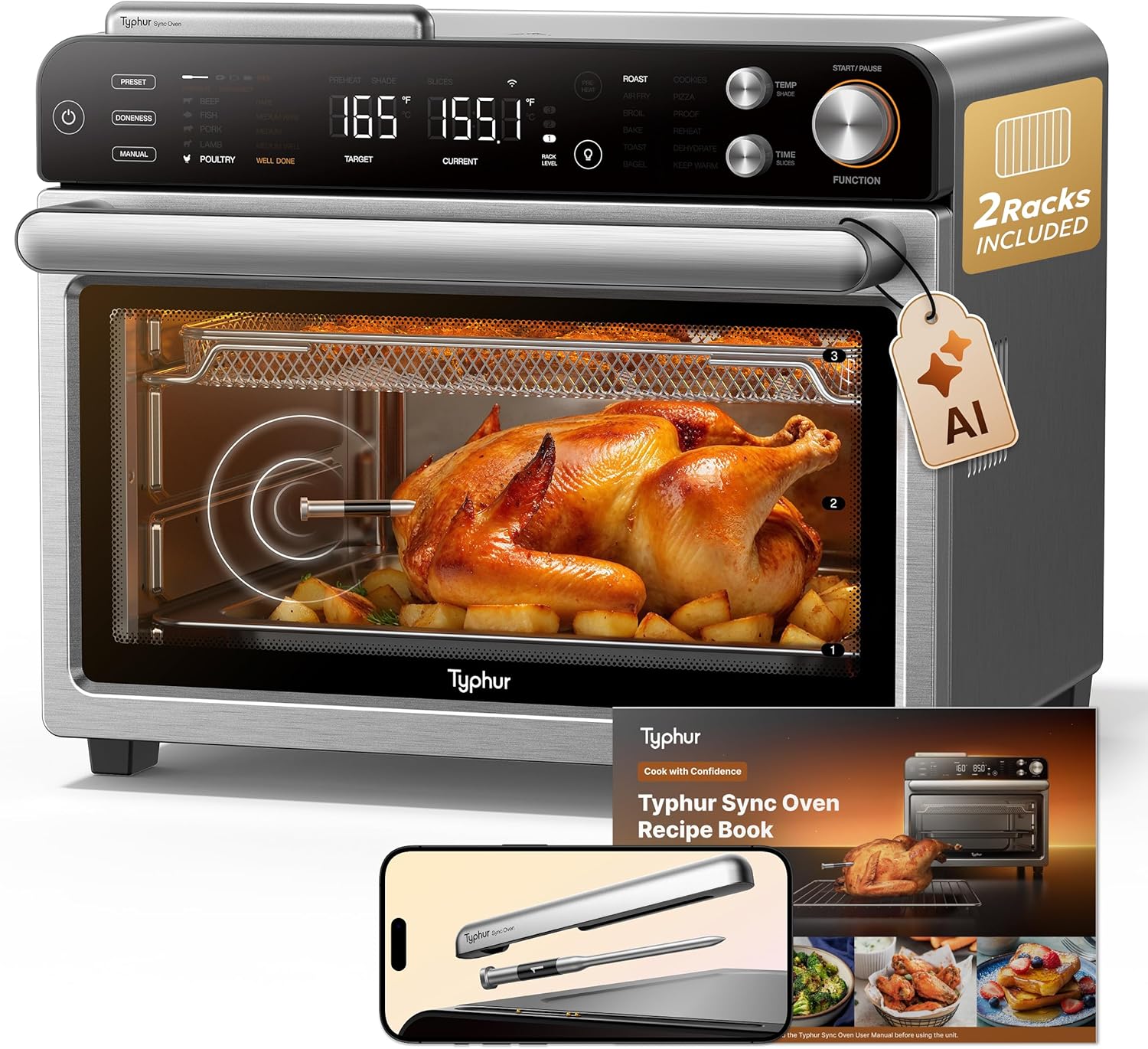
This air fryer oven uses 360° turbo convection for even hot air circulation, smart AI probe for precision, and wireless controls to handle many cooking tasks with minimal oil. It suits those wanting convenience, less fat, and a range of cooking modes but is not ideal for authentic deep-fried batter textures or large batch frying.
Brand: 4.7 4.7 out of 5 stars · Price when checked: $299.99 · Rating: 4.4 out of 5 (355 ratings)
Pros
- Smart wireless probe for temperature control
- 360° turbo convection for even air flow
- Multi-function oven design for roasting, baking, and air frying
Cons
- Longer cooking times compared to deep frying
- Less effective for wet battered foods or very thick coatings
Best for traditional fried foods and large batches: ZALUKV 7.4QT Double Deep Fryer

This dual-basket deep fryer offers 7.4 quarts total capacity with 3000W power for fast heating and two separate temperature controls up to 375°F (190°C). It is suited for those who want to prepare large quantities or authentic fried textures, but it requires oil maintenance and more space.
Brand: ZALUKV · Price when checked: $98.99 · Rating: 4.5 out of 5 (3690 ratings)
Pros
- Double basket design allows cooking two foods separately
- High wattage for quick heating to 375°F (190°C)
- Oil filtration system and dishwasher safe parts
Cons
- Requires significant oil usage and disposal
- Needs dedicated circuit due to high power draw
When neither deep fryer nor air fryer is the best choice
If you want to cook foods that require gentle, precise temperature control or slow cooking—such as sous vide meats, delicate fish, or custards—neither deep frying nor air frying will deliver good results. Techniques like sous vide, slow roasting, or steaming provide better control over internal temperatures and moisture retention without drying or overcooking the exterior.
Additionally, for baking bread or cakes, or cooking large roasts, conventional ovens or steam ovens outperform both fryers. Their temperature ranges, humidity controls, and cooking volumes are designed for those tasks. For kitchens with limited space or where oil use is unacceptable, microwave reheating or convection toaster ovens might offer simpler alternatives depending on the food type and volume.
Related reading
- Ice Cream Storage Containers: Keeping Scoops Fresh Without Freezer Burn
- OXO Pop containers vs Prokeepers for flour and sugar: Which Is Better?
- Snack Storage Containers: What Actually Matters
Frequently Asked Questions
Can I use an air fryer to deep fry foods?
No, air fryers are not designed to deep fry because they do not submerge food in oil. Instead, they cook by circulating hot air to crisp food surfaces. While you can add a small amount of oil to improve browning, air fryers cannot replicate the texture or rapid cooking of true deep frying, especially for wet batters or thick coatings.
How much oil does a typical deep fryer use per batch?
Most domestic deep fryers use between 1.5 to 3 litres (about 6 to 12 cups) of oil to fully submerge the food. The exact amount depends on the fryer’s capacity and basket size. This oil needs to be heated to around 350°F (177°C) and maintained during frying for consistent results.
Are air fryers healthier than deep fryers?
Air fryers generally use much less oil, resulting in lower fat content in the finished food. However, the health impact depends on what you cook and how often. Deep-fried foods absorb more oil, increasing calories and fat. Air frying reduces oil absorption but may dry out some foods or produce different textures. Neither method alone guarantees a healthy diet.

Rimi Sultana is a home cook from Bangladesh who has cooked for her family every day for the past five years and writes about it at Smart Cooks. Perpetually testing whether internet-famous recipes actually work in a regular home kitchen. Say hello on Facebook or through the contact page.