Choosing a tea kettle for a gas stove is less about style and more about how it handles the direct heat of an open flame. Gas stoves produce uneven, intense heat spots that can damage thin metals or glass not designed for it, causing warping or cracking over time.
Some links in this post are affiliate links. If you buy through them we may earn a small commission at no extra cost to you — it never changes which products we recommend.
A good kettle for gas stoves distributes heat across the base quickly and withstands the flame’s temperature without deteriorating. It also safely signals when the water is boiling, usually with a whistle that starts at the right pressure and temperature, preventing unattended boiling.
What actually matters
Understanding the real factors that separate capable kettles for gas stoves from underperformers helps avoid costly mistakes and safety issues. The focus here is on material properties, heat distribution, and whistle mechanism functionality.
Material and base construction
Gas flames can reach temperatures from about 1300°F to 1500°F (700°C to 815°C) at the burner. Tea kettles with thicker stainless steel bases, or those with a layered base that sandwiches conductive metals like aluminum or copper between stainless steel, spread the heat more evenly. This prevents hotspots that can scorch or deform the kettle’s base. Thin steel or glass kettles without reinforced bases often develop hot spots leading to warping or cracking.
The thickness and composition of the kettle’s base are critical because they determine how heat is absorbed and transferred to the water inside. For example, a 3-ply base construction typically includes an inner layer of aluminum or copper for excellent heat conduction, sandwiched between layers of stainless steel for durability and corrosion resistance. This design can reduce boiling times by up to 20% compared to single-layer bases.
Moreover, kettles with encapsulated bases prevent direct flame contact with the water chamber, reducing the risk of warping. The base’s diameter should match the size of the gas burner to ensure optimal heat distribution and efficiency. Using a kettle too large or too small for the burner can cause uneven heating and increase energy consumption.
Heat responsiveness and capacity
A kettle’s volume affects how quickly it heats. Smaller kettles—around 1 to 1.5 litres—heat faster because there is less water mass to bring to boiling temperature. Larger kettles, while convenient for multiple cups, take longer and demand a sturdier build to handle sustained heat without damage. The design of the spout and handle also matters; they must stay cool enough to avoid burns when the kettle is ready.
To put it in numbers, heating 1 litre of water from room temperature (about 20°C) to boiling (100°C) requires approximately 334 kilojoules of energy. A smaller kettle with 1 litre capacity can bring water to boil in roughly 4-6 minutes on a typical gas stove, depending on flame intensity and kettle efficiency. Larger kettles of 1.5 litres or more may require 6-9 minutes.
The handle materials and positioning are designed to minimize heat conduction from the base and spout, often using heat-resistant plastics or silicone. Some kettles incorporate insulated handles or double-wall construction to keep the handle cool. Additionally, spouts are engineered for smooth pouring without dripping, which is important for safety and convenience when handling hot liquids.
The kettle’s lid should fit securely to maintain pressure and heat inside, speeding up boiling and preventing steam loss. Some models feature lids with locking mechanisms to prevent accidental spills.
Whistle mechanism and safety
A reliable whistle alerts you promptly when the water reaches boiling point, typically near 212°F (100°C) at sea level. The whistle works by forcing steam through a narrow channel or opening that vibrates, producing the sound. Poorly designed whistles may fail to sound under lower pressures or can jam with mineral deposits from hard water. Some kettles use removable whistles or have handles that lock to prevent accidental opening when hot.
The physics behind the whistle involves steam pressure building up inside the kettle until it reaches a threshold sufficient to push through the whistle’s aperture. This causes a vibration of the air column, generating the characteristic whistling sound. The frequency and volume of the whistle depend on the size and shape of the opening and the steam flow rate.
Mineral buildup from hard water can clog the whistle mechanism, reducing its effectiveness or silencing it altogether. Regular cleaning with vinegar or descaling agents is recommended to maintain whistle performance. Some kettles feature detachable whistles for easier maintenance.
Safety features related to the whistle include heat-resistant handles and locking lids that prevent accidental opening during boiling. Additionally, some kettles incorporate pressure relief valves or steam vents to avoid excessive pressure buildup, enhancing user safety.
Whistles are not just functional but also contribute to energy efficiency. By alerting users to turn off the heat promptly, they prevent unnecessary gas consumption and reduce the risk of overheating the kettle, which can damage the material over time.
How to choose the right tea kettle for your gas stove
If you regularly use high flames and want quick boiling, pick kettles with thick, layered steel bases like the OXO Good Grips or All-Clad Specialty. They withstand hotspots and spread heat efficiently.
For small households or kitchens with limited space, a smaller kettle like the Primula Stewart boils fast with less water and less exposure to flame.
Glass kettles are best for slow, gentle heating where you want to watch the water, but only if your gas stove allows low flame use.
Enamel-on-steel kettles offer durability and a classic look but boil slower and weigh more, so they suit users who prioritise style and longevity over speed.
Those who want fast, even heating and can manage higher costs will appreciate the All-Clad model, but it’s not a necessity for casual tea drinkers.
Avoid kettles without reinforced bases or thin walls if you have a powerful gas stove; these won’t last and may pose safety risks.
Consider also the water quality in your area. Hard water with high mineral content can accelerate wear on kettle interiors and clog whistle mechanisms. Stainless steel kettles with smooth interiors are easier to clean and more resistant to scale buildup.
Energy efficiency is another factor. Kettles with well-insulated bodies and tight-fitting lids reduce heat loss, lowering gas consumption during boiling. Some models advertise energy savings up to 15% compared to standard kettles.
Maintenance should not be overlooked. Stainless steel kettles require regular descaling to maintain performance, while enamel coatings may chip if handled roughly. Glass kettles need careful handling to avoid cracks but allow easy visual monitoring of scale buildup.
Finally, consider ergonomics and safety features such as comfortable handles, stable bases to prevent tipping, and clear spouts for controlled pouring. These features enhance usability and minimize accidents in busy kitchens.
| Pick | Best for | Capacity (litres) | Watch out for |
|---|---|---|---|
| Cuisinart 2-Quart Brushed Stainless Kettle | Everyday use | Stainless, stainless steel, 2-quart | Rated lower than some rivals |
| Primula Stewart Whistling | Small kitchens and quick boiling | 1.0 | Whistle can be hard to remove for cleaning |
| Teabloom Purity Glass Whistling Kettle | Visual boiling and gentle heating | 1.2 | Fragile, not suited for high flames |
| Le Creuset Enamel On Steel | Durability and style | 1.6 | Heats slower due to enamel coating |
| All-Clad Specialty Stainless | Professional-level even heating | 1.4 | Pricey, heavier than average |
From my kitchen
Once, I boiled water in a thin glass kettle on a high flame gas burner and heard a sharp crack. The flame had touched the glass sides directly, causing a stress fracture. Since then, I reserve glass kettles for low flame settings and use thick steel kettles for fast boils, which has prevented further damage.
This experience highlights the importance of matching your kettle material and design to your stove’s flame intensity. Using a kettle unsuited to high flames can lead to damage not only to the kettle but also potential safety hazards, such as steam burns or glass shards.
Additionally, I noticed that kettles with layered bases not only heat more evenly but also reduce the amount of gas needed to boil water, saving energy and cost over time. Investing in a well-constructed kettle can be economical in the long run despite a higher initial price.
Worth Considering
Best for everyday use: Cuisinart 2-Quart Brushed Stainless Kettle

A 2-quart brushed stainless steel whistling kettle from Cuisinart for everyday stovetop use.
Price when checked: $42.95 · Rating: 3.9 out of 5 (255 ratings)
Pros
- Stainless steel
- Whistle alert
- 2-quart capacity
Cons
- Rated lower than some rivals
- Smaller than family-size kettles
Best for small kitchens: Primula Stewart Whistling

Compact and lightweight, this kettle heats 1 litre of water quickly on a gas stove. The whistle activates reliably but can be fiddly to remove for cleaning mineral scale. Ideal when space is tight and speed matters more than capacity.
Price when checked: $14.99 · Rating: 4.3 out of 5 (22.7K ratings)
Pros
- Quick heating with smaller capacity
- Bright whistle tone
- Lightweight and easy to handle
Cons
- Whistle mechanism can be difficult to clean
- Smaller volume not suited for larger families
Best for visual boiling: Teabloom Purity Glass Whistling Kettle
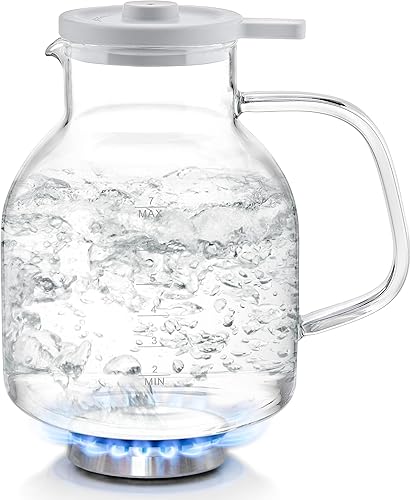
The borosilicate glass body lets you monitor water as it heats, useful for gentle heating and watching for the first bubbles. It struggles with direct high flames and can crack if flame touches sides. Best for low flame gas stoves or careful use.
Price when checked: $39.95 · Rating: 4.2 out of 5 (82 ratings)
Pros
- Heat-resistant borosilicate glass
- Visual boil monitoring
- Attractive modern design
Cons
- Fragile compared to metal kettles
- Not suitable for high or uneven gas flames
Best for durability and style: Le Creuset Enamel On Steel

Enamel coating protects the steel and adds an appealing finish that resists scratches. It spreads heat well but takes longer to boil due to the enamel thickness. Ideal for those who prioritise longevity and aesthetics over fast boiling.
Price when checked: $129.95 · Rating: 4.2 out of 5 (466 ratings)
Pros
- Enamel coating resists scratches and stains
- Sturdy steel base
- Classic kitchen look
Cons
- Slower to reach boiling point
- Heavier kettle
Best for professional-level even heating: All-Clad Specialty Stainless

With a multi-ply base designed for chefs, this kettle distributes heat evenly on gas stoves, preventing hotspots. It boils water quickly but is noticeably heavier and more expensive, making it a niche pick for enthusiasts or serious cooks.
Price when checked: $119.95 · Rating: 4.3 out of 5 (1.9K ratings)
Pros
- Multi-ply stainless steel base for heat distribution
- Fast boiling time
- Robust construction
Cons
- High price point
- Heavy and less portable
How to choose the right tea kettle for your gas stove
If you regularly use high flames and want quick boiling, pick kettles with thick, layered steel bases like the OXO Good Grips or All-Clad Specialty. They withstand hotspots and spread heat efficiently.
For small households or kitchens with limited space, a smaller kettle like the Primula Stewart boils fast with less water and less exposure to flame.
Glass kettles are best for slow, gentle heating where you want to watch the water, but only if your gas stove allows low flame use.
Enamel-on-steel kettles offer durability and a classic look but boil slower and weigh more, so they suit users who prioritise style and longevity over speed.
Those who want fast, even heating and can manage higher costs will appreciate the All-Clad model, but it’s not a necessity for casual tea drinkers.
Avoid kettles without reinforced bases or thin walls if you have a powerful gas stove; these won’t last and may pose safety risks.
Consider also the water quality in your area. Hard water with high mineral content can accelerate wear on kettle interiors and clog whistle mechanisms. Stainless steel kettles with smooth interiors are easier to clean and more resistant to scale buildup.
Energy efficiency is another factor. Kettles with well-insulated bodies and tight-fitting lids reduce heat loss, lowering gas consumption during boiling. Some models advertise energy savings up to 15% compared to standard kettles.
Maintenance should not be overlooked. Stainless steel kettles require regular descaling to maintain performance, while enamel coatings may chip if handled roughly. Glass kettles need careful handling to avoid cracks but allow easy visual monitoring of scale buildup.
Finally, consider ergonomics and safety features such as comfortable handles, stable bases to prevent tipping, and clear spouts for controlled pouring. These features enhance usability and minimize accidents in busy kitchens.
Related reading
- Le Creuset vs Staub which dutch oven is worth it: Which One is Right for You?
- Best Electric Kettles with Temperature Control for Tea
- Electric kettle vs stovetop kettle: understanding the real differences
Frequently Asked Questions
Can I use any tea kettle on a gas stove?
Not all tea kettles are suitable for gas stoves. Those without thick or layered bases may warp from the intense, uneven heat of an open flame. Glass kettles, unless made from heat-resistant borosilicate glass, risk cracking. Always check that the kettle specifies compatibility with gas stoves to avoid damage.
Why do some kettles whistle and others don’t?
The whistling mechanism forces steam through a narrow opening to create a sound when boiling starts. Some kettles have no whistle, relying on visual or tactile cues instead. Whistles can jam or fail if mineral deposits build up or if the design doesn’t create enough steam pressure, which is why reliable whistles are a sign of thoughtful engineering.
Is stainless steel better than glass for gas stove kettles?
Stainless steel, especially with layered bases, handles gas flame heat better because it distributes heat evenly and resists warping. Glass kettles offer the advantage of seeing the water but are more fragile and must be used carefully with low flames to prevent cracking. Your choice depends on how you use your stove and your priorities between durability and visual monitoring.

Rimi Sultana is a home cook from Bangladesh who has cooked for her family every day for the past five years and writes about it at Smart Cooks. Perpetually testing whether internet-famous recipes actually work in a regular home kitchen. Say hello on Facebook or through the contact page.