The primary quality that separates a good springform pan from a bad one is how well it seals to prevent batter leaks during baking. Cheesecake batter is thin and often baked in a water bath, so even small gaps can cause leakage, ruining both the cake and the oven. The mechanism that achieves a tight seal varies by design and material, and understanding this helps identify the most reliable pans.
Some links in this post are affiliate links. If you buy through them we may earn a small commission at no extra cost to you — it never changes which products we recommend.
Another crucial factor is the material and construction of the pan, which affects heat conduction and durability. Poor heat distribution can cause uneven baking and cracking in the cheesecake. Moreover, size and release mechanisms impact how you handle and serve the cake, especially since cheesecakes are fragile and require gentle removal from the pan.
What actually matters
Choosing a springform pan involves more than picking the prettiest design. The real technical differences lie in how the pan seals, the materials used, and how size influences baking outcomes.
Leakproof sealing mechanism
The key to avoiding leaks is the pan’s locking system and how the base fits into the ring. Some pans use a well-machined metal lip that presses tightly against the base, while others rely on silicone gaskets or thicker bases to fill gaps. If the seal is loose, batter can seep through during baking, especially when using a water bath that adds moisture around the pan’s exterior.
The mechanics of sealing involve the precision of the metal lip’s machining tolerances and the compression properties of silicone gaskets. Silicone gaskets, typically made from food-grade silicone rubber, compress to fill microscopic gaps, creating a watertight barrier. Over time, repeated heating cycles can cause gaskets to harden or crack, reducing their effectiveness. Metal lips rely on tight manufacturing tolerances and consistent latch tension to maintain a seal. Variability in latch tightness or deformation of the ring can cause leaks.
Material and heat conduction
Springform pans usually come in anodized aluminum, stainless steel, or carbon steel with nonstick coatings. Anodized aluminum pans conduct heat efficiently and evenly due to aluminum’s high thermal conductivity (around 235 W/m·K). Stainless steel’s conductivity is much lower (around 16 W/m·K), which can cause uneven baking unless the pan has a layered base. Nonstick coatings help with release but can degrade over time.
Heat conduction directly affects baking times and evenness. For example, an anodized aluminum pan will reach baking temperature faster and distribute heat more uniformly, reducing hotspots that cause cracking or overcooked edges. Stainless steel pans, often with layered bases combining aluminum or copper, compensate for lower conductivity but add weight and cost. Carbon steel pans have a conductivity of roughly 54 W/m·K, offering a middle ground. Nonstick coatings typically have a thickness of 20-30 microns and can withstand temperatures up to 260°C (500°F), but repeated use and abrasive cleaning reduce their lifespan.
Size and depth considerations
Most cheesecakes are baked in 9-inch (23 cm) pans, typically 2.5 to 3 inches (6.5 to 7.5 cm) deep. Shallow pans risk batter overflow or cracking, while very deep pans require longer baking times and can affect the crust-to-filling ratio. The ease of releasing the cake and serving also depends on how smoothly the side ring detaches without damaging the delicate edges.
The volume of a 9-inch pan with a 3-inch depth is approximately 1900 ml, which suits standard cheesecake recipes yielding 8 to 12 servings. Deeper pans increase volume but may require adjustments to baking temperature and time, often extending baking by 10 to 20 minutes to ensure the center sets without overbaking edges. Shallow pans, less than 2 inches deep, can cause the batter to spread thinly, increasing the risk of cracks due to faster moisture loss. The release mechanism’s design—whether a single latch or multiple locking points—affects how evenly the ring releases pressure, which is critical to avoid breaking the cake edges.
Choosing the right springform pan for your cheesecake needs
If you frequently bake cheesecakes with a water bath, prioritise pans with silicone gasket seals as they provide the most reliable leakproofing. For occasional bakers or those who prefer dry baking, a tightly fitting metal lip without a gasket may suffice.
Material choice depends on your priorities: anodized aluminum pans conduct heat best and are ideal for consistent results, while stainless steel or carbon steel with coatings offer easier release but may bake less evenly. Nonstick coatings make clean-up simpler but can wear out, so consider how often you’ll bake.
Size and depth should match your recipe and serving needs. Standard 9-inch pans are versatile, but a niche smaller pan could work for test batches or small servings. Remember that deeper pans require longer baking times and affect texture and crust ratios.
Avoid pans that rely solely on thin metal lips without a gasket if you use water baths, as leakage risk increases. Also, if you dislike greasing pans repeatedly, look for durable nonstick coatings or silicon-sealed options.
| Pick | Best for | Seal type / Key feature | Watch out for |
|---|---|---|---|
| Nordic Ware 9-Inch | Durability and long-term use | Tight machined metal lip seal, heavy gauge aluminum | Heavier than average, no gasket |
| Fat Daddio’s 9-Inch | Tall cheesecakes requiring deep pans | Anodized aluminum with close fit base | No nonstick coating, requires greasing |
| HIWARE 9-Inch Nonstick | Budget-conscious leakproof choice | Silicone gasket seal with nonstick coating | Gasket may wear out, less sturdy metal |
| Farberware 9-Inch | Heavy-duty build for frequent baking | Thick steel with nonstick, simple latch | Seal less tight, possible minor leaks |
| Wilton Excelle Elite 9-Inch | Nonstick release for delicate cakes | Nonstick coated steel with locking latch | Potential for leaks if not closed tightly |
| USA Pan Leakproof 9-Inch | Professional-grade leakproof pan | Silicone gasket with aluminized steel | Limited availability, pricier |
| Chicago Metallic 9-Inch | Versatile pan for cheesecakes and more | Standard metal lip without gasket | More prone to leakage |
| RFAQK 6-Inch Springform Pan | Niche pick for smaller cheesecakes | Nonstick, 6-inch | Too small for standard recipes |
From my kitchen
Once, I baked a 9-inch cheesecake in a pan without a proper gasket seal and used a water bath as usual. Midway through baking, batter started leaking through the base-ring junction, causing a mess in the oven and a thin, incomplete crust on the bottom. Switching to a pan with a silicone gasket solved this, but I learned that even small variances in closing the latch affect seal integrity. Now I always test the seal by filling the assembled pan with water before adding batter.
This experience highlights the importance of pan maintenance and proper closure technique. Even the best gasket can fail if the latch is not fully engaged or if the pan has warped from repeated use. Regular inspection for warping, gasket condition, and latch tension can prevent baking failures and prolong pan lifespan.
Worth Considering
Best for durability and longevity: Nordic Ware 9-Inch
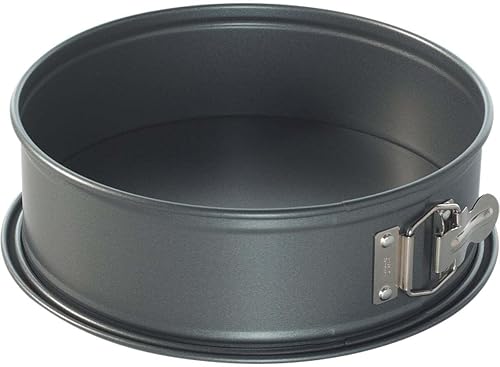
This pan is made from heavy-gauge aluminum with a machined metal lip that forms a tight seal without any silicone gasket. It’s built to last and withstand frequent use but is heavier than average, which makes it less convenient for quick handling.
Rating: 4.6 out of 5 (7.5K ratings)
Pros
- Heavy gauge aluminum for consistent heat conduction
- Tight metal lip reduces leaks without extra seals
- Sturdy latch mechanism maintains tension over time
Cons
- Heavier weight can be cumbersome
- No nonstick coating requires thorough greasing
Best for tall cheesecakes: Fat Daddio’s 9-Inch
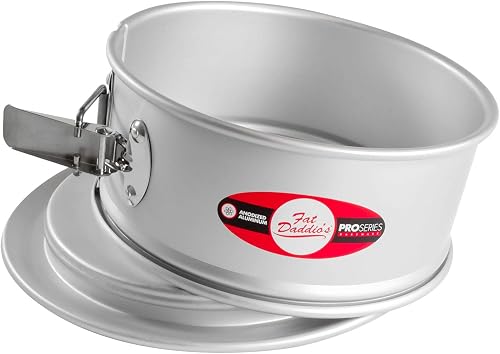
Its anodized aluminum construction offers excellent heat conduction, and the deeper 3-inch walls accommodate taller cakes. It lacks a nonstick surface, so greasing is necessary, but this pan excels when you want a precise crust thickness on tall cheesecakes.
Price when checked: $27.99 · Rating: 4.5 out of 5 (3K ratings)
Pros
- Anodized aluminum conducts heat efficiently
- 3-inch depth ideal for tall cheesecakes
- Close fit base minimizes leaks
Cons
- No nonstick coating means sticky release
- Requires careful greasing to avoid sticking
Best budget leakproof option: HIWARE 9-Inch Nonstick
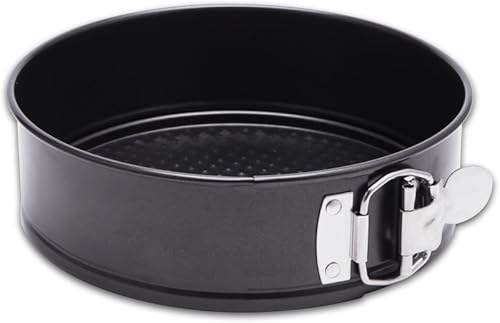
This pan combines a silicone gasket with a nonstick coating, making it both leak-resistant and easy to clean. The metal is thinner and less robust than premium models, so it’s better for occasional bakers who want a reliable seal without spending much.
Price when checked: $15.99 · Rating: 4.6 out of 5 (39.7K ratings)
Pros
- Silicone gasket greatly reduces leaks
- Nonstick coating eases release and cleaning
- Affordable price point
Cons
- Gasket may degrade over time
- Thinner metal less durable for heavy use
Best heavy-duty build: Farberware 9-Inch

This pan features thick steel with a nonstick coating that stands up well to frequent use. The seal relies on a classic metal lip without a gasket, so minor leaks are possible if the latch isn’t perfectly closed, but its robust construction compensates for this.
Price when checked: $16.99 · Rating: 4.7 out of 5 (2.1K ratings)
Pros
- Thick steel walls resist warping
- Nonstick coating aids cake release
- Strong latch mechanism
Cons
- Seal isn’t fully leakproof
- Requires attention to latch tightness
Best for nonstick release: Wilton Excelle Elite 9-Inch
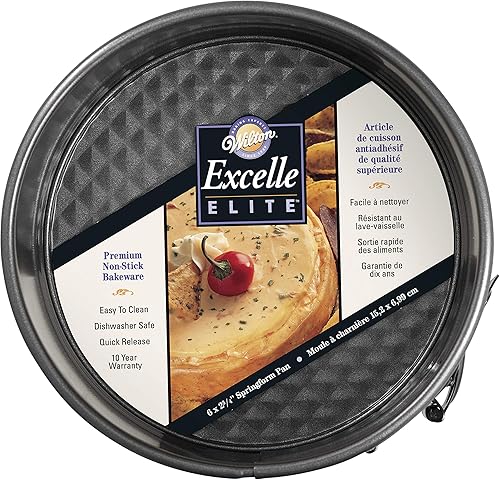
With a fully nonstick coated steel surface, this pan is geared toward those prioritising easy release over complete leakproofing. It’s suitable for delicate cheesecakes but requires careful closure to minimise leaks, making it less ideal for water bath baking.
Price when checked: $14.99 · Rating: 4.5 out of 5 (2.8K ratings)
Pros
- Full nonstick coating improves release
- Lightweight steel pan
- Simple latch mechanism
Cons
- Potential for batter leaks if not sealed tightly
- Nonstick coating can wear with heavy use
Best professional leakproof pan: USA Pan Leakproof 9-Inch

Designed with a silicone gasket and aluminized steel, this pan offers near-perfect leakproof performance preferred by professionals. It is pricier and less widely available but excels for bakers who need consistent results in water baths.
Price when checked: $41.99 · Rating: 4.5 out of 5 (525 ratings)
Pros
- Silicone gasket ensures leakproof seal
- Aluminized steel for even heating
- Durable construction
Cons
- Higher price point
- Less common, harder to find
Best versatile pan for everyday baking: Chicago Metallic 9-Inch

This pan is a solid all-rounder with a standard metal lip seal but no gasket, making it less leak-resistant than some options. It works well for dry baking but isn’t the best choice if you use a water bath regularly.
Price when checked: $19.99 · Rating: 4.3 out of 5 (546 ratings)
Pros
- Sturdy steel construction
- Good for a variety of baked goods
- Simple to use and clean
Cons
- More prone to leaks in water baths
- No nonstick coating can cause sticking
Best niche pick for small cheesecakes: RFAQK 6-Inch Springform Pan

A 6-inch nonstick leakproof springform pan supplied with 50 parchment rounds, for small cheesecakes.
Price when checked: $10.79 · Rating: 4.5 out of 5 (1.8K ratings)
Pros
- 6-inch size
- Parchment included
- Leakproof design
Cons
- Too small for standard recipes
- Nonstick needs care
Related reading
- Nordic Ware vs Wilton cake pan comparison: Which Is Better?
- Best Tofu Presses for Making Extra-Firm Tofu
- Top 10 garlic presses for daily Indian cooking: practical picks explained
Frequently Asked Questions
Why do cheesecakes need a leakproof springform pan?
Cheesecake batter is typically thin and runny, especially before it sets during baking. Many recipes use a water bath to prevent cracking and ensure even cooking, which means the pan sits in hot water inside the oven. If the springform pan’s seal isn’t tight, this water can seep in or batter can leak out, causing a mess and uneven baking. Leakproof pans use silicone gaskets or precision metal lips to create a barrier that prevents this, maintaining the pan’s integrity throughout the long baking times of 50 to 70 minutes at around 325°F to 350°F (160°C to 175°C).
How do I know if my springform pan is truly leakproof?
A simple test is to assemble the pan fully, fill it with water to about 2 inches (5 cm) deep, and watch for drips or seepage over several minutes. If water leaks from the base-ring junction, the pan isn’t fully leakproof. Some pans feature silicone gaskets that you can inspect for damage or wear. Over time, even gasketed pans may lose sealing efficiency due to warping or gasket degradation, so it’s worth retesting periodically.
Can I use a springform pan without a nonstick coating for cheesecake?
Yes, you can, but it requires more care. Pans made of anodized aluminum or stainless steel without nonstick coatings need to be greased thoroughly with butter or oil and sometimes dusted with flour or crushed biscuits before adding batter. This prevents sticking and helps release the cake smoothly. Nonstick coatings simplify this step but can wear off after many uses, so proper greasing is always a good backup.

Rimi Sultana is a home cook from Bangladesh who has cooked for her family every day for the past five years and writes about it at Smart Cooks. Perpetually testing whether internet-famous recipes actually work in a regular home kitchen. Say hello on Facebook or through the contact page.