
Choosing a moka pot for stovetop espresso involves more than just size or brand reputation. The key factor separating a good moka pot from a poor one is how effectively it controls heat transfer and pressure buildup during brewing, which directly affects the flavour and extraction consistency.
Some links in this post are affiliate links. If you buy through them we may earn a small commission at no extra cost to you — it never changes which products we recommend.
Understanding the materials, compatibility with your heat source, and the precision of the safety valve can prevent common brewing problems like burnt coffee or under-extraction. These elements are often overlooked but crucial for any moka pot user seeking reliable stovetop espresso.
What actually matters
Not all moka pots operate the same way, and their performance depends on specific design and material choices.
Material and heat conduction
Moka pots are typically made from aluminium or stainless steel. Aluminium has a lower thermal mass and higher thermal conductivity (around 205 W/m·K) compared to stainless steel (about 16 W/m·K). This means aluminium heats faster and distributes heat more evenly across the base, which aids in consistent pressure buildup. Stainless steel heats more slowly and can cause hotspots if the base isn’t thick or well-engineered, potentially leading to uneven extraction or burnt coffee.
The faster heat conduction of aluminium allows the water in the lower chamber to reach boiling point more quickly, which shortens the brewing time to about 4-6 minutes for a standard 6-cup pot. This rapid heating helps maintain a stable steam pressure around 1.5 bars, essential for pushing water evenly through the coffee grounds. Conversely, stainless steel pots may take 6-8 minutes due to slower heat transfer, requiring users to monitor heat closely to avoid over-extraction or under-extraction.
Thermal mass also plays a role: aluminium’s lower mass means it cools down faster when removed from heat, reducing the risk of residual heat causing burnt coffee. Stainless steel’s higher mass retains heat longer, which can continue brewing beyond the ideal extraction window if not removed promptly.
Compatibility with stovetops
Aluminium moka pots generally do not work on induction cooktops because induction requires magnetic materials. Stainless steel pots can be made induction-compatible if their base includes magnetic layers. Some models have multi-layered bases combining stainless steel and aluminium to balance heat conduction with induction capability. Choosing a moka pot matched to your stove type avoids uneven heating or incomplete brewing.
Induction cooktops generate heat by magnetic induction, requiring cookware with ferromagnetic properties. Aluminium lacks these, so it cannot be heated directly on induction surfaces. Stainless steel moka pots designed for induction usually incorporate a ferromagnetic base plate, often with a thickness of 2-4 mm, to ensure efficient energy transfer.
In practical terms, using a non-induction compatible aluminium moka pot on an induction stove results in failure to heat or very slow heating, leading to under-extracted coffee. Users should verify the stove compatibility before purchase, especially as induction cooktops are becoming more common in modern kitchens.
For gas and electric coil stoves, both aluminium and stainless steel moka pots perform well, but heat distribution varies. Gas flames can cause hotspots under thinner bases, so thicker or multi-layered bases improve heat spread and coffee quality.
Pressure regulation and safety valve
A moka pot brews by forcing boiling water through coffee grounds using steam pressure, which usually reaches around 1.5 bars (about 22 psi). The safety valve releases pressure above this threshold to prevent accidents. The valve’s placement, size, and responsiveness affect brewing safety and consistency. Poorly designed valves can clog or leak, causing unsafe pressure spikes or weak extraction.
Typically, the safety valve is a small brass or stainless steel component located on the lower chamber’s side. It is calibrated to open at pressures slightly above the brewing pressure, around 2 bars, acting as a fail-safe. Frequent use of poorly maintained valves can lead to clogging from coffee oils or mineral deposits, which impairs their function.
Regular inspection and cleaning of the valve are crucial; a blocked valve can cause dangerous pressure buildup, risking the pot’s integrity and user safety. Conversely, a valve that leaks at low pressure reduces brewing pressure, resulting in weak coffee.
Mechanically, the valve employs a spring-loaded mechanism or a simple pressure-sensitive flap. The responsiveness of this valve influences how stable the brewing pressure remains during extraction, impacting coffee flavour consistency. High-quality moka pots often feature valves tested for pressure accuracy and durability.
How to choose your moka pot and who should avoid them
Choosing the right moka pot depends primarily on your stovetop type and typical brew volume. Aluminium pots heat quickly and are best for gas or electric coil stoves but won’t work on induction. Stainless steel models tend to be heavier and slower to heat but offer induction compatibility and longer durability.
If you want very large volume brewing, look for moka pots with capacities above 15 oz, but remember that bigger pots require more careful heat management to avoid burnt coffee. For example, a 17.5 oz pot like the LAOION 12 Cup requires maintaining a lower heat setting for longer to prevent over-extraction. The larger water volume increases pressure buildup time, and uneven heating can lead to channeling or burnt grounds.
For small kitchens or casual use, a 3-6 cup pot is more manageable, offering quicker brewing times and easier cleaning. Smaller pots also reduce wasted coffee and are more portable for camping or travel. However, very small pots may have less stable pressure and require precise grind size and tamping for optimal extraction.
Moka pots are not ideal if you prefer crema-rich espresso as they brew at lower pressure (around 1.5 bars) compared to espresso machines (9 bars). This results in coffee with a different body and texture, lacking the dense crema layer characteristic of espresso. If you seek true espresso quality, investing in a pump-driven espresso machine is recommended.
Also, if you dislike ritualistic cleaning or careful heat control, an automatic coffee maker might suit you better. Moka pots require disassembly and rinsing after each use to prevent coffee oil buildup and maintain flavour integrity. Neglecting maintenance can cause off-flavours and shorten the pot’s lifespan.
In summary, select a moka pot that matches your stove type, brewing volume, and maintenance willingness to ensure the best stovetop espresso experience.
| Pick | Best for | Capacity (oz) | Material and stovetop compatibility | Watch out for |
|---|---|---|---|---|
| GROSCHE Milano | Large batch brewing | 15.2 | Aluminium, non-induction | Cannot be used on induction stoves |
| DITOSH 3 Cup | Budget and camping | 5 | Aluminium, non-induction | Small capacity, limited durability |
| LAOION 12 Cup | Stainless steel durability | 17.5 | Stainless steel, induction compatible | Heats slower, heavier |
| JimysCo SIXAQUAE 6 Cup | Visual brewing with glass top | 8.1 | Stainless steel with glass, induction compatible | Glass top fragile |
| Bialetti Venus 10 Cup | Induction stovetops | 15.5 | 18/10 stainless steel, induction compatible | Higher price, hand wash only |
| Mixpresso 6 Cup | Versatile stove types | 8.1 | Stainless steel, induction compatible | Handles can get hot |
| LRYYBTI 6 Cup | Mid-size stainless steel | 10 | Stainless steel, induction compatible | Limited rating data |
| elabo 10 Cup | Electric and ceramic stovetops | 10 | Stainless steel, non-induction | Not induction compatible |
| Easyworkz Diego 12 Cup | Large stainless steel pot | 17.5 | Stainless steel, induction compatible | Bulky for small kitchens |
| Mongdio 6 Cup | Stylish coloured pot | 10 | Aluminium with painted finish, non-induction | Paint may chip over time |
From my kitchen
Once, I tried brewing on an induction stove with a classic aluminium moka pot. The pot never built enough pressure, and the coffee was weak. Switching to a stainless steel, induction-compatible moka pot fixed this immediately. This experience highlighted how crucial matching pot material to stove type is, not just for safety but for achieving proper extraction.
In addition, I noticed that the stainless steel pot required a slightly longer brewing time due to slower heat conduction, but the coffee flavour was more consistent once I adjusted the heat settings. This reinforced the idea that understanding material properties and stove compatibility is essential for optimal moka pot performance.
Worth Considering
Best for large batch brewing: GROSCHE Milano Stovetop Espresso Maker
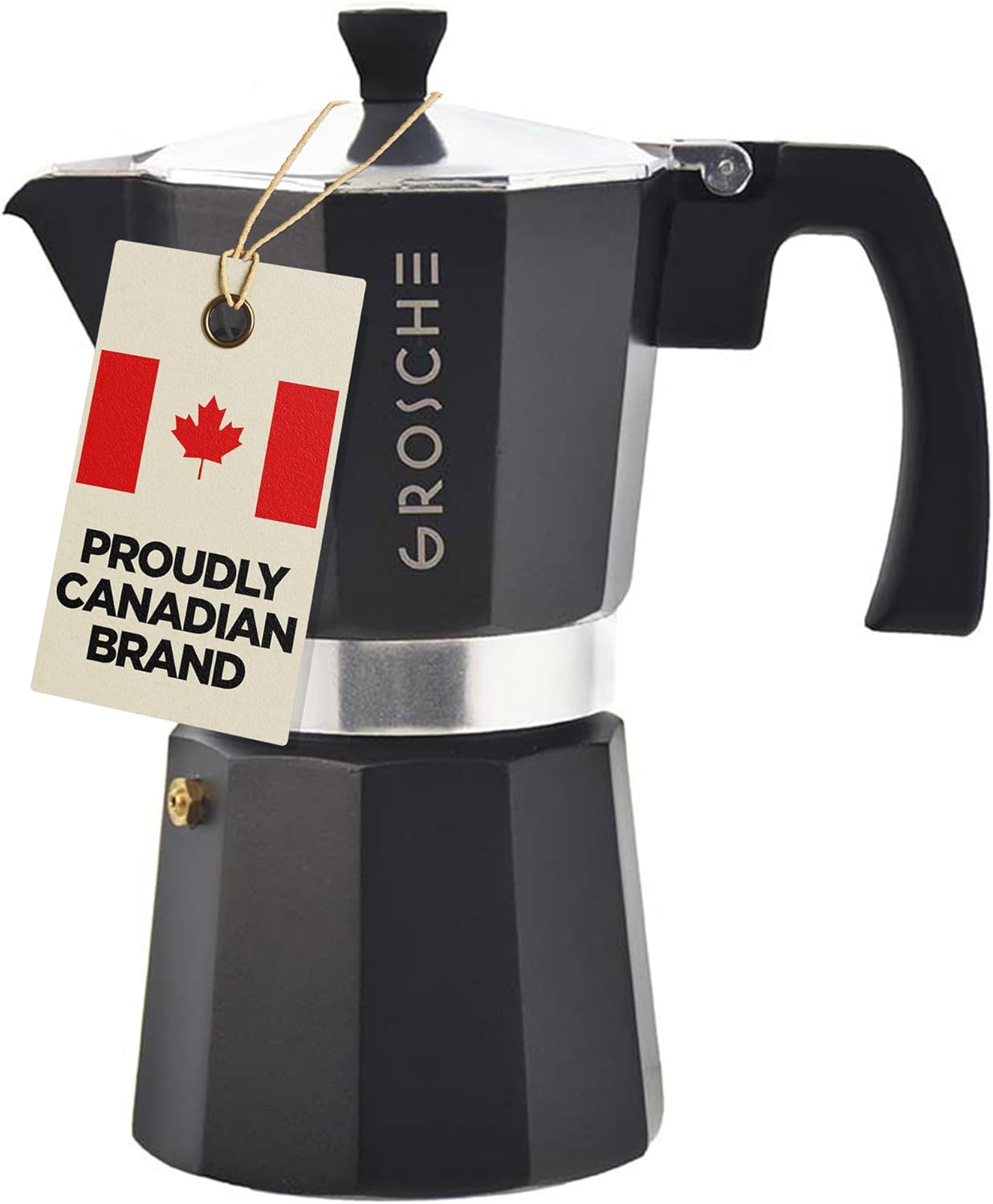
Its 15.2 oz aluminium body makes brewing for a group efficient, with good heat conduction promoting consistent extraction. Not suitable for induction cooktops, and the large size may be unwieldy for small kitchens.
Brand: GROSCHE · Price when checked: $54.99 · Rating: 4.4 out of 5 (302 ratings)
Pros
- Large 9 espresso cup capacity
- Aluminium body heats quickly and evenly
- Classic design with reliable pressure valve
Cons
- Not compatible with induction stovetops
- Heavier when full, less portable
Best budget pick for camping: DITOSH 3 Cup Aluminium Moka Pot

Small and lightweight, this 5 oz aluminium pot is easy to take on camping trips or for occasional use. Its basic build limits durability, and it’s not designed for induction stoves or large volume brewing.
Brand: DITOSH · Price when checked: $15.99 · Rating: 4.2 out of 5 (1,656 ratings)
Pros
- Compact 3 cup size
- Lightweight and portable
- Affordable price point
Cons
- Aluminium not induction compatible
- Build quality and durability limited
Best for stainless steel durability: LAOION 12 Cup Moka Pot

Made from stainless steel and induction compatible, it offers robust construction and a large 17.5 oz capacity. Stainless steel heats slower than aluminium, so brewing times are longer and heat management more crucial.
Brand: LAOION · Price when checked: $53.99 · Rating: 4.2 out of 5 (657 ratings)
Pros
- Large 12 cup capacity
- Induction compatible stainless steel
- Durable and rust-resistant
Cons
- Heavier and slower to heat
- Can cause hotspots if stove uneven
Best for visual coffee brewing: JimysCo SIXAQUAE Glass-top Moka Pot

The glass lid adds an unusual feature allowing you to watch extraction in real time. Stainless steel body supports induction cooktops. Glass increases fragility and requires careful handling.
Brand: JimysCo · Price when checked: $32.99 · Rating: 4.3 out of 5 (787 ratings)
Pros
- Glass top for brew observation
- Compatible with induction stoves
- Classic Italian design
Cons
- Glass lid fragile and may break
- Slightly more delicate cleaning required
Best for induction stovetops: Bialetti Venus 10 Cup Stainless Steel

Designed specifically for induction and other cooktops, its 18/10 stainless steel body balances durability with compatibility. Instructions warn against dishwasher use and detergents to maintain taste and finish.
Brand: Bialetti · Price when checked: $69.99 · Rating: 4.4 out of 5 (401 ratings)
Pros
- Induction compatible high-quality stainless steel
- Large 10 cup capacity
- Authentic Italian design and build
Cons
- Higher price point
- Requires hand washing only
Best versatile stove use: Mixpresso 6 Cup Moka Pot

A mid-sized stainless steel pot compatible with gas, electric, and induction stoves. Its compact size suits small kitchens, but the handles can become hot during use, requiring caution.
Brand: Mixpresso · Price when checked: $17.99 · Rating: 4.5 out of 5 (4,107 ratings)
Pros
- Induction stove compatible
- Compact 6 cup size
- Easy to clean with soap and water
Cons
- Handles heat up during brewing
- Not dishwasher safe
Best mid-size stainless steel: LRYYBTI 6 Cup Moka Pot

Offers a balanced 10 oz capacity suitable for everyday use. Made from food-grade stainless steel and compatible with various cooktops, though lacks detailed user feedback to confirm long-term durability.
Brand: LRYYBTI · Rating: 4.2 out of 5
Pros
- Food-grade stainless steel
- Induction compatible
- Moderate 6 cup capacity
Cons
- Limited customer rating data
- Build quality less documented
Best for electric and ceramic stovetops: elabo Stainless Steel 10 Cup Moka Pot

This stainless steel pot suits gas, electric, and ceramic stovetops but is not induction compatible. Its 10 cup capacity fits most households but falls short for induction users.
Brand: elabo · Rating: 4.4 out of 5
Pros
- 10 cup capacity
- Compatible with electric and ceramic cooktops
- Durable stainless steel construction
Cons
- Not induction stove compatible
- Heats slower than aluminium
Best large induction pot: Easyworkz Diego 12 Cup Stainless Steel

This 17.5 oz stainless steel pot works on induction and other stovetops, offering large capacity. Its bulk makes it less ideal for small kitchens or quick single servings.
Brand: Easyworkz
Pros
- Induction compatible stainless steel
- Large 12 cup capacity
- Robust construction
Cons
- Bulky size
- Heavier to handle when full
Best stylish coloured pot: Mongdio 6 Cup Red Moka Pot

Adds a splash of colour with its painted aluminium body, suitable for stovetops excluding induction. The finish may chip over time, and the aluminium base limits compatibility.
Brand: Mongdio
Pros
- Attractive coloured design
- Compact 6 cup size
- Classic stovetop brewing
Cons
- Paint can chip with use
- Not induction compatible
How to choose your moka pot and who should avoid them
Choosing the right moka pot depends primarily on your stovetop type and typical brew volume. Aluminium pots heat quickly and are best for gas or electric coil stoves but won’t work on induction. Stainless steel models tend to be heavier and slower to heat but offer induction compatibility and longer durability.
If you want very large volume brewing, look for moka pots with capacities above 15 oz, but remember that bigger pots require more careful heat management to avoid burnt coffee. For small kitchens or casual use, a 3-6 cup pot is more manageable.
Moka pots are not ideal if you prefer crema-rich espresso as they brew at lower pressure (around 1.5 bars) compared to espresso machines (9 bars). Also, if you dislike ritualistic cleaning or careful heat control, an automatic coffee maker might suit you better.
Related reading
- 10 Best Paints for Kitchen Cabinets: Your Ultimate Guide
- Best Cookware for Induction Cooktops: Top Picks & Reviews
- Best Portable Induction Cooktops with Precise Temperature Control
Frequently Asked Questions
Is moka pot coffee the same as espresso?
Moka pot coffee is not true espresso because it brews at a lower pressure, about 1.5 bars, whereas espresso machines use 9 bars or more. This difference affects the crema, body, and flavour profile. Moka pot coffee is stronger than drip but lacks the crema and fine texture typical of true espresso.
Can I use a moka pot on an induction cooktop?
Only moka pots made with magnetic stainless steel or a specially designed induction base work on induction cooktops. Aluminium pots, while common and good heat conductors, are not compatible because induction relies on magnetic fields to generate heat.
How do I clean and maintain a moka pot?
Avoid detergents and dishwashers; rinse all parts with warm water after each use to preserve flavour and prevent residue buildup. Regularly check the safety valve for blockages and replace the rubber gasket if it becomes brittle. Proper cleaning keeps coffee tasting fresh and ensures safety.

Rimi Sultana is a home cook from Bangladesh who has cooked for her family every day for the past five years and writes about it at Smart Cooks. Perpetually testing whether internet-famous recipes actually work in a regular home kitchen. Say hello on Facebook or through the contact page.