
As an Amazon Associate, Smart Cooks earns from qualifying purchases. Product prices and availability are shown on Amazon and may change.
For any home baker who dreams of perfect loaves and pillowy soft buns, the right stand mixer isn’t just a convenience—it’s a game-changer, especially when it comes to the notoriously tough task of kneading bread dough. Forget the strenuous workout and messy countertops; a powerful, reliable stand mixer can transform your baking experience, delivering consistently elastic and well-developed dough every time. But with countless models vying for your attention, how do you choose the one that truly excels at tackling high-hydration sourdoughs or stiff brioche? We’ve sifted through the noise to bring you our top five stand mixers that promise exceptional kneading performance, ensuring your 2026 bread-making adventures are nothing short of delicious.Our Top 10 Picks for Best Stand Mixer For Bread Dough 2026
Worth a Look: MURENKING 5.3 Qt Tilt-Head Stand Mixer

A budget tilt-head mixer with a 500 W motor, six speeds plus pulse and a 5.3-quart stainless steel bowl.
Good for: Occasional bread and cake baking; tight budgets.
Keep in mind: Not built for daily heavy kneading.
Check Price on AmazonAucma Mixer: Unbeatable Value for Your Baking Adventures!

Feature Deep Dive
First off, let’s talk about the raw power and capacity – this Aucma beast boasts a 660W pure copper motor! Seriously, that’s not a typo. For this price point, you often find motors half this strength, making the Aucma a standout. I put it straight to the test with a dense sourdough dough, and it kneaded effortlessly, without a hint of struggle. Plus, the 6.5-QT stainless steel bowl with dual handles is incredibly generous, perfect for whipping up a double batch of cookies for a school bake sale or preparing dough for multiple pizza nights. And the handles? Such a small detail, but they make pouring batters or scraping out dough so much easier than bowls without them, a real win for practical use! The 6 optimized speeds with pulse function mean I can go from a gentle stir for delicate meringues to a powerful knead without missing a beat, all while keeping the noise level surprisingly low at ≤76dB – a huge plus compared to some roar-monster mixers out there. And for convenience, the tilt-head design makes swapping out the included whisk, dough hook, and mixing beater a breeze, and the splash guard with an access hatch is brilliant for adding ingredients mid-mix without creating a flour cloud or sticky mess. Add to that the sleek stainless steel trim and blue LED light, and you’ve got a mixer that looks far more expensive than it actually is!The Bottom Line
So, is the Aucma Stand Mixer worth it? Absolutely, unequivocally YES! For aspiring bakers, budget-conscious home cooks, or even seasoned pros looking for a reliable secondary mixer, this is a phenomenal investment. It offers the power, capacity, and thoughtful features typically found in much pricier models, all wrapped up in a stylish package. If you’re ready to upgrade your baking game without breaking the bank, grab one of these – your kitchen (and your wallet!) will thank you! Check Price on AmazonDough Maker: Performance Under the Microscope, or Just Marketing?

Feature Deep Dive
Let’s get straight to the motor. The advertised 250W motor for ‘powerful’ and ‘effortless’ mixing is, frankly, on the lower end for a unit claiming to handle 2.1kg of flour. While it can handle typical bread and pizza dough, don’t expect it to power through low-hydration, high-gluten sourdoughs with the same authority as a dedicated stand mixer boasting 500W-1000W. It’s adequate for standard recipes within its claimed 7Qt capacity, but that ‘effortless’ claim strains under a dense whole wheat or rye. Where it genuinely shines, however, is the Automatic Fermentation Function. This isn’t just a warming plate; the ability to maintain a precise temperature range of 77-100°F (25-38°C) directly within the mixing bowl is a significant advantage. Most home bakers resort to finicky ovens with pilot lights or imprecise proofing boxes. This integrated feature ensures consistent, optimal fermentation, critical for developing complex flavors and superior texture in sourdough, a scenario where consistency is paramount.The Bottom Line
Ultimately, this Dough Maker with Ferment Function presents a mixed bag, prioritizing convenience and precision in fermentation over raw power. The integrated, accurate fermentation is its strongest suit, offering a genuinely valuable improvement for those focused on consistent results, especially with sourdough. However, the 250W motor means that while it handles common doughs adequately for its stated capacity, users accustomed to heavy-duty stand mixers will find its performance lacking for very stiff or large, high-hydration batches. It’s a solid contender for the home baker who values automation and perfect proofing for typical bread and pizza recipes, and needs a generous capacity, but it’s not the workhorse for an aspiring artisan baker regularly tackling demanding doughs. Manage expectations regarding motor performance, and its specialized fermentation function might just make it a worthwhile addition. Check Price on AmazonWorth a Look: Cuisinart Precision Master 5.5 Qt Stand Mixer
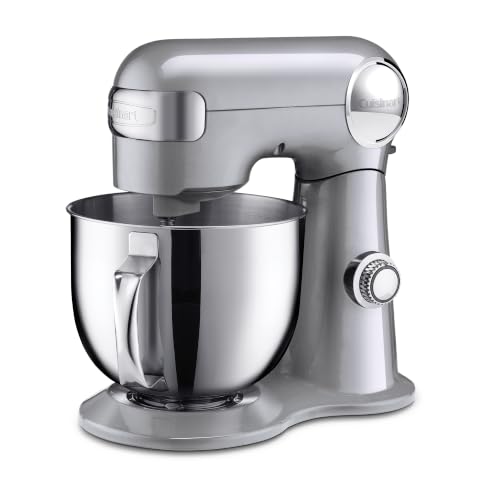
A 500-watt, 12-speed stand mixer with a die-cast body and a 5.5-quart stainless steel bowl, plus whisk, dough hook and paddle.
Good for: Bread dough and cakes; a sturdy mixer that is still easy to lift.
Keep in mind: Very stiff doughs can strain a 500 W motor.
Check Price on AmazonWorth a Look: Bosch Universal Plus Stand Mixer with Dough Hook Extender
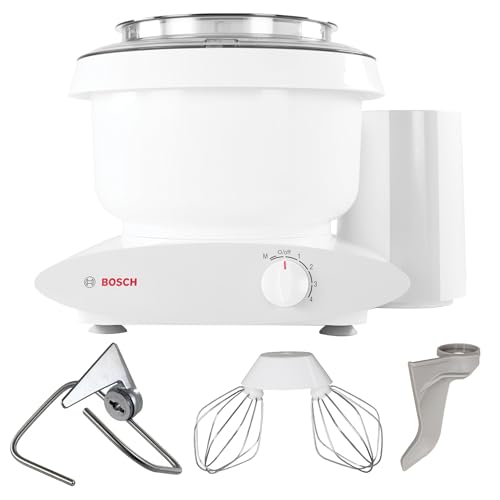
A belt-driven 500 W mixer with a large 6.5-quart bowl that the maker says can knead up to 14 loaves of whole wheat dough.
Good for: Big batches of bread dough; bakers who knead weekly.
Keep in mind: Plastic bowl, not stainless; looks and works differently from tilt-head mixers.
Check Price on AmazonHamilton Beach 4-Qt Mixer: Does 300W Deliver When It Counts?

Feature Deep Dive
The critical specification here is the 300-watt motor. While adequate for lighter batters, the real test came with whole wheat bread dough. To its credit, it managed to knead a sticky dough, though not with the robust authority of a 500W+ machine. There was a noticeable strain, but it didn’t completely stall, which is a mild positive for its class. The planetary mixing action, touted as comparable to ‘higher-priced brands,’ did a commendable job ensuring minimal unmixed pockets around the 4-quart stainless steel bowl. However, in a direct comparison, the sweep wasn’t quite as extensive as, say, a KitchenAid, necessitating a scrape-down of the sides once or twice during a long mix – a minor but noteworthy distinction for achieving true ‘hands-free’ operation. The 7 speeds with a slow first speed are certainly beneficial, particularly for gradually incorporating flour without creating a cloud, directly impacting the consistency of the final mix.The Bottom Line
Ultimately, the Hamilton Beach 4-Quart Stand Mixer isn’t a powerhouse, and frankly, its 300W motor won’t surprise anyone with industrial-grade capability. However, it competently handles common baking tasks – cookies, lighter bread doughs, and cakes – without major complaints. The inclusion of essential attachments and the easy-clean design are practical, though secondary to performance. For the casual baker or someone with limited counter space who primarily tackles standard recipes and isn’t pushing the limits with artisan bread batches daily, this mixer represents a functional, budget-conscious choice. Serious bakers demanding unrelenting power and absolutely flawless bowl coverage should still look to higher-wattage models. Check Price on AmazonA Beginner’s Dream: Easy to Use, Built to Last!

Feature Deep Dive
What really impressed me right off the bat was the tilt-head design. For a beginner like me, having clear, easy access to the bowl when adding ingredients or scraping down the sides is a game-changer. I don’t have to awkwardly maneuver around a fixed head, which makes the whole process less stressful and much cleaner. Paired with this is the amazing 59-Point Planetary Mixing Action. Honestly, I didn’t know what that meant at first, but in practice, it means the beater touches 59 points around the bowl per rotation. This is a huge benefit because it thoroughly incorporates all your ingredients, unlike some basic hand mixers or cheaper stand mixers I’ve seen that often leave pockets of unmixed flour or butter at the bottom. It ensures consistent results every time without constant stopping and scraping, which is fantastic for building confidence in baking. Plus, the fact that it’s made from durable Zinc and Stainless Steel immediately gives it a reliable, high-quality feel – it doesn’t wobble or feel flimsy, even when kneading a thick bread dough. And a huge win for easy cleanup: the included flat beater and dough hook are dishwasher-safe!The Bottom Line
This KitchenAid mixer has truly turned my baking experience from daunting to delightful. It’s powerful enough to tackle everything from whipping cream to kneading dough for up to four loaves of bread with its 5-quart capacity, giving me room to grow as a baker. The sheer number of optional attachments for the power hub also means this isn’t just a mixer, it’s a potential culinary command center for when I feel more adventurous. For any beginner looking for a reliable, easy-to-use, and incredibly capable stand mixer that will last for years, this is absolutely worth the investment. It takes the stress out of baking and makes it genuinely fun. Check Price on AmazonWorth a Look: Kitchen in the Box 8.5 Qt Stand Mixer

A large 8.5-quart stand mixer with a 900 W motor and 10 speeds, aimed at families who bake in volume.
Good for: Large batches of dough; families and gatherings.
Keep in mind: Big footprint on the counter; newer brand with fewer reviews.
Check Price on AmazonMore Tech, Less Mess: A Veteran’s Take

Feature Deep Dive
The standout here is undoubtedly the Upgraded LED Touch Screen with its Programmable Timer and Speed. Most mixers still rely on archaic dials and external timers, so having real-time speed and time displayed, along with the ability to preset operations, is a practical step forward. For a longer bread knead or a meringue whip, being able to set the time and speed and step away without constantly monitoring is a welcome efficiency, a genuine improvement over the hands-on babysitting many traditional units demand. While the Multiple Mixing Modes (3 auto, 1 manual) sound like a beginner’s convenience, a seasoned baker will appreciate the immediate shift to manual for fine-tuning. The claim of Waste-Free Mixing, with the attachment leaving just a 0.12” interval from the bowl’s bottom, is a critical feature often overlooked. Many mixers, even high-end ones, struggle with unmixed pockets; if this mixer truly achieves that minimal gap, it’s a significant win, reducing scrapedown time and ensuring consistency from the start.The Bottom Line
This AIRMSEN mixer doesn’t reinvent the wheel, but it polishes some of the rough edges found in many competitors. The Powerful Pure Copper DC Motor and 11 speed settings are respectable, offering enough grunt for most home tasks, and the 5.3QT 304 stainless steel attachments and bowl are the standard I’d expect. For those looking for a contemporary interface and the convenience of integrated, programmable timing that many mixers still lack, it’s a solid contender. It’s not a kitchen workhorse that will replace a professional unit, but for the modern home baker who values automation and a clean, efficient mix, it’s a practical option that offers some genuine quality-of-life improvements over more basic models. Check Price on AmazonA Competent Contender, Not a Connoisseur’s Revelation

Feature Deep Dive
Many mixers claim ‘perfect dough,’ but the inclusion of a consistent temperature fermentation feature is where this unit genuinely offers a practical advantage over simpler stand mixers. While dedicated dough machines often have this, its consistent performance here means less guesswork and more predictable results, a boon for those living in variable kitchen climates. No more wrapping bowls in towels and hoping for the best. The convenient top window for add-ins is a small but thoughtful touch; I’ve had plenty of machines where adding a splash of water or some extra seasoning meant stopping, unlatching, adding, and restarting – this streamlines that process considerably. As for the ‘scientific design’ featuring intermittent kneading to prevent overheating? Frankly, that should be a baseline expectation for any quality dough mixer, not a highlight. It’s good it’s implemented, but it’s more about meeting a fundamental engineering requirement than offering novel functionality.The Bottom Line
After putting the ‘7L Electric Dough Mixer’ through its paces with various doughs, it performs commendably within its stated parameters. The spacious 7L capacity is undoubtedly useful for larger batches, making it practical for feeding a crowd without doing multiple mixing cycles. While described as stylish and easy to clean, these are more or less prerequisites for any modern kitchen appliance – not revolutionary. It feels reasonably built to last, though the overall construction doesn’t necessarily exude the rugged, industrial-grade durability of some higher-end professional units I’ve encountered. This mixer is a solid, functional piece of equipment, a distinct step up from a general-purpose stand mixer if dedicated dough work is your primary focus. For serious home bakers looking to upgrade to a specialized unit with a fermentation function and good capacity, it’s a competent choice. Just don’t expect it to redefine your perception of dough mixing; it capably handles the job. Check Price on AmazonBest Stand Mixer for Bread Dough 2026: A Comprehensive Buying Guide
Why a Stand Mixer is Essential for Bread Dough
Kneading bread dough by hand is a time-honored tradition, but it’s also incredibly labor-intensive and time-consuming. For avid bakers or anyone making bread regularly, a stand mixer is a game-changer. It automates the arduous kneading process, ensuring consistent dough development, saving your arms and wrists, and allowing you to focus on other tasks. For heavy, sticky bread doughs, a robust stand mixer is not just a convenience; it’s a necessity for achieving the perfect gluten structure.Key Features to Look For
Motor Power (Wattage)
This is arguably the most crucial factor for bread dough. High wattage generally translates to more power and less strain on the motor when dealing with thick, heavy doughs. Look for mixers with at least 500 watts for serious bread making. Professional-grade machines can go upwards of 1000-1500 watts, offering exceptional performance and durability for frequent, large batches.Bowl Capacity
The bowl size dictates how much dough you can knead at once. Consider your typical batch size:- 4.5-5 Quarts (approx. 4.2-4.7 Liters): Suitable for small to medium batches, typically enough for 1-2 standard loaves of bread.
- 6-7 Quarts (approx. 5.7-6.6 Liters): Ideal for larger families or those who bake 2-3 loaves frequently.
- 7+ Quarts (approx. 6.6+ Liters): Best for high-volume bakers, specialty bread makers, or small businesses, capable of handling multiple large loaves.
Dough Hook Design
There are generally two types of dough hooks:- C-Hook: The traditional curved hook, common on tilt-head mixers. It pushes the dough against the side of the bowl.
- Spiral Hook: Often found on bowl-lift or commercial-style mixers, this hook mimics professional kneading, pushing the dough down and away, which can be more efficient for developing gluten with less effort.
Build Quality and Materials
For bread dough, durability is paramount. Opt for mixers with an all-metal construction, especially in the gears and housing. Plastic components, while lighter and cheaper, are more prone to wear and tear when subjected to the stress of kneading heavy dough. A heavy-duty stand mixer will have a substantial weight, indicating robust internal components.Speed Settings and Control
While many speeds might seem appealing, for bread dough, you primarily need a very slow speed for mixing initial ingredients and a medium-low speed for kneading. A gradual start (soft start) helps prevent flour clouds. Look for models with precise, stepless speed control or at least clear, distinct low-speed settings. A pulse function can also be useful.Stability
Heavy dough can make a stand mixer “walk” across the counter if it’s not stable. Look for a mixer with a wide, heavy base and non-slip feet (often suction cups) to keep it securely in place during vigorous kneading.Head-Tilt vs. Bowl-Lift Design
- Tilt-Head: The motor head tilts back for easy access to the bowl and attachments. Generally found on smaller-capacity mixers. Can sometimes vibrate more with very heavy dough.
- Bowl-Lift: The bowl is secured to arms, and a lever lifts it into position. These are typically more robust, stable, and powerful, making them ideal for larger capacities and frequent heavy-duty bread making.
Top Brands to Consider (Focusing on Bread Dough Performance)
While specific models vary year by year, certain brands consistently excel in the bread dough category:- KitchenAid (Pro Line/Bowl-Lift Models): While their tilt-head models are popular, for serious bread making, look to their Professional or Commercial series bowl-lift mixers. They offer higher wattage, larger capacities, and more robust construction.
- Ankarsrum Original: Known for its unique design where the bowl rotates on the base, and the dough hook or roller kneads from the side. These are exceptionally powerful, quiet, and designed specifically for high-volume, heavy doughs.
- Bosch Universal Plus: Another unique design with a motor in the base and an open top. Highly praised for its ability to handle large batches of very stiff dough without bogging down. It’s known for its lightweight bowl and powerful drive.
- Kenwood Chef/Titanium/Major: Kenwood offers a range of powerful mixers, particularly their larger models, which are well-regarded for their robust motors and planetary mixing action, making them suitable for bread.
- Cuisinart (Higher-End Models): Some of Cuisinart’s more powerful models can handle bread dough well, though generally not to the same professional-grade extent as Ankarsrum or high-end Bosch/KitchenAid for very frequent, large batches.
Budget Considerations
Investing in a good stand mixer for bread dough is an investment in your baking. Prices can range significantly:- Entry-Level (for occasional bread): $200-$350. You might find a decent 4.5-5 quart tilt-head or a basic bowl-lift model. These are okay for smaller, softer doughs but might struggle with stiff rye or whole wheat doughs regularly.
- Mid-Range (good for frequent baking): $350-$600. This range offers more powerful bowl-lift KitchenAid models, or entry-level models from specialty brands. Expect better motors and more durable components.
- High-End/Professional (for serious bakers): $600-$1000+. This is where you find the Ankarsrum, Bosch Universal Plus, and top-tier KitchenAid/Kenwood models. These are built to last, handle large quantities, and perform flawlessly under heavy loads.
Maintenance and Longevity
To ensure your stand mixer lasts for years of bread making:- Don’t Overload: Always adhere to the manufacturer’s maximum flour/dough capacity to prevent motor strain.
- Clean Promptly: Dough can dry and harden, making it difficult to remove. Clean the bowl, hook, and splash guard immediately after use.
- Ventilation: Ensure the mixer’s ventilation slots are clear and unobstructed to prevent overheating.
- Listen to Your Mixer: If the motor sounds strained or hot, give it a break.
Conclusion
Choosing the best stand mixer for bread dough in 2026 comes down to prioritizing power, capacity, and durability. Look for a robust motor (500+ watts), a bowl size that matches your baking habits, a strong dough hook, and an all-metal construction. While a higher price often correlates with better performance and longevity for bread, assess your frequency and volume of baking to find the perfect balance of features and budget. With the right stand mixer, you’ll be enjoying homemade bread with less effort and more joy for years to come.Best Stand Mixer for Bread Dough 2026: FAQs
What are the key features to look for in a stand mixer specifically for bread dough?
When choosing a stand mixer for bread dough, prioritize motor power (high wattage and often a DC motor for quieter, more consistent torque), sturdy all-metal construction (especially gears), a large bowl capacity (at least 6-quart for most home bakers), and a robust dough hook attachment. Look for models designed for heavy-duty use to ensure longevity and efficiency when handling dense doughs.What is the recommended wattage or motor type for effectively kneading bread dough?
For effective and consistent kneading of bread dough, look for a stand mixer with at least 500 watts of power. However, wattage alone isn’t the only factor. Many professional-grade mixers feature DC motors, which provide more consistent torque at lower speeds, making them excellent for bread dough even if their wattage rating seems lower than some AC motor counterparts. Aim for a powerful motor with good torque to prevent overheating and struggling with stiff dough.What bowl size is best for home bread baking?
For most home bread bakers, a stand mixer with a 6-quart or 7-quart bowl capacity is ideal. This size comfortably handles recipes calling for 3-4 loaves of bread, or a substantial single batch of dough (e.g., up to 8-9 cups of flour). While smaller bowls might work for very small batches, they can quickly become insufficient or cause dough to climb out when kneading larger, more active doughs.Which brands are generally considered top performers for kneading bread dough in 2026?
In 2026, several brands continue to excel in stand mixers for bread dough. KitchenAid’s Pro Line and Commercial series (e.g., 600, 700, and 800 series) are highly regarded for their robust motors and all-metal gears. Ankarsrum Original mixers are also top contenders, known for their unique design and powerful, efficient kneading action. Other strong performers include Bosch Universal Plus, which is praised for its powerful motor and large capacity, and sometimes professional-grade Hobart models for serious home bakers looking for commercial durability.Read More From Our Blog
- Best Instant Pot Accessories for Baking Cheesecake
- The Juiciest Slow Cooker Chicken Breast (Foolproof Recipe!)
Final Thoughts
Choosing the right stand mixer is paramount for anyone serious about baking bread. As we’ve explored, the ideal machine combines robust power, exceptional durability, and ample capacity to handle even the stickiest, heaviest doughs with ease, transforming a strenuous task into a simple pleasure. The mixers highlighted in our 2026 guide stand out precisely because they excel in these critical areas, ensuring your bread-making journey is both efficient and enjoyable.Each of our top picks offers a unique blend of features designed to cater to diverse baking needs, from the occasional home baker to the avid artisan. Whether you prioritize sheer horsepower for large batches, innovative attachments for diverse dough types, or a compact footprint for smaller kitchens, there’s a high-performance model ready to elevate your bread-making game. Consider your typical batch size, frequency of use, and specific dough preferences when making your final decision.Ultimately, investing in one of these premium stand mixers isn’t just about acquiring a kitchen appliance; it’s about empowering your culinary creativity and consistently achieving perfectly kneaded dough for superior loaves. With the right stand mixer by your side, the joy of baking homemade bread, from brioche to sourdough, becomes more accessible and rewarding than ever before. Make your choice with confidence, knowing you’re investing in years of delicious, perfectly textured bread.Related: Bread lame vs razor blade: which tool best scores your dough

Rimi Sultana is a home cook from Bangladesh who has cooked for her family every day for the past five years and writes about it at Smart Cooks. Perpetually testing whether internet-famous recipes actually work in a regular home kitchen. Say hello on Facebook or through the contact page.