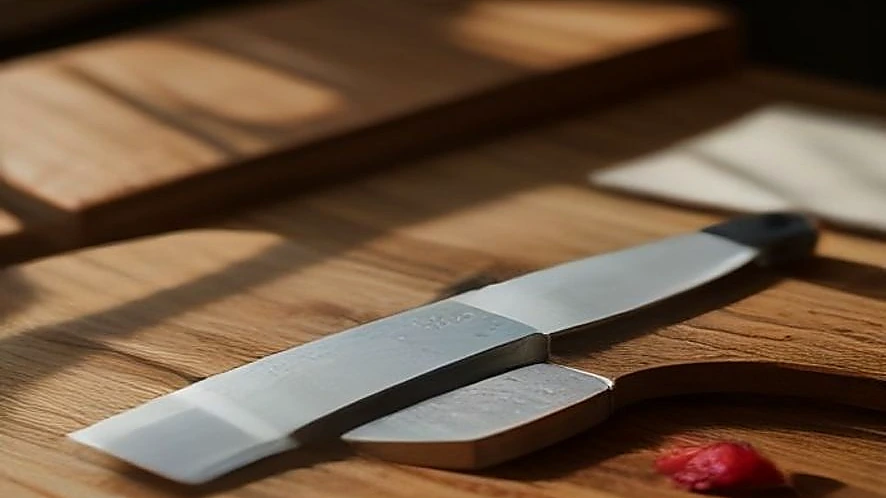
Boning knives and fillet knives are often confused because they both serve to separate meat from bone or skin. However, their designs cater to distinct tasks in the kitchen, influencing how they perform when preparing different proteins.
Some links in this post are affiliate links. If you buy through them we may earn a small commission at no extra cost to you — it never changes which products we recommend.
The main differences lie in blade flexibility, shape, and length. These factors affect precision, control, and ease of use, which becomes apparent depending on whether you’re working with poultry, beef, or delicate fish fillets.
Where each one wins
Boning knives are superior when working with firm meats that require forceful separation from bones, such as chicken thighs, pork ribs, or beef joints. Their stiff blades allow you to cut through cartilage and connective tissue without the blade bending, which improves safety and control.
The rigidity of boning knives typically ranges from stiff to moderately flexible, with blade thickness usually around 1.5 to 2.5 millimeters, providing the strength needed to tackle tougher cuts. This stiffness ensures that when applying pressure, the blade does not flex unexpectedly, reducing the risk of slipping and injury. For example, when deboning a whole chicken, a boning knife lets you navigate the joints and cartilage with precise, forceful cuts, minimizing wasted meat.
Fillet knives excel at tasks demanding finesse, like filleting whole fish or removing skin. Their flexible blades glide along the fish’s rib cage and bones, producing clean, even cuts that preserve the flesh’s integrity. This flexibility also helps when working with smaller or irregularly shaped fish.
Fillet knives generally have thinner blades, often between 1 to 1.5 millimeters thick, allowing them to bend easily to follow the contours of fish bones and skin. The blade length, ranging from 6 to 9 inches, gives ample reach to fillet large fish like salmon or trout in a single, smooth stroke. The flexibility helps reduce tearing and damage to delicate flesh, which is crucial for maintaining the quality of the fillet.
If you need to remove thin membranes or trim fat from raw meat, a boning knife’s rigidity is advantageous. The stiff blade can slide under membranes without bending, allowing clean separation. Conversely, for anyone preparing fish regularly or needing to create thin, precise slices, a fillet knife is the better choice. The fillet knife’s flexibility also allows for delicate skin removal without puncturing the flesh.
In terms of cutting angles, boning knives typically have a blade bevel of 15 to 20 degrees per side, optimized for durability and strength. Fillet knives often have a more acute bevel angle, around 12 to 15 degrees, to maintain a sharper edge suitable for thin slicing. The handle ergonomics also differ: boning knives often feature thicker, contoured handles designed to provide a secure grip during forceful cuts, while fillet knives have slimmer, more streamlined handles that facilitate delicate wrist movements.
Performance implications and practical consequences
Using the wrong knife for a task can lead to inefficient work and even injury. For instance, attempting to fillet a fish with a boning knife often results in uneven cuts and wasted meat because the blade cannot flex to follow the bones closely. The increased resistance can cause the blade to slip, increasing the risk of cuts to the user.
Conversely, using a fillet knife on tough meat can cause the blade to bend excessively, making it hard to apply the necessary force to separate meat from bone. This not only reduces precision but also risks damaging the blade. Over time, repeated misuse can dull the edge prematurely or cause the blade to warp.
When working with poultry, the boning knife’s stiffness is essential for cutting through joints and cartilage cleanly. For example, when breaking down a whole chicken, the boning knife allows you to efficiently separate thighs and drumsticks without damaging the surrounding meat. In contrast, a fillet knife may struggle here due to its flexibility and longer blade, which can be unwieldy in tight spaces.
In fish preparation, the fillet knife’s flexibility preserves the delicate texture and appearance of the fillet. A flexible blade can follow the subtle curves of the fish’s rib bones, minimizing flesh loss. For example, a 7-inch fillet knife can cleanly separate the skin from the flesh in one smooth stroke, which is difficult to achieve with a boning knife.
Blade maintenance also varies. Boning knives, with their thicker blades, can tolerate more aggressive sharpening methods and less frequent honing. Fillet knives require more delicate care; their thin blades are prone to damage if sharpened improperly. Using fine-grit sharpening stones and careful honing extends the life of a fillet knife and maintains its flexibility.
In summary, understanding the mechanical differences between boning and fillet knives—blade thickness, flexibility, length, bevel angle, and handle design—helps in selecting the right tool for the job. This selection impacts not only the quality of the cut but also efficiency and safety in the kitchen.
| Attribute | Boning Knife | Fillet Knife |
|---|---|---|
| Blade length | Generally 5 to 6.5 inches (13 to 16.5 cm) | Typically 6 to 9 inches (15 to 23 cm) |
| Blade flexibility | Stiff to moderately flexible to allow controlled pressure | Highly flexible to contour around bones and skin |
| Blade shape | Narrow with a slight curve, tapered to a sharp point | Long, thin, and narrow with pronounced tapering |
| Primary use | Separating meat from bones in poultry, beef, pork | Filleting fish and removing skin |
| Cutting precision | Allows forceful cuts close to bone but less suited for thin slices | Enables thin, precise slices following bone structure |
| Handle design | Often ergonomically shaped for force application | May be slimmer to facilitate delicate control |
From My Kitchen
Once I tried to fillet a whole sea bass using a boning knife. The blade’s stiffness made it hard to follow the fish’s rib bones closely, resulting in uneven cuts and wasted flesh. Switching to a fillet knife with a thinner, more flexible blade allowed me to glide smoothly along the bones and skin, producing a clean fillet with minimal waste. That experience underscored the importance of matching knife flexibility to the protein’s contours.
Worth Considering
Best for precision filleting: imarku Fillet Knife 7 Inch

The imarku fillet knife offers a razor-sharp 7-inch blade made from Japanese high carbon stainless steel, balancing flexibility and strength for controlled filleting. It’s ideal for fish and delicate meat but less suited for heavy-duty boning tasks.
Brand: imarku
Pros
- High carbon stainless steel blade retains sharpness
- Thin, flexible 7-inch blade for precise cuts
- Ergonomic handle designed for control
Cons
- Flexibility limits use on tougher, thicker meats
- Longer blade can be unwieldy for some boning tasks
Best for versatile boning: Dalstrong 7″ Fillet Knife – V12 Ultra Steel

Dalstrong’s 7-inch fillet knife, made from V12 ultra steel with a honeycomb handle, offers a balance of stiffness and flexibility. While marketed as a fillet knife, it’s robust enough for boning thicker cuts, making it a good option for cooks who need some versatility.
Brand: Dalstrong
Pros
- V12 ultra steel blade with good edge retention
- Moderate flexibility suitable for filleting and boning
- Honeycomb handle provides a secure grip
Cons
- Less specialized flexibility compared to dedicated fillet knives
- Heavier than some fillet knives, reducing finesse
When neither boning nor fillet knives are right
If your primary tasks include large-scale butchery or breaking down whole animals, a boning or fillet knife alone won’t suffice. You’ll need a cleaver or a heavy-duty chef’s knife to cut through thick bones and joints.
Similarly, for skinning or trimming fat on poultry, a dedicated skinning knife with a short, curved blade can offer better control than either a boning or fillet knife. Fillet knives are too long and flexible for such precise trimming, while boning knives may be too stiff.
For slicing cooked meat, a carving knife with a long, thin blade designed for smooth slices is preferable to both boning and fillet knives, which are optimized for raw meat and fish.
Frequently Asked Questions
Can a fillet knife be used for boning meat?
While fillet knives have flexible blades suited to fish, they generally lack the stiffness required to cut through tougher meat and cartilage safely. Using a fillet knife for boning can result in blade bending and less precise cuts, increasing the risk of injury. For boning meat, a stiffer boning knife is recommended.
What blade length is best for a boning knife?
Boning knives typically range from 5 to 6.5 inches (13 to 16.5 cm) in blade length. This length provides enough reach to navigate around bones and joints while maintaining control. Longer blades can be harder to manoeuvre, and shorter blades might limit reach.
How do I maintain the sharpness of a fillet knife?
Fillet knives require regular honing to maintain their thin edges. Using a sharpening stone with a fine grit (around 1000-3000) helps preserve the blade without removing too much material. Because the blade is thin and flexible, avoid electric sharpeners that can overheat and warp the steel.
Related: Saucepan vs saucier: understanding the practical differences
Related: Grill pan vs electric grill: understanding the real differences
Related: Mixer grinder vs wet grinder: Understanding the real differences
Related: Electric kettle vs stovetop kettle: understanding the real differences
Related: Espresso machine vs moka pot: understanding real differences in brewing and taste

Rimi Sultana is a home cook from Bangladesh who has cooked for her family every day for the past five years and writes about it at Smart Cooks. Perpetually testing whether internet-famous recipes actually work in a regular home kitchen. Say hello on Facebook or through the contact page.