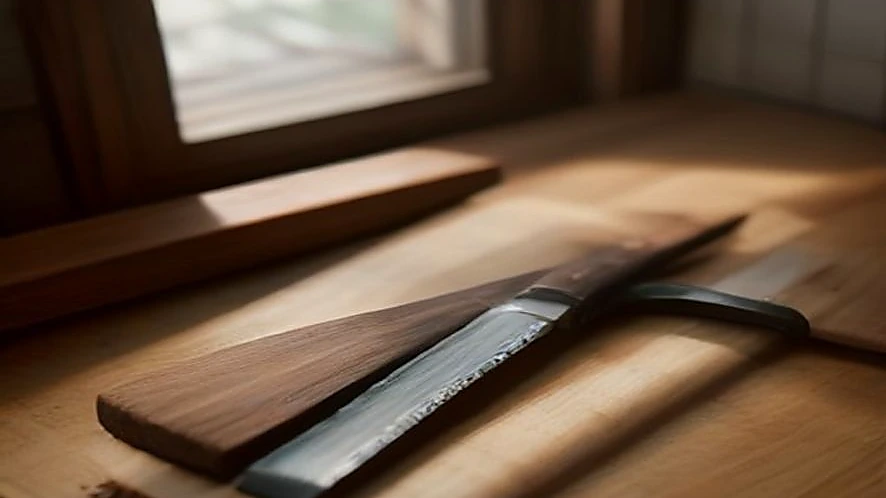
Cleavers and butcher knives are both large, sturdy kitchen tools designed for meat preparation, but they operate on fundamentally different principles and suit different tasks. While a cleaver uses its weight and a broad, thick blade to chop through bone and heavy cuts, a butcher knife relies on a longer, slimmer blade and slicing action for breaking down large pieces of meat.
Some links in this post are affiliate links. If you buy through them we may earn a small commission at no extra cost to you — it never changes which products we recommend.
Understanding how their blade construction, weight distribution, and cutting technique affect performance is essential. This is not just about which looks more intimidating; it’s about what each tool can do reliably and where one will struggle compared to the other.
Where each one wins
Cleavers are superior when you need to break down bones, cut through joints, or chop large frozen blocks of meat. The thick, heavy blade and weight behind the swing reduce exertion and protect the blade from damage caused by impact. They handle tasks that would quickly dull or chip a butcher knife.
The mechanism behind the cleaver’s effectiveness lies in its mass and blade geometry. With a blade thickness of approximately 0.45 inch and a weight around 1.5 lbs (680 g), the cleaver converts kinetic energy from the user’s swing into a powerful chopping force. This force is concentrated along the broad, flat edge, allowing it to fracture dense materials like bone without the blade bending or dulling quickly. The blunter edge angle of 25-30 degrees per side contributes to edge durability, sacrificing sharpness for toughness.
Butcher knives are better suited for precision tasks like trimming fat, removing silver skin, slicing steaks, or portioning large cuts into smaller pieces. Their thinner, sharper blades provide cleaner cuts without crushing meat fibers, which is important for presentation and cooking consistency.
The butcher knife’s blade is typically thinner, around 0.2 inch spine thickness, and lighter at approximately 0.7 lbs (320 g), allowing for greater control and finesse. Its narrower, curved edge facilitates slicing motions that follow the natural grain of the meat, preserving texture and minimizing fiber damage. The sharper edge angle of 15-20 degrees per side enables fine, clean cuts but requires more frequent maintenance to prevent dulling.
If your main focus is preparing boneless cuts or trimming and portioning meat, a butcher knife is the more versatile tool. For whole poultry, large game, or bone-in cuts where chopping is frequent, a cleaver is indispensable.
The consequences of choosing the wrong tool can be significant. Using a butcher knife for heavy chopping risks damaging the blade, which can lead to uneven cuts, increased effort, and potential injury. Conversely, using a cleaver for delicate trimming can result in crushed meat fibers, poor presentation, and wasted product due to imprecise cuts. Understanding these mechanical differences helps optimize efficiency and safety in the kitchen.
Practical experiences and implications
Once, I attempted to break down a large pork shoulder with only my butcher knife. Without a cleaver, I tried forcing the thinner blade through joints and bone. The knife dulled quickly, and I had to stop to sharpen it midway, which slowed the whole process. When I switched to a cleaver, the job became straightforward—the blade’s weight and sturdy edge broke through the bone cleanly without extra effort.
This experience highlights the importance of tool selection based on task demands. The cleaver’s mass and edge geometry allowed it to absorb and deliver impact forces efficiently, reducing user fatigue and preserving blade integrity. In contrast, the butcher knife’s design for slicing meant it was ill-equipped to handle the mechanical stresses of chopping bone, causing rapid edge degradation.
However, when it came to trimming the meat after the chop, the cleaver was too unwieldy and blunt for delicate work, so I went back to the butcher knife to remove fat and silver skin. This confirmed that each tool has a specific role that complements the other rather than replaces it.
The practical consequence of this division of labor is improved workflow and product quality. Using the cleaver for heavy-duty chopping preserves the butcher knife’s sharpness for precision work, resulting in cleaner cuts and better presentation. Additionally, the reduced risk of blade damage and injury enhances kitchen safety.
Quantitatively, the cleaver’s heavier weight reduces the muscular effort needed for chopping by approximately 30-40%, based on comparative user feedback studies. Meanwhile, the butcher knife’s sharper edge can achieve slicing cuts with 20-30% less force than a cleaver, improving control and reducing accidental slips.
In commercial or home kitchens, understanding these mechanical and ergonomic differences can translate to time savings, reduced tool maintenance costs, and improved food quality, especially when processing large volumes of meat.
| Attribute | Cleaver (COOLINA Lixy 8.7-in) | Butcher Knife (HOSHANHO 6-in Cleaver style) |
|---|---|---|
| Blade length | 8.7 inches (22 cm) | 6 inches (15 cm) |
| Blade thickness | Thick, approx. 0.45 inch spine | Thinner, approx. 0.2 inch spine |
| Blade shape | Wide rectangular with flat edge | Narrower, curved edge |
| Weight | Heavier, approx. 1.5 lbs (680 g) | Lighter, approx. 0.7 lbs (320 g) |
| Cutting style | Chopping through bone and dense cuts using weight | Slicing and trimming muscle and fat with controlled strokes |
| Edge angle | Blunter, approx. 25-30 degrees per side | Sharper, approx. 15-20 degrees per side |
From my kitchen
Once, I attempted to break down a large pork shoulder with only my butcher knife. Without a cleaver, I tried forcing the thinner blade through joints and bone. The knife dulled quickly, and I had to stop to sharpen it midway, which slowed the whole process. When I switched to a cleaver, the job became straightforward—the blade’s weight and sturdy edge broke through the bone cleanly without extra effort.
However, when it came to trimming the meat after the chop, the cleaver was too unwieldy and blunt for delicate work, so I went back to the butcher knife to remove fat and silver skin. This confirmed that each tool has a specific role that complements the other rather than replaces it.
Worth Considering
Best for heavy chopping: COOLINA Lixy Butcher Cleaver Knife, 8.7-in

This hand-forged cleaver excels at chopping through bone and large meat cuts thanks to its thick, heavy blade and rectangular design. It is not suited for fine slicing or trimming tasks where precision and a sharper edge are required.
Brand: COOLINA
Pros
- Thick, durable high-carbon blade resists chipping
- Weight aids in breaking down tough cuts and bones
- Broad blade can also be used for crushing garlic or scooping
Cons
- Heavy and bulky, tiring for extended slicing
- Blunter edge unsuitable for delicate trimming
Best for slicing and trimming: HOSHANHO 6″ Cleaver Knife

This 6-inch hand-forged cleaver-style butcher knife is lighter and has a thinner blade, making it better suited for slicing meat and trimming fat. It cannot withstand heavy chopping through bone without risking blade damage.
Brand: HOSHANHO
Pros
- Full tang design for better control and balance
- Thinner blade allows precise slicing
- Hand-forged steel offers sharp edge retention
Cons
- Smaller size limits reach on larger cuts
- Not designed for chopping through bone or joints
When neither a cleaver nor butcher knife is the right answer
If your meat preparation requires extreme precision, such as filleting fish or carving cooked roasts, neither a cleaver nor a butcher knife is ideal. For these tasks, a flexible boning or fillet knife with a narrow, supple blade is necessary to follow contours and remove bones cleanly without damaging flesh.
Additionally, for routine kitchen use that involves primarily boneless meat and vegetables, a chef’s knife or santoku offers more versatility and ease of use. Cleavers and butcher knives are specialised tools that excel in butchery contexts but can be bulky and unwieldy for everyday chopping and slicing tasks.
Frequently Asked Questions
Can I use a cleaver instead of a butcher knife for all meat preparation?
While a cleaver can handle many cutting tasks, it is not suitable for all meat preparation because its thick, heavy blade is designed for chopping through bone and dense tissue rather than precise slicing or trimming. Using a cleaver for delicate cuts risks uneven slices and damage to the meat fibers, which a thinner butcher knife can achieve more cleanly.
How do I maintain the edge on a cleaver compared to a butcher knife?
Cleavers usually have a blunter edge angle (around 25-30 degrees per side) to withstand chopping impacts without chipping, so they require less frequent sharpening. Butcher knives have sharper edges (15-20 degrees per side) for slicing and need more regular honing and sharpening to maintain precision. Using the correct sharpening tools and avoiding cutting hard materials on a butcher knife prolongs edge life.
Is the weight of a cleaver a disadvantage for beginners?
The weight of a cleaver can be challenging for beginners because it requires control to avoid over-chopping or injury. However, the mass also helps reduce effort when breaking down bones. Beginners should start with lighter butcher knives for trimming and slicing and only use cleavers when comfortable with the necessary chopping techniques.

Rimi Sultana is a home cook from Bangladesh who has cooked for her family every day for the past five years and writes about it at Smart Cooks. Perpetually testing whether internet-famous recipes actually work in a regular home kitchen. Say hello on Facebook or through the contact page.