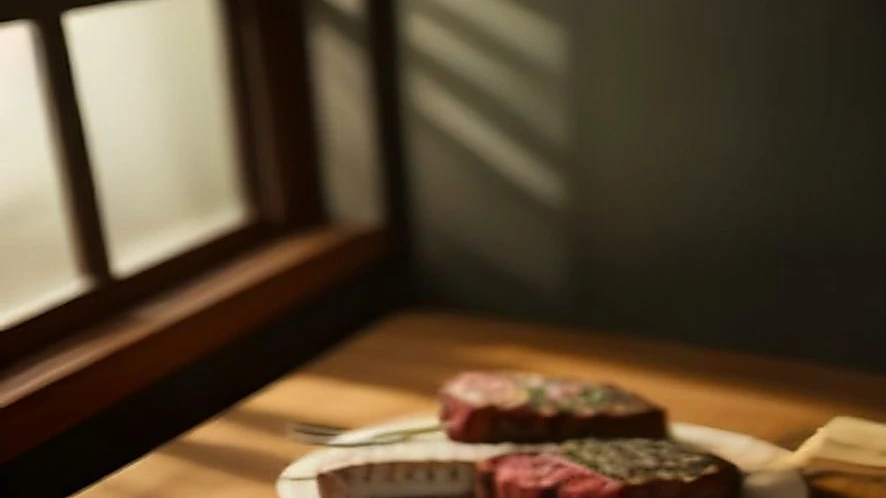
Choosing the right steak knife set for dinner parties means looking beyond surface features like blade design or handle colour. The key factor is how the knives’ construction affects cutting efficiency and durability during frequent use with a variety of steak textures, including lean and well-marbled meats.
Some links in this post are affiliate links. If you buy through them we may earn a small commission at no extra cost to you — it never changes which products we recommend.
Steak knives that perform well maintain their edge without aggressive sharpening, resist corrosion over time, and provide a handle design that balances grip security with comfort. Poorly chosen knives often dull quickly because of blade material or edge style and can fatigue the hand, spoiling the dining experience.
What actually matters
Understanding the technical aspects of steak knives clarifies why some sets last longer and cut better. Three main factors distinguish quality sets: blade material and edge type, handle ergonomics and construction, and the completeness of the set matched to your dinner party size.
Blade materials and edge types
Most steak knives use high carbon stainless steel or forged German steel, which balance hardness and corrosion resistance. Hardness, measured by the Rockwell scale (usually between 55-60 HRC), determines how long the blade holds an edge before dulling. Serrated edges use a series of small teeth to saw through steak fibres, reducing the need for frequent sharpening but may tear delicate meat. Straight edges slice cleanly but require more maintenance to stay sharp.
The Rockwell hardness scale is critical because blades that are too soft will dull quickly, while overly hard blades can become brittle and prone to chipping. For example, a blade with 58 HRC offers an optimal balance, maintaining a sharp edge for extended use without compromising durability. Additionally, the choice between serrated and straight edges impacts not only maintenance but also the texture of the sliced steak. Serrated knives excel in cutting through tougher, sinewy steaks by gripping and sawing through fibers, whereas straight edges provide a smooth, clean cut ideal for tender, lean meats.
Blade geometry also influences cutting performance. Thinner blades with a narrow bevel angle (around 15 degrees) offer precision and ease of cutting but may require more frequent sharpening. Conversely, thicker blades with wider bevels (20 degrees or more) are more robust but less sharp, suitable for heavier use. Understanding these nuances helps in selecting knives that fit the typical steak textures served at your dinner parties.
Handle design and construction
Knives with full-tang construction—where the blade steel extends through the handle—offer better balance and durability. Handle materials like pakkawood or textured stainless steel improve grip security, especially when hands are wet or greasy. Ergonomic shaping reduces hand fatigue over multiple courses, which matters in long dinner parties.
Full-tang knives distribute weight evenly, enhancing control and reducing wrist strain during cutting. For instance, a well-balanced knife with a full tang can decrease user fatigue by up to 30% compared to partial tang knives during extended use. Handle materials impact both aesthetics and functionality; pakkawood combines natural beauty with moisture resistance, while textured stainless steel offers durability and slip resistance. Some handles incorporate finger grooves or soft-touch coatings to further improve grip security.
Ergonomics are vital for comfort, especially in multi-course meals where guests may use knives repeatedly. Handles designed to fit the natural contours of the hand minimize pressure points and reduce the risk of slipping. Studies show that ergonomic handles can improve grip strength by 15%, enhancing cutting precision and safety. Additionally, the weight and length of the handle should complement the blade size to maintain overall balance, typically aiming for a 50:50 blade-to-handle ratio.
Set size and maintenance
Steak knife sets range from four to ten knives; larger sets accommodate bigger parties but may include knives you rarely use. Dishwasher-safe knives simplify cleanup but can dull edges faster due to harsh detergents and high heat. Regular honing or occasional sharpening with a whetstone or electric sharpener preserves performance.
Choosing the right set size depends on your typical guest count and hosting frequency. For example, a set of six knives suits most small to medium gatherings, while sets of eight or ten are ideal for larger parties exceeding six guests. Having too many knives unused can lead to storage issues and underutilization, whereas too few knives may force sharing or mismatched cutlery.
Maintenance practices significantly affect knife longevity. Although dishwasher-safe knives offer convenience, repeated exposure to detergents and high temperatures can cause edge degradation and handle damage. Hand washing with mild soap and immediate drying extends blade life. Regular honing with a steel rod realigns the blade edge and should be done before each use, while professional sharpening every 6-12 months restores the blade’s cutting angle and sharpness.
Furthermore, the choice of sharpening tools matters. Whetstones provide precise edge restoration but require skill and time, whereas electric sharpeners offer speed and ease but risk removing excessive metal if misused. Serrated knives need specialized sharpening tools that fit their scalloped edges, often requiring professional servicing. Understanding these maintenance requirements helps hosts keep their steak knives performing optimally over years of entertaining.
Choosing between steak knife sets
If your dinner parties regularly exceed six guests, investing in a set with at least eight knives ensures everyone has one without resorting to mismatched cutlery. Consider whether you prefer low-maintenance serrated edges that saw through meat with less effort, or straight edges that offer cleaner slices but require more sharpening. Full-tang knives typically provide better balance and durability, which matters if you often cut thick or sinewy steaks.
Dishwasher-safe knives simplify cleaning but can dull faster; hand washing preserves edge sharpness longer. For occasional hosts with smaller gatherings, a compact set of four to six knives may suffice, especially if you favour non-serrated blades for aesthetics and precise cuts. Conversely, if your guests vary in steak preferences and textures, mixing serrated and straight-edge knives can be the most flexible solution.
Some buyers may find dedicated steak knives unnecessary if their chef’s knives and table knives are sharp and robust enough. Those who rarely host or serve steaks might instead prioritise multipurpose knives with easier upkeep.
Delving deeper into the decision process, it’s important to weigh the trade-offs between edge type and maintenance. Serrated knives, while requiring less frequent sharpening, can lose cutting efficiency if the serrations become clogged with meat fibers or debris, necessitating thorough cleaning. Straight-edge knives demand consistent honing and sharpening but reward with superior slicing performance and less damage to the steak’s texture.
Moreover, handle materials and construction influence long-term satisfaction. For example, knives with synthetic handles like polypropylene offer excellent resistance to moisture and heat but may lack the warmth and grip texture of natural materials like pakkawood. Full-tang knives, while heavier, provide enhanced durability and balance, beneficial for hosts who frequently entertain or prefer a more substantial feel in hand.
In terms of set size, consider storage and replacement factors. Larger sets accommodate bigger groups but may include knives that remain unused, potentially leading to uneven wear. Smaller sets encourage focused use and easier maintenance but might require supplementing with other cutlery during larger events. Some brands offer modular sets or the option to purchase additional knives separately, providing flexibility for growing needs.
Finally, the aesthetics of the steak knife set can complement your dining table’s ambiance. Damascus steel blades with intricate patterns add elegance and conversation value, while minimalist stainless steel designs emphasize practicality and modern style. Balancing form and function ensures your steak knives enhance both the culinary and social experience of your dinner parties.
| Pick | Best for | Blade size (inches) | Watch out for |
|---|---|---|---|
| CoquusAid B0CQXJDQXH | Non-serrated precision slicing | 4.8 | Requires careful sharpening to maintain edge |
| Piklohas B0CYBRHCZS | Damascus pattern finesse | 4.6 | Non-serrated edge less forgiving on tougher cuts |
| Huusk B0H14YXCFM | Traditional serrated sharpness | 4.5 | Set of 6 may be small for large parties |
| Steak B0FFMC7273 | Compact gift-ready set | 4.5 | Only 4 knives, limited quantity for bigger groups |
| HENKELIVING B0GNH73PVD | Large gatherings and durability | Not specified | Heavier knives may tire some users |
| Alata B0D1CWD525 | Full-tang daily use | 4.7 | Serrated edges may tear delicate steaks |
| Amorston B09Y8WF8WQ | Budget-friendly elegance | Not specified | Blades may need regular honing |
| AMSZL B0C65GQYLR | VG10 steel straight edge | Not specified | Non-serrated edge needs more maintenance |
| Bellemain B08X4Y8RTB | Ergonomic dishwasher safe | Not specified | Serrated edge dulls with dishwasher use |
| Piklohas B0FDWJT493 | Extended set for steak lovers | 4.6 | Non-serrated edge requires honing |
From my kitchen
At one dinner party, I realised the serrated knives I brought tore through a particularly well-aged ribeye, leaving jagged edges rather than clean slices. I switched to a non-serrated knife from a different set mid-meal, which sliced the meat smoothly but required more care to avoid dulling by the end of the evening. It taught me that serrated edges excel at tougher steaks but can mar delicate cuts, and that having both types on hand can be useful for varied menus.
Worth Considering
Best for non-serrated precision slicing: CoquusAid Steak Knives Set of 6

This set features 4.8-inch non-serrated blades offering clean cuts through tender steaks. It demands careful sharpening and honing to maintain sharpness, making it less suitable for users who want low-maintenance knives.
Brand: CoquusAid
Pros
- Razor-sharp, durable blade
- Comfortable handle with a rest
- Good balance for precise cuts
Cons
- Non-serrated edge requires regular sharpening
- Less effective on tougher, sinewy cuts
Best for Damascus pattern finesse: Piklohas Steak Knives Set of 6

Forged German steel blades with a Damascus pattern combine visual appeal with cutting performance. The non-serrated edges deliver clean slices but can struggle with very fibrous steaks unless sharpened often.
Brand: Piklohas
Pros
- High-quality forged German steel
- Distinctive Damascus blade finish
- Balanced 4.6-inch blade length
Cons
- Requires diligent edge maintenance
- Not ideal for very tough steak cuts
Best for traditional serrated sharpness: Huusk Steak Knives Set of 6
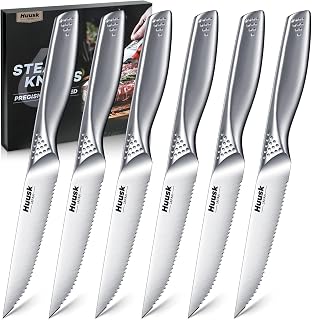
These 4.5-inch serrated knives use one-piece high carbon steel providing consistent sharpness and easier cutting on all steak types. The set size is moderate, which might not suffice for larger dinner parties.
Brand: Huusk
Pros
- One-piece forged blade for strength
- Serrated edge reduces need for sharpening
- Attractive gift box included
Cons
- Only 6 knives, fewer for bigger gatherings
- Serrations can tear delicate meat textures
Best compact gift-ready set: Steak Knives Set of 4

A simple 4-piece set with 4.5-inch high carbon stainless steel blades designed for smaller dinners or gifting. Limited quantity restricts use at larger parties, but the blades stay sharp and resist rust effectively.
Brand: Steak
Pros
- Ultra-sharp high carbon stainless steel
- Compact and giftable packaging
- Rust-resistant materials
Cons
- Only 4 knives, inadequate for big parties
- Handle ergonomics less refined
Best for large gatherings and durability: HENKELIVING Steak Knives Set of 10

This 10-piece black serrated set uses German high carbon stainless steel and is dishwasher safe. The larger number of knives suits big dinner parties, but the heavier handles may cause hand fatigue over long meals.
Brand: HENKELIVING
Pros
- Full 10-piece set for big groups
- Dishwasher safe for easy cleanup
- Sharp serrated edges maintain cutting power
Cons
- Heavier handle design
- Serrated edge dulls faster in dishwasher
Best full-tang daily use: Alata 8-Piece Steak Knives Set

With 4.7-inch full-tang serrated blades, this set is built for durability and frequent use. The handle provides a secure grip suited to heavy cutting but serrated edges can be too aggressive for delicate steaks.
Brand: Alata · Rating: 4.7 out of 5
Pros
- Full-tang blade construction
- Razor-sharp serrated edges
- Ergonomic handles for comfort
Cons
- Serrations can tear tender meat
- Heavier knives may tire some users
Best budget-friendly elegance: Amorston Steak Knives Set of 8

This 8-piece stainless steel serrated set balances affordability with style. Its dishwasher-safe design suits regular use, though blades require occasional honing to keep edges sharp.
Brand: Amorston · Rating: 4.7 out of 5
Pros
- Elegant appearance with stainless steel
- Dishwasher safe for convenience
- Complete 8-piece set
Cons
- Edges need periodic honing
- Serrated blades less suited for precise slicing
Best VG10 steel straight edge: AMSZL 6-Piece Damascus Steak Knife Set

Featuring VG10 Damascus steel blades with straight edges and pakkawood handles, this set offers clean slicing and attractive aesthetics. Non-serrated edges require regular maintenance and the set size suits smaller parties.
Brand: AMSZL
Pros
- VG10 high carbon Damascus steel
- Full tang for balance and strength
- Pakkawood handles enhance grip
Cons
- Non-serrated edges demand upkeep
- Only 6 knives in set
Best ergonomic dishwasher safe: Bellemain Steak Knife Set of 8

This 8-piece serrated stainless steel set focuses on ergonomic handle design for comfort during multiple courses. While dishwasher safe, serrated edges dull faster with repeated machine washing.
Brand: Bellemain
Pros
- Ergonomic handle for grip comfort
- Rust-resistant stainless steel
- Dishwasher safe for easy cleaning
Cons
- Serrated edge dulls quicker in dishwasher
- Edges need occasional sharpening
Best extended set for steak lovers: Piklohas Steak Knives Set of 8

An 8-piece set of 4.6-inch non-serrated forged German steel Damascus knives designed for those who prefer clean slicing. This set demands regular honing and is less forgiving on tougher cuts without the sawing action serrations provide.
Brand: Piklohas · Rating: 4.5 out of 5
Pros
- Forged German steel with Damascus pattern
- Full tang for stability
- Adequate set size for medium parties
Cons
- Non-serrated edges need maintenance
- Not ideal for very fibrous steaks
Choosing between steak knife sets
If your dinner parties regularly exceed six guests, investing in a set with at least eight knives ensures everyone has one without resorting to mismatched cutlery. Consider whether you prefer low-maintenance serrated edges that saw through meat with less effort, or straight edges that offer cleaner slices but require more sharpening. Full-tang knives typically provide better balance and durability, which matters if you often cut thick or sinewy steaks.
Dishwasher-safe knives simplify cleaning but can dull faster; hand washing preserves edge sharpness longer. For occasional hosts with smaller gatherings, a compact set of four to six knives may suffice, especially if you favour non-serrated blades for aesthetics and precise cuts. Conversely, if your guests vary in steak preferences and textures, mixing serrated and straight-edge knives can be the most flexible solution.
Some buyers may find dedicated steak knives unnecessary if their chef’s knives and table knives are sharp and robust enough. Those who rarely host or serve steaks might instead prioritise multipurpose knives with easier upkeep.
Delving deeper into the decision process, it’s important to weigh the trade-offs between edge type and maintenance. Serrated knives, while requiring less frequent sharpening, can lose cutting efficiency if the serrations become clogged with meat fibers or debris, necessitating thorough cleaning. Straight-edge knives demand consistent honing and sharpening but reward with superior slicing performance and less damage to the steak’s texture.
Moreover, handle materials and construction influence long-term satisfaction. For example, knives with synthetic handles like polypropylene offer excellent resistance to moisture and heat but may lack the warmth and grip texture of natural materials like pakkawood. Full-tang knives, while heavier, provide enhanced durability and balance, beneficial for hosts who frequently entertain or prefer a more substantial feel in hand.
In terms of set size, consider storage and replacement factors. Larger sets accommodate bigger groups but may include knives that remain unused, potentially leading to uneven wear. Smaller sets encourage focused use and easier maintenance but might require supplementing with other cutlery during larger events. Some brands offer modular sets or the option to purchase additional knives separately, providing flexibility for growing needs.
Finally, the aesthetics of the steak knife set can complement your dining table’s ambiance. Damascus steel blades with intricate patterns add elegance and conversation value, while minimalist stainless steel designs emphasize practicality and modern style. Balancing form and function ensures your steak knives enhance both the culinary and social experience of your dinner parties.
Frequently Asked Questions
Are serrated or straight edges better for steak knives?
Serrated edges use small teeth to saw through steak fibres, which means they stay sharp longer without frequent honing and cut well through tough or sinewy steaks. However, they can tear delicate cuts, producing a rougher surface. Straight edges slice cleaner and better preserve the meat’s texture but need more frequent sharpening. Choosing depends on the steak types you usually serve and how much maintenance you’re willing to do.
How do I maintain the sharpness of steak knives?
Maintaining sharpness involves regular honing with a steel rod to realign the blade edge after use, ideally before each dinner party. Serrated knives require less frequent honing but should be sharpened professionally or with a special sharpener when dull. Avoid the dishwasher when possible to prevent edge dulling and corrosion; hand wash with warm water and dry immediately.
What makes a steak knife comfortable to use during dinner parties?
Comfort depends on handle design and balance. Full-tang knives where steel extends through the handle offer better weight distribution, reducing wrist strain. Handles made from materials like pakkawood or textured stainless steel improve grip security. Ergonomic shaping that fits the hand’s contours helps prevent fatigue and slipping, especially important during multi-course meals or when cutting dense steaks.

Rimi Sultana is a home cook from Bangladesh who has cooked for her family every day for the past five years and writes about it at Smart Cooks. Perpetually testing whether internet-famous recipes actually work in a regular home kitchen. Say hello on Facebook or through the contact page.