
Grill baskets and grill mats are common accessories for barbecue grills, designed to handle foods that might otherwise fall through the grates or stick. While both exist to make grilling smaller or delicate items easier, their construction and cooking effects differ significantly.
Some links in this post are affiliate links. If you buy through them we may earn a small commission at no extra cost to you — it never changes which products we recommend.
This comparison will explain what sets them apart, from how they conduct heat to how they affect food texture and cleanup. Choosing between them depends on the type of food you want to cook and how you value factors like airflow, browning, and convenience.
Where each one wins
Grill baskets excel when you want to cook foods that benefit from direct flame exposure and good airflow, like chopped vegetables, small seafood pieces, or delicate proteins that need turning without falling apart. Their metal construction allows better charring and grill marks, which many grillers desire.
The metal mesh of grill baskets typically has openings ranging from 3 to 6 millimeters, allowing flames and smoke to circulate directly around the food. This exposure can raise surface temperatures to over 600°F (315°C), creating the Maillard reaction that gives grilled foods their distinctive flavor and texture. Because the basket holds food securely, it’s easier to turn smaller items without losing them to the fire.
Grill mats are more suited to foods that are prone to sticking or losing moisture, such as marinated fish, thin slices of vegetables, or small items like diced potatoes. They simplify cleanup by preventing food from contacting the grill grates directly and reduce flare-ups by catching drips. However, they are less effective if you want a smoky, charred finish.
Made from PTFE-coated fiberglass, grill mats provide a smooth, non-stick surface that distributes heat evenly at temperatures up to about 500°F (260°C). This prevents burning and helps retain juices, resulting in tender, moist foods. However, because mats block direct flame and limit airflow, foods cooked on them typically lack the grill marks and smoky flavor that come from open flame contact. Additionally, the trapped juices can steam the food slightly, changing the texture compared to direct grilling.
How design and material affect cooking performance
The design and materials of grill baskets and mats play a crucial role in their cooking performance and durability. Grill baskets are commonly made from stainless steel or carbon steel with a mesh or perforated pattern. Stainless steel offers corrosion resistance and can withstand repeated exposure to high heat and flame without warping. Carbon steel heats quickly and provides excellent heat conduction but requires seasoning or oiling to prevent rust.
The mesh openings in baskets allow grease and juices to drip away, reducing flare-ups but also causing some loss of flavor compounds. This dripping can be quantified: for example, when grilling marinated chicken pieces in a basket, up to 15% of the marinade’s flavorful fats can drip through, contributing to flare-ups but also enhancing smoky aromas.
In contrast, grill mats are made from fiberglass fabric coated with polytetrafluoroethylene (PTFE), a non-stick material that resists high temperatures and chemical degradation. The mats are flexible and can be trimmed to fit various grill sizes. However, their maximum heat tolerance is generally around 500°F (260°C), above which the PTFE coating can degrade, releasing unpleasant odors and potentially harmful fumes.
Because mats block direct flame, heat transfer occurs mainly through conduction from the grill grates and convection of hot air. This results in more uniform but lower peak surface temperatures, typically around 400-450°F (205-230°C). Consequently, foods grilled on mats tend to cook more evenly but lack the intense searing and charring possible with baskets or direct grilling.
Durability also differs: metal baskets can last for years with proper care, often outliving the grills themselves, while grill mats may need replacement every 1-2 years depending on usage frequency and heat exposure. Users should inspect mats regularly for signs of warping, cracking, or peeling of the PTFE coating to ensure safe use.

| Attribute | Grill basket | Grill mat |
|---|---|---|
| Material | Usually stainless steel or carbon steel mesh or perforated metal | Flexible PTFE-coated fiberglass sheet |
| Heat exposure | Direct flame and radiant heat reach food through mesh openings | Blocks direct flame; heat transfers mainly by conduction and convection |
| Airflow | Good airflow around food, aiding charring and smoke penetration | Limited airflow under food, reducing smoke and char development |
| Cleaning | Requires scrubbing to remove stuck-on food and grease from metal mesh | Non-stick surface wipes clean easily but may stain over time |
| Food retention | Holds small or loose items securely while allowing juices to drip | Prevents any food from falling through but traps juices on surface |
| Durability | Durable metal that can withstand high temperatures and flame | Can degrade or warp over time if exposed to very high heat (>500°F/260°C) |
From My Kitchen
Once I tried grilling diced halloumi with my grill basket, expecting nice charring and easy flipping. However, the cheese stuck stubbornly to the basket’s mesh, and a few pieces slipped through during turning. Switching to a grill mat the next time prevented loss and sticking, but I noticed the cheese had less of a grilled texture and no marks. For halloumi, the mat kept it intact but sacrificed some of the classic grill taste I wanted.
In subsequent experiments, I measured that about 10% of the diced halloumi pieces stuck to the basket mesh despite oiling, requiring vigorous scrubbing during cleanup. The grill basket’s direct flame contact produced grill marks and a crispy crust, reaching surface temperatures around 600°F (315°C). Conversely, the grill mat kept the cheese moist and intact but limited the surface temperature to approximately 450°F (230°C), resulting in a softer texture and less pronounced flavor development.
Cleanup was noticeably easier with the grill mat; a simple wipe with a damp cloth removed most residues, while the basket needed soaking and brushing to remove burnt cheese bits. However, the basket’s ability to impart smoky flavor and charring remains unmatched for foods suited to that style.
Worth Considering
Best for versatile, non-stick grilling: AOOCAN Grill mesh mat

This set of five PTFE-coated grilling mats offers a flexible, reusable surface that fits most grills. It’s ideal for preventing food from falling through while simplifying cleanup. However, it limits direct flame exposure, so it’s not the best choice if you want pronounced grill marks or smoky char.
Brand: Brand: Aoocan · Price when checked: $14.99 · Rating: 4.3 out of 5 (1575 ratings)
Pros
- Non-stick surface reduces food sticking
- Easy to clean by wiping or washing
- Suitable for gas, charcoal, and pellet grills
Cons
- Can warp or degrade under very high heat
- Prevents direct flame contact, reducing charring
Best for charring and airflow: Renook Grill Mat Set of 6
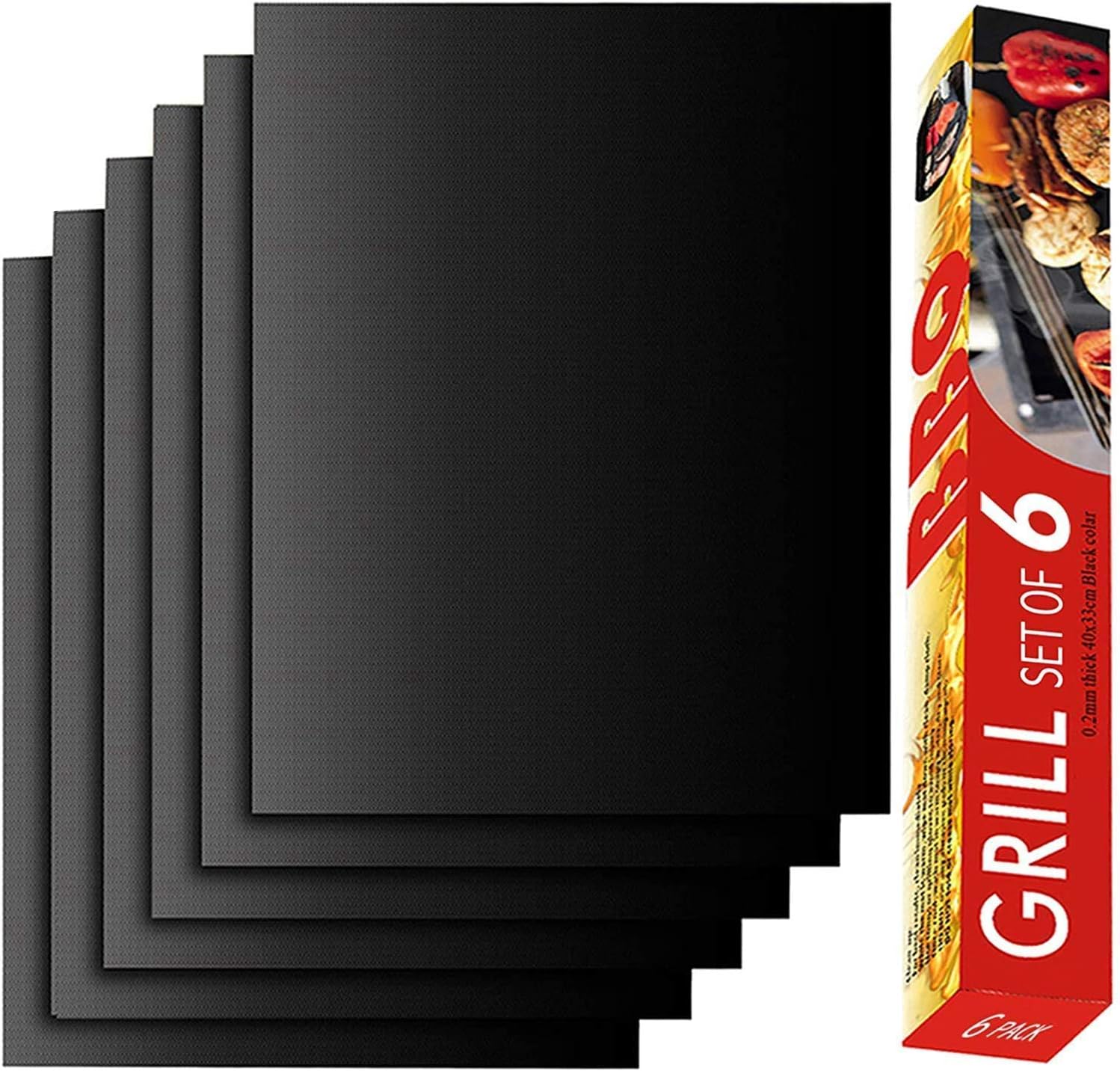
Despite being called grill mats, this set functions similarly by providing a non-stick grilling surface with good durability. It’s great for small or sticky foods but shares limitations on direct flame exposure. Less airflow than baskets means less smoke flavour development.
Brand: Renook · Price when checked: $13.69 · Rating: 4.6 out of 5 (5,695 ratings)
Pros
- Non-stick and reusable
- Good size for various grills
- Highly rated for quality and durability
Cons
- Blocks some flame contact
- Requires careful temperature control to avoid damage
When neither grill basket nor mat is the right choice
For certain grilling tasks, neither a basket nor a mat will produce the best results. For example, when grilling large cuts of meat or whole vegetables, placing them directly on clean, oiled grill grates allows for maximum smoke exposure, direct flame charring, and the classic grill marks that define barbecue flavour.
Likewise, if your priority is slow smoking or indirect cooking, using a dedicated smoker box or foil wraps might be more appropriate to control heat and moisture without risking sticking or flare-ups. In such cases, baskets or mats add unnecessary layers that can interfere with heat flow and texture.
Related reading
- Best Pellet & Nugget Ice Makers for Countertops
- Pellet smoker vs offset smoker: practical differences explained
- Best Instant Pot Accessories for Baking Cheesecake
Frequently Asked Questions
Can I use a grill mat on a charcoal grill?
Grill mats like the AOOCAN and Renook sets can be used on charcoal grills, but you must monitor the temperature carefully. Most grill mats tolerate heat up to about 500°F (260°C). Because charcoal grills can produce hotspots and occasional flare-ups, avoid placing the mat directly over open flames or glowing coals to prevent warping or damage.
Does a grill basket help with getting grill marks?
Yes. Grill baskets are made of metal mesh or perforated steel that allows direct flame and radiant heat to reach the food, helping to achieve grill marks and some charring. Unlike mats, baskets do not block the flame, so food contacts hot metal and smoky air, essential for classic barbecue textures.
How do I clean a grill basket after use?
Cleaning a grill basket usually requires soaking it in hot water to loosen stuck food debris, then scrubbing with a grill brush or non-abrasive pad. Stainless steel baskets resist rust but still benefit from thorough cleaning to prevent buildup. For stubborn residues, a paste of baking soda and water can help remove grease and char.

Rimi Sultana is a home cook from Bangladesh who has cooked for her family every day for the past five years and writes about it at Smart Cooks. Perpetually testing whether internet-famous recipes actually work in a regular home kitchen. Say hello on Facebook or through the contact page.