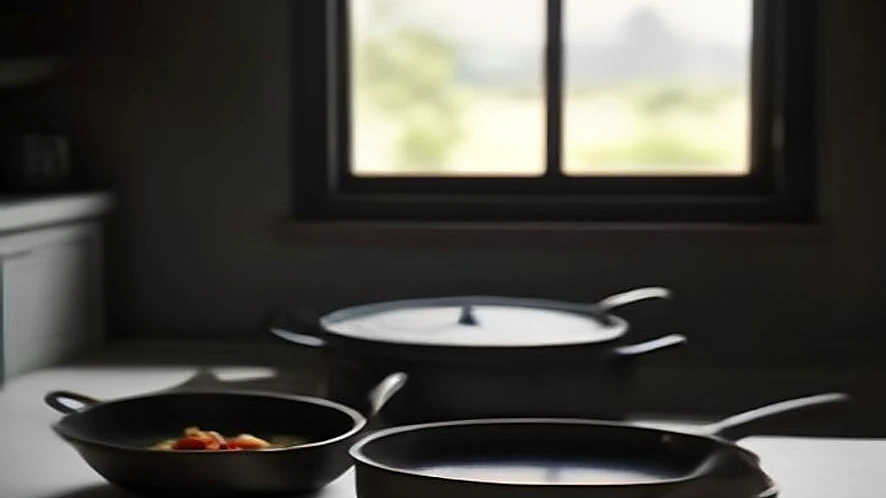
Kadai and wok are two types of cooking vessels often compared due to their prominent roles in Indian and East Asian cuisines respectively. While both are designed for high-heat cooking like stir-fry and deep frying, their shapes, materials, and heat conduction affect how food cooks in each.
Some links in this post are affiliate links. If you buy through them we may earn a small commission at no extra cost to you — it never changes which products we recommend.
Understanding what actually differs beyond cultural association is key to selecting the right pan. Differences in wall curvature, base shape, and construction material influence heat retention, cooking technique suitability, and even what foods each excels at handling.
Where each one wins
The kadai excels when you need steady, retained heat for dishes that require simmering or deep frying, such as Indian curries, bhajis, or slow-cooked dals. Its thick walls and heavy base prevent temperature drops when adding cold ingredients, which is essential for consistent cooking.
A wok is the better choice when rapid heat changes and quick cooking are desired, such as for stir-fries, searing meats, or vegetable sautéing. Its shape allows you to push cooked food up the cooler sides while concentrating heat at the base to finish cooking, which is harder to replicate in a kadai.
For stovetop types, a flat bottom wok is versatile for induction and electric stoves, whereas traditional round-bottom woks need a supporting ring to sit securely. The kadai’s flat base makes it inherently stable on all burner types but it is less suited to tossing food due to its weight and shape.
In summary, if your cooking leans towards fast, high heat techniques and you want to move and toss food easily, the wok is preferable. If you prepare more slow-cooked, deep-fried, or simmered dishes, the kadai’s heat retention and shape make it superior.
Delving deeper into the mechanics, the thermal mass of the kadai is a critical factor in its heat retention. Cast iron kadais typically weigh between 3 to 5 kilograms, and their thick walls, often 4-6 mm thick, absorb and hold heat for extended periods. This allows the oil temperature to remain stable even when cold or wet ingredients are introduced, minimizing the risk of oil temperature drop that causes soggy or greasy food. For example, while deep frying samosas, maintaining oil temperature around 180°C is crucial; the kadai’s thermal inertia helps maintain this temperature within a narrow range of ±5°C during cooking.
In contrast, woks, especially those made from carbon steel with thinner walls of about 1-2 mm thickness, heat up and cool down rapidly. This responsiveness is advantageous for stir-frying where quick temperature adjustments are needed to prevent overcooking. The wok’s shape, with steeply sloped sides and a rounded bottom, creates a temperature gradient from the hot base (reaching temperatures of 250°C or more) to cooler upper sides. This gradient enables chefs to push food up the sides to slow cooking or keep it warm while continuing to stir-fry fresh ingredients at the base. This technique is integral to many Chinese stir-fry recipes where precise control over cooking speed and texture is required.
The wok’s design also facilitates tossing food to ensure even cooking and coating with sauces or oils. Its lighter weight, often between 1 to 2 kilograms for a 12-inch wok, allows for this maneuverability. However, the downside is that the thinner metal and lower thermal mass make it less ideal for prolonged simmering or deep frying, where steady heat is necessary.
Furthermore, the materials used impact maintenance and longevity. Cast iron kadais develop a natural seasoning over time, improving their non-stick properties and heat distribution. However, they require regular seasoning and careful drying to prevent rust. Carbon steel woks also require seasoning but are generally lighter and easier to handle. Stainless steel woks are lower maintenance but have poorer heat conduction and retention compared to carbon steel or cast iron.
Practical cooking experiences and implications
Once I tried deep frying samosas in a lightweight stainless steel wok with a flat bottom. The food at the bottom browned quickly, but the oil temperature dropped sharply whenever cold samosas were added, causing soggy spots and uneven crisping. Switching to a cast iron kadai helped—its thicker walls maintained the oil temperature more steadily, giving more consistent frying results. I had to preheat the kadai longer, but that made the difference in texture noticeable. The downside was the heavier weight made stirring and moving the oil a little more cumbersome.
This experience highlights the importance of heat retention in deep frying. When oil temperature drops below the ideal frying range (usually 160–190°C), food absorbs more oil, resulting in greasier texture and uneven cooking. The kadai’s ability to maintain a constant temperature reduces this risk, ensuring crisper and more evenly cooked results.
In contrast, when preparing quick stir-fries such as a vegetable medley or thinly sliced meats, the wok’s rapid heat response is invaluable. The ability to quickly increase or decrease heat, combined with the temperature gradient along the sides, allows for precise cooking control. For example, a typical stir-fry may require searing meat at 230°C for 30 seconds before moving it up the cooler sides to rest while vegetables cook at a slightly lower temperature. This technique preserves texture and flavor without overcooking.
The wok’s shape also promotes efficient moisture evaporation, critical for achieving the characteristic ‘wok hei’ or ‘breath of the wok’ flavor in Chinese cuisine. The high heat and quick tossing facilitate Maillard reactions and slight charring that are difficult to replicate in a kadai.
From a handling perspective, the heavier cast iron kadai demands more effort to lift and stir, which may be a consideration for cooks with limited strength or those preparing large quantities requiring frequent movement. Conversely, the wok’s lighter weight and dual handles or a single long handle provide ergonomic advantages during rapid cooking.
In terms of stovetop compatibility, the flat bottom kadai and flat bottom wok are well suited for modern induction and electric stoves, ensuring even contact and heat transfer. Traditional round bottom woks, while excellent on gas burners, require additional support, which can reduce heating efficiency and stability.
Ultimately, the choice between kadai and wok should consider not only the type of cuisine but also cooking techniques, heat management, and user ergonomics. Quantitatively, if your cooking involves maintaining oil temperatures above 175°C for over 20 minutes, a kadai’s thermal mass is beneficial. For quick stir-frying that involves rapid temperature cycling between 150°C and 250°C within minutes, a wok’s responsiveness is preferable.
| Attribute | Kadai | Wok |
|---|---|---|
| Shape | Deep bowl with flat or slightly curved base and tall sides | Round bottom with steeply sloped sides |
| Material | Typically cast iron or heavy gauge steel | Often carbon steel or stainless steel, thinner walls |
| Heat retention | High due to thick walls and dense material | Lower; heats and cools quickly, temperature gradient present |
| Cooking techniques suited | Slow cooking, deep frying, stewing | Stir-frying, searing, tossing |
| Stovetop compatibility | Works well on flat burner surfaces including induction | Traditional round bottom needs wok ring; flat bottom wok better for induction and electric stoves |
| Weight and handling | Heavier, less manoeuvrable | Lighter, easier to toss and move |
From my kitchen
Once I tried deep frying samosas in a lightweight stainless steel wok with a flat bottom. The food at the bottom browned quickly, but the oil temperature dropped sharply whenever cold samosas were added, causing soggy spots and uneven crisping. Switching to a cast iron kadai helped—its thicker walls maintained the oil temperature more steadily, giving more consistent frying results. I had to preheat the kadai longer, but that made the difference in texture noticeable. The downside was the heavier weight made stirring and moving the oil a little more cumbersome.
Worth Considering
Best for lightweight, versatile stir-frying: Willow & Everett Stainless Steel Flat Bottom Wok Pan

This wok offers a professional-grade stainless steel build with a flat bottom that works well on induction, gas, and electric stoves. It’s lighter than cast iron and features dual handles for easier handling. Ideal for cooks who want quick heat response and easy tossing without the extra weight. Not the best choice for slow, steady heat cooking or deep frying where heat retention is critical.
Brand: Willow & Everett · Price when checked: $79.99 · Rating: 4.3 out of 5 (291 ratings)
Pros
- 3-layer construction provides decent heat conduction
- Lightweight and easy to handle
- Compatible with all stovetop types including induction
Cons
- Requires hand washing for best maintenance despite dishwasher safety
- Less heat retention compared to cast iron
Best for heat retention and traditional cooking: Chaoduole Cast Iron Wok with Lid

This cast iron wok has a flat base suitable for all stove types and excels at retaining heat for consistent cooking, especially deep frying and slow searing. It’s preseasoned for easier use but is heavier to handle and requires seasoning upkeep. Not ideal for quick heat changes or frequent tossing due to weight and slower temperature response.
Brand: Brand: Chaoduole · Price when checked: $45.99 · Rating: 4.2 out of 5 (54 ratings)
Pros
- Excellent heat retention and even heating
- Works on all cooking surfaces including induction and open flame
- Versatile for frying, searing, and slow cooking
Cons
- Heavy and less manoeuvrable
- Requires seasoning and care to prevent rust
When neither a kadai nor wok is the right answer
If your cooking frequently involves delicate sauces, precise temperature control, or recipes requiring non-stick surfaces, neither a traditional kadai nor wok may serve you best. For example, making crepes, omelettes, or slow-simmered delicate dishes calls for a flat frying pan or non-stick skillet that allows even contact and gentle heat.
Similarly, if you want to sauté small quantities without much oil or need a pan that cleans easily without seasoning, a non-stick frypan or stainless steel skillet with a flat bottom will outperform both. Woks and kadais excel at high-heat, larger batch cooking where shape and heat retention matter more than surface contact uniformity.
Related reading
- Mastering Carbon Steel: An Expert’s In-Depth Guide to Proper Seasoning and Long-Term Pan Care
- Best Casserole Dishes With Lids: Top Picks
- Best Cast Iron Skillet Under $50: Top Affordable Picks
Frequently Asked Questions
Can I use a wok for Indian cooking that usually requires a kadai?
You can use a wok for Indian cooking, but be aware that its thinner walls and rounded shape mean it heats and cools faster, which may affect slow cooking or deep frying consistency. A kadai’s thicker walls and flat base hold heat better, making it more suitable for dishes requiring steady temperature and oil retention.
Is a flat bottom wok better than a round bottom wok?
A flat bottom wok sits securely on most stovetops, including induction and electric ranges, without needing a wok ring. It provides more even contact with the heat source but loses the traditional tossing dynamics of a round bottom wok. Round bottom woks concentrate heat at the base but require a supporting ring and are better suited for gas burners.
How do I maintain a cast iron kadai compared to a stainless steel wok?
Cast iron kadais require seasoning to maintain their non-stick properties and prevent rust. They should be dried thoroughly after washing and lightly oiled before storage. Stainless steel woks are easier to clean and maintain as they resist rust and do not require seasoning, but may need polishing to avoid discoloration from high heat.

Rimi Sultana is a home cook from Bangladesh who has cooked for her family every day for the past five years and writes about it at Smart Cooks. Perpetually testing whether internet-famous recipes actually work in a regular home kitchen. Say hello on Facebook or through the contact page.