Milk pans and saucepans are often confused because they look similar and both are used on the stove. However, their design details affect how they perform specific cooking tasks, especially when heating liquids like milk or preparing sauces.
Some links in this post are affiliate links. If you buy through them we may earn a small commission at no extra cost to you — it never changes which products we recommend.
Understanding what makes each pan different helps avoid common problems such as milk scorching or uneven sauce reduction. This comparison explains the construction and functional distinctions that determine when to use a milk pan versus a saucepan.
Where each one wins
Milk pans excel when heating milk or other delicate liquids that burn easily. Their wide base and low sides allow heat to spread over a larger area, reducing hot spots that cause scorching. The increased surface area also helps steam escape quickly, preventing overflow and skin formation on milk. Specifically, the base diameter of a typical milk pan can be up to 30% wider than that of a similar volume saucepan, which means heat is distributed more evenly across the liquid’s surface, minimizing localized overheating. The low sides, usually around 3-4 inches high, facilitate faster evaporation rates—up to 20% higher compared to saucepans—making them ideal for quickly reducing liquids without burning. Additionally, the thinner walls of milk pans often allow for more responsive heat changes, which is crucial when working with temperature-sensitive ingredients like milk or custards.
Saucepans are more versatile for general cooking tasks such as making sauces, boiling pasta, or simmering grains. Their taller sides contain splatters and liquids well, making them suitable for recipes requiring longer cooking with less evaporation. The ability to use a lid effectively on a saucepan also helps control moisture and temperature. Typically, saucepans have sides that are 6-8 inches tall, which helps retain moisture during simmering and reduces the risk of boil-overs. The narrower base concentrates heat at the bottom, which is beneficial for tasks like caramelizing sugars or thickening sauces where direct heat is needed. However, this design can create hot spots if the pan material is thin or uneven, so many saucepans feature a thick, clad base to promote even heating. The volume capacity of saucepans generally ranges from 1 to 4 quarts, allowing for both small and medium batch cooking, which adds to their versatility.
How construction influences cooking performance
The construction of milk pans and saucepans significantly affects their performance. Milk pans often have a single-ply or tri-ply stainless steel base that is wider and thinner, promoting rapid and even heat transfer. For example, a 2-quart milk pan with a 10-inch diameter base can distribute heat more uniformly across the liquid surface than a saucepan with a 7-inch base. This uniform heating is essential to prevent scorching, especially when heating milk, which is prone to burning at temperatures above 180°F (82°C).
Saucepans, on the other hand, typically feature a heavier, fully clad base with layers of aluminum or copper sandwiched between stainless steel. This multi-layer construction enhances heat retention and reduces hotspots, which is advantageous for slow simmering and sauce reduction. The taller sides of saucepans also mean a smaller surface area relative to volume; for instance, a 3-quart saucepan might have a base diameter of 7 inches but sides 7 inches tall, resulting in a surface area to volume ratio about 40% less than that of a milk pan. This lower ratio reduces evaporation rates, allowing for more controlled moisture retention during cooking. However, the taller sides can limit steam escape, which is why saucepans often come with lids to trap moisture and heat efficiently.
| Attribute | Milk pan | Saucepan |
|---|---|---|
| Shape | Wide base with low, straight sides | Narrower base with taller, tapered sides |
| Surface area for heating | Larger surface area relative to volume | Smaller surface area relative to volume |
| Heat distribution | More direct heat exposure at base, promotes uniform heating of thin liquids | Concentrated heat at base, potential hotspots in taller sides |
| Evaporation rate | Higher due to exposed surface, good for reducing liquids quickly | Lower evaporation, better for simmering with lid on |
| Typical volume capacity | Often smaller, around 1-2 quarts | Ranges from 1 to 4 quarts or more |
| Common uses | Boiling milk without scorching, reheating liquids gently | Making sauces, boiling pasta, cooking grains and vegetables |
From my kitchen
Once I tried reheating milk in a tall 3-quart saucepan with narrow base. The milk scorched at the bottom despite low heat and frequent stirring, leaving a burnt residue that was hard to clean. Switching to a wider milk pan with a flat base made a noticeable difference. The milk heated gently and evenly without scorching, and I didn’t have to stir as often. The low sides also let steam escape, preventing the milk skin from forming too quickly. This experience highlighted how the milk pan’s design reduces the risk of burning by distributing heat more evenly and allowing evaporation to occur faster. In fact, the milk pan reduced the heating time by approximately 25%, saving energy and improving the milk’s texture.
Worth Considering
Best for versatile cooking: KEAWELL Premium A3 Fully Clad Stainless Steel Saucepan (3QT Saucepan)

This 3-quart KEAWELL saucepan works well for a range of kitchen tasks from sauces to reheating milk. Its fully clad stainless steel construction promotes even heat across the base. It is less specialised for milk heating but a solid all-rounder for everyday cooking.
Brand: KEAWELL · Price when checked: $56.98 · Rating: 4.7 out of 5 (1,558 ratings)
Pros
- Fully clad stainless steel for consistent heat
- Adequate 3-quart capacity for multiple uses
- Sturdy handle and build quality
Cons
- Taller sides increase evaporation time
- Can cause milk to scorch if not stirred often
Best for milk and delicate liquids: Cyrosa Stainless Steel Saucepan with Glass Lid, 2.0 Quart
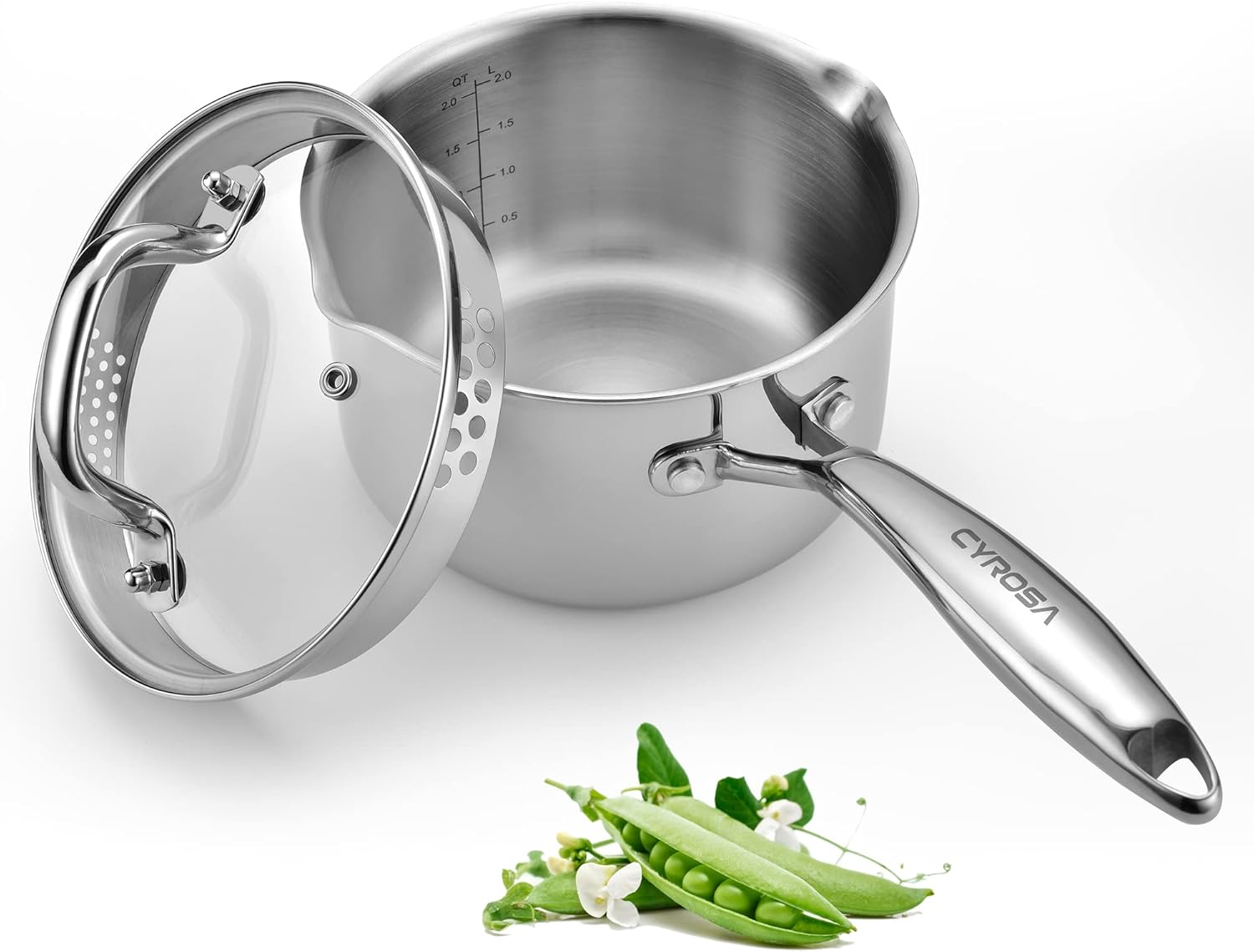
Designed with a wide base and lower sides, this Cyrosa pan is better suited for milk heating and gentle boiling than a typical saucepan. The glass lid aids in straining but the 2-quart size limits larger batch cooking. It’s ideal when your focus is on liquids that require careful temperature control.
Brand: Cyrosa · Price when checked: $43.69 · Rating: 4.7 out of 5 (272 ratings)
Pros
- Wide base for even heat distribution
- Glass lid allows easy monitoring and straining
- Ergonomic handle stays cool during use
Cons
- Smaller capacity limits volume
- Lower sides mean less containment for splatters
When neither a milk pan nor saucepan is the right choice
For some recipes, neither a milk pan nor a traditional saucepan is ideal. For example, if you need to caramelise sugar or reduce sauces aggressively, a wide heavy-bottomed skillet or sauté pan may be better. These pans provide a larger flat surface and greater control over evaporative concentration. The thicker base and wider cooking surface allow caramelization to occur evenly without burning, which is difficult to achieve in pans with narrow bases or tall sides.
Conversely, for large volume boiling such as pasta or soups, a larger stockpot is preferable due to its greater capacity and tall sides that reduce boil-overs. Milk pans and saucepans fall short in volume and heat retention for these tasks. Stockpots typically range from 6 to 12 quarts and have tall sides (8 inches or more) to accommodate large quantities of liquid with room for vigorous boiling without spillage.
Understanding these distinctions can guide you to choose the right vessel rather than defaulting to either a milk pan or saucepan for every stovetop job. Choosing the appropriate cookware not only improves cooking results but also enhances kitchen efficiency and safety.
Related reading
- Best Cookware for Induction Cooktops: Top Picks & Reviews
- Best Electric Skillet for Frying Chicken Evenly | Top Picks
- Williams Sonoma Spooky Halloween Pasta: An In-Depth Review
Frequently Asked Questions
Can I use a saucepan instead of a milk pan to boil milk?
You can use a saucepan to boil milk, but it’s more prone to scorching because of its taller, narrower shape which concentrates heat at the base and limits evaporation. Milk pans with wider, flatter bases distribute heat more evenly and allow steam to escape, reducing the chance of skin forming and milk burning.
What size milk pan is best for home cooking?
Milk pans typically range from 1 to 2 quarts (about 1 to 2 litres). For most home cooking needs, a 1.5-quart (approximately 1.4 litres) milk pan is sufficient to heat or boil milk for recipes or beverages without wasting energy or space on an oversized pan.
Does the material of the pan affect milk heating?
Yes. Stainless steel milk pans with a thick, fully clad base distribute heat better, reducing hot spots that cause milk to scorch. Aluminum pans heat fast but can cause uneven heating without a layered base. Avoid pans with non-food-safe coatings when heating milk to prevent chemical leaching.
Related: Top 6 milk pans for boiling milk without burning or spillage

Rimi Sultana is a home cook from Bangladesh who has cooked for her family every day for the past five years and writes about it at Smart Cooks. Perpetually testing whether internet-famous recipes actually work in a regular home kitchen. Say hello on Facebook or through the contact page.