
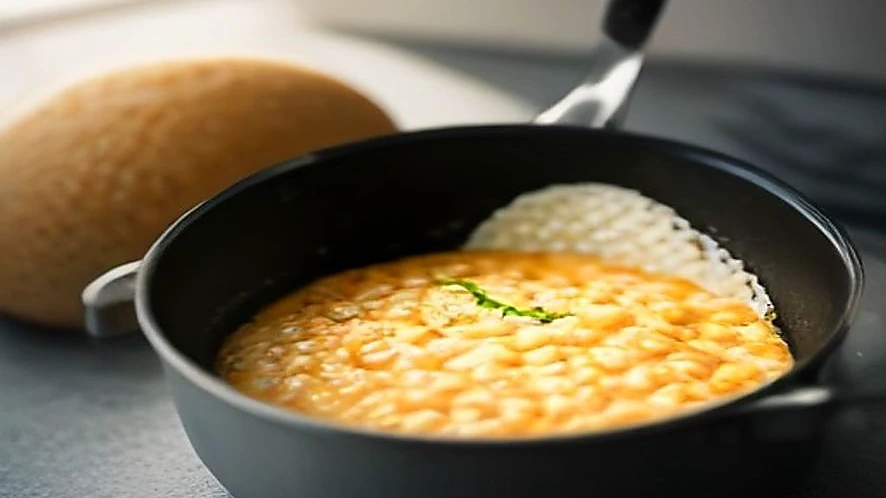
The quality of a risotto depends as much on the pan as on the rice and stock. A good saucier for risotto is defined not by marketing terms but by how its shape and material affect stirring, heat control, and evaporation. The rounded walls and wide base of a saucier allow the constant movement of rice without corners where grains can catch and burn, which is essential for the creamy texture risotto requires.
Some links in this post are affiliate links. If you buy through them we may earn a small commission at no extra cost to you — it never changes which products we recommend.
Not all sauciers are created equal for risotto. Differences in pan depth, material composition, and handle design directly impact how evenly heat spreads and how easy it is to stir continuously for 18 to 20 minutes at precise temperatures between 180°F and 200°F (82°C to 93°C). Pans that don’t manage heat well or have awkward shapes make achieving a good risotto more difficult.
What actually matters
Choosing a saucier for risotto involves understanding the technical aspects that influence cooking performance rather than relying on brand reputation or aesthetic appeal. The pan’s construction, size, and shape all contribute to how heat distributes and how the rice cooks. For instance, the thermal conductivity of aluminium is about 205 W/m·K, much higher than stainless steel’s 16 W/m·K, meaning aluminium layers in multi-ply pans ensure rapid and even heat transfer. This responsiveness is crucial when maintaining the delicate temperature range needed for risotto.
The stirring process, lasting around 18 to 20 minutes, requires constant attention to prevent the rice from sticking or cooking unevenly. The pan’s shape facilitates this by allowing the spoon to scrape the bottom and sides smoothly, preventing grain accumulation and burning. Evaporation rates depend on the surface area exposed; a wider base increases evaporation, helping control the risotto’s final consistency.
Material and heat distribution
The pan’s base and walls greatly influence heat distribution. Multi-ply constructions with layers of aluminium or copper sandwiched between stainless steel provide consistent, responsive heat, preventing hot spots that cause uneven cooking or sticking. For example, copper has a thermal conductivity of around 400 W/m·K, which is excellent for rapid heat adjustments. Solid stainless steel pans without an aluminium core heat more slowly and unevenly, which can lead to burning the rice at the base while the top remains undercooked.
In practical terms, a multi-ply saucier can respond to heat changes within seconds, allowing cooks to maintain the ideal simmering temperature between 180°F and 200°F (82°C to 93°C). This precision helps extract the starches from the rice gradually, producing the creamy texture characteristic of risotto.
Shape and wall curvature
A saucier’s defining feature is its rounded walls, which allow the wooden spoon or spatula to glide smoothly when stirring. Sharp corners found in traditional saucepans cause rice to accumulate and burn. The shape also facilitates evaporation, helping adjust liquid levels gradually. However, pans with excessively steep walls reduce the surface area and slow evaporation, which is counterproductive for risotto.
The curvature radius typically ranges from 2 to 4 inches, optimizing the ease of stirring and preventing rice from settling in corners. This design also impacts the pan’s surface area; for example, a saucier with a 10-inch diameter and rounded walls has approximately 15-20% more surface area exposed to air than a straight-walled saucepan of the same diameter, enhancing liquid reduction.
Size and capacity
The ideal size balances volume and control. For risotto, a 2 to 3-quart (1.9 to 2.8 litre) capacity is common; it allows cooking portions for two to four people without overcrowding. A pan that is too large results in uneven heating and requires more stirring effort, while one too small risks spills and insufficient space for proper stirring.
For example, cooking 1.5 cups of arborio rice with 4.5 cups of stock fits well in a 2.5-quart saucier, leaving enough room for stirring without spillage. Using a pan over 4 quarts for this quantity can cause the liquid to evaporate too quickly due to increased surface area, making temperature control more challenging.
Choosing the right saucier for your kitchen
If you rarely make risotto or sauces, investing in a specialised saucier might not be necessary; a good-quality saucepan can suffice. However, frequent risotto makers will benefit from a pan designed for consistent stirring and even heat. Consider the size you need based on usual portions and the type of stove you have—induction compatibility can be crucial. For example, induction cooktops require pans with magnetic bases, often stainless steel with an aluminium core.
Also, think about handle comfort if you stir for long periods. Handles made from heat-resistant materials or designed ergonomically reduce fatigue during the typical 20-minute stirring process. Weight is another factor; heavier pans retain heat better but can tire the wrist, while lighter pans allow easier stirring but require more attentive heat management.
Finally, weigh durability and maintenance against your cooking style—stainless steel requires upkeep but lasts longer, while non-stick pans simplify cleaning but wear out faster. Stainless steel pans may need occasional polishing to prevent water spots, and multi-ply pans often cost more upfront but provide superior cooking performance over time.
| Pick | Best for | Capacity (quarts/litres) | Watch out for |
|---|---|---|---|
| Made In 2-Quart Stainless Saucier | Everyday risotto cooking | Stainless, 5-ply, 2-quart | Expensive for a single-purpose pan |
| Hestan CopperBond 2-Quart Saucier | Precision heat control | Copper, induction, 2-quart | Very expensive |
| Misen 5-Ply Stainless Saucier | Induction cooktops | 5-ply, stainless | Heavier than aluminium pans |
| Cuisinart Chef’s Classic 3-Quart Chef’s Pan | Budget-conscious buyers | Stainless, 3-quart | Thinner base than clad saucier pans |
| Le Creuset Tri-Ply 3.5-Quart Saucier | Larger batches | Tri-ply, 3.5-quart | High price |
| Rachael Ray Hard-Anodized Nonstick Saucier | Non-stick surface preference | Hard-anodized, nonstick | Coating wears over time |
| Duxtop 3-Quart Tri-Ply Saucier | Budget-friendly tri-ply | Tri-ply, induction, 3-quart | Stainless needs preheating and fat to prevent sticking |
| Misen 5-Ply Saucier (smaller size) | Small portions and sauces | 5-ply | Too small for family portions |
| Made In 5-Quart Stainless Saucier | Classic style and durability | Stainless, 5-ply, 5-quart | Expensive |
| Cuisinart Chef’s Classic Nonstick 3-Quart Chef’s Pan | Lightweight and ergonomic | Nonstick, hard-anodized, 3-quart | Few reviews on this listing |
From my kitchen
Once, while making risotto in a heavier saucier without the rounded walls I expected, the rice caught in the corners and stuck badly. I had to loosen it by gently scraping with a wooden spoon, then switched to a saucier with a well-rounded interior. The difference was immediate—stirring became smoother and the rice cooked evenly without sticking. That taught me how critical the pan’s shape is for the texture and ease of cooking risotto.
Additionally, I noticed that pans with thicker bases maintained temperature more steadily during the stirring process. For example, a 5-ply pan took longer to cool down after removing from heat, allowing the risotto to finish cooking gently without sudden temperature drops. Conversely, thinner pans required more frequent heat adjustments, increasing the risk of undercooked or unevenly cooked rice.
Worth Considering
Best for everyday risotto cooking: Made In 2-Quart Stainless Saucier

A 2-quart, 5-ply stainless clad saucier with the curved walls risotto needs, so the spoon reaches every corner while you stir. It is priced as a long-term pan rather than a starter one.
Price when checked: $159.00 · Rating: 4.7 out of 5 (1.1K ratings)
Pros
- 5-ply clad construction spreads heat evenly
- Rounded sides for continuous stirring
- 2-quart size suits two to three portions
Cons
- Expensive for a single-purpose pan
- Stainless needs a little fat and heat control to avoid sticking
Best for precision heat control: Hestan CopperBond 2-Quart Saucier

A copper-bonded saucier with a lid that still works on induction, which is unusual for copper. Copper responds quickly when you raise and lower the heat as each ladle of stock goes in.
Price when checked: $359.95 · Rating: 4.5 out of 5 (18 ratings)
Pros
- Copper layer responds quickly to heat changes
- Induction compatible
- Lid included
Cons
- Very expensive
- Only a small number of reviews so far
Best for induction cooktops: Misen 5-Ply Stainless Saucier

A 5-ply stainless saucier with a lid and an induction-ready base, shaped with curved sides for smooth stirring.
Price when checked: $139.00 · Rating: 4.6 out of 5 (435 ratings)
Pros
- Induction compatible
- Lid included
- Curved sides make stirring easy
Cons
- Heavier than aluminium pans
- Premium price
Best budget pick: Cuisinart Chef’s Classic 3-Quart Chef’s Pan

A 3-quart stainless chef’s pan with sloped sides and a cover from Cuisinart’s Chef’s Classic line. The rounded profile does the job of a saucier at a much lower price.
Price when checked: $33.99 · Rating: 4.4 out of 5 (1K ratings)
Pros
- Low price
- Cover included
- Sloped sides for stirring
Cons
- Thinner base than clad saucier pans
- Stainless needs attention to avoid sticking
Best for larger batches: Le Creuset Tri-Ply 3.5-Quart Saucier

At 3.5 quarts this tri-ply saucier has room for risotto for four or more, with a wide rounded base that keeps the rice moving.
Price when checked: $304.95 · Rating: 4.8 out of 5 (233 ratings)
Pros
- 3.5-quart capacity
- Tri-ply stainless construction
- Highly rated (4.8 stars)
Cons
- High price
- Large for single servings
Best non-stick surface: Rachael Ray Hard-Anodized Nonstick Saucier

A hard-anodized nonstick saucier with a helper handle. The coating makes release and cleanup easy, though it will not brown like stainless.
Price when checked: $51.99 · Rating: 4.5 out of 5 (679 ratings)
Pros
- Nonstick interior
- Helper handle
- Easy cleanup
Cons
- Coating wears over time
- No fond for pan sauces
Best for budget-friendly tri-ply: Duxtop 3-Quart Tri-Ply Saucier
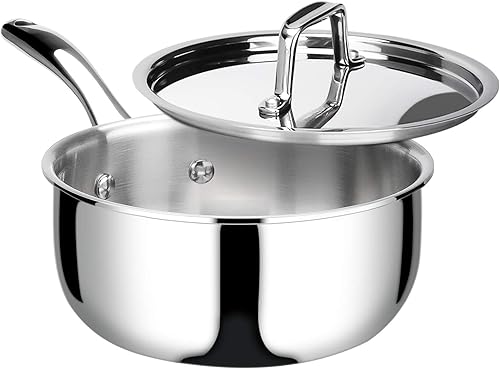
A whole-clad tri-ply 3-quart saucier with a lid at a fraction of the premium brands’ price, and it works on induction.
Price when checked: $45.99 · Rating: 4.6 out of 5 (2.3K ratings)
Pros
- Low price for fully clad tri-ply
- Induction compatible
- Lid included
Cons
- Stainless needs preheating and fat to prevent sticking
- Bulky for one person
Best for small portions and sauces: Misen 5-Ply Saucier (smaller size)

The smaller size of Misen’s 5-ply saucier, useful for pan sauces, custards and risotto for one or two.
Price when checked: $119.00 · Rating: 4.6 out of 5 (435 ratings)
Pros
- Compact for small batches
- 5-ply stainless build
- Induction compatible
Cons
- Too small for family portions
- Premium price for its size
Best classic style and durability: Made In 5-Quart Stainless Saucier
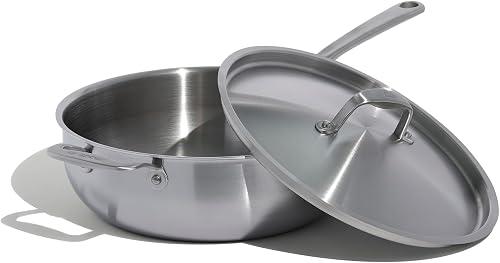
The larger 5-quart version of Made In’s 5-ply stainless saucier, built for years of heavy use and big batches.
Price when checked: $199.00 · Rating: 4.7 out of 5 (1.1K ratings)
Pros
- 5-ply clad stainless
- 5-quart capacity
- Very well reviewed
Cons
- Expensive
- Heavy when full
Best lightweight and ergonomic: Cuisinart Chef’s Classic Nonstick 3-Quart Chef’s Pan

A lighter hard-anodized aluminium 3-quart chef’s pan with a nonstick interior and cover, easier to handle through long stirring.
Price when checked: $44.95 · Rating: 4.5 out of 5 (26 ratings)
Pros
- Lighter than clad stainless
- Nonstick interior
- Cover included
Cons
- Few reviews on this listing
- Nonstick limits high-heat searing
Choosing the right saucier for your kitchen
If you rarely make risotto or sauces, investing in a specialised saucier might not be necessary; a good-quality saucepan can suffice. However, frequent risotto makers will benefit from a pan designed for consistent stirring and even heat. Consider the size you need based on usual portions and the type of stove you have—induction compatibility can be crucial. For example, induction cooktops require pans with magnetic bases, often stainless steel with an aluminium core.
Also, think about handle comfort if you stir for long periods. Handles made from heat-resistant materials or designed ergonomically reduce fatigue during the typical 20-minute stirring process. Weight is another factor; heavier pans retain heat better but can tire the wrist, while lighter pans allow easier stirring but require more attentive heat management.
Finally, weigh durability and maintenance against your cooking style—stainless steel requires upkeep but lasts longer, while non-stick pans simplify cleaning but wear out faster. Stainless steel pans may need occasional polishing to prevent water spots, and multi-ply pans often cost more upfront but provide superior cooking performance over time.
Related reading
- Offset Spatula vs Regular Spatula for Frosting Cakes
- Silicone Spatula vs Wooden Spoon for Sauces
- How to Choose a Bar Spoon
Frequently Asked Questions
Why is a saucier pan better than a regular saucepan for risotto?
A saucier pan has rounded walls that eliminate corners, allowing rice to be stirred continuously without catching or burning. This shape also increases surface area for gradual evaporation, essential for achieving risotto’s creamy consistency. Regular saucepans have straight edges where rice can stick, making even cooking difficult.
What size saucier is best for homemade risotto?
A 2 to 3-quart (1.9 to 2.8 litre) saucier is generally ideal for home cooking, as it fits portions for 2 to 4 people without overcrowding. Smaller pans limit batch size, while larger pans can cause uneven heating and make stirring more tiring.
Can I use a non-stick saucier for risotto?
Non-stick sauciers reduce sticking and clean-up effort, which some find helpful. However, non-stick coatings can degrade under the frequent stirring and high heat risotto requires. They also don’t brown ingredients as effectively, which may affect flavour development.

Rimi Sultana is a home cook from Bangladesh who has cooked for her family every day for the past five years and writes about it at Smart Cooks. Perpetually testing whether internet-famous recipes actually work in a regular home kitchen. Say hello on Facebook or through the contact page.