Choosing the right food storage containers for meal prep comes down to how well they preserve your food’s freshness and how convenient they are to use day-to-day. The key difference between a good and a poor container set is how the materials and design maintain airtight seals and resist stains or odours after repeated use.
Some links in this post are affiliate links. If you buy through them we may earn a small commission at no extra cost to you — it never changes which products we recommend.
Beyond simply holding food, containers must stack efficiently to save fridge space and endure temperature changes from freezer to microwave or oven without cracking or warping. Containers that fail in these areas either waste space or require frequent replacement, adding cost and frustration.
What actually matters
Not all food storage containers are created equal, especially when it comes to meal prep. Understanding the construction and design elements that impact performance will help you pick containers that maintain food quality and simplify your routine.
Material choice directly influences durability and safety. Borosilicate glass, for example, has a coefficient of thermal expansion around 3.3 × 10⁻⁶ /°C, making it highly resistant to thermal shock. This allows containers made from it to safely transition from freezer temperatures (as low as -20°F / -29°C) to oven temperatures up to 450°F (232°C) without cracking. In contrast, standard soda-lime glass or many plastics have higher thermal expansion, increasing risk of breakage or warping.
Plastic containers, while lighter and less prone to shattering, often soften or deform above approximately 250°F (120°C). Over time, exposure to staining agents like tomato sauce or curry can cause permanent discoloration, while odours from garlic or onions may linger due to plastic’s porous nature. This can impact food appeal and hygiene.
The sealing mechanism plays a critical role in maintaining freshness. Silicone gaskets combined with snap-lock lids create a barrier against air and moisture. Airtightness reduces oxidation and microbial growth, which can extend the shelf life of refrigerated meals by several days compared to loosely sealed containers. For example, a study found that airtight containers can preserve freshness up to 3–5 days longer than non-airtight alternatives.
Size and shape influence both usability and storage efficiency. Containers with uniform dimensions that stack securely can reduce fridge clutter by up to 30%, enabling better airflow and temperature consistency. Single-compartment containers simplify reheating and portion control, while multi-compartment designs support varied meal components but may compromise stackability and increase storage volume by 10–15%.
Considering these factors together helps select containers that balance durability, freshness preservation, and practicality, ultimately supporting a smoother meal prep routine.
Material and durability
Glass containers made from borosilicate glass resist thermal shock better than standard soda-lime glass, meaning they can safely move between freezer, microwave, and oven without cracking. Plastic containers avoid breaking but risk warping at temperatures above about 250°F (120°C) and can absorb stains and odours over time.
Borosilicate glass has a higher manufacturing cost but offers longevity, often lasting several years without degradation. Plastic containers may need replacement every 1-2 years depending on use and care, especially if exposed frequently to heat or acidic foods.
Durability also affects environmental impact. Glass containers are more sustainable due to their reusability and recyclability, while plastic containers contribute to waste if discarded frequently.
Sealing mechanism and airtightness
Seals made with silicone gaskets and snap-lock lids create airtight and leak-proof closures critical for keeping food fresh and preventing spills during transport. Without a secure seal, moisture and air enter, speeding spoilage and risking leaks.
Airtight seals minimize dehydration and freezer burn by limiting exposure to air. This can preserve texture and flavor, reducing food waste. For example, airtight containers can reduce freezer burn by up to 50% compared to loosely sealed bags or containers.
Maintenance of seals is important: silicone gaskets should be cleaned regularly to prevent mold and maintain elasticity. Over time, gaskets may need replacement to sustain airtight performance.
Size, shape, and stackability
Containers designed with consistent dimensions and stackable lids optimize fridge and cabinet space. Single-compartment containers simplify reheating and portion control, while those with compartments suit mixed meal prep but often sacrifice stack efficiency.
Standard sizes range from 16 oz (2 cups) to 36 oz (4.5 cups), with larger sizes suitable for full meals and smaller sizes ideal for snacks or side dishes. Selecting sizes aligned with your typical meal portions can reduce food waste and improve meal balance.
Stackability reduces storage footprint by allowing containers to nest vertically, saving up to 30% space in refrigerators or cabinets. Lids that lock or snap securely contribute to stable stacking, preventing tipping or spills during storage or transport.
How to choose and when to skip meal prep containers
Selecting your ideal meal prep container depends largely on your cooking and reheating habits. If you regularly move meals from freezer to oven, borosilicate glass sets like M MCIRCO or KEKEGO are worth the investment for their durability and heat tolerance. For example, glass containers that withstand temperature swings from -20°F to 450°F provide flexibility for cooking and reheating without transferring food.
For those prioritising portion control or limited fridge space, smaller options like Vtopmart’s 22 oz containers excel. Their compact size helps manage caloric intake and fits better in smaller refrigerators. However, the smaller capacity may limit meal variety or require multiple containers per meal.
Plastic sets such as YORY serve best when weight and budget are the main concerns but expect to replace them sooner due to staining. Plastic containers typically weigh 30-50% less than glass, making them more portable for on-the-go meals, but their lifespan may be 1–2 years with regular use.
If you don’t actually prepare meals in advance or prefer fresh cooking daily, investing in large sets of dedicated meal prep containers might add clutter. In that case, multipurpose containers or simply using airtight jars and wraps may be more practical. For occasional meal storage, flexible options like silicone bags or reusable wraps can reduce storage needs and cleanup.
Ultimately, consider your meal preparation frequency, storage space, reheating methods, and budget to select containers that align with your lifestyle and reduce food waste.
| Pick | Best for | Capacity per container | Watch out for |
|---|---|---|---|
| M MCIRCO | Freezer-to-oven versatility | 36 oz (4.5 cups) | Plastic lids not oven-safe |
| Vtopmart | Compact portions | 22 oz | Smaller size limits meal variety |
| YORY | Budget-friendly plastic option | 5 cups | Plastic stains and odours over time |
| KEKEGO | Stacking and airtight seal | 36 oz | Limited brand recognition |
| KOMUEE | Mid-size balanced portions | 30 oz | Lids can be stiff to open when new |
From my kitchen
Once, I packed a batch of stew in M MCIRCO containers to freeze. I accidentally left the plastic lids on when putting one in the oven to reheat. The lid warped and cracked, which was frustrating. After that, I made a point of removing lids before heating and only using the glass portion for oven use. This small oversight taught me the importance of checking lid oven compatibility.
Worth Considering
Best for freezer to oven use: M MCIRCO 5 Pack 36 oz Glass Food Storage Containers
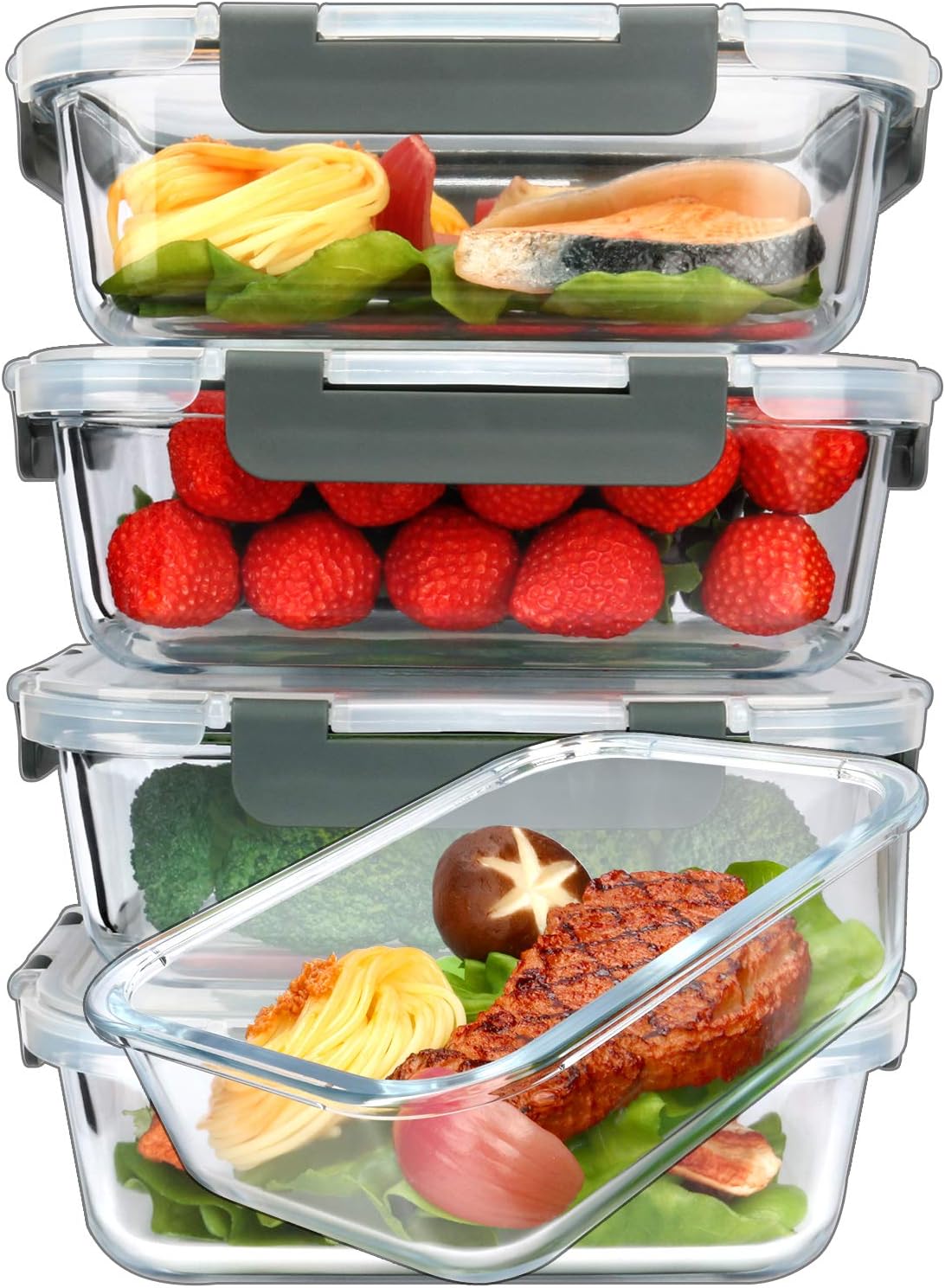
These borosilicate glass containers withstand freezer, microwave, and oven use up to 450°F (232°C) without cracking. They suit meal preppers who want to cook in bulk and reheat in the same dish. The plastic lids, however, cannot go in the oven or microwave, so you need to remove them before heating.
Brand: M MCIRCO · Price when checked: $29.99 · Rating: 4.6 out of 5 (8303 ratings)
Pros
- Premium borosilicate glass resists thermal shock
- Microwave, freezer, and oven safe (glass only)
- Stackable design saves fridge space
Cons
- Plastic lids not oven or microwave safe
- Glass adds weight compared to plastic
Best for portion control and small meals: Vtopmart 5Pack 22oz Glass Storage Containers

The smaller 22 oz capacity suits those who prefer compact meals or snacks. Glass construction offers durability and safe reheating, but the limited size restricts larger meal prep or mixed dishes. Ideal for light eaters or precise portioning.
Brand: Vtopmart · Rating: 4.6 out of 5
Pros
- Snap airtight lids reduce leaks
- Glass is dishwasher and microwave safe
- Compact size fits small fridges
Cons
- Smaller capacity limits versatility
- Less suitable for multi-component meals
Best budget plastic option: YORY 5cup Plastic Food Storage Containers

These plastic containers are lightweight, stackable, and BPA-free, making them easy to handle and affordable. They suit users prioritising portability and convenience but plastic’s tendency to stain and retain odours makes them less ideal for long-term meal prep or acidic foods.
Brand: YORY · Rating: 4.6 out of 5
Pros
- Lightweight and stackable
- BPA free plastic
- Affordable price point
Cons
- Plastic stains and retains odours
- Not suitable for oven use
Best airtight seal and stacking: KEKEGO 5 Pack 36oz Glass Storage Containers

With an emphasis on airtight lids and a stackable form, KEKEGO containers keep meals fresher longer and maximise fridge space. Their 36 oz size is versatile for most meal prep needs. Brand recognition is limited, so fewer independent reviews are available.
Brand: KEKEGO · Rating: 4.7 out of 5
Pros
- Strong airtight snap lids
- Good capacity for full meals
- Stackable lids save space
Cons
- Less widely known brand
- Lids may be stiff initially
Best mid-size balanced containers: KOMUEE 30 oz 5 Pack Glass Meal Prep Containers

KOMUEE offers a middle ground with 30 oz containers suitable for average meals. Their glass build and snap airtight lids balance durability and freshness. New lids can be difficult to open at first, which may frustrate some users.
Brand: KOMUEE · Rating: 4.7 out of 5
Pros
- Airtight lids preserve freshness
- Durable glass construction
- Moderate portion size fits many needs
Cons
- Lids tight and hard to open when new
- Not suitable for oven use with lids on
Related reading
- The Best Large Ice Sphere Molds for Whiskey Cocktails (Keep Your Drink Chilled Longer)
- Best Halloween Silicone Molds for Chocolate & Candy
- Best Silicone Molds for Hot Cocoa Bombs & Hot Chocolate Bombs
Frequently Asked Questions
Are glass meal prep containers really better than plastic?
Glass containers generally last longer and handle temperature changes without warping or absorbing odours. Borosilicate glass, in particular, tolerates freezer-to-oven transitions safely. Plastic containers are lighter and cheaper but may stain, retain smells, and degrade with heat exposure.
How airtight do meal prep containers need to be for freshness?
Airtight seals prevent air and moisture entry, slowing food spoilage and preserving texture. Containers with silicone gasket lids that snap securely typically perform best. Without a good seal, foods dry out or develop freezer burn faster.
Can I use meal prep containers for reheating meals in the microwave or oven?
Glass containers made from borosilicate glass are safe for microwave and oven use without lids. Most plastic lids are not heat resistant and should be removed prior to heating. Always check manufacturer guidelines to avoid warping or safety risks.

Rimi Sultana is a home cook from Bangladesh who has cooked for her family every day for the past five years and writes about it at Smart Cooks. Perpetually testing whether internet-famous recipes actually work in a regular home kitchen. Say hello on Facebook or through the contact page.