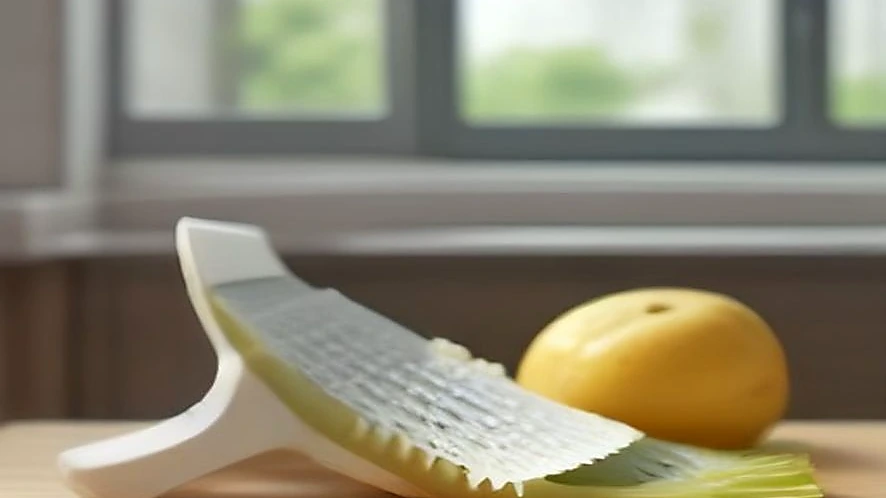
Mandoline slicers are designed to cut vegetables into thin, uniform slices quickly, but not all models achieve the precision needed for paper-thin potato slices. The main difference between a good and a bad mandoline slicer lies in the blade quality, thickness control, and safety features that allow consistent slicing down to fractions of a millimetre without tearing or breaking the potato.
Some links in this post are affiliate links. If you buy through them we may earn a small commission at no extra cost to you — it never changes which products we recommend.
Many slicers fail to maintain a stable slicing angle or offer precise thickness adjustment, which results in uneven slices that cook unevenly or break during frying. The right mandoline’s mechanism ensures the potato glides smoothly over a razor-sharp blade with minimal resistance, allowing you to produce thin slices as fine as 0.5 mm safely and repeatedly.
What actually matters
Understanding the key technical features helps separate mandolines that reliably slice paper-thin potatoes from those that struggle. The precision in slicing is critical; even a 0.1 mm variation in thickness can affect cooking times and texture, causing some slices to burn while others remain undercooked. This is especially important when frying chips, where uniformity ensures consistent crispness and flavour.
Blade design and material
The slicing blade must be made from high-quality stainless steel or carbon steel to maintain sharpness over time. A sharper blade cuts cleanly through potatoes without crushing the cells, which preserves slice integrity. Blades with a straight edge are typical for paper-thin slices, while waved blades create ridges and are better suited for shredded or crinkle cuts. The blade’s angle and placement also affect how smoothly the potato slices without sticking or tearing.
High-grade blades can retain sharpness for over 100 hours of slicing, whereas lower-quality blades may dull after just a few uses, resulting in crushed or uneven slices. The blade angle is usually between 15 and 30 degrees; a shallower angle reduces slicing resistance but can dull faster, while a steeper angle maintains sharpness longer but requires more force.
Thickness adjustment mechanisms
Precise and reliable thickness control distinguishes a mandoline that can produce slices as thin as 0.5 mm from one that only slices down to 1 or 2 mm. Mechanisms vary from simple sliders to dial-adjusted plates controlling the distance between blade and food support. The adjustment must be stable during use to avoid slice thickness shifting mid-session, which ruins uniformity. Clear markings help the user select the desired thickness accurately.
In practical terms, thickness adjustments with increments of 0.1 mm allow fine-tuning for specific recipes. Some premium models maintain thickness accuracy within ±0.05 mm during prolonged use, ensuring consistent results. Less precise models can fluctuate by up to 0.5 mm, which is noticeable in cooking outcomes.
The mechanism’s durability also matters; plastic gears may wear down after repeated use causing slippage, whereas metal components tend to last longer and provide better tactile feedback.
Safety features and handling
Mandoline blades are sharp enough to cause injury if not used carefully. Quality slicers include food holders or hand guards that secure the potato and keep fingers away from the blade. Non-slip feet or handles stabilise the device on the work surface. Ergonomic design reduces hand fatigue and improves control, which is important when slicing many potatoes. Some models store the guard conveniently to avoid losing it.
Injury statistics indicate that mandoline slicers account for a significant portion of kitchen lacerations annually, often due to improper use or lack of guards. Using a well-designed hand guard can reduce injury risk by over 80%. Additionally, non-slip bases prevent the device from shifting under pressure, which is crucial for safety and slice uniformity.
Ergonomics also impact slicing speed and comfort. Handles designed to fit the hand reduce strain during extended use, enabling users to slice hundreds of potatoes with less fatigue. Some models feature angled blades and supports that match natural wrist movements, further enhancing safety and efficiency.
How to choose the right mandoline slicer
Consider how often and for what purposes you’ll use a mandoline. For frequent use and multiple vegetables, a versatile model like the Gramercy with many slice settings is practical. If you want precise, ultra-thin potato slices but have limited space, a compact handheld slicer like the OXO is better.
Budget slicers may suffice for occasional use but expect quicker blade wear and less precision. Specialty slicers like the Arnest Japanese model suit niche tasks and won’t replace a general-purpose mandoline. Always prioritise safety features, especially if you slice large volumes or have less knife skill.
If you rarely slice potatoes paper-thin or prefer to do it by hand, a mandoline might not be necessary. Also, if you’re uncomfortable handling sharp blades, consider alternative tools or methods to avoid injury.
To quantify, professional kitchens often slice thousands of potatoes weekly, necessitating durable, precise mandolines that maintain blade sharpness and thickness accuracy over extended periods. Home users slicing a few potatoes monthly may opt for simpler, more affordable models.
Another consideration is cleaning and maintenance. Stainless steel blades resist corrosion and are easier to clean, while plastic components may harbor bacteria if not properly maintained. Some mandolines are dishwasher safe, which can save time but may accelerate wear on adjustment mechanisms.
Finally, think about storage and portability. Bulkier models offer more features but require more space. Compact handheld models trade versatility for convenience, suiting small kitchens or travel.
| Pick | Best for | Thickness range (mm) | Watch out for |
|---|---|---|---|
| Gramercy Mandoline | Versatile kitchen slicing with many settings | 0.5 to 7 mm, 12 slice settings | Bulky design, some find adjustment fiddly |
| NACOLUS 5 in 1 | Budget multi-blade slicer for occasional use | 1 to 6 mm | Lower durability, blade sharpness fades quickly |
| OXO Good Grips Precision | Compact handheld precision slicing | 0.5 to 3 mm | Limited to smaller quantities due to size |
| Arnest Japanese mandoline | Ultra-thin wave slicing for cabbage and chips | Approx. 0.5 mm wave slices | Niche for wave cuts, less versatile thickness control |
| Weltonhm Mandoline | Standard julienne and slicing for vegetables | 1 to 6 mm | Adjustment less precise for ultra-thin slices |
From my kitchen
Once, while making homemade potato chips, I initially used a mandoline without a fine thickness control. The slices came out uneven, some thick, some wafer-thin, which made frying unpredictable—some chips burnt while others remained soggy. Switching to a mandoline with a reliable thickness dial fixed this problem, producing consistently 0.5 mm slices that cooked evenly. However, I forgot the hand guard once and cut my finger slightly; it reminded me why safety features matter as much as sharp blades.
Worth Considering
Best for versatile kitchen slicing: Gramercy Mandoline Slicer

The Gramercy Mandoline offers 12 thickness settings from 0.5 to 7 mm, covering everything from paper-thin potato chips to thicker vegetable slices. It is a solid choice for cooks who want a single tool for multiple slicing tasks. However, the slicer is somewhat bulky and the thickness adjustment can be fiddly, which may disrupt workflow for some users.
Brand: Gramercy Kitchen Company · Price when checked: $39.96 · Rating: 4.3 out of 5 (20,234 ratings)
Pros
- Wide thickness range with fine increments
- Sturdy construction suitable for frequent use
- Includes safety hand guard for finger protection
Cons
- Larger size takes up more storage space
- Adjustment mechanism not very intuitive
Best budget multi-blade slicer: NACOLUS 5 in 1 Mandoline Slicer

This NACOLUS slicer offers five blade types for various cuts at a very low price. It performs adequately for occasional slicing of potatoes and other vegetables but lacks long-term blade sharpness and durability. The thickness range starts at 1 mm, which may be too thick for those seeking ultra-thin slices.
Brand: NACOLUS · Price when checked: $9.99 · Rating: 4.5 out of 5 (1480 ratings)
Pros
- Very affordable with multiple blade options
- Lightweight and easy to handle
- Compact for small kitchens
Cons
- Blades dull quickly with regular use
- Thickness adjustments not precise enough for paper-thin slicing
Best for handheld precision slicing: OXO Good Grips Precision Handheld Mandoline

The OXO handheld mandoline excels at producing thin, consistent slices down to 0.5 mm thanks to its height-adjustable food holder and clear slicing runway. Its small footprint makes it ideal for kitchens with limited counter space. The trade-off is its size, which suits smaller batches but may slow prep for larger quantities.
Brand: 4.6 4.6 out of 5 stars · Price when checked: $34.70 · Rating: 4.6 out of 5 (1480 ratings)
Pros
- Five cutting options including ultra-thin slice
- Compact design with built-in finger guard
- Dishwasher safe for easy cleaning
Cons
- Not suitable for large volume slicing
- Requires steady hand for best results
Best for ultra-thin wave slicing: Arnest Japanese mandoline slicer

This Japanese mandoline is specialised for ultra-thin wave-style slices, ideal for tonkatsu-style cabbage and crispy chips with a textured surface. Its triple wave blades minimise drag, ensuring clean cuts at approximately 0.5 mm thickness. It’s less adaptable for other slice types and thickness settings, limiting its versatility.
Brand: forest Originals · Price when checked: $22.99 · Rating: 4.4 out of 5 (1480 ratings)
Pros
- Triple wave blades reduce slicing resistance
- Cuts very thin, uniform slices for specialty uses
- Includes sturdy safety holder
Cons
- Niche product focused on wave slicing
- Thickness control less adjustable for flat slices
Best standard julienne and slicing: Weltonhm Mandoline Slicer

Weltonhm’s mandoline covers basic julienne and slicing needs with a thickness range from 1 to 6 mm. It offers a reliable cut for vegetable preparation but lacks the precision and ultra-thin slice capability needed for fine potato chips. Those prioritising exact thickness control should consider other options.
Brand: weltonhm · Price when checked: $29.69 · Rating: 4.3 out of 5 (17433 ratings)
Pros
- Multiple blade types including julienne
- Easy to use with straightforward adjustment
- Good value for mid-range budget
Cons
- Minimum slice thickness is too thick for paper-thin chips
- Less refined adjustment mechanism
How to choose the right mandoline slicer
Consider how often and for what purposes you’ll use a mandoline. For frequent use and multiple vegetables, a versatile model like the Gramercy with many slice settings is practical. If you want precise, ultra-thin potato slices but have limited space, a compact handheld slicer like the OXO is better.
Budget slicers may suffice for occasional use but expect quicker blade wear and less precision. Specialty slicers like the Arnest Japanese model suit niche tasks and won’t replace a general-purpose mandoline. Always prioritise safety features, especially if you slice large volumes or have less knife skill.
If you rarely slice potatoes paper-thin or prefer to do it by hand, a mandoline might not be necessary. Also, if you’re uncomfortable handling sharp blades, consider alternative tools or methods to avoid injury.
To quantify, professional kitchens often slice thousands of potatoes weekly, necessitating durable, precise mandolines that maintain blade sharpness and thickness accuracy over extended periods. Home users slicing a few potatoes monthly may opt for simpler, more affordable models.
Another consideration is cleaning and maintenance. Stainless steel blades resist corrosion and are easier to clean, while plastic components may harbor bacteria if not properly maintained. Some mandolines are dishwasher safe, which can save time but may accelerate wear on adjustment mechanisms.
Finally, think about storage and portability. Bulkier models offer more features but require more space. Compact handheld models trade versatility for convenience, suiting small kitchens or travel.
Related reading
- Better Than The Original: Taco Bell Mexican Pizza Recipe
- Best Splatter Guards: Top Reviews & Buyer’s Guide
- Mastering Carbon Steel: An Expert’s In-Depth Guide to Proper Seasoning and Long-Term Pan Care
Frequently Asked Questions
What thickness setting should I use for paper-thin potato slices?
For paper-thin potato slices suitable for chips, aim for a thickness between 0.4 mm and 0.7 mm. Slices thinner than 0.4 mm may break easily, while thicker than 0.7 mm won’t crisp as well when fried. Most quality mandolines offer adjustments allowing you to dial in this precise range.
How do mandoline slicers prevent potato slices from breaking?
Mandolines prevent breakage by using sharp blades that cut cleanly rather than tearing the potato cells. A stable slicing surface and consistent thickness reduce uneven pressure, which can cause slices to snap. Food holders keep the potato steady, and some models feature blade angles designed to minimise drag and sticking.
Are safety features standard on all mandoline slicers?
Not all mandoline slicers include safety features, but most reputable models do provide some form of finger guard or food holder. These features help keep your hands away from the blade and secure the food during slicing. It’s important to use these guards every time to reduce the risk of injury.

Rimi Sultana is a home cook from Bangladesh who has cooked for her family every day for the past five years and writes about it at Smart Cooks. Perpetually testing whether internet-famous recipes actually work in a regular home kitchen. Say hello on Facebook or through the contact page.