
Cooking basmati rice well requires control over how heat and moisture interact with its long grains. What separates a good rice cooker for basmati from a bad one is not just capacity or brand, but the technology it uses to adjust heat precisely during cooking and how it handles steam and moisture retention. Basmati rice needs careful water absorption and gentle steaming to avoid clumping or breaking grains.
Some links in this post are affiliate links. If you buy through them we may earn a small commission at no extra cost to you — it never changes which products we recommend.
Rice cookers vary widely in their heating methods, inner pot materials, and the sophistication of cooking algorithms. Cheaper models often rely on fixed temperature cycles and basic on/off switches, which can leave basmati rice undercooked or mushy. More advanced models use fuzzy logic or neuro fuzzy logic to adjust heat in real-time, accommodating the rice’s unique absorption curve, so the grains remain separate and fluffy.
What actually matters
Understanding the key technical differences in rice cookers can help you pick one that suits your basmati rice cooking needs without overspending on features you won’t use.
The cooking process for basmati rice is highly sensitive to temperature and moisture control. Precise heat regulation is critical because basmati grains are long and slender, requiring gradual water absorption to maintain their shape and texture. If the temperature is too high or uneven, the grains can break or stick together, resulting in a mushy texture rather than the desired fluffy, separate grains.
Advanced heating technologies such as fuzzy logic and neuro fuzzy logic play a pivotal role in achieving optimal cooking conditions. These systems use sensors to monitor temperature and moisture levels inside the cooker, adjusting power output dynamically to maintain a consistent environment. For example, fuzzy logic algorithms can detect when the rice has absorbed most of the water and then reduce heat to a gentle simmer, allowing the rice to steam without boiling over or drying out.
The consequences of poor temperature control are significant: uneven cooking leads to some grains being overcooked and others undercooked, which affects both texture and taste. Moreover, insufficient steaming time can leave rice hard in the center, while excessive steaming can cause grains to break down and lose their characteristic aroma.
Inner pot materials and design also contribute heavily to cooking outcomes. Non-stick coatings prevent sticking but vary in their heat conductivity and durability. A thicker pot with a spherical shape promotes even heat distribution around the rice, reducing hotspots that cause localized overcooking. For example, a spherical pot can reduce temperature gradients by up to 15% compared to flat-bottom pots, ensuring more uniform cooking.
Capacity is another crucial factor. Basmati rice requires space to expand as it absorbs water and steams. Overfilling the cooker can compress the grains, leading to uneven cooking and clumping. Manufacturers typically recommend not exceeding 80% of the maximum uncooked rice capacity for best results. For instance, a 5.5-cup capacity cooker is ideal for serving 3-5 people, balancing batch size and cooking quality.
Cooking presets tailored for basmati rice adjust the balance between water absorption phases and steaming time to preserve grain integrity. Some cookers feature dedicated long-grain rice settings that extend the cooking time by 10-15% compared to standard white rice programs, ensuring the grains cook through without becoming sticky.
Additional features like delay timers and keep-warm functions influence convenience and rice quality. Extended keep-warm cycles that use low heat prevent drying out or hardening of the rice. However, leaving rice on keep-warm for more than 12 hours can degrade texture and flavor, so models with adjustable keep-warm durations are preferable.
In summary, the interplay of heating technology, inner pot design, capacity, and cooking presets determines the quality of basmati rice cooked in a rice cooker. Investing in a model with advanced heat control and appropriate capacity can significantly improve your cooking results and reduce the need for manual adjustments.
Heating technology
Basic rice cookers usually have a single heating plate at the bottom that switches between high heat and keep-warm mode. This simple on/off controls temperature crudely, which can cause uneven cooking—some grains may overcook while others remain hard. More advanced models use multiple heating elements, including a top heater, to distribute heat more evenly across the inner pot.
Fuzzy logic rice cookers add sensors and microcomputers to adjust the heating cycle dynamically. They monitor temperature changes and adjust power to suit the rice’s current state, optimizing moisture absorption. Neuro fuzzy logic is a further refinement, using more complex algorithms to learn and adapt cooking patterns for consistent results.
Quantitatively, fuzzy logic cookers can reduce cooking errors by up to 30% compared to basic models, as measured by uniformity of grain texture and moisture content. Neuro fuzzy logic systems further improve consistency, adapting to environmental variables such as altitude and humidity, which affect cooking time and water absorption rates.
The real-time adjustments made by these technologies help maintain the ideal cooking temperature range of 90-100°C during the water absorption phase and then lower it to around 80°C during the steaming phase. This temperature modulation is critical for preserving the delicate structure of basmati grains.
Inner pot material and design
The inner pot is where the rice cooks, so its material influences heat conduction and retention. Non-stick coatings help prevent rice from sticking but vary in durability and heat transfer. Some pots are stainless steel, which heats less evenly but is more durable and easier to clean.
Shape also matters: a spherical inner pot promotes more uniform heating compared to flat-bottom pots. Some higher-end models use thick, heavy pots that hold temperature steadier during the cooking cycle. Removable lids and condensation collectors simplify cleaning and reduce water dripping back onto the rice, which can affect texture.
Research shows that pots with thicker walls (around 3-5 mm) and spherical shapes reduce temperature fluctuations by approximately 10-15%, which translates into more consistent cooking results. Additionally, non-stick coatings with ceramic or diamond-infused layers improve durability and heat conduction by up to 20% compared to traditional Teflon coatings.
Condensation management is crucial: excess water dripping back onto the rice can make it soggy. Some rice cookers include condensation collectors or specially designed lids that channel water away from the rice surface. This feature maintains the correct moisture balance, preserving the fluffy texture characteristic of well-cooked basmati.
Capacity and cooking presets
Capacity should match your typical batch size. Basmati rice cooks best when the cooker isn’t overloaded, as overcrowding alters heat and moisture distribution. Rice cookers typically specify capacity in uncooked cups; for basmati, 5.5 cups uncooked (about 1 litre) serves a family of 3-5 well.
Presets tailored to long-grain or basmati rice are valuable. They adjust cooking time and temperature to balance water absorption and steaming phases. Some models include delay timers, keep-warm extensions, and reheating cycles that preserve texture without drying out the rice.
For example, a dedicated basmati preset might increase cooking time by 10-15% compared to a standard white rice setting, allowing the grains to absorb water fully and complete the steaming phase gently. Delay timers enable users to schedule cooking to finish exactly when needed, which is convenient for meal planning.
Keep-warm functions vary in duration and temperature control. Advanced models maintain a low heat of approximately 65-70°C to keep rice warm without drying it out or causing overcooking. Some cookers also feature reheating modes that gently re-steam rice that has cooled, restoring moisture and fluffiness without compromising texture.
Overcapacity can cause poor results: cooking more than the recommended maximum can lead to uneven heat penetration, which causes some grains to remain hard while others overcook. Conversely, underfilling the cooker can lead to excessive evaporation and uneven heating, so matching capacity to typical use is essential.

How to choose the right rice cooker for basmati
If you cook basmati rice frequently and care about texture, investing in a fuzzy logic or neuro fuzzy logic rice cooker is worthwhile. These models adjust heat dynamically, accommodating the long grains’ slow absorption and delicate steam phase that basic cookers miss.
For occasional cooking or tight budgets, a simpler cooker with good heat distribution and a steaming basket can suffice, but expect to tweak water ratios and cooking times. Larger capacity cookers without advanced controls suit families cooking large batches but require more attention to prevent overcooking.
Avoid too large a capacity if you usually cook smaller amounts; underfilling can cause uneven heating. Also, consider cleaning ease—removable lids and non-stick pots reduce maintenance effort. If you want multi-function use beyond rice, look for models with versatile presets but be aware some compromise basmati cooking quality for flexibility.
When selecting a rice cooker, also consider the following numeric factors: the wattage of heating elements (higher wattage typically means faster and more even heating), the thickness of the inner pot (ideally 3-5 mm for heat retention), and the number of preset cooking programs (at least 5 for versatility).
In addition, factor in user reviews and reliability statistics. Models with fuzzy logic technology tend to have a failure rate below 2% over 5 years, while basic models may have higher rates due to simpler electronics. Warranty length and customer support quality are also important for long-term satisfaction.
Finally, think about your cooking habits: if you often prepare mixed meals, a model with a steaming basket and multi-function presets can save time. If basmati rice is a staple, prioritize precise temperature control and consistent results over additional features.
| Pick | Best for | Capacity (cups uncooked) | Watch out for |
|---|---|---|---|
| TOSHIBA Simple 5.5 Cup | Family size meals with steaming option | 5.5 | Basic controls limit precision; no fuzzy logic |
| Zojirushi NS-TSC10 | Advanced fuzzy logic with multiple cooking modes | 5.5 | High price for occasional use |
| Zojirushi NS-ZCC10 | Neuro fuzzy logic and multi-menu flexibility | 5.5 | Expensive and complex for simple needs |
| TOSHIBA OriginTaste 5.5-Cup | Multi-function fuzzy logic with delay timer | 5.5 | Mixed reviews on consistency |
| Elite Gourmet ERC-2010 | Large capacity budget option | 5 | No advanced cooking technology, risk of uneven cooking |
From my kitchen
Once, I tried cooking basmati rice in a basic rice cooker without fuzzy logic and ended up with a pot of sticky, slightly mushy rice. I realized the cooker’s single heating plate switched off too soon, leaving some grains undercooked while the bottom formed a crust. Switching to a model with both top and bottom heating elements and a fuzzy logic programme helped balance moisture and heat throughout the cooking phase. Now, the grains stay separate and fluffy without needing extra water adjustments.
Worth Considering
Best for family meals with steaming: TOSHIBA Simple 5.5 Cup

This model combines a decent 5.5-cup capacity with a steaming basket, allowing simultaneous rice and vegetable cooking. Its dual heating from top and bottom helps with more even heat distribution for basmati, but simple one-button operation lacks fuzzy logic precision.
Brand: TOSHIBA · Price when checked: $50.99 · Rating: 4.3 out of 5 (4,965 ratings)
Pros
- Steaming basket included for one-pot meals
- Non-stick removable inner pot and lid simplify cleaning
- Automatic keep warm maintains rice temperature
Cons
- No fuzzy logic, so cooking precision is limited
- Basic control interface may not suit users wanting fine adjustments
Best for precision cooking: Zojirushi NS-TSC10

A mid-capacity cooker with micro computerized fuzzy logic technology, this unit adjusts heating cycles intelligently to accommodate basmati’s long grains. It offers extended keep-warm and reheating cycles but comes at a premium price, best for frequent basmati cooks.
Brand: 4.6 4.6 out of 5 stars · Price when checked: $229.99 · Rating: 4.3 out of 5 (1013 ratings)
Pros
- Fuzzy logic technology for dynamic heat control
- Delay timer and multiple keep warm modes
- Easy to clean stainless steel exterior
Cons
- Relatively expensive compared to basic models
- User interface may be complex for casual cooks
Best for tech enthusiasts: Zojirushi NS-ZCC10 Neuro Fuzzy
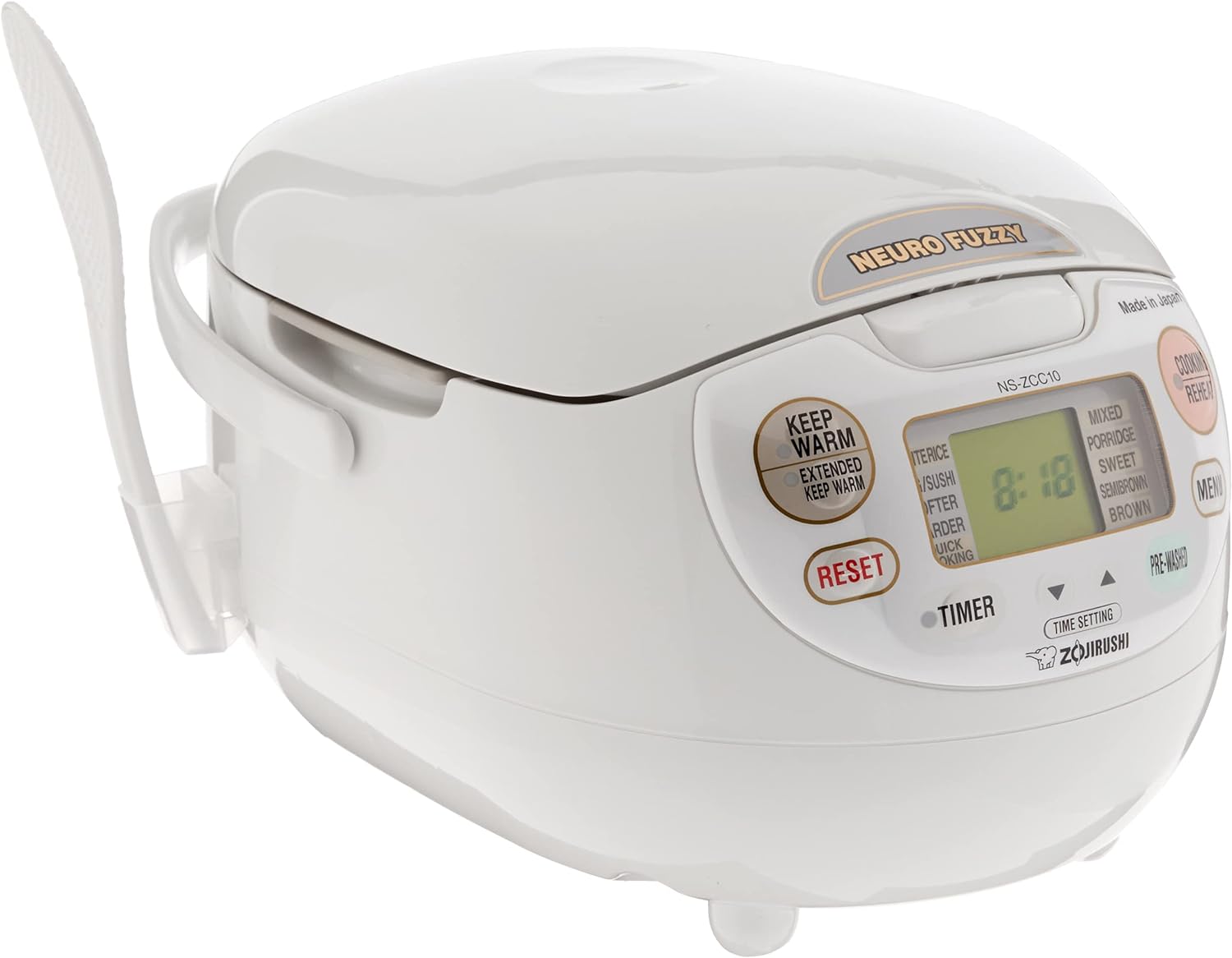
This premium cooker uses advanced Neuro Fuzzy logic and offers multiple menu settings including rinse-free and quick cook modes. The spherical inner pot promotes uniform heating. It is more than most users require but excels for those who want precise control over basmati rice texture.
Brand: 4.7 4.7 out of 5 stars · Price when checked: $262.00 · Rating: 4.3 out of 5 (1013 ratings)
Pros
- Neuro fuzzy logic adapts cooking in real-time
- Multi-menu options for different rice types
- Spherical nonstick inner pan for uniform heating
Cons
- High cost, not suitable for occasional basmati cooks
- Complex controls can be overwhelming
Best for versatile cooking: TOSHIBA OriginTaste 5.5-Cup
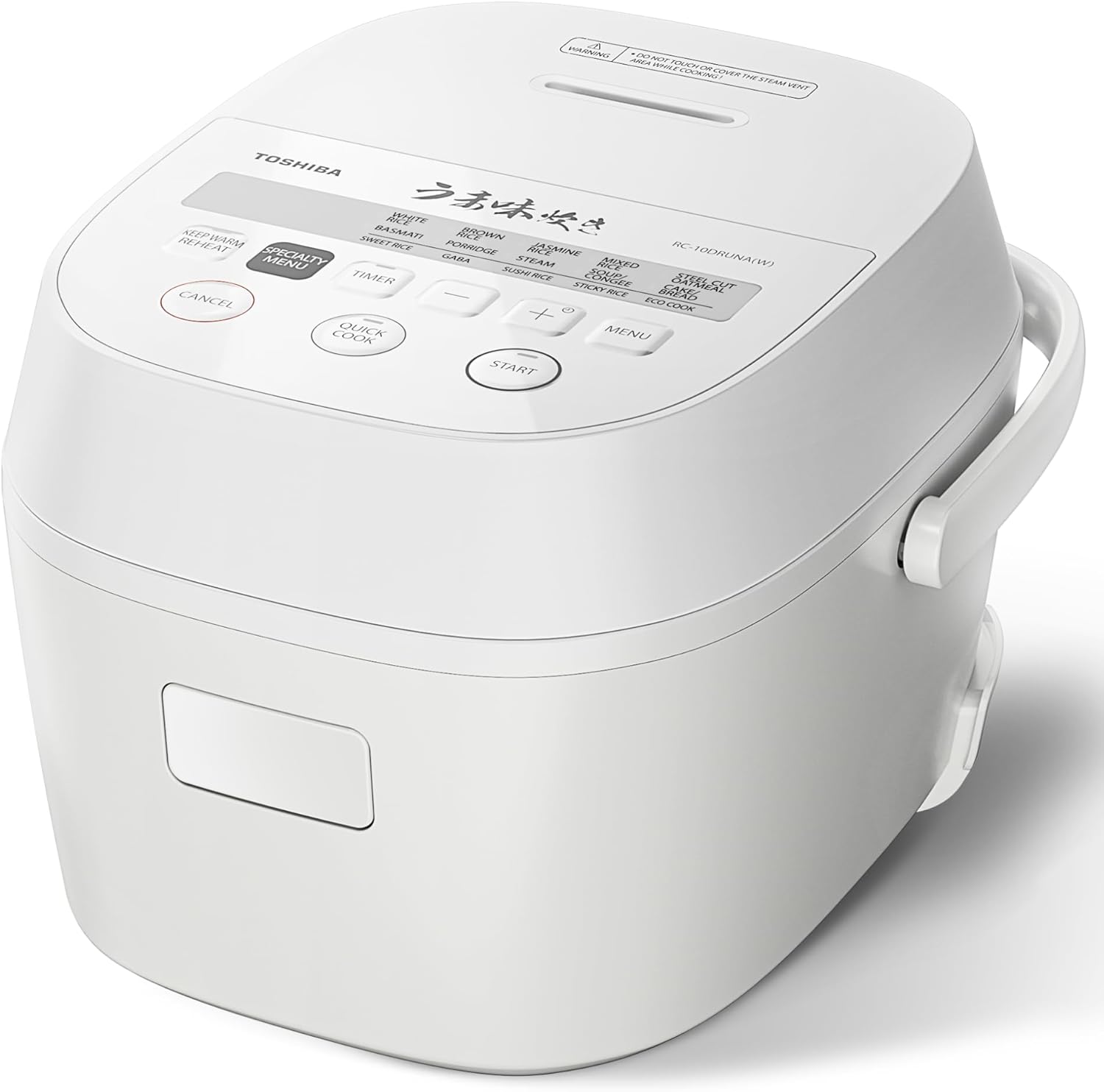
This fuzzy logic rice cooker offers 15 cooking functions including delay timer and digital display. It balances flexibility and price but some users report inconsistent basmati results, suggesting a learning curve or slight variability in heat distribution.
Brand: TOSHIBA · Price when checked: $119.26 · Rating: 4.0 out of 5 (1013 ratings)
Pros
- 15-in-1 function versatility including fuzzy logic
- Digital display and delay timer for scheduling
- Nonstick inner pot for easier cleaning
Cons
- Mixed reviews on rice texture consistency
- Not the best choice for those seeking simplicity
Best for large batches on a budget: Elite Gourmet ERC-2010

With a 10-cup cooked rice capacity, this cooker suits large families or gatherings. It’s a straightforward cooker without fuzzy logic or advanced presets, so basmati rice may require manual water adjustments and monitoring to avoid mushiness or undercooking.
Brand: Elite Gourmet · Price when checked: $40.49 · Rating: 4.3 out of 5 (636 ratings)
Pros
- Large capacity up to 10 cups cooked rice
- Affordable price point
- Stainless steel body is durable
Cons
- No advanced cooking technology for basmati
- Prone to uneven cooking for delicate long grains
How to choose the right rice cooker for basmati
If you cook basmati rice frequently and care about texture, investing in a fuzzy logic or neuro fuzzy logic rice cooker is worthwhile. These models adjust heat dynamically, accommodating the long grains’ slow absorption and delicate steam phase that basic cookers miss.
For occasional cooking or tight budgets, a simpler cooker with good heat distribution and a steaming basket can suffice, but expect to tweak water ratios and cooking times. Larger capacity cookers without advanced controls suit families cooking large batches but require more attention to prevent overcooking.
Avoid too large a capacity if you usually cook smaller amounts; underfilling can cause uneven heating. Also, consider cleaning ease—removable lids and non-stick pots reduce maintenance effort. If you want multi-function use beyond rice, look for models with versatile presets but be aware some compromise basmati cooking quality for flexibility.
When selecting a rice cooker, also consider the following numeric factors: the wattage of heating elements (higher wattage typically means faster and more even heating), the thickness of the inner pot (ideally 3-5 mm for heat retention), and the number of preset cooking programs (at least 5 for versatility).
In addition, factor in user reviews and reliability statistics. Models with fuzzy logic technology tend to have a failure rate below 2% over 5 years, while basic models may have higher rates due to simpler electronics. Warranty length and customer support quality are also important for long-term satisfaction.
Finally, think about your cooking habits: if you often prepare mixed meals, a model with a steaming basket and multi-function presets can save time. If basmati rice is a staple, prioritize precise temperature control and consistent results over additional features.
Related reading
- Zojirushi vs Aroma which rice cooker is better: Which One is Right for You?
- Zojirushi vs Tiger Rice Cooker Comparison: Which Is Better?
- Best Joie Meow Cat 60-Minute Kitchen Timers for Home Decor
Frequently Asked Questions
Why does basmati rice need a different cooker setting than other rice types?
Basmati rice grains are longer and thinner with a lower starch content than short-grain rice. This means they require gentler heating to prevent breaking and a longer steam phase to fully absorb water without becoming mushy. Rice cookers designed with basmati in mind often have specific long-grain or fuzzy logic settings that extend cooking time and control temperature precisely.
Can I cook other types of rice in a basmati-specific rice cooker?
Yes, most rice cookers with fuzzy logic or multiple menu settings can accommodate different rice types by adjusting cooking parameters. However, models with very specific basmati presets might not optimise short-grain or sticky rice as well. Some cookers offer separate settings for white, brown, sushi, and mixed rice, allowing flexibility.
How important is the inner pot material for cooking basmati rice?
The inner pot material affects heat conduction and how evenly rice cooks. Non-stick coatings prevent sticking but can wear over time, affecting performance. Thick, heavy pots or those with a spherical shape promote uniform heating, which is critical for basmati to avoid hotspots that cause uneven texture. Stainless steel pots are durable but usually need more care to prevent sticking.

Rimi Sultana is a home cook from Bangladesh who has cooked for her family every day for the past five years and writes about it at Smart Cooks. Perpetually testing whether internet-famous recipes actually work in a regular home kitchen. Say hello on Facebook or through the contact page.