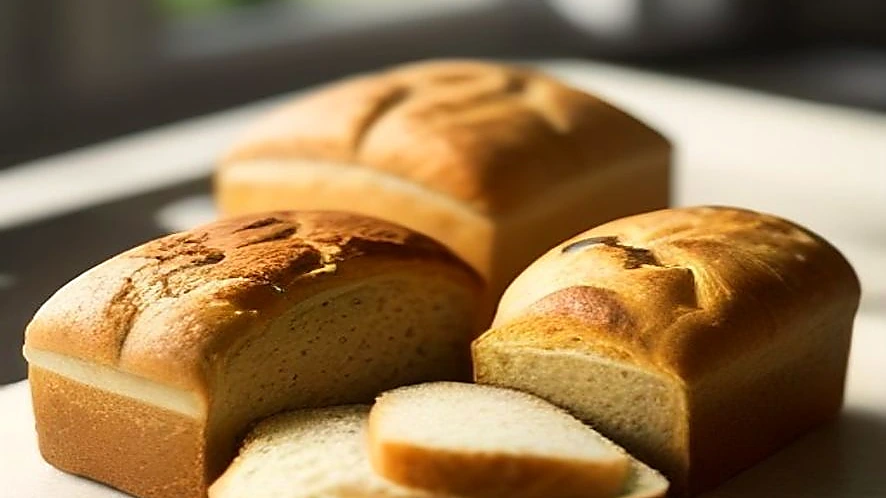
A good bread box balances airflow and humidity to slow bread staling without encouraging mould. That means it must regulate moisture inside, so crusts don’t soften too quickly but the crumb doesn’t dry out. The materials and design control this microenvironment.
Some links in this post are affiliate links. If you buy through them we may earn a small commission at no extra cost to you — it never changes which products we recommend.
Not all bread boxes manage this well, and some are better suited for certain loaf types or kitchen conditions. Choosing one depends on understanding how vent placement, material thermal properties, and size affect bread preservation.
What actually matters
Bread boxes are more than simple containers; their performance hinges on key technical aspects that influence bread freshness. Understanding these factors helps in selecting a box that extends the shelf life of your homemade loaves significantly.
The staling process in bread primarily involves moisture migration and starch retrogradation. By controlling the microenvironment inside the bread box, one can slow down these processes. For instance, maintaining relative humidity around 60-70% inside the box helps keep the crumb moist while preserving crust crispness.
Studies show that bread stored in a well-designed bread box can remain fresh for up to 3 days longer compared to bread left exposed on the counter. This is a substantial improvement, especially for homemade loaves that often lack preservatives found in commercial bread.
Additionally, the temperature inside the storage environment impacts staling speed. Bread stored at room temperature (around 20-22°C) stales more slowly than refrigerated bread, which accelerates starch retrogradation. A bread box that insulates against temperature fluctuations can help maintain optimal conditions.
Material and thermal regulation
Materials like stainless steel, wood, and bamboo have different thermal conductivities and moisture absorption rates. Wood and bamboo absorb excess humidity, preventing soggy crusts, while metal tends to keep a more stable temperature but can cause condensation if poorly ventilated.
Wood’s natural hygroscopic properties mean it can absorb and release moisture, acting as a buffer that stabilizes humidity levels inside the box. For example, bamboo can absorb up to 10-15% of its weight in moisture, which helps in reducing dampness that would otherwise cause mould.
Metal, particularly stainless steel, has high thermal conductivity, which helps moderate temperature changes but lacks moisture absorption. Without proper ventilation, condensation can form on metal surfaces, increasing mould risk. Therefore, metal bread boxes often incorporate slits or vents to balance this effect.
Plastic bread boxes, although lightweight and inexpensive, generally have low breathability and can trap moisture, leading to faster staling or mould growth. Their thermal insulation properties are also inferior compared to wood or metal.
In summary, the choice of material affects not only durability and aesthetics but also the microclimate inside the bread box, directly influencing bread preservation.
Ventilation and airflow control
Airflow inside the box is critical. Too much ventilation dries the bread rapidly, while too little traps moisture, leading to mould. Adjustable vents or slits placed strategically balance this by allowing stale air to escape and fresh air to enter without direct drafts on the bread.
Optimal ventilation maintains a steady exchange of air, preventing accumulation of excess moisture and stale air. For instance, vents positioned on the sides or back of the box encourage gentle airflow that removes humidity without exposing bread to drying currents.
Adjustable vents provide flexibility across seasons and climates. In humid environments, opening vents wider reduces trapped moisture, whereas in dry conditions, closing vents helps retain crumb moisture. This adaptability can extend bread freshness by several days.
Quantitatively, a ventilation rate that replaces the air inside the bread box every 1-2 hours is generally effective. Too frequent air exchange risks drying the bread, while too infrequent leads to condensation buildup.
Some bread boxes also incorporate moisture-absorbing liners or paper towels to assist in humidity regulation, further enhancing airflow control effectiveness.
Size and internal layout
A box that is too large will allow excess air circulation and faster drying, while one that is too small can crush the bread or restrict airflow. Internal shelves or layers can help separate breads or loaf types but may reduce airflow if cramped.
For example, a bread box sized approximately 15-20% larger than the largest loaf provides sufficient clearance for air circulation without excessive empty space that accelerates drying.
Multi-layer designs enable storage of different bread types simultaneously, reducing cross-contamination of flavors and aromas. However, these layers must be spaced adequately—typically at least 3-4 inches apart—to maintain airflow.
Crushing or compressing bread inside a too-small box can damage the crumb structure, leading to faster staling and loss of texture. Therefore, choosing an appropriately sized box is essential for preserving loaf integrity.
Moreover, internal layouts that facilitate airflow pathways—such as perforated shelves or slotted dividers—enhance moisture regulation and prevent stagnant air pockets that promote mould growth.
Choosing the right bread box for your kitchen
Start by considering the type and quantity of bread you bake. Large or multiple loaves need a spacious box with adjustable ventilation to prevent moisture buildup. Smaller kitchens benefit from compact metal or plastic designs but may need to watch for condensation issues.
If your kitchen humidity is high, opt for wood or bamboo that naturally regulate moisture by absorption. For minimal upkeep, stainless steel is easy to clean but requires good ventilation to avoid sogginess.
Some users might not need a bread box at all. If you bake daily and consume bread within 24 hours, storing it in a paper bag or cloth might suffice. Conversely, freezers or bread bags with controlled humidity are better for long-term storage than any bread box.
Additionally, consider the maintenance required. Wooden and bamboo boxes need occasional cleaning and oiling to maintain their moisture-regulating properties, while metal and plastic boxes are easier to wipe down but may require more attention to ventilation.
The aesthetic and kitchen space constraints also influence choice. For example, a roll-top metal box can save counter space, whereas a wooden box with an integrated cutting board adds functionality but requires more upkeep.
Finally, think about bread types you most often bake. Sourdoughs with thick crusts benefit from less ventilation to maintain crust crispness, while softer sandwich breads need more airflow to prevent sogginess. Matching box features to bread habits optimizes freshness.
| Pick | Best for | Material & ventilation | Watch out for |
|---|---|---|---|
| Sunhoo Two-Layer Wooden Bread Box | Large loaf storage | Wood with adjustable vents | Takes counter space |
| Oggi Stainless Roll-Top Bread Box | Roll-top storage | Stainless, glass | Fingerprints show |
| Tafura 5.8L Airtight Bread Container | Budget-conscious | Plastic, 5.8-litre | Plastic does not breathe |
| Bamboo Bread Box with Top Shelf | Multi-loaf organisation | Bamboo | Acrylic scratches |
| HOME IT Stainless Roll-Top Bread Box | Minimalist design | Stainless, stainless steel | Fingerprints show |
| Bamboo Cutting Board Lid Bread Box | Cutting board included | Bamboo | Board needs occasional oiling |
From my kitchen
Once, after storing a freshly baked sourdough in a metal bread box overnight, I found the crust noticeably softened and the crumb less springy the next morning. Instead of assuming the box failed, I adjusted by leaving the lid slightly ajar to increase airflow and placed a paper towel inside to absorb excess moisture. This simple tweak restored the crust’s crunch and kept the bread fresher for two more days.
This experience highlights how small adjustments in ventilation can significantly impact bread freshness. It also underscores the importance of understanding your bread box’s airflow characteristics and adapting usage accordingly.
Moreover, it demonstrates that no bread box is perfect for all conditions; user intervention and monitoring are key to maximizing benefits. Keeping an eye on humidity levels and adjusting vent settings seasonally can optimize storage outcomes.
In humid summers, for example, opening vents wider or adding absorbent materials inside the box can prevent mould, while in dry winters, closing vents helps retain crumb moisture. These practices can extend bread freshness by 1-3 days beyond standard storage.
Finally, combining bread box use with proper bread cooling and wrapping techniques—such as letting bread cool completely before storing and using breathable bags—further improves shelf life and eating quality.
Worth Considering
Best for large loaf storage: Sunhoo Two-Layer Wooden Bread Box

A two-layer wooden bread box with room for several loaves.
Price when checked: $49.99 · Rating: 4.4 out of 5 (2.2K ratings)
Pros
- Two layers
- Large capacity
- Wooden look
Cons
- Takes counter space
- Wood needs dry wiping
Best for roll-top storage: Oggi Stainless Roll-Top Bread Box
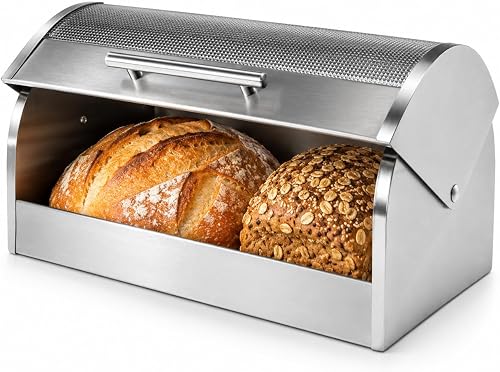
A stainless roll-top bread box with a tempered glass lid that fits multiple large loaves.
Price when checked: $42.99 · Rating: 4.6 out of 5 (3.2K ratings)
Pros
- Roll-top opening
- Stainless steel
- Well reviewed
Cons
- Fingerprints show
- Glass can break
Best budget pick: Tafura 5.8L Airtight Bread Container

A 5.8-litre BPA-free airtight plastic bread box that holds homemade loaves and sandwich bread.
Price when checked: $19.99 · Rating: 4.5 out of 5 (2.4K ratings)
Pros
- Airtight
- Lightweight
- Inexpensive
Cons
- Plastic does not breathe
- Crusts can soften
Best for multi-loaf organisation: Bamboo Bread Box with Top Shelf

A bamboo bread box with an acrylic window and a top shelf for jars or fruit.
Price when checked: $35.99 · Rating: 4.4 out of 5 (154 ratings)
Pros
- Top shelf
- Bamboo
- Viewing window
Cons
- Acrylic scratches
- Fewer reviews
Best minimalist design: HOME IT Stainless Roll-Top Bread Box

A large stainless steel roll-top bread box with a minimalist look.
Price when checked: $28.49 · Rating: 4.6 out of 5 (14.7K ratings)
Pros
- Roll-top lid
- Large capacity
- Very widely reviewed
Cons
- Fingerprints show
- Metal does not regulate humidity
Best with cutting board: Bamboo Cutting Board Lid Bread Box

A bread box whose bamboo lid doubles as a cutting board, saving counter space.
Price when checked: $19.99 · Rating: 4.6 out of 5 (6.1K ratings)
Pros
- Lid doubles as board
- Large capacity
- Well reviewed
Cons
- Board needs occasional oiling
- Crumbs collect in the box
Related reading
- The 10 Best Kitchen Towels for a Spotless & Dry Kitchen
- The Most Absorbent Reusable Paper Towels for a Sustainable Clean
- Best Christmas Kitchen Towels: Top Picks for Festive Holiday Decor
Frequently Asked Questions
How does a bread box keep homemade bread fresh longer?
A bread box creates a controlled environment by balancing airflow and humidity. This slows moisture loss from the crumb while preventing the crust from becoming too soft. Materials like wood absorb excess moisture, and vents regulate stale air exchange, reducing staling and mould risk compared to open-air storage.
Can I store all types of bread in the same bread box?
Not always. Different breads have varying crust thicknesses and moisture levels. For example, sourdough with a thick crust benefits from less ventilation to keep crust crisp, while sandwich bread needs more airflow to prevent sogginess. Multi-layer boxes help separate types but may restrict airflow, so match your box to your bread habits.
Is a bread box necessary if I freeze my homemade loaves?
If you freeze most of your bread and only keep small portions fresh daily, a bread box is less critical. Freezing halts staling effectively. However, for fresh bread stored at room temperature up to 2-3 days, a bread box can slow moisture loss and prevent mould better than bags alone.

Rimi Sultana is a home cook from Bangladesh who has cooked for her family every day for the past five years and writes about it at Smart Cooks. Perpetually testing whether internet-famous recipes actually work in a regular home kitchen. Say hello on Facebook or through the contact page.