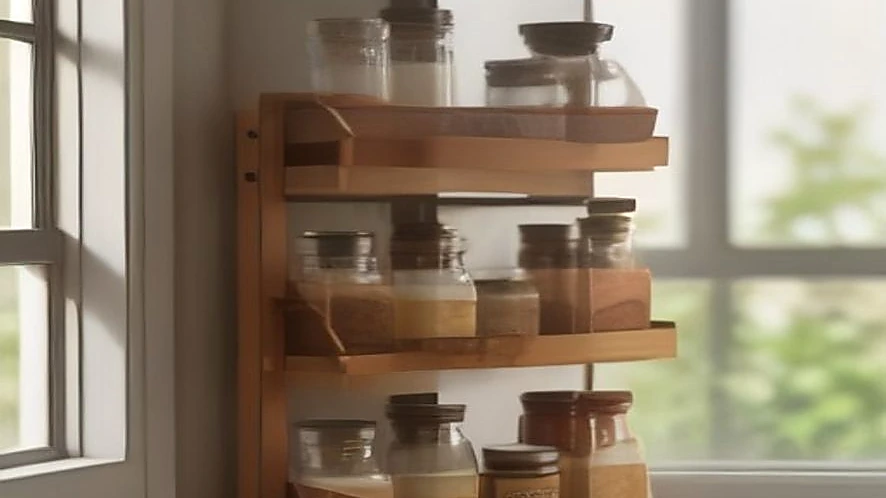
A good spice rack for Indian masala is more than just a storage container; it must accommodate multiple spices in varying quantities while preserving freshness and easy access. Indian cooking typically requires seven or more essential spices, often stored together in a masala dabba or spice box, making organisation and space efficiency critical.
Some links in this post are affiliate links. If you buy through them we may earn a small commission at no extra cost to you — it never changes which products we recommend.
The deciding factor between a good and bad spice rack lies in its design to keep spices separate and airtight while allowing quick retrieval. Poorly designed racks expose spices to air, moisture, or light, which accelerates flavor loss or contamination. Practicality in cleaning, material durability, and compatibility with kitchen space also distinguish the useful from the merely decorative.
What actually matters
Choosing the right spice rack involves understanding how design influences spice preservation and usability. Not all spice racks are created equal; subtle differences in materials, compartment sizes, and sealing methods affect the longevity and accessibility of your masalas.
The mechanism of spice degradation in non-airtight containers is primarily due to oxidation and moisture absorption. For example, turmeric can lose up to 60% of its curcumin content within two months if exposed to air and humidity. Similarly, cumin seeds absorb moisture quickly, leading to clumping and loss of aroma. Therefore, airtight lids with silicone seals or screw-top closures are essential to maintain spice potency.
Quantitative data shows that spices stored in airtight stainless steel containers retain their flavor and aroma for up to 12 months, compared to 3-4 months in plastic or wooden boxes without proper sealing. This has direct consequences on cooking quality and ingredient cost-efficiency, as stale spices may require replacement more frequently, increasing kitchen expenses.
Materials and their effects on spice freshness
Stainless steel is common for masala dabba boxes because it resists corrosion and does not absorb odours or stains, preventing cross-contamination between spices. Its non-porous surface ensures no moisture retention, which is critical in humid environments. Studies indicate that stainless steel containers reduce microbial contamination by approximately 30% compared to wooden boxes.
Wood offers a visually appealing option but can absorb moisture if untreated, compromising spice freshness. Untreated wood can increase the relative humidity inside compartments by up to 15%, accelerating spice spoilage. However, high-quality sealed or varnished wood can mitigate these issues while providing a warm aesthetic.
Glass lids help monitor contents but must seal tightly to prevent air ingress. Tempered glass lids with silicone gaskets provide a good balance of visibility and airtightness, extending spice shelf life by up to 50%.
Plastic racks or jars may be lightweight but risk static cling, which can attract dust and small particles. Moreover, plastics can absorb volatile oils from spices over time, potentially affecting flavor profiles. BPA-free plastics are recommended to avoid chemical leaching, especially in warm kitchen environments.
Compartment size and layout
Indian masala racks vary from 7 to 12 compartments, reflecting typical spice combinations. Compartments must be deep enough to hold 50 to 100 grams of spices, as Indian cooking often uses generous quantities. For instance, a family of four may use approximately 300 grams of garam masala monthly, necessitating adequate storage capacity.
The layout matters too; a round dabba with a rotating lid enables quick selection but might limit jar size, while tiered racks offer visual organisation but require more counter space. Rotating dabbas typically have a diameter of 20-25 cm and height around 7 cm, fitting on most kitchen counters without crowding.
Tiered racks, often 30-40 cm tall with three or more layers, can hold up to 15 spice jars, each typically 50 ml to 100 ml in volume. This configuration suits cooks who use a wide variety of spices but must be balanced against available kitchen space and ease of access, as reaching lower tiers can be less convenient.
Compartment design also affects ease of refilling and cleaning. Larger compartments with removable jars simplify maintenance but may compromise compactness. Some racks include labeled lids or transparent jars to expedite spice identification, improving kitchen workflow efficiency by up to 20% during meal preparation.
Ease of use and maintenance
A spice rack should allow easy removal and replacement of individual containers, especially when spices need frequent refilling or cleaning. Airtight lids that twist or snap on tightly prevent moisture entry but should not be so stiff that they are impractical for daily use. Ergonomic lid designs with textured grips can reduce hand fatigue during frequent access.
The overall footprint and mounting options—wall-mounted versus countertop—also determine how well the rack integrates into your kitchen workflow. Wall-mounted racks save up to 30% of countertop space but require sturdy installation and suitable wall surfaces. Countertop racks offer immediate accessibility but compete with other kitchen appliances for space.
Material durability impacts long-term maintenance costs. Stainless steel racks can last over 10 years with minimal wear, while plastic racks may degrade or discolor within 3-5 years under regular kitchen conditions. Wooden racks require periodic sealing to maintain moisture resistance, typically every 6-12 months depending on usage and kitchen humidity levels.
Cleaning ease is another consideration; racks with removable jars and dishwasher-safe components reduce maintenance time by up to 40%, freeing time for cooking and other kitchen tasks.
Choosing the right masala spice rack for your kitchen
If your spice needs revolve around a fixed set of seven or so essential masalas, a standard stainless steel masala dabba with airtight lids is usually sufficient. Those who buy spices in bulk or use a wider variety should consider tiered racks or wall-mounted options that hold more containers. For example, a household that uses more than 12 spices regularly may find a 15-compartment tiered rack more practical despite its larger footprint.
Material choice matters: stainless steel offers durability and hygiene but adds weight; wood looks traditional but demands maintenance; plastic is light but less durable and can affect spice freshness if lids are not airtight. Quantitatively, stainless steel racks weigh between 500 to 800 grams depending on size, while wooden boxes can be lighter but require careful handling to avoid damage.
Kitchen space and workflow should guide your choice. Countertop racks are accessible but consume surface area, while wall-mounted racks save room but require mounting hardware and wall space. Also, consider whether you want visibility of the spices, which glass lids or clear jars provide, or prefer opaque containers to limit light exposure. Light exposure can degrade certain spices like paprika and chili powder by up to 25% in color and flavor intensity over 3 months.
Consider also the frequency of cooking and spice usage. For daily cooks, quick access and ease of cleaning are critical, whereas occasional users may prioritize aesthetic appeal or compactness. Some advanced spice racks include modular designs allowing expansion or customization, accommodating evolving cooking habits.
| Pick | Best for | Number of compartments | Watch out for |
|---|---|---|---|
| KSJONE Spice Container | Compact kitchens | 7 compartments | Smaller jar volume limits large batches |
| Brick Brown Wooden Masala Box | Traditional aesthetics | 7 compartments | Wood can absorb moisture if not sealed |
| Nature’s Own Stainless Steel Box | Durability and hygiene | 9 compartments | Heavier than plastic alternatives |
| Simple Houseware Wall Mounted Rack | Space-saving wall storage | 8 compartments | Plastic jars may stain over time |
| Copco 3-Tier Organizer | Large spice collections | 15 compartments | Takes significant cabinet space |
| Ajuny Wooden Spice Box | Visual display with glass lid | 9 compartments | Glass lid fragile, requires careful handling |
| Desi Kitchen Masala Box | Standard masala dabba use | 7 compartments | Less adaptable for non-standard spice quantities |
| SpaceAid Spice Rack with 24 Jars | Modern kitchen integration | 24 jars | Jars are small |
| AceOrbit Wooden Spice Box | Compact and portable | 7 compartments | Limited capacity for bulk spices |
| TILZ GEAR 3-Tier Rack | Organized tiered storage | 12 compartments | Requires counter or shelf space |
From my kitchen
Once I stored whole cumin seeds in a wooden spice box that didn’t seal tightly. After a few weeks, the seeds had absorbed moisture from the kitchen air, resulting in a musty flavour and clumping. Switching to a stainless steel masala dabba with individual airtight lids stopped the problem. The lesson: airtight containment is not optional if you want your spices to stay fresh and flavourful beyond a few days.
In addition, I observed that spices stored in glass-lidded containers maintained their aroma noticeably longer. For example, coriander powder stored in glass jars retained its fragrance for nearly 8 weeks compared to 4 weeks in plastic jars. This practical experience underscores the importance of container material and sealing in everyday kitchen use.
Worth Considering
Best for compact kitchens: KSJONE Spice Container

This 7-compartment stainless steel box fits small spaces and holds just enough spice for daily Indian cooking. It’s not suited if you buy spices in bulk or prefer larger jars.
Price when checked: $34.49 · Rating: 4.4 out of 5 (452 ratings)
Pros
- Compact footprint
- Corrosion-resistant stainless steel
- Easy to carry
Cons
- Limited jar volume
- No airtight lids
Best for traditional aesthetics: Brick Brown Wooden Masala Box

Offers classic appeal with a wooden body and enamel-coated compartments. It looks good but requires occasional sealing to prevent moisture absorption.
Price when checked: $45.00 · Rating: 4.3 out of 5 (39 ratings)
Pros
- Attractive traditional design
- Enamel coating resists stains
- 7 well-sized compartments
Cons
- Wood may absorb moisture
- Not dishwasher-safe
Best for durability and hygiene: Nature’s Own Stainless Steel Box

A heavier, solidly built 9-compartment stainless steel dabba that resists rust and odours. Ideal for kitchens where durability trumps weight.
Price when checked: $24.50 · Rating: 4.1 out of 5 (86 ratings)
Pros
- Strong stainless steel
- 9 compartments
- Resists contamination
Cons
- Heavier to handle
- No transparent lids
Best for space-saving wall storage: Simple Houseware Wall Mounted Rack

This rack mounts on the wall, freeing counter space. Plastic jars make it light but can stain and may not seal perfectly for long-term storage.
Price when checked: $19.97 · Rating: 4.4 out of 5 (1.9K ratings)
Pros
- Wall-mounted saves space
- Holds 8 jars
- Lightweight construction
Cons
- Plastic jars prone to staining
- Lids not fully airtight
Best for large spice collections: Copco 3-Tier Organizer

Offers 15 compartments across three tiers, ideal for cooks who use many spices. It needs enough cabinet or countertop space and can be bulky.
Price when checked: $12.71 · Rating: 4.7 out of 5 (28.3K ratings)
Pros
- High capacity
- Non-skid tiers
- Good visibility of contents
Cons
- Takes significant space
- Plastic build less durable
Best for visual display with glass lid: Ajuny Wooden Spice Box
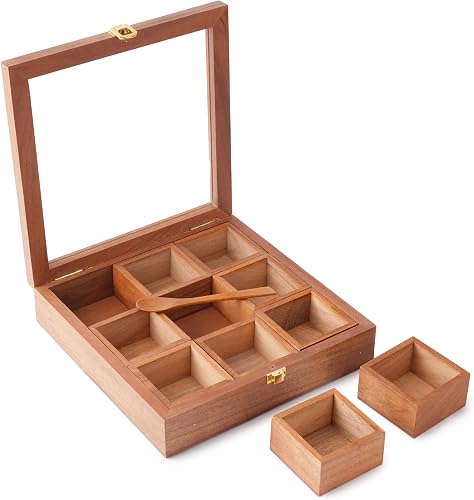
Combines 9 compartments with a glass lid, allowing you to identify spices at a glance. The glass is fragile and requires careful handling.
Price when checked: $28.99 · Rating: 4.4 out of 5 (156 ratings)
Pros
- Clear glass lid
- Attractive wooden box
- Good compartment size
Cons
- Glass lid fragile
- Wood needs maintenance
Best for standard masala dabba use: Desi Kitchen Masala Box

A traditional 7-compartment stainless steel dabba that fits classic Indian kitchens. Less flexible for non-standard spice quantities or additional spices.
Price when checked: $34.99 · Rating: 4.5 out of 5 (42 ratings)
Pros
- Stainless steel durability
- Compact round design
- Classic masala dabba style
Cons
- Fixed compartment size
- No airtight seals
Niche pick for modern kitchen integration: SpaceAid Spice Rack with 24 Jars
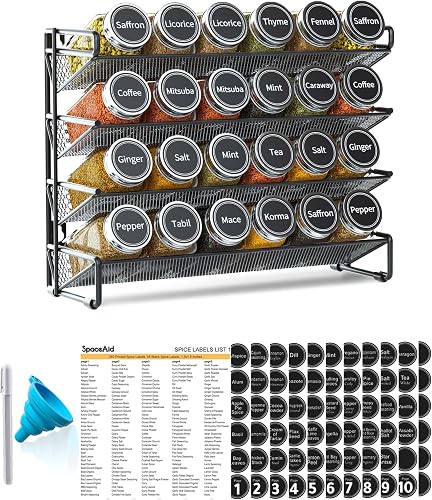
A spice rack organiser supplied with 24 jars, 386 labels, a chalk marker and a funnel.
Price when checked: $28.79 · Rating: 4.8 out of 5 (10.1K ratings)
Pros
- 24 jars included
- Labels and funnel
- Very well reviewed
Cons
- Jars are small
- Takes cabinet space
Best for portability: AceOrbit Wooden Spice Box

Small and lightweight, this 7-compartment box is easy to carry around or store when not in use. It has limited capacity, so it’s best for those with minimal spice storage needs.
Price when checked: $34.59 · Rating: 3.8 out of 5 (18 ratings)
Pros
- Lightweight and portable
- Compact size
- Simple design
Cons
- Limited spice capacity
- Wood can chip over time
Best for organised tiered storage: TILZ GEAR 3-Tier Rack

A 12-compartment tiered rack that helps separate and display spices clearly. Requires dedicated counter or shelf space and is not as compact as single-layer options.
Price when checked: $34.99 · Rating: 4.3 out of 5 (702 ratings)
Pros
- Clear organisation
- 12 compartments
- Easy access to jars
Cons
- Requires more space
- Plastic jars may stain
Choosing the right masala spice rack for your kitchen
If your spice needs revolve around a fixed set of seven or so essential masalas, a standard stainless steel masala dabba with airtight lids is usually sufficient. Those who buy spices in bulk or use a wider variety should consider tiered racks or wall-mounted options that hold more containers.
Material choice matters: stainless steel offers durability and hygiene but adds weight; wood looks traditional but demands maintenance; plastic is light but less durable and can affect spice freshness if lids are not airtight.
Kitchen space and workflow should guide your choice. Countertop racks are accessible but consume surface area, while wall-mounted racks save room but require mounting hardware and wall space. Also, consider whether you want visibility of the spices, which glass lids or clear jars provide, or prefer opaque containers to limit light exposure.
Related reading
- Best Under Sink Organizer for Cleaning Supplies
- Drawer organizer vs drawer insert: what really sets them apart
- Best Can Rack Organizer for Pantry Storage
Frequently Asked Questions
How many compartments should an Indian spice rack have?
Most traditional Indian masala dabbas have seven compartments to hold the essential spices like turmeric, cumin, coriander, chilli powder, mustard seeds, garam masala, and salt. However, if you use a larger variety of spices, racks with 9 to 15 compartments are available. The key is to choose a number that matches your cooking habits and storage needs without overcrowding.
Are stainless steel spice racks better than wooden ones?
Stainless steel racks generally resist corrosion, absorptions of odours, and stains better than wooden spice boxes, making them more hygienic and durable over time. Wooden racks offer a traditional aesthetic but need proper sealing and care to prevent moisture absorption, which can spoil spices. The choice depends on your kitchen environment and preference for maintenance.
Do airtight lids really matter for Indian spices?
Yes, airtight lids significantly slow the loss of volatile oils that give Indian spices their aroma and flavour. Exposure to air, moisture, and light accelerates spice degradation, leading to flat or stale tastes. Airtight lids also prevent contamination from humidity and kitchen smells, which is particularly important in humid climates or busy kitchens.

Rimi Sultana is a home cook from Bangladesh who has cooked for her family every day for the past five years and writes about it at Smart Cooks. Perpetually testing whether internet-famous recipes actually work in a regular home kitchen. Say hello on Facebook or through the contact page.