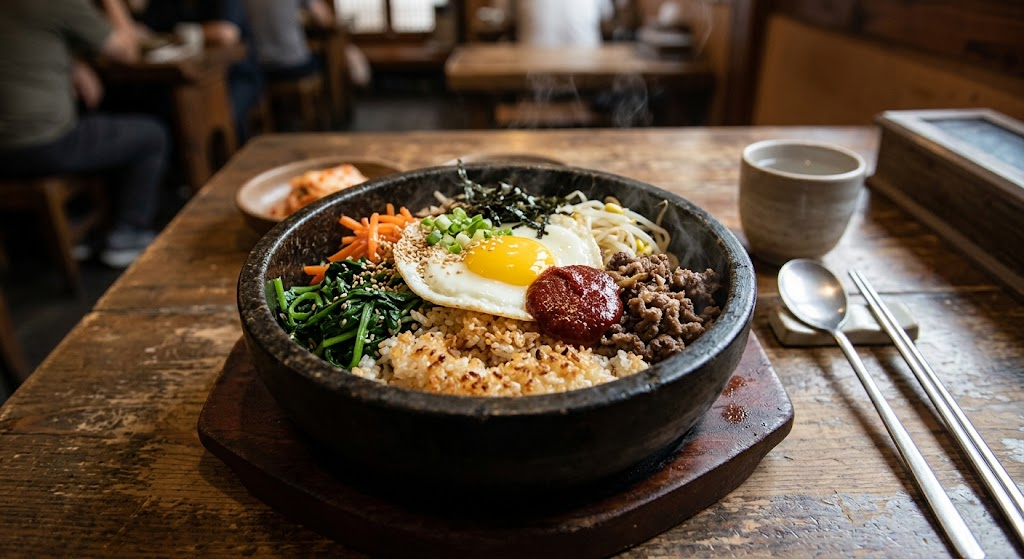
Regular bibimbap is rice topped with vegetables, meat, and a fried egg, mixed together with gochujang. Dolsot bibimbap is the same idea served in a heated stone bowl, and that one change is what makes it worth the extra equipment. The scorching-hot stone keeps cooking the rice in contact with it after the bowl reaches the table, forming nurungji — a crackling, toasted crust on the bottom layer of rice. Without a true dolsot, you get bibimbap. With one, you get bibimbap plus a textural payoff that no other version has.
Ingredients You’ll Need
- 2 cups cooked short-grain white rice, warm
- 1 tbsp sesame oil, plus extra for coating the bowl
- 150g beef bulgogi-style strips (or ribeye, thinly sliced), marinated in 1 tbsp soy sauce, 1 tsp sugar, ½ tsp minced garlic
- 1 cup spinach, blanched and squeezed dry, seasoned with a pinch of salt and sesame oil
- 1 cup julienned carrots, quickly stir-fried
- 1 cup julienned zucchini, quickly stir-fried and lightly salted
- 1 cup bean sprouts, blanched and seasoned with salt, sesame oil, and a little minced garlic
- 4–5 dried shiitake mushrooms, rehydrated and sliced, sautéed with a little soy sauce
- 1 fried egg, sunny-side up, per bowl
- 2–3 tbsp gochujang (Korean chili paste), or to taste
- 1 sheet gim (roasted seaweed), cut into thin strips
- Toasted sesame seeds, for garnish
How to Make Dolsot Bibimbap
- Prep every topping separately before you touch the stone bowl. Bibimbap is really just five or six quick, small cooking jobs — spinach, carrots, zucchini, bean sprouts, mushrooms, beef — done one after another and kept warm. Don’t try to do this step while the dolsot is already heating; you’ll fall behind.
- Place your empty dolsot (stone bowl) over medium-high heat on the stovetop for 3–4 minutes to preheat it. This step is what actually produces the crust later, so don’t skip it or rush it.
- Coat the inside of the hot bowl generously with sesame oil, tilting it to cover the bottom and sides. It should sizzle immediately on contact.
- Add the warm rice to the bowl and press it down firmly and evenly with the back of a spoon, especially against the bottom and sides where it touches the stone.
- Working quickly, arrange the beef and each vegetable in its own separate section on top of the rice, keeping the colors distinct rather than mixing them yet. Top with the fried egg and a spoonful of gochujang in the center.
- Sprinkle with sesame seeds and gim, then bring the bowl straight to the table while it’s still audibly sizzling.
- Let each diner mix it themselves at the table, pressing down as they stir so the crust on the bottom starts to release in crispy, toasted flakes mixed through the rice.
From My Kitchen: Why My First Dolsot Bibimbap Had No Crust at All
The first time I tried this, I did what felt logical — I put the rice into a cold stone bowl and turned the heat on underneath, thinking that would build up the crust gradually as everything cooked together. It didn’t work. The rice on the bottom just steamed instead of toasting, because a cold dolsot heats up too slowly and the moisture in the rice never had a chance to drive off before the dish was ready to serve. There was no nurungji at all — just regular rice that happened to be in a stone bowl. The actual trick is heating the empty stone bowl first, hot enough that the oil sizzles the second it touches it, and only then adding the rice. That initial blast of direct heat against dry stone is what toasts the bottom layer fast enough to form a real crust before the rest of the rice overcooks. Now I preheat the empty bowl for a full 3–4 minutes every time, no exceptions.
Tips for the Best Dolsot Bibimbap
- Use day-old or slightly cooled rice if you can — rice that’s too wet or too fresh releases extra steam and softens the crust before it can form.
- Don’t skimp on the sesame oil coating the bowl. It’s doing double duty: flavoring the crust and preventing the rice from sticking hard enough to tear the bowl’s surface.
- Keep every topping in its own section rather than pre-mixing. Part of the appeal of bibimbap is the visual layout before it all gets stirred together.
- A genuine stone dolsot holds heat far longer and more evenly than a ceramic imitation, which matters a lot for how long and how evenly the crust develops.
What to Serve With Dolsot Bibimbap
A simple bowl of doenjang jjigae (fermented soybean paste soup) or a light cucumber banchan on the side rounds this out well. Since the dish already has rice, protein, and vegetables in one bowl, it doesn’t need much else.
Frequently Asked Questions
Can I make bibimbap without a real stone dolsot?
You can make regular bibimbap in any bowl, but you won’t get the nurungji crust without a stone or heavy ceramic dolsot that can be preheated on the stovetop. A thin ceramic or ordinary bowl can’t take that direct heat and won’t produce the same effect.
Is the stone bowl safe to put directly on a gas or electric stovetop?
A genuine dolsot is made to go directly on stovetop heat — that’s the entire point of it. Always check the specific product’s instructions, since some decorative stone bowls are for serving only and aren’t rated for direct heat.
Why is my rice sticking too hard to the bottom of the bowl?
Usually this means either not enough oil was used to coat the bowl before adding the rice, or the bowl wasn’t hot enough when the rice went in. A well-heated, well-oiled dolsot should release its crust in flakes when scraped, not fuse into one solid layer.
Can I prep the toppings ahead of time?
Yes — all the vegetable and meat toppings can be cooked earlier in the day and kept in the fridge, then reheated briefly or added at room temperature right before assembly. Just make sure the rice and the stone bowl itself are handled fresh, since those two steps are what create the crust.
If you’re shopping for your first one, we compared the options in our guide to the best dolsot stone bowls, including which sizes actually hold heat long enough to matter.

Rimi Sultana is a home cook from Bangladesh who has cooked for her family every day for the past five years and writes about it at Smart Cooks. Perpetually testing whether internet-famous recipes actually work in a regular home kitchen. Say hello on Facebook or through the contact page.