A cleaver intended for chopping bone in chicken must balance blade thickness, weight, and steel quality to deliver clean, controlled cuts without excessive force. The blade needs enough heft and edge retention to break through small bones but should avoid being so heavy that it becomes unwieldy during repetitive tasks.
Some links in this post are affiliate links. If you buy through them we may earn a small commission at no extra cost to you — it never changes which products we recommend.
Equally important is the handle design and overall balance; a cleaver that slips or feels awkward increases the risk of injury and slows prep. Buyers often miss how subtle differences in edge angle and steel composition affect durability, sharpness over time, and resistance to chipping when striking bone.
What actually matters
Choosing a cleaver for chopping chicken bone involves more than picking the heaviest blade. Key technical differences determine performance, comfort, and longevity.
Blade thickness and weight directly impact how effectively and safely you can chop through bones. A blade thickness between 3mm and 5mm offers the best compromise: thick enough to absorb impact and prevent bending when chopping bone, but not so heavy it fatigues the wrist. In practical terms, a 4mm blade weighing around 300 to 400 grams provides sufficient momentum to cleave through small poultry bones without excessive effort. Heavier cleavers rely on momentum, but require more control to avoid damaging the meat or the cutting surface. For example, cleavers exceeding 500 grams can cause wrist strain during extended prep sessions, reducing overall efficiency.
Steel composition and edge angle are equally critical. High-carbon stainless steel is common for meat cleavers, balancing sharpness retention and corrosion resistance. German steel often rates around 56+ on the Rockwell hardness scale, providing resilience against chipping. This hardness rating means the blade can maintain a sharp edge for up to several months of regular use without needing frequent sharpening. Edge angles between 14° and 16° per side give a sharp edge while maintaining durability when chopping bone. Sharper angles below 14° can slice better but increase the risk of chipping, especially against hard bone.
Handle ergonomics and balance influence user comfort and safety. Handles made from pakkawood or triple-riveted hardwood provide a secure grip that resists moisture and prevents slippage. Full tang construction improves balance, distributing weight evenly across the blade and handle. Poorly balanced cleavers increase wrist strain and reduce cutting precision, especially during repetitive bone chopping. For instance, a well-balanced cleaver will have its center of gravity near the handle-blade junction, allowing better control and reducing fatigue over long prep periods.
Blade thickness and weight
A blade thickness between 3mm and 5mm offers the best compromise: thick enough to absorb impact and prevent bending when chopping bone, but not so heavy it fatigues the wrist. Heavier cleavers rely on momentum, but require more control to avoid damaging the meat or the cutting surface.
In numbers, a typical cleaver designed for poultry bone chopping weighs between 300 and 450 grams. This weight range provides enough force to cleave through small bones without excessive user fatigue. For comparison, a cleaver weighing less than 250 grams might struggle with bone chopping, while one exceeding 500 grams can tire the wrist during extended use.
Steel composition and edge angle
High-carbon stainless steel is common for meat cleavers, balancing sharpness retention and corrosion resistance. German steel often rates around 56+ on the Rockwell hardness scale, providing resilience against chipping.
The Rockwell hardness scale measures steel hardness; blades rated 56-58 offer an optimal balance between hardness and toughness. Harder steels (above 60) hold edges longer but risk brittleness, while softer steels dull quickly.
Edge angles between 14° and 16° per side give a sharp edge while maintaining durability when chopping bone. Sharper edges below 14° increase slicing precision but are more prone to chipping on hard surfaces like bone.
Handle ergonomics and balance
Handles made from pakkawood or triple-riveted hardwood provide a secure grip that resists moisture. Full tang construction improves balance, distributing weight evenly across the blade and handle.
A well-designed handle reduces wrist strain and improves cutting precision. For example, handles with ergonomic contours and textured surfaces improve grip security, especially when hands are wet or greasy.
Balance is measured by the center of gravity, ideally located near the junction between blade and handle. This positioning allows better control and reduces fatigue during repetitive chopping tasks.
| Pick | Best for | Blade length and steel | Watch out for |
|---|---|---|---|
| HOSHANHO Cleaver Knife | Versatile chopping and slicing | 7 inch, ultra-sharp vegetable & meat chopper | Heavier blade may tire new users |
| Cutluxe 7″ German Steel | Multipurpose with grooves for easy slicing | 7 inch, high-carbon German stainless steel, 56+ Rockwell | Grooves can trap debris; needs regular cleaning |
| Cutluxe 7″ Japanese Blade | Everyday cleaver for meat and vegetables | 7 inch, high-carbon stainless steel, sharp edge at 14-16° | Thinner blade less suited for heavy bone work |
| TUO Fiery Phoenix Series | Home kitchen chopping with pakkawood handle | 7 inch stainless steel with pakkawood handle | Handle finish may degrade without care |
| Cuisinart 7″ Stainless Steel | Budget-friendly for soft bones and vegetables | 7 inch stainless steel with blade guard | Less durable edge for prolonged bone chopping |
| Mueller 7″ German High Carbon Steel | Heavy-duty but balanced butcher cleaver | 7 inch high-carbon German steel | Basic handle ergonomics, less refined balance |
| 7-inch Heavy Duty Bone Chopper | Professional-grade heavy bone chopper | 7 inch, heavy blade for bone chopping | Very heavy; not suited to delicate slicing |
From my kitchen
Once, while preparing a whole chicken, I underestimated the toughness of the wing joints and used a lightweight cleaver designed mainly for vegetables. The blade chipped slightly against the bone, and the cutting felt inefficient. Switching to a heavier cleaver with a thicker blade and a sharper edge angle fixed the issue immediately. The thicker blade absorbed the impact, and the sharper edge sliced cleanly through the bone without chipping. This experience reinforced how crucial blade thickness and steel hardness are for bone chopping tasks.
In addition, I noticed that the handle design significantly affected my chopping speed and comfort. The heavier cleaver with a well-balanced pakkawood handle allowed me to maintain control and reduce wrist fatigue, enabling me to prepare multiple chickens without discomfort. This hands-on experience underlines the importance of balance and grip in cleaver selection, especially for repetitive bone chopping.
Worth Considering
Best for versatile chopping and slicing: HOSHANHO Cleaver Knife 7 Inch

This cleaver handles both meat and vegetables with its ultra-sharp blade and sturdy construction. It is well-suited for cooks who want one tool for various tasks but may feel heavy for extended chopping sessions.
Brand: HOSHANHO · Price when checked: $89.99 · Rating: 4.5 out of 5 (180 ratings)
Pros
- Sharp, durable blade suitable for meat and vegetables
- Solid heft aids chopping through small bones
- Comfortable pakkawood handle with good grip
Cons
- Heavier blade can cause wrist fatigue
- Lacks specialised features for bone-specific chopping
Best for multipurpose cutting with less sticking: Cutluxe Meat Cleaver Knife 7″ German Steel

The side grooves reduce food sticking, making slicing and dicing more efficient. Its German steel ensures sharpness retention, but grooves require diligent cleaning to prevent buildup.
Brand: Cutluxe · Price when checked: $37.99 · Rating: 4.5 out of 5 (127 ratings)
Pros
- Grooves reduce food sticking on blade
- High-carbon steel with 56+ Rockwell hardness
- Triple-riveted pakkawood handle for secure grip
Cons
- Grooves can trap debris if not cleaned properly
- May not be ideal for heavy bone chopping due to thinner blade
Best everyday cleaver for mixed tasks: Cutluxe Meat Cleaver Knife 7″ Japanese Blade

This cleaver excels at general kitchen chopping with a sharp edge and balanced weight. It performs well on meat and vegetables but the thinner blade limits its suitability for repeated heavy bone chopping.
Brand: Cutluxe · Price when checked: $22.49 · Rating: 4.8 out of 5 (36115 ratings)
Pros
- Sharp 14-16° edge for precision cuts
- Lightweight and balanced for versatility
- Full tang design improves control
Cons
- Less suitable for dense bone chopping
- Pakkawood handle needs occasional maintenance
Best for home kitchens with traditional style: TUO Vegetable Cleaver Knife 7 inch

A reliable cleaver with a comfortable pakkawood handle and stainless steel blade. Good for home cooks who want a classic look and feel but the handle finish may wear without proper care.
Brand: TUO · Price when checked: $31.75 · Rating: 4.5 out of 5 (4,025 ratings)
Pros
- Pakkawood handle with triple rivets
- Sharp stainless steel blade for multiple uses
- Comfortable balance for extended chopping
Cons
- Handle finish can degrade if exposed to water often
- Not designed specifically for heavy bone chopping
Best budget option for soft bones and occasional use: Cuisinart 7″ Stainless Steel Cleaver

This cleaver offers a sharp blade and a protective guard at a low price. It can chop softer poultry bones but lacks the robustness and edge retention needed for frequent heavy bone chopping.
Brand: Cuisinart · Price when checked: $14.95 · Rating: 4.6 out of 5 (2,797 ratings)
Pros
- Affordable price point
- Includes blade guard for safe storage
- Effective on soft bones and vegetables
Cons
- Edge dulls faster with frequent bone chopping
- Basic handle ergonomics limit comfort
Best for heavy-duty chopping with German steel: Mueller 7-Inch Meat Cleaver
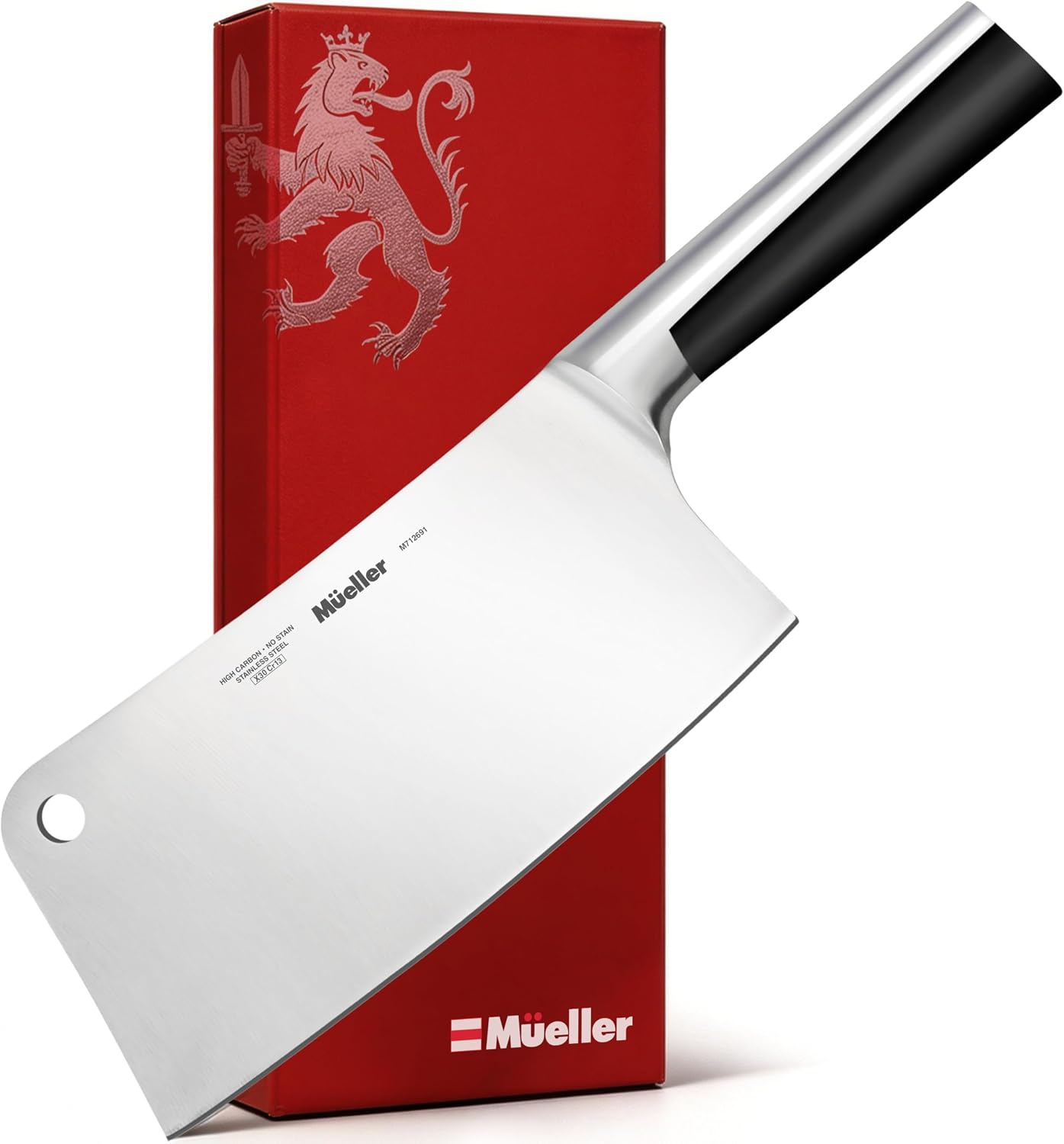
This cleaver has a robust high-carbon German steel blade and a solid feel, making it a dependable choice for frequent bone chopping. It lacks some ergonomic refinements but offers good value for its durability.
Brand: Mueller · Price when checked: $19.99 · Rating: 4.6 out of 5 (36115 ratings)
Pros
- Strong high-carbon German steel blade
- Balanced weight for controlled chopping
- Sharp edge retention over time
Cons
- Simplistic handle design
- May feel less comfortable during long prep sessions
Best professional-grade heavy bone chopper: 7-inch Butcher Knife Meat Cleaver

Designed for serious bone chopping with a heavy-duty blade, this cleaver excels in forceful cuts but sacrifices finesse. Its weight and bulk make it unsuitable for delicate slicing or extended general kitchen use.
Brand: 7-inch · Rating: 4.5 out of 5
Pros
- Extremely heavy blade for breaking tough bones
- Multipurpose for various kitchen tasks
- Professional-grade construction
Cons
- Very heavy, causing fatigue quickly
- Not suitable for precision or delicate cuts
How to choose the right cleaver for chopping chicken bone
Deciding on a cleaver depends on how often you chop bone and the size of the bones. For occasional use on small poultry bones, a cleaver with a thinner blade and sharper edge angle will suffice, offering more versatility across kitchen tasks.
If you frequently chop through tougher bones or larger joints, prioritize a cleaver with a thicker, heavier blade made from high-carbon steel with a Rockwell hardness above 56 to resist chipping and maintain sharpness.
Consider handle comfort and balance: a pakkawood handle with full tang construction offers a secure grip and reduces wrist fatigue. Avoid very heavy cleavers if you prepare poultry regularly but in small quantities, as they can slow you down.
Those who rarely chop bone might be better off with a quality chef’s knife or sturdy kitchen shears, which simplify prep without the bulk or maintenance of a cleaver.
Additionally, proper maintenance extends cleaver life. Regular honing maintains edge sharpness, while occasional professional sharpening restores the blade angle. Avoid dishwasher cleaning to preserve handle integrity and steel quality.
Related reading
- 10 Best Kitchen Shears for Every Kitchen Task
- Best Splatter Guards: Top Reviews & Buyer’s Guide
- Budget vs Premium Ice Cream Makers: What the Price Actually Buys You
Frequently Asked Questions
What blade thickness is best for chopping chicken bones?
A blade thickness between 3mm and 5mm is generally ideal for chopping chicken bones. This range provides enough rigidity to withstand the impact without bending, while avoiding excessive weight that can cause fatigue. Thicker blades resist chipping but can be harder to control for fine cuts.
How does the steel type affect cleaver performance on bone?
High-carbon stainless steel is preferred because it balances sharpness retention with corrosion resistance. German steel often offers around 56+ Rockwell hardness, which means the blade can maintain a sharp edge longer and resist chipping when hitting bone. Softer steels dull quickly; harder steels risk brittleness.
Can I use a vegetable cleaver for chopping chicken bones?
Vegetable cleavers tend to have thinner blades and sharper angles optimized for slicing vegetables, not impact cutting. They may chip or bend when used on bone repeatedly. Some versatile cleavers can handle both, but for regular bone chopping, a dedicated meat cleaver with a thicker blade is safer and more effective.

Rimi Sultana is a home cook from Bangladesh who has cooked for her family every day for the past five years and writes about it at Smart Cooks. Perpetually testing whether internet-famous recipes actually work in a regular home kitchen. Say hello on Facebook or through the contact page.