The difference between a good coarse pepper grinder and a poor one lies primarily in the grinding mechanism’s precision and durability. A grinder that can reliably produce large, cracked pepper pieces without crushing them into dust depends on the design of its burr or grinding teeth, the material used, and how easily the grind size can be adjusted.
Some links in this post are affiliate links. If you buy through them we may earn a small commission at no extra cost to you — it never changes which products we recommend.
Many grinders claim to offer adjustable coarseness, but the actual control comes from how the grinding mechanism engages with the peppercorns. Those with stable, well-machined burrs or gears maintain consistent particle size, while cheaper or worn-out grinders produce uneven results. Additionally, ease of refilling and comfortable handling affect daily usability.
What actually matters
Choosing a pepper grinder for coarse grind requires understanding the underlying mechanism and materials. This section breaks down the key technical aspects that influence performance and longevity.
The importance of the grinding mechanism cannot be overstated. Burr grinders use two abrasive surfaces that crush peppercorns between them, which allows for precise control over particle size. The quality of these burrs, their material, and their alignment directly influence the consistency and durability of the coarse grind produced.
Durability is another crucial factor. High-quality materials like ceramic and stainless steel differ in wear resistance and maintenance needs. Ceramic burrs resist corrosion and maintain sharpness longer, making them ideal for frequent use, especially in humid environments. Stainless steel burrs are tougher against physical impacts but may dull faster, requiring occasional replacement or sharpening.
Adjustability and repeatability of grind size are essential for users who want consistent results. A well-designed adjustment mechanism allows users to select a coarse setting easily and return to it after disassembly or refilling. Indexed settings or locking mechanisms minimize trial and error and ensure that the grind size remains stable over time.
Capacity and ergonomics also impact user experience. Larger chambers reduce the frequency of refills but add weight, which may affect comfort during use. Ergonomic design considers grip comfort, twisting or pressing force, and overall balance. These factors are especially important when grinding tough peppercorns or when frequent seasoning is required.
Understanding these technical details helps in selecting a grinder that not only produces the desired coarse grind but also provides reliable performance and ease of use over its lifespan.
Grinding mechanism and materials
Coarse grinding depends on a burr or gear system that can separate peppercorns into larger pieces rather than crushing them. Ceramics and stainless steel are common burr materials; ceramics resist corrosion and maintain sharp edges longer, while stainless steel burrs are tougher against physical impact but may wear faster.
The shape and alignment of the burrs determine how uniformly coarse the grind will be. Well-machined burrs produce cracked pepper consistently, whereas misaligned or blunt burrs cause a mixture of dust and chunks.
Quantitatively, ceramic burrs can maintain sharpness for up to 10,000 cycles of grinding without significant wear, while stainless steel burrs may require maintenance or replacement after approximately 5,000 to 7,000 cycles depending on usage intensity. This longevity affects both performance and cost-effectiveness.
The burr design—conical or flat—also influences grind texture. Conical burrs tend to produce more uniform cracked pepper with less heat generation, preserving flavor, while flat burrs may generate more dust and heat, potentially altering the pepper’s aromatic qualities.
Adjustability and repeatability
Grind size adjustment works by changing the distance between the burrs or the pressure applied. Effective systems allow the user to select a coarse setting with minimal trial and error, often with clear markings or stops.
Repeatability means the grinder returns to the same coarseness after disassembly or refilling. Models with indexed settings or locking mechanisms excel here; those with vague or friction-based adjustments require multiple attempts to reproduce a preferred grind.
For example, grinders with numbered settings from 1 to 6 provide a measurable range of coarseness, with setting 6 typically producing the largest cracked pieces. Users can expect particle sizes ranging from 3mm to 6mm at the coarsest settings, suitable for steak seasoning or robust recipes.
Repeatability is crucial in professional kitchens where consistency affects flavor balance. A grinder that drifts in coarseness can lead to uneven seasoning, affecting dish quality. Locking mechanisms or detents in the adjustment collar prevent accidental changes during use or transport.
Capacity and ergonomics
A larger peppercorn chamber reduces refill frequency but adds weight, affecting ease of use. Electric models often have smaller chambers but compensate with automated grinding.
Ergonomics covers grip comfort, ease of twisting or pressing, and balance. A grinder that feels awkward or requires excessive force may discourage frequent use, especially with tougher peppercorn varieties.
Typical manual grinders have capacities ranging from 50ml to 110ml. Larger capacities mean fewer refills but can increase the grinder’s weight by up to 200 grams, which may lead to hand fatigue during extended use.
Ergonomic features such as rubberized grips, contoured bodies, and balanced weight distribution help reduce strain. For instance, a well-balanced grinder requires approximately 20% less twisting force compared to a poorly designed one, enhancing user comfort.
Electric grinders, while often lighter, may have smaller chambers (around 60-80ml) due to motor size constraints but offer consistent output with minimal physical effort, appealing to users with limited hand strength or those who season frequently.
| Pick | Best for | Capacity or Core Spec | Watch out for |
|---|---|---|---|
| ThermoMaven Upgraded | Rechargeable electric with LED light | 110 ml capacity, 6 grind settings | Bulkier and pricier than manual options |
| EIHO Electric Set | Budget-friendly automatic grinder | Rechargeable, adjustable coarseness | Smaller capacity, less robust build |
| WannSenn Professional | Manual heavy-duty use | Solid metal burrs, high output | Heavier and more expensive |
| Joinvie Manual | Repeatable grind control | All-metal body, clearly marked settings | Smaller capacity, manual effort required |
| TooWoom Wooden Mill | Affordable refillable wood grinder | 8 inch tall, adjustable coarse grind | Plastic internal parts, less durable |
| Gulex Wood Mill | Natural wood aesthetic | 8 inch oak body, adjustable coarseness | Coarse adjustment less precise |
| Home EC Stainless Set | Ceramic adjustable burrs in glass body | Two-piece set, tall glass jars | Fragile glass exterior |
| JOIDXIR Pepper Mill | Compact adjustable manual grinder | Stainless steel mechanism | Limited user reviews, light-duty |
From My Kitchen
Once, while preparing a steak dinner, I reached for a new manual pepper grinder expecting a coarse crack, but the grind came out too fine and dusty. After opening it, I found the burrs slightly misaligned from shipping. Adjusting the burr spacing and tightening the mechanism fixed the problem, producing large cracked pepper pieces ideal for the steak. This episode reminded me that even well-built grinders need occasional tuning to maintain coarse grind consistency.
In practical terms, this experience highlighted how small misalignments can cause up to a 50% increase in fine dust output, which dilutes the flavor and texture of cracked pepper. Fine dust tends to overpower the coarse fragments, leading to uneven seasoning and a less satisfying mouthfeel.
Regular maintenance, such as cleaning burrs and checking alignment every few months, ensures that the grinder performs optimally. This is especially true for manual grinders used frequently, where mechanical wear can subtly shift burr positioning.
Additionally, the tactile feedback during grinding can indicate burr condition; increased resistance or inconsistent grinding sounds often signal the need for adjustment or cleaning.
From a user perspective, investing time to understand the grinder’s mechanism and performing routine checks can significantly extend its lifespan and maintain seasoning quality.
Worth Considering
Best for electric convenience: ThermoMaven Upgraded Larger Capacity Electric Salt and Pepper Grinder Set

This rechargeable electric grinder offers six coarseness levels and a 110ml capacity, making it suitable for users who want hands-free grinding with adjustable output. It is bulkier than manual grinders and requires charging, which might not suit those who prefer simplicity or lighter kitchen tools.
Brand: ThermoMaven · Price when checked: $45.71 · Rating: 4.6 out of 5 (4,897 ratings)
Pros
- Large 110ml chamber reduces refills
- Six adjustable grind sizes
- LED light for precise seasoning
Cons
- Heavier and bulkier than manual models
- More expensive than standard grinders
Best budget electric option: Electric Salt and Pepper Grinder Set Rechargeable by EIHO
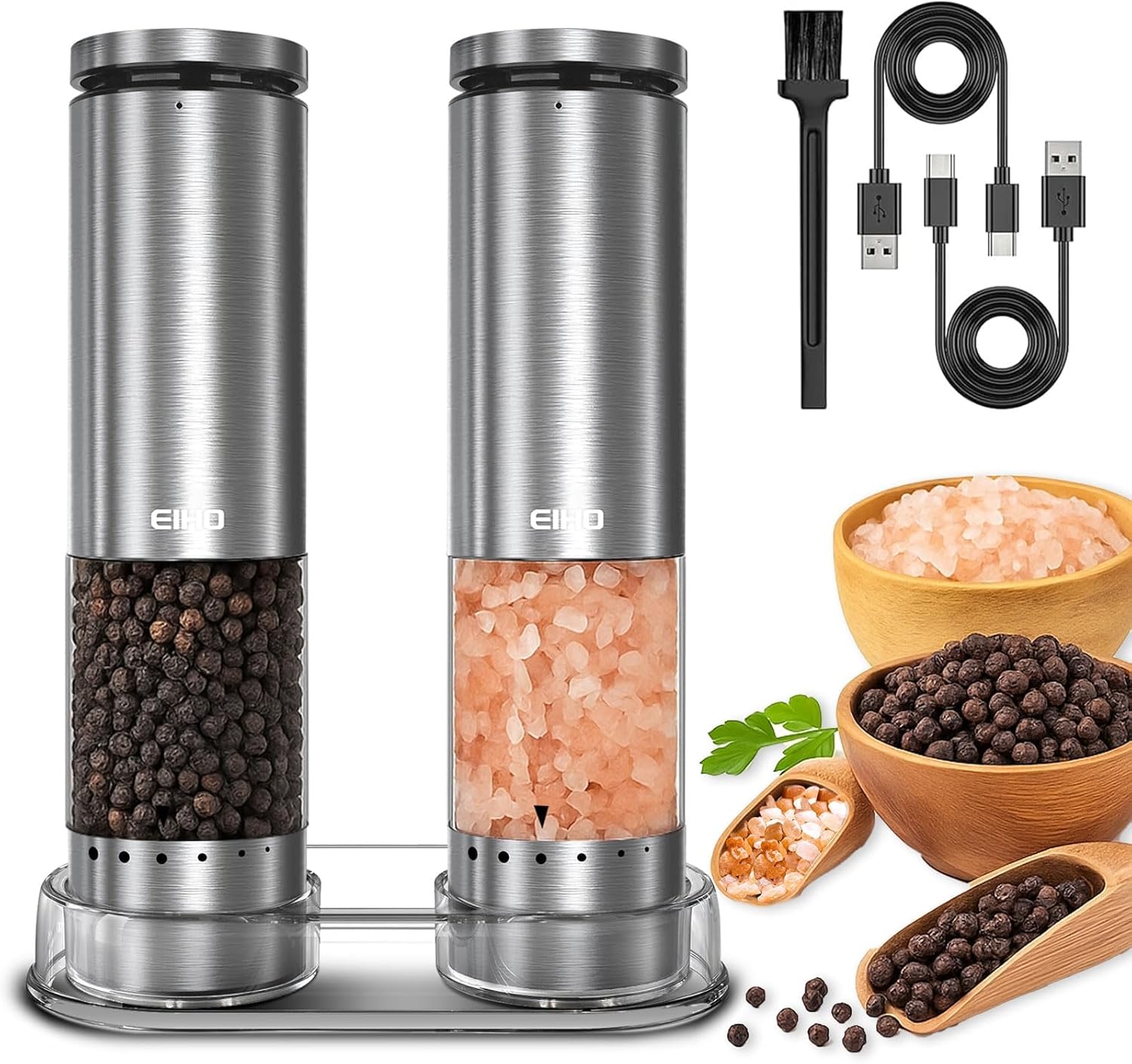
This rechargeable electric set provides adjustable coarseness at a lower price point, making it an accessible choice for electric pepper grinding. It has a smaller capacity and less robust build quality, so it may not hold up well under heavy daily use.
Brand: EIHO · Price when checked: $29.99 · Rating: 4.7 out of 5 (4,897 ratings)
Pros
- Affordable rechargeable electric grinder
- Adjustable grind coarseness
- Compact and lightweight
Cons
- Smaller pepper chamber
- Build quality less durable
Best for professional and heavy-duty use: WannSenn Professional-Grade High-Output Pepper Grinder
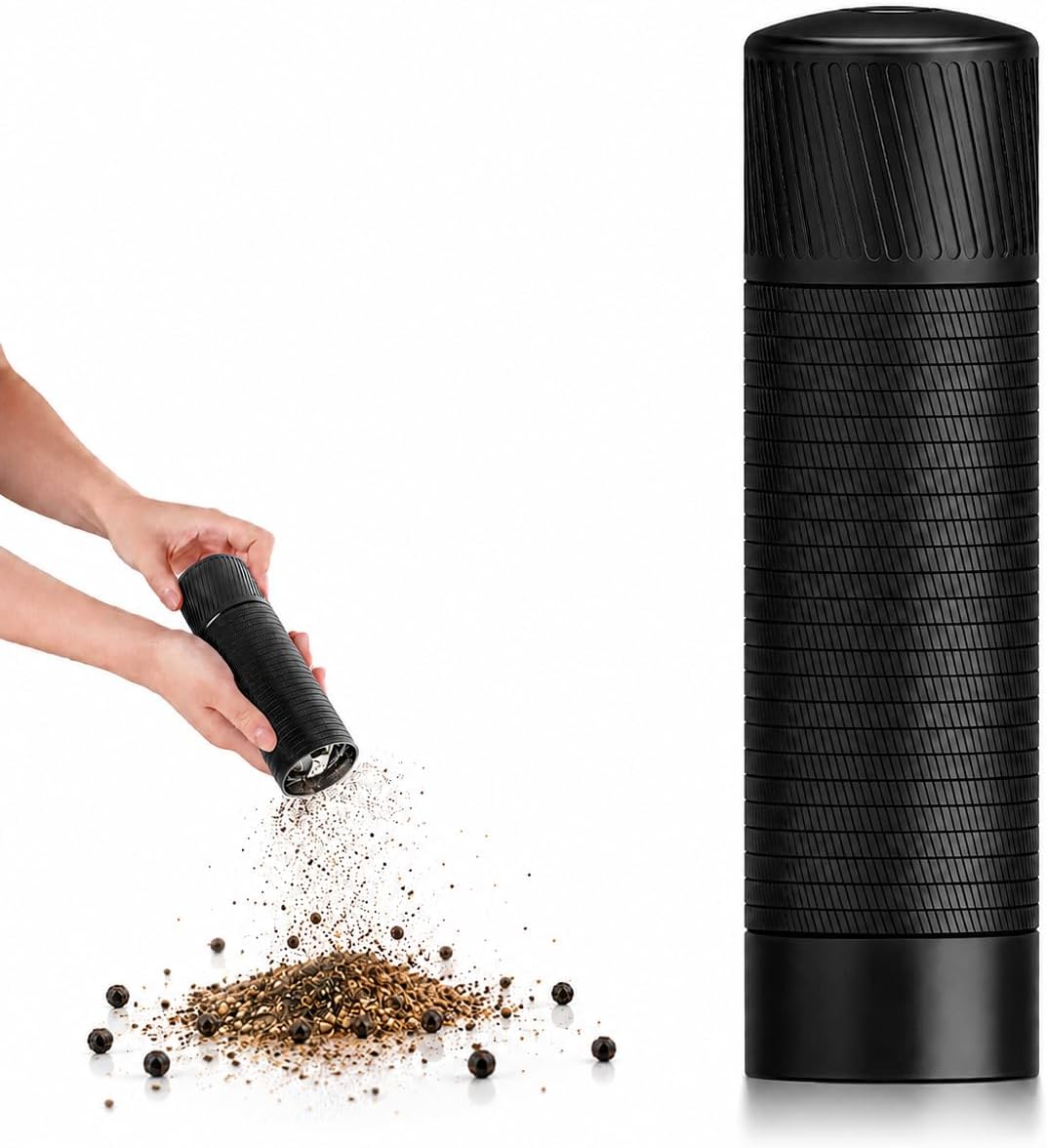
This manual grinder features a heavy-duty metal construction and professional-grade burrs designed for high output and consistent coarse grind. It is heavier and priced higher, making it less suitable for casual users or those prioritising portability.
Brand: Brand: WannSenn · Price when checked: $89.99 · Rating: 4.8 out of 5 (143 ratings)
Pros
- Solid metal burrs for durability
- High output for frequent use
- Consistent coarse grind
Cons
- Heavier and pricier
- Manual effort required
Best for precise repeatable control: Joinvie Manual Pepper Grinder

With clearly marked grind settings and an all-metal body, this grinder allows quick selection of coarse grind sizes and reliable return to the preferred setting. It has a smaller capacity and requires manual twisting, which may not suit those wanting electric convenience.
Brand: Brand: Joinvie · Price when checked: $67.49 · Rating: 4.5 out of 5 (93 ratings)
Pros
- Indexed grind settings for repeatability
- Durable aluminum alloy and stainless steel
- Suitable for multiple peppercorn types
Cons
- Smaller pepper chamber
- Manual effort needed
Best for affordability and simplicity: TooWoom Wooden Pepper Grinder

This 8-inch wooden grinder provides adjustable coarse grinding at a budget price. Its ease of cleaning and refillability make it a practical choice for occasional cooks, but internal plastic parts reduce long-term durability and precision.
Brand: TooWoom · Price when checked: $9.99 · Rating: 4.7 out of 5 (43,416 ratings)
Pros
- Low cost and easy to clean
- Simple adjustable coarse grind
- Refillable with standard peppercorns
Cons
- Plastic internal parts
- Less precise grind adjustment
Best for natural wood enthusiasts: Gulex Wood Pepper Grinder

An 8-inch oak wood body gives this grinder a rustic look while allowing air circulation to keep peppercorns dry. The coarse adjustment works but is less precise than metal burr grinders, so it suits users prioritising aesthetic over exact grind size.
Brand: Gulex · Price when checked: $8.99 · Rating: 4.3 out of 5 (43,416 ratings)
Pros
- Solid oak wood body with natural moisture control
- Adjustable coarseness
- Comfortable grip
Cons
- Coarse grind adjustment less precise
- Wood surface requires occasional care
Best for ceramic burr quality: Home EC Premium Stainless Steel Sea Salt and Pepper Grinder Set
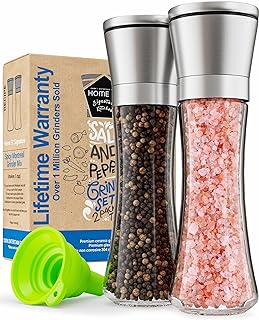
This set uses adjustable ceramic burrs in tall glass containers to deliver consistent coarse grinding. The glass body is elegant but fragile, making it better suited for careful home use rather than rugged kitchen environments.
Brand: Home
Pros
- Adjustable ceramic burrs resist corrosion
- Clear glass jars for visual monitoring
- Good for consistent coarse grind
Cons
- Fragile glass exterior
- Less impact-resistant
Best niche compact manual grinder: JOIDXIR Pepper Mill

A refillable compact manual grinder with an adjustable stainless steel mechanism, this model fits smaller kitchens or travel. Limited user feedback and light-duty design mean it is better for occasional use rather than heavy daily grinding.
Brand: JOIDXIR · Rating: 4.5 out of 5
Pros
- Compact and refillable
- Stainless steel grinding mechanism
- Adjustable coarseness
Cons
- Limited user reviews
- Less durable under heavy use
Who should consider alternative seasoning methods
If you rarely use coarse cracked pepper or prefer a uniform fine grind, investing in a coarse-specific pepper grinder might be unnecessary. Some electric grinders with burr adjustment can handle multiple grind sizes but may not excel at very coarse settings.
Those with limited kitchen space or seeking no-maintenance options might opt for pre-ground cracked pepper from specialty producers, though it loses freshness quickly. For cooks focused on other spices, a versatile spice grinder might be more practical than a dedicated pepper mill.
In short, buy a coarse pepper grinder if you frequently want freshly cracked pepper with control and durability. Otherwise, consider multi-use grinders or pre-ground options.
Related reading
- 8 Best Grain Mills in 2026 (Impact vs Stone vs the Immortal Corona)
- The 7+ Best Manual Coffee Grinders for Perfect Pour Over
- Top 10 coffee grinders for espresso with precise grind control
Frequently Asked Questions
What is the difference between a burr and blade pepper grinder for coarse grind?
Burr grinders use two abrasive surfaces to crush peppercorns, allowing precise adjustment of particle size, which is essential for consistent coarse grinding. Blade grinders chop irregularly and often produce uneven results with dust and large chunks mixed. For coarse cracked pepper, burr grinders are preferred because they provide controlled, repeatable coarseness.
How do I adjust my pepper grinder for a coarse grind?
Adjusting coarse grind usually involves turning a knob or collar that changes the distance or pressure between grinding burrs. Larger gaps produce bigger pepper pieces. Some models have numbered or labelled settings to return to preferred coarseness easily. It helps to check the manufacturer’s instructions for precise adjustment methods.
Are electric pepper grinders reliable for coarse grinding?
Electric grinders can reliably produce coarse pepper if they have quality burr mechanisms and adjustable settings. Rechargeable models offer convenience but tend to be bulkier and may have smaller chambers. They require occasional charging and careful handling to avoid motor strain. For frequent coarse grinding with minimal effort, a well-made electric grinder can be suitable.

Rimi Sultana is a home cook from Bangladesh who has cooked for her family every day for the past five years and writes about it at Smart Cooks. Perpetually testing whether internet-famous recipes actually work in a regular home kitchen. Say hello on Facebook or through the contact page.